| Author |
 Replies: 13 / Views: 2,116 Replies: 13 / Views: 2,116 |
|
|
Pillar of the Community
United Kingdom
1273 Posts |
Well I'm just looking for some answers on a few things. I've currently got a 12megapixel Fujifilm camera and I've had it for years, I can take pretty good photos on it but when it comes to getting that extra fine detail, it just doesn't seem to get good enough results, its hard to focus on the coins when I have it on a copy stand quite high up, and any zoom at all blurs the image. When you take a photo from very very close (i.e an inch or two) it can get good results but it just can't get the light in as it is too close. The lens is 55mm but I don't think its very good, you can't manually zoom, only press zoom on the camera and the image instantly blurs. So, I'm looking at buying a new camera and lens, and ended up looking at a used Nikon D3100 with Nikon DX VR AF-S Nikkor 18-105mm 1:3.5 5:5.6 GED. Am I correct in thinking that this kind of lens will not blur hardly at all?
Now I want a lens of this length as I can get the camera further away from the coin whilst filling up the display area still, allowing me to get some perfect photos. But, I've read a few reviews on this specific lens that say it's macro capability is only about 1:1.47, and optimal coin photography macro I believe should be about 1:1 from what I have read. So my question is, will this kind of lens work for coin photography? Or do I really need a macro lens? and do I really need one of such length? I will be photographing all sizes of coins. If so, would a Sigma one suffice for a Nikon 3100.
I don't want to spend a fortune and I have found some good prices on used Nikon's, I just don't want to buy one and then find out it is no better than my current Fujifilm ol' blurry zoom lens!
What kinds of lenses are people using to get amazing results? I think I've got lighting spot on, and even made little balancing corks to balance coins on so that the camera can focus easier on the coin.
Should I just buy the Nikon D3100 Body, and then choose a good macro lens? Or would the 18-105mm that I am looking at be suitable for high quality images?
Thanks for the help :)
Toby. Edited by TobyJ
01/27/2017 3:14 pm
|
|
|
|
Pillar of the Community
United States
9395 Posts |
Quote:
What kinds of lenses are people using to get amazing results? I don't get "amazing results", but I currently use enlarger/duplicating lenses and a bellows for most coins. In particular, I usually use the following at the present time: - For most coin shots, from about 1.25x to 0.33x, the 75mm APO Rodagon D 1x. In the past I used the Olympus Zuiko Auto Macro 80mm lens (before lens tests showed the Rodagan to be a little bit better). Before that there was the Canon EF 100mm Macro. Long ago (in the days of film), I used the Micro-Nikkor 55mm f/2.8. - For whole slab shots (and also any huge coins), I currently use the Olympus 50mm f/2 Macro lens attached directly to the camera with an OM-EOS adapter (no bellows). - For close-up shots, I currently use the Mitotoyo 5x or 10x microscope objectives or the Nikon CFI60 4x/0.20 Plan APO objective, with a Thorlabs ITL-200 tube lens. Focus stacking is with Zerene Stacker. Long ago, used the (reversed) Micro-Nikkor 55mm/2.8 lens, but results with film were poor, since focus stacking is hard with film. The key for getting good focus with all these lenses is having 5x or 10x live view on the computer monitor (along with stacking when needed). Back before live view was available focusing was difficult, and the sharpness was hit or miss. My biggest problem these days is getting proper lighting, especially for coins in slabs. |
|
Pillar of the Community
United States
1970 Posts |
Don't buy a Nikon D3100. I have the D3300 and I highly recommend against using it to take coin photos.
|
|
Pillar of the Community
 United Kingdom
1273 Posts |
Fair enough, back to square one then in the search for a new camera. Pepactonius, that Olympus 50mm f2 macro lens looks incredible, although far above what I can currently afford.
Is it possible to get really decent photographs by just having a good set up, suitable camera and suitable lens? Without having to invest in complicated matters (to me anyway), such as bellows and magnifiers etc. In that case, I just need pointing in the right direction in regards to camera and lens. Or, can you really get pretty good results with the long set up I have found on 'Best I can get on a $400 budget', The Canon XS, because that camera seems a bit outdated, but if it still does get really good results, that set up may be a lot cheaper now?
|
|
Pillar of the Community
United States
9395 Posts |
Quote:
Is it possible to get really decent photographs by just having a good set up, suitable camera and suitable lens? Some folks have posted great coin photos taken with an I-phone (or Android phone), so you don't really need a fancy camera and lens to get great results. I think the recommended Canon XS is one of the earliest Canon cameras with live view focusing, which makes getting good focus more reliable. I use a newer Canon DSLR. Just make sure any camera you get has magnified live on a regular laptop or desktop computer monitor (not a cell phone), and has EFSC/EFCS to minimize vibrations. Some modern Canon DSLRs seem to have better EFSC than others. This has been discussed over at photomacrography.net, where the gurus of macro photography hang out. One advantage of the "$400 setup" is that it's very flexible and can be easily expanded (with microscope objectives, bellows, etc.) as the need arises. With any luck, rmpsrpms will be along soon to post more definitive advice on cameras, lenses, lighting, setups, etc. |
|
Pillar of the Community
United States
1970 Posts |
I say to just use your iPhone. Unless I am shooting pictures of Morgan dollars or other huge coins, I don't like using my Nikon D3300. When I am trying to take a pic of a small ancient Roman coin or even a dime, a 18-55 lens can't go close enough and my 55-200mm lens is useless altogether. Edited by coin197
01/27/2017 4:29 pm
|
|
Pillar of the Community
United Kingdom
1273 Posts |
Thanks for the replies,
I've just read a lot of that $400 set up thread, I might just be up for the challenge of sourcing the equipment to build that set up.
- Coin197, I use my Samsung Galaxy S6 camera quite a bit, and it is rather good but not as clear as I want. You've got to be close to get the macro function and that makes it very tricky to get enough light on the coin, plus no live view to see a good clear image on my laptop, plus you can't really clamp it in place to stop vibrations. If this $400 setup with the 75mm nikkor magnifying lens can capture better photos, then I may just give it a go.
|
|
Pillar of the Community
 United States
4051 Posts |
Quote:
With any luck, rmpsrpms will be along soon to post more definitive advice on cameras, lenses, lighting, setups, etc. You guys are giving great advice already! The <$400 setup is really still the best budget setup around, and these days can be put together for even cheaper. The extra working distance you get vs cell phones or most point and shoots gives you a lot more flexibility in lighting, which is ultimately the most important factor in taking good coin photos. The equipment needs to support a few basics: - stable, without vibration, and level to the coin - ability to critically focus - enough working distance to light the coin - ability to adjust white balance - flexibility in setting exposures to avoid hotspots The <$400 setup has all the above given that you can get a decent tripod or copy stand to hold it all together. Upgrades that folks use (newer camera, better lenses) give only marginal quality improvements. Using a bellows instead of helicoid/extensions is a little more convenient, and has the advantage of mounting the bellows instead of the camera to the copy stand, but it has the disadvantage of not being able to shoot larger coins/medals/slabs with the same lens. Quote:
My biggest problem these days is getting proper lighting, especially for coins in slabs. Have you given my Smile Directors (or their later incarnations) a try? |
|
Pillar of the Community
United States
9395 Posts |
Quote:
Have you given my Smile Directors (or their later incarnations) a try? I use something which may be functionally equivalent to the later incarnation of the Smile Director. It doesn't look anything like the ones I have seen so far on this forum. It is a circular conical piece of Opalux paper that is attached to the lens filter threads. You shine 1 or 2 Jansjo lights on it from above in some pattern that hopefully gets good results for a particular coin, in a slab or not. The problem is that this method doesn't give good results for some coins, especially ones that are too shiny all over. For these coins, I now have a "diffuse true axial" setup that uses 45-degree 50% transmission glass from Edmunds Optics. There are numerous limitations with this setup, but it's more convenient than doing "pseudo-axial" lighting using a shift bellows (Nikon PB-4) and bouncing light off a coin shifted to one side. My current problem to solve is how to do diffuse axial lighting for slabbed coins. This requires an extremely even light source so you get uniform glare off that portion of the slab above the coin. Hopefully, you can subtract the uniform glare in post processing. |
|
Pillar of the Community
United States
4051 Posts |
Quote:
I use something which may be functionally equivalent to the later incarnation of the Smile Director. It doesn't look anything like the ones I have seen so far on this forum. It is a circular conical piece of Opalux paper that is attached to the lens filter threads. You shine 1 or 2 Jansjo lights on it from above in some pattern that hopefully gets good results for a particular coin, in a slab or not. Sounds interesting. What does the reflected illumination pattern look like? |
|
Pillar of the Community
United States
9395 Posts |
Quote:
What does the reflected illumination pattern look like? I don't have any pictures of the reflected pattern. When I'm curious, I just peek under the diffuser (with my setup, it's fairly high up above the table). Here's what the diffuser looks like from the top: 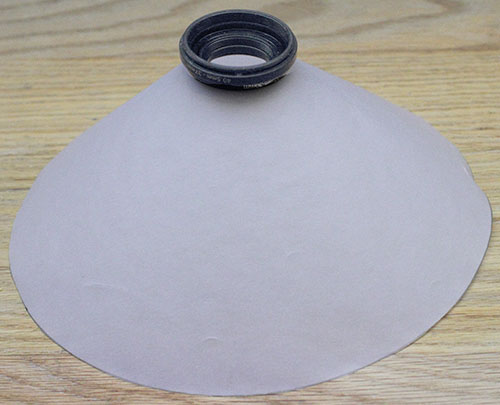 It just screws into the filter threads on the lens. The clear opening is about 25mm, which seems to be enough for the 75mm f/4 lens at f/5.6 or f/8. Here's the diffuser from underneath: 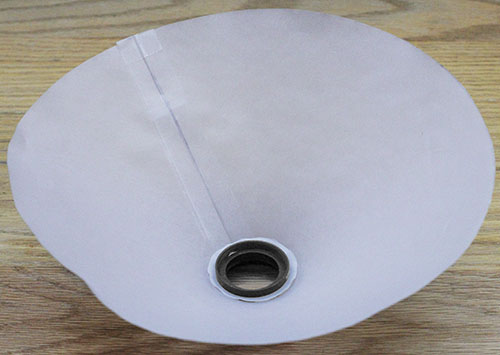 When shooting slabbed coins or very shiny coins, you may need a blackout zone that prevents glare from the slab or coin. Here is the full set of blackout rings: 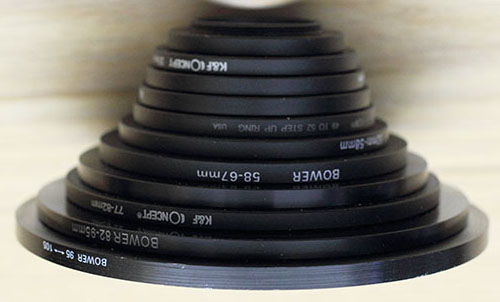 The blackout rings attached to the diffuser, shot from underneath: 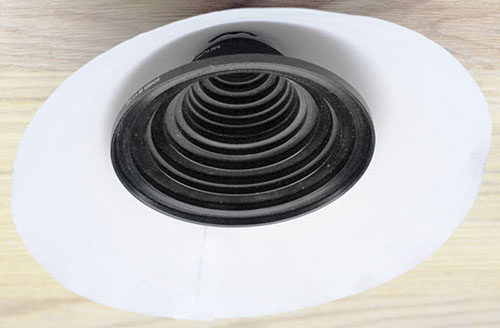 Normally, you'd use only enough rings to eliminate the unwanted glare. |
|
Pillar of the Community
United States
4051 Posts |
Very nice! Same concept, and a good implementation.
|
|
Valued Member
United States
123 Posts |
All I use is my iPhone 7 camera. I take a short video because it is zoomed in more than a picture then I screenshot the video. I then crop it in the optimizer. It's probably not the best way but it works for me!  |
|
Pillar of the Community
United Kingdom
1273 Posts |
Haha fair enough ^^^ I do use my Samsung Galaxy for larger coins like Morgans, which seems to capture details quite well. Anything smaller however and detail becomes harder to capture. Its all about the lens I'm beginning to realise, I need a long lens and a very very very stable copy stand! And to take photos from my laptop instead of pressing the shutter button on my camera. All these skills to tune up! If I get some photos that I think are really great in the future I'll definitely post them!
|
| |
Replies: 13 / Views: 2,116 |
|







 Posted 01/27/2017 3:44 pm





