| Author |
 Replies: 16 / Views: 2,572 Replies: 16 / Views: 2,572 |
|
Pillar of the Community
United States
3479 Posts |
As many of you know I really love early US coins. I recently stumbled on to a 1783 shipwrecked 8 real piece at a local pawn shop. I'm fascinated with it. I can't stop looking at it. My question is how deep does the rabbit hole run? Meaning if I go on a colonial binge what are the chances of completing a type set for under 10K? |
|
|
|
Pillar of the Community
United States
937 Posts |
Like all things, it depend on how far down the rabbit hole you go. You can go broke fast if you shoot for AU and better. Do a few searches on Great collections, Heritage, and ebay before you dive in headfirst. |
|
Pillar of the Community
United States
4409 Posts |
|
|
Pillar of the Community
United States
1683 Posts |
In colonials there is hardly any such thing as complete, but you could go a long ways. If you went for a Higley copper I doubt you would find one for under $50,000 and some of the Massachusetts silver and Continental dollars would set you back more than that. You can still pick up Connecticut coppers and Hibernia coppers for $25 or so, so it is a wide field. It is in my opinion the most fascinating are of numismatics and well worth the time you would spend in researching.
|
|
Pillar of the Community
United States
1304 Posts |
The rabbit hole is deep, BUT, it is by no means expensive. There is a lot of reasonably priced stuff and you can pretty much make it up as you go along as far as the make up of your set. I recommend it, the history is fascinating if you are in to that.
|
|
Pillar of the Community
 United States
3479 Posts |
Thanks guys! And Meadowview thank you for the helpful link. Much more homework is needed before I tackle this.
I figured the rabbit hole was deeper. I watch a lot of auctions. It seems like colonial coins command a fraction of the premium that early US mint coins enjoy. Perhaps making it a more attractive.
|
|
Bedrock of the Community
United States
12057 Posts |
Colonials are fun & interesting way to get into American history & numismatic history at the same time; from Fugio cents, to Connecticut/Vermont/Virginia/Massachusetts/New Jersey...then you get into Constellatio Nova's, counterfeit George III halfpence, Rosa Americana, Machin's Mills, evasion...so many things to pursue, and that's just the tip of the Colonial iceberg...Conder tokens, French billon coinage, Continental Currency, Wood's Hibernia / harp coinage...Spanish milled coinage too.
You are never bored and there is always something new to look at or go after, and you are in many cases dealing with TRUE scarcities, many varieties of, say, Connecticut copper being R4, R5 and higher...and there's always a market if you ever go to sell with C4 and cross-pollination with EAC.
It behooves you to study. Join C4. Get books. Miller for Connecticut, Maris for NJ, Vlack, Bowers, Ryder...lots to learn.
Member ANA - EAC - TNA - SSDC - CCT #890 "Most of the things worth doing in the world had been declared impossible before they were done." -- Louis D. Brandeis |
|
Pillar of the Community
United States
1499 Posts |
I am what you might call a serious dabbler in colonial coins. Not burst you balloon, but $10 grand is not going to get you too far if you like nice coins. A nice piece of Massachusetts silver (e.g. "Pine Tree Shilling") can put a big hole in your budget, even for a small planchet shilling. The large planchet Massachusetts silver is harder, because most of them were struck bent. They were made on a device called a rocker press that sort rolled them out instead of squeezing the planchet flat between two dies. That means that when you get below Choice VF, the coins get pretty ratty. The small planchet coins were struck on a screw press and are therefore nicer and more common. The biggest trouble with copper colonials is that many of them are pitted and corroded. In the colonial area of collecting it's lot more tolerated that it is for regular U.S. coins. I'm fussy and won't buy that stuff, but many people do. Some colonials, like the Vermont coppers, which were made in Vermont (landscapes, "baby head" and the like) were made very crudely. The quality of the copper was low, and the dies were mostly "amateur hour" stuff. If you think that the early U.S. coins are crude, wait until you see some these colonial pieces. Some collectors laugh at the "colonial coin type set" concept because so many of them concentrate on one series. Still there are guys like me who dabble in them all to a point. If you look at the Red Book listings you will see that some items are very expensive and virtually impossible - like Bermuda. |
|
Pillar of the Community
United States
1211 Posts |
The rules of coin collecting that most collectors follow do not apply to colonial coin collecting. Your best bet is to buy a few $100 colonial specimens and LEARN as much as possible about them. You will quickly find new doors opening up as you are learning. This will help you to focus in on the area of colonial coins you wish to pursue. I am not telling you NOT to collect colonials by type, but I would caution you that it doesn't really work the way you are used to.
|
|
Valued Member
United States
127 Posts |
You may want to pick a certain series of colonial coins. Maybe Connecticut or New Jersey cents. They are popular are popular, and rather inexpensive as colonial coins go.
|
|
Pillar of the Community
United States
3479 Posts |
Thanks guys... that's kind of what I'm discovering. I think it would be fair to call it the wild west of US coin collecting. There's so many varieties. Even with all the auctions I watch there might be only a couple varieties that seem to show up consistently. I'm going to buy some books for weekend reading.
|
|
Pillar of the Community
United States
1499 Posts |
Quote:
I'm going to buy some books for weekend reading. Buy the Whitman Encyclopedia of Colonial and Early American Coins by Q. David Bowers. There is more in there in one place than you will find in any other source. The classic work by Sylvester Crosby is an amazing source despite the fact that it is over 100 years old. Just to wet you appetite ... The Massachusetts copper coins were the best made among all of the "Confederation period" pieces. This lovely Half Cent was in the Eric P. Newman collection. 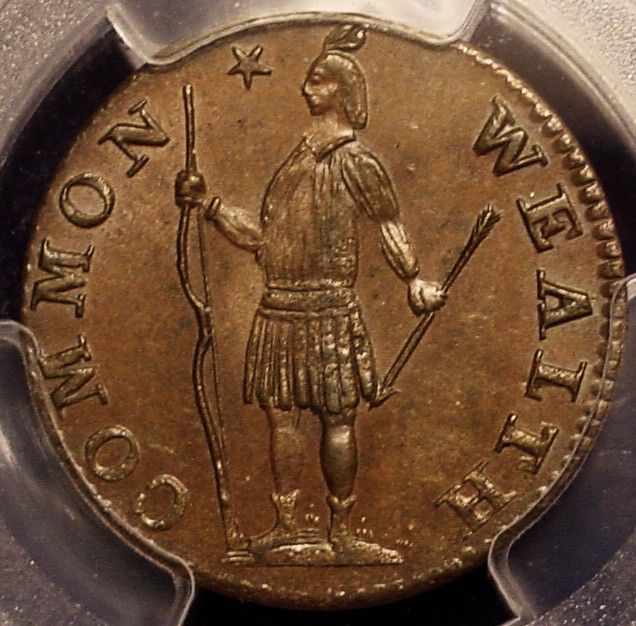 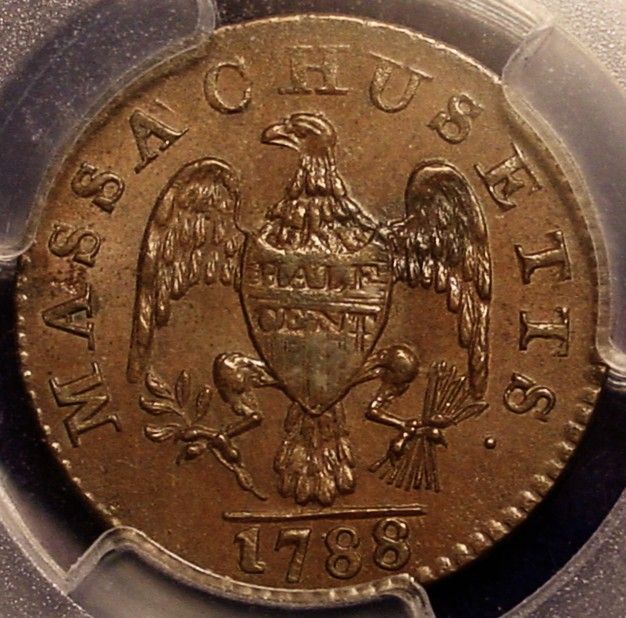 Edited by billjones
02/14/2017 08:22 am
|
|
Pillar of the Community
United States
3479 Posts |
|
|
Pillar of the Community
United States
1499 Posts |
Yes, it's mine. It's part of my "colonial coion type set." NGC has a registry set for that which endless and virtually impossilbe to complete because they have spots for stuff like the Bermuda coins in it.
|
|
CCF Advertiser
United States
1533 Posts |
I once got a few colonials, Fugio cent, Mass cent, NJ cent, then realized just how many colonials there are. You could assemble a collection of just New Jersey and it would be a substantial collection. And unlike die varieties of half dollars, these coins look very, very different from variety to variety.
|
|
Pillar of the Community
United States
1499 Posts |
There are something over 300 Connecticut copper or if you prefer cent varieties. You could spend a collector's lifetime collecting just those. I've been down the die variety collector road with Half Cents. After a while it got frustrating. The thing about colonials is that new ones are still out there to be found, but the condition of some of the finds might shock you. Think of the worst coin you have even seen (almost no detail visible, half a coin left), and some coins like that are treasures to those who collect the series |
| |
Replies: 16 / Views: 2,572 |




 Posted 02/10/2017 1:29 pm





