I may be a little late to the party, but better late than never.
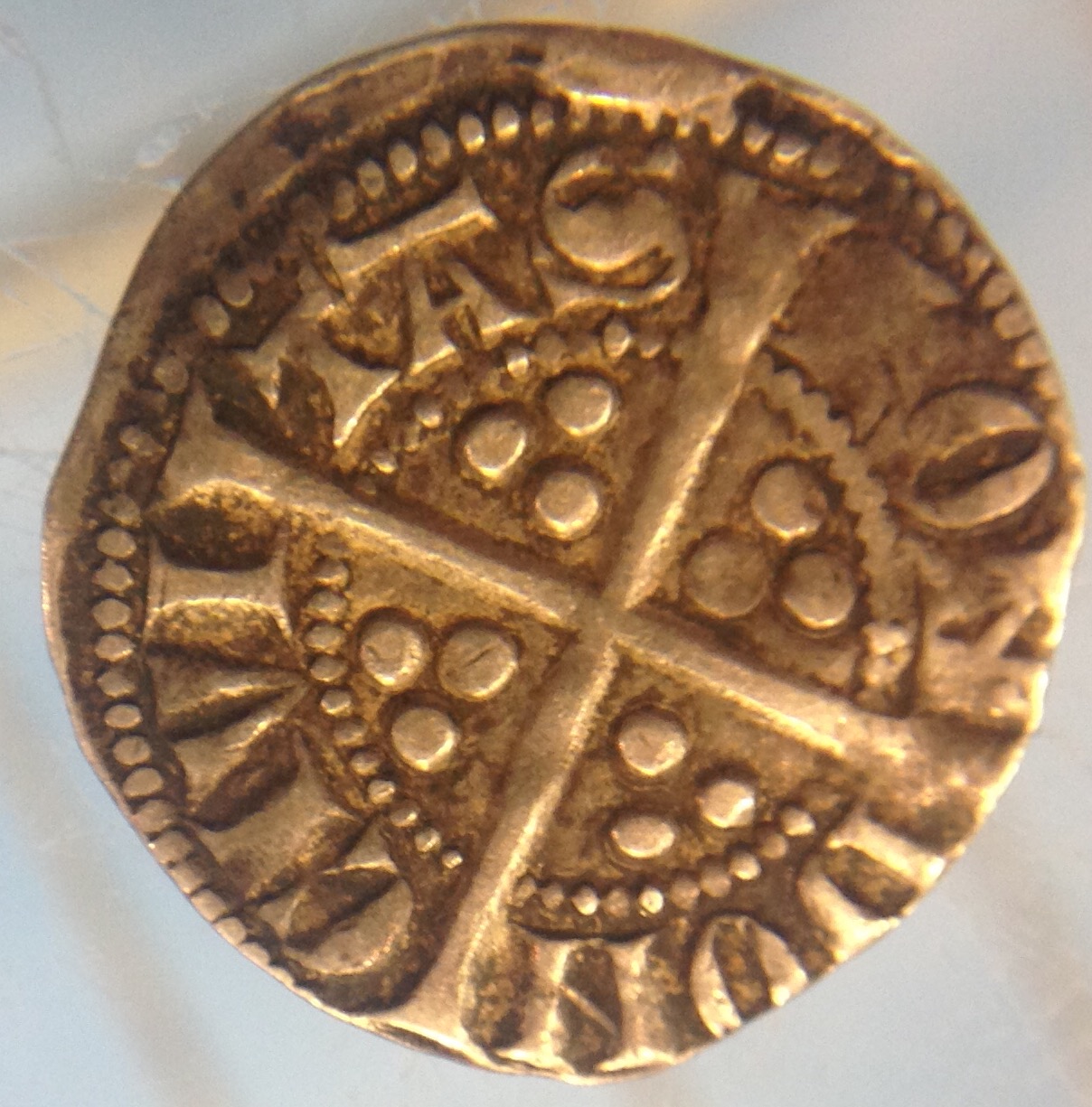
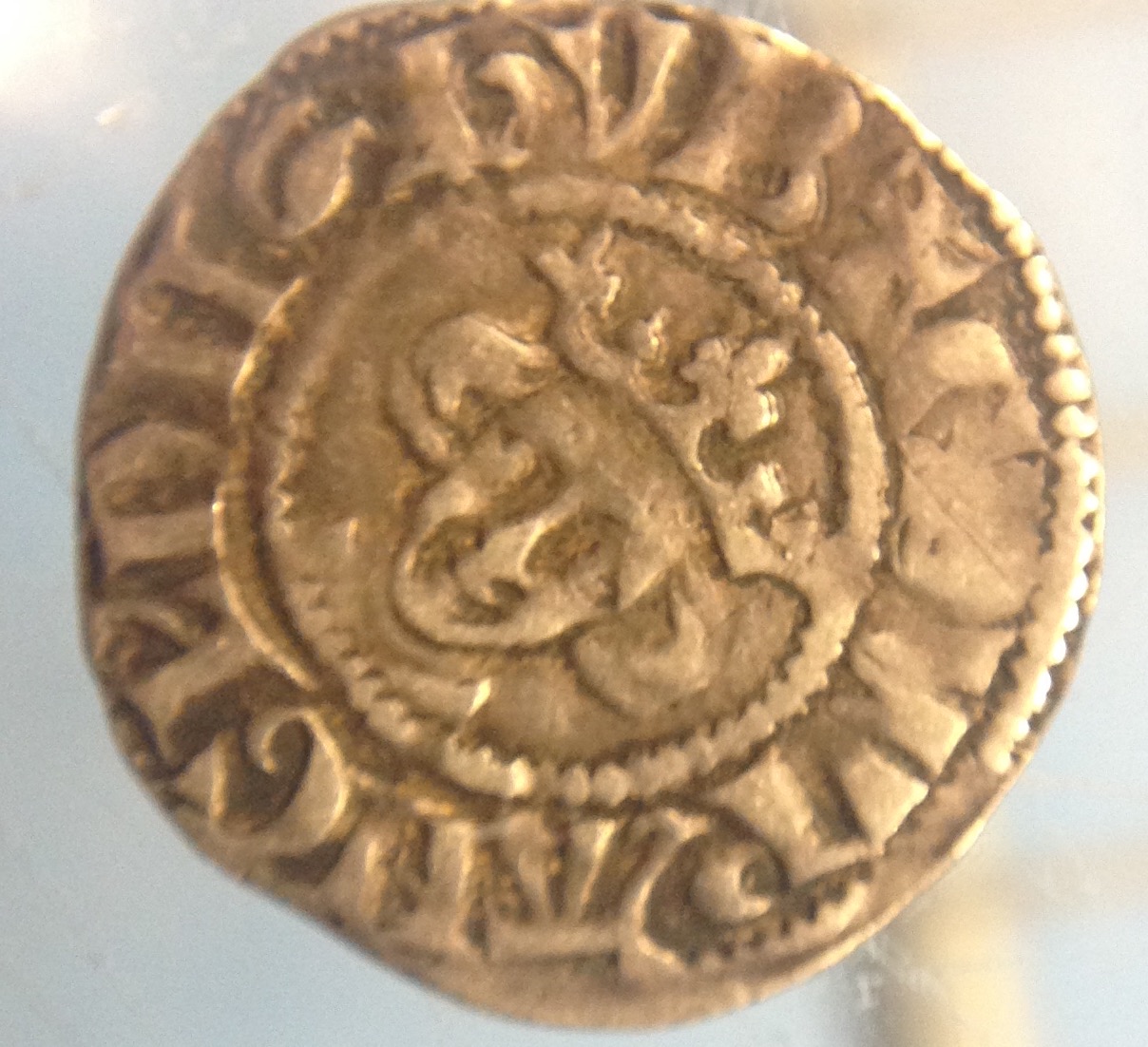
It is definitely an Edward the first Penny. I too am no expert on this series, but have picked up a few things here and there. The first thing to look for is the general layout of the legend. If it is an abbreviation of some sort of the legend "EDWARDUS REX ANGLIE DOMINUS HYBERNIE", you're looking at an Edward the First to an Edward the third (florin coinage) penny. Any later coinage by this monarch has an entirely different legend, and is thus easily recognisable. The next thing to look for is the general shape of the crown, whether it is bifoliate or trifoliate. Trifoliate always points to the early classes (1-9) issued by Edward the First, bifoliate means a late Edward 1st to Edward 3rd penny. In this case we have a trifoliate crown, which points to classes 1-9, and thus we can conclude that it was issued under Edward the First with certainty. Alternatively, we can look at how the name of the king is spelled. In this case only 'EDW', which can point to either class 1-9, or florin (third) coinage form Edward III. We can narrow it down even further, but we are now getting into an area where only true experts know everything. Looking at the shape of the crown, it is not a penny from class 1. The shape of the 'S', the so-called 'Non-composite' or 'thick-waist" S, excludes class 2, as well as the first half of class 3 (3A-3E). 4C, 4D and 4E can be written off because of a lack of pellets and due to a complete headband. The lack of anything on Edward's breast on this coin means that class 5 and 7 can be excluded as well. There is no contractive mark after the 'H' in 'HYB', so it isn't from class 8. And finally, the mintmark, in this case a fairly obvious cross potent, excludes classes 6 and 9. So we are left with; 3F, 3G, 4A and 4B. The difference between these sub-classes is very minimal, and I'm afraid I don't have the expertise yet to identify these correctly. I believe one should look at the shape of the bust and its crown, particularly at the way the ornaments in the crown are positioned relative to each other. I'll leave that to an expert.
This identification does give us a nice and limited date-range according to the site Toby already posted; the first coins in class 3 were minted in 1280 and class 4 was minted from 1282 to 1289. Sweet coin!
Mika
Ps. As said, I'm no expert. Feel free to correct me.












 Posted 02/11/2017 5:58 pm


 with AnYangMan, and would add Class 4B.


