| Author |
 Replies: 10 / Views: 1,209 Replies: 10 / Views: 1,209 |
|
|
Valued Member
United States
121 Posts |
I need some opinions from people experienced in sending coins to PCGS to get slabbed. I've seen some ugly, stained-up stuff pass with flying colors and some get a details grade for a little spot, so I'm at a loss as to what criteria they use. Any ideas what I would get with this one? 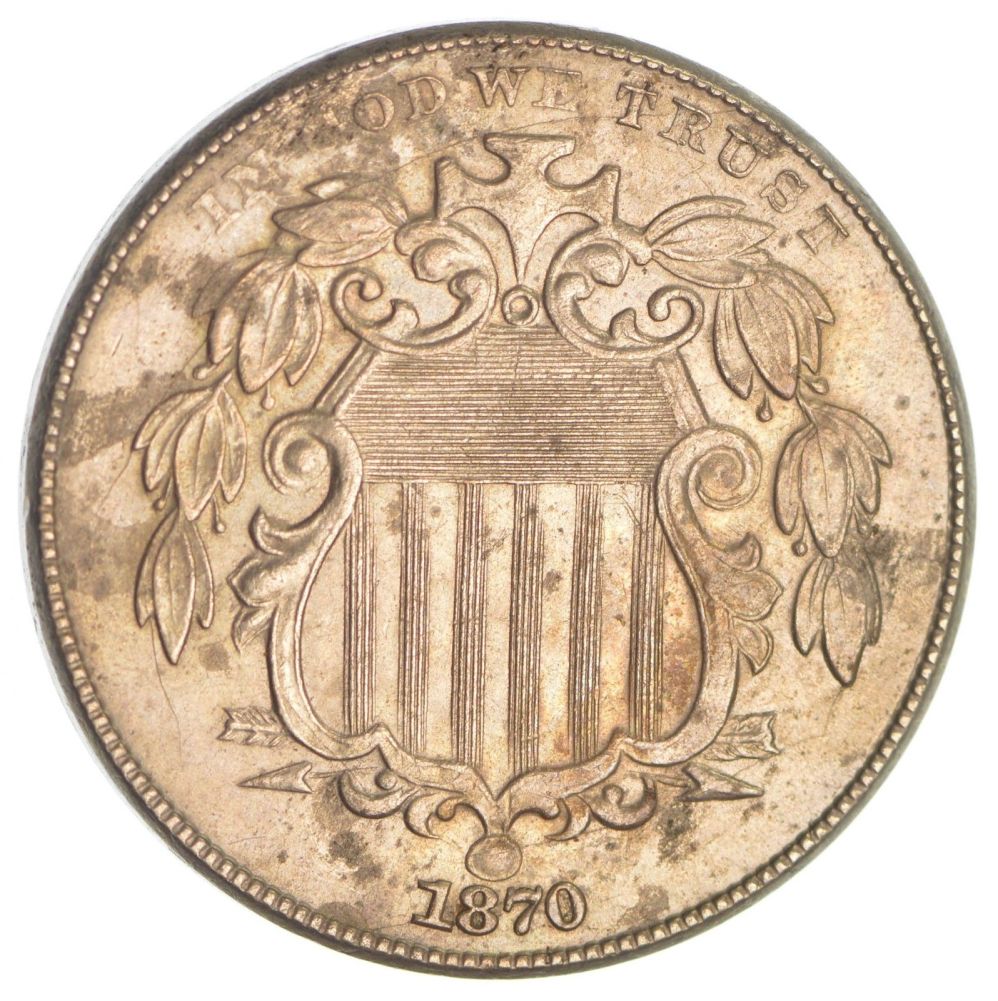 *** Moved by Staff to a more appropriate forum. *** *** Moved by Staff to a more appropriate forum. *** |
|
|
|
Pillar of the Community
United States
6370 Posts |
Those aren't stains or spots, they're patches of corrosion.
|
|
Bedrock of the Community
United States
12477 Posts |
For the folks to give a grade opinion, we really need a reverse pic.
That's a good pic, though!
In Memory of Crazyb0 12-26-1951 to 7-27-2020
In Memory of Tootallious 3-31-1964 to 4-15-2020
In Memory of T-BOP 10-12-1949 to 1-19-2024
|
|
Valued Member
 United States
121 Posts |
I didn't post a reverse pic, because it's pretty clean. If the front will fly, the reverse is no problem
|
|
Pillar of the Community
United States
1531 Posts |
I agree with the others, a reverse pic would help. In regards to the criteria slabbing companies have for passing and rejecting coins: it all depends on the type of staining, marking, toning, etc. [Edit: Environmentally] Corroded coins will get a details grade because the actual surface was changed because of a chemical reaction. Corrosion permanently damages a coin. If that's what this coin has, it likely wouldn't pass. Usually permanently stained coins will pass through, since it's just discoloration as opposed to damage. I have this UGLY UGLY proof Jefferson nickel that PCGS OK'd, even though it's got stains all over it. But yeah. I'm no expert on the effects of acetone or its uses, but I wonder if that would help in this case? I've never used it, but I hear dipping can be helpful IF done correctly and carefully. Do you think you could get some pictures from a different angle or lighting to better tell what those marks are? Edited by Cruisinfusion
03/03/2017 12:35 am
|
|
Bedrock of the Community
Australia
21792 Posts |
All forms of toning or patination no matter how even toned, beautiful rainbow toned, or ugly patchy blotchy,
are really different types of surface corrosion.
Beauty is in the eye of the beholder, and is just an opinion. just as the whole art of grading, despite recognized standards.
Small wonder it is possible to get variations of opinion, especially when it comes to 'blotchy'.
|
|
Bedrock of the Community
United States
12477 Posts |
Quote:
If the front will fly, the reverse is no problem In some cases, the obverse and reverse show differing levels of wear and/or damage/cleaning that could require an aggregate grade and possibly add a "Details" designation. Coins can't be graded only seeing one side. In Memory of Crazyb0 12-26-1951 to 7-27-2020
In Memory of Tootallious 3-31-1964 to 4-15-2020
In Memory of T-BOP 10-12-1949 to 1-19-2024
Edited by spru
03/03/2017 01:14 am
|
|
Valued Member
United States
121 Posts |
Thanks for all the input, but all I really want is a consensus of opinions on whether or not the crud you see in the picture would be enough to disqualify it from a regular grading and merit a details grade. And by the way, acetone is vastly overrated in this forum. I recently soaked a modern Lincoln Cent that had a big layer of crud on it for 2 weeks as an experiment, and the acetone made very little difference. I immediately rinsed it in hot water, and then let it soak in a cup of hot water for an hour and rinsed it again, but again the difference was negligible. |
|
Pillar of the Community
United States
1531 Posts |
To be honest, I think it would pass through. I don't think it's bad enough. Apologies, I completely forgot to answer your only question in my entire response!
|
|
Bedrock of the Community
United States
12477 Posts |
Quote:
acetone is vastly overrated in this forum It depends on what you're trying to remove. I've posted several examples of what acetone can do and what it cannot. A simple thing like old fingerprints on a cent cannot be removed by acetone. It's really just subjective. Acetone is suggested because it does not interact with the metal and cause further damage. An example of success with a Lincoln Cent (and a couple others): 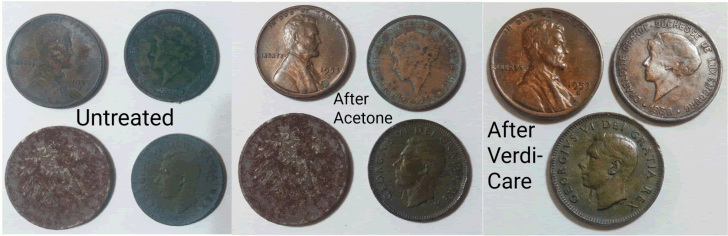 Most of the improvement came from pure acetone. Verdi-Care was used afterwards. I'm undecided about the specific applications of it. The lower left coin in the first two pics is a German 10 pfennig that rusted from being iron. In Memory of Crazyb0 12-26-1951 to 7-27-2020
In Memory of Tootallious 3-31-1964 to 4-15-2020
In Memory of T-BOP 10-12-1949 to 1-19-2024
Edited by spru
03/03/2017 02:15 am
|
|
Bedrock of the Community
United States
94367 Posts |
|
| |
Replies: 10 / Views: 1,209 |
|










 Posted 03/02/2017 11:22 pm


