| Author |
 Replies: 13 / Views: 2,920 Replies: 13 / Views: 2,920 |
|
|
Pillar of the Community
United States
6130 Posts |
After noticing a generally uncertain attitude towards ancients and medievals from the general pool of collectors, I figured we could benefit from a thread to showcase and discuss coins that can be collected within a certain beginner's budget.
For this thread, the budget will be $10 or less, not accounting for shipping.
Contributors, please feel free to share any coin from your collection that you feel meets this budget requirement. Price paid is not necessarily a factor, as long as the results would be repeatable; e.g. a mis-attributed coin purchased for $5 that is "worth" $50 would not belong here, because the coin may never be available for that price again.
In addition to the pictures of the coin, please also feel free to elaborate:
- When and where was this coin made?
- Who made it?
- How common or scarce is it?
- What is special about it?
- What level of experience would you recommend before pursuing a similar piece (How common are fakes? How available is literature on these coins?)
For those who are still learning (all of us here) please feel free to chime in with questions or discussion points!
|
|
|
|
Pillar of the Community
United States
1969 Posts |
A common Late Roman Bronze. Flavius Arcadius from the Thessalonica Mint, double stamped reverse. Minted between 383-408 AD. I bought it for 10 cents. It is is the only identifiable ancient I own, as I don't collect ancients. 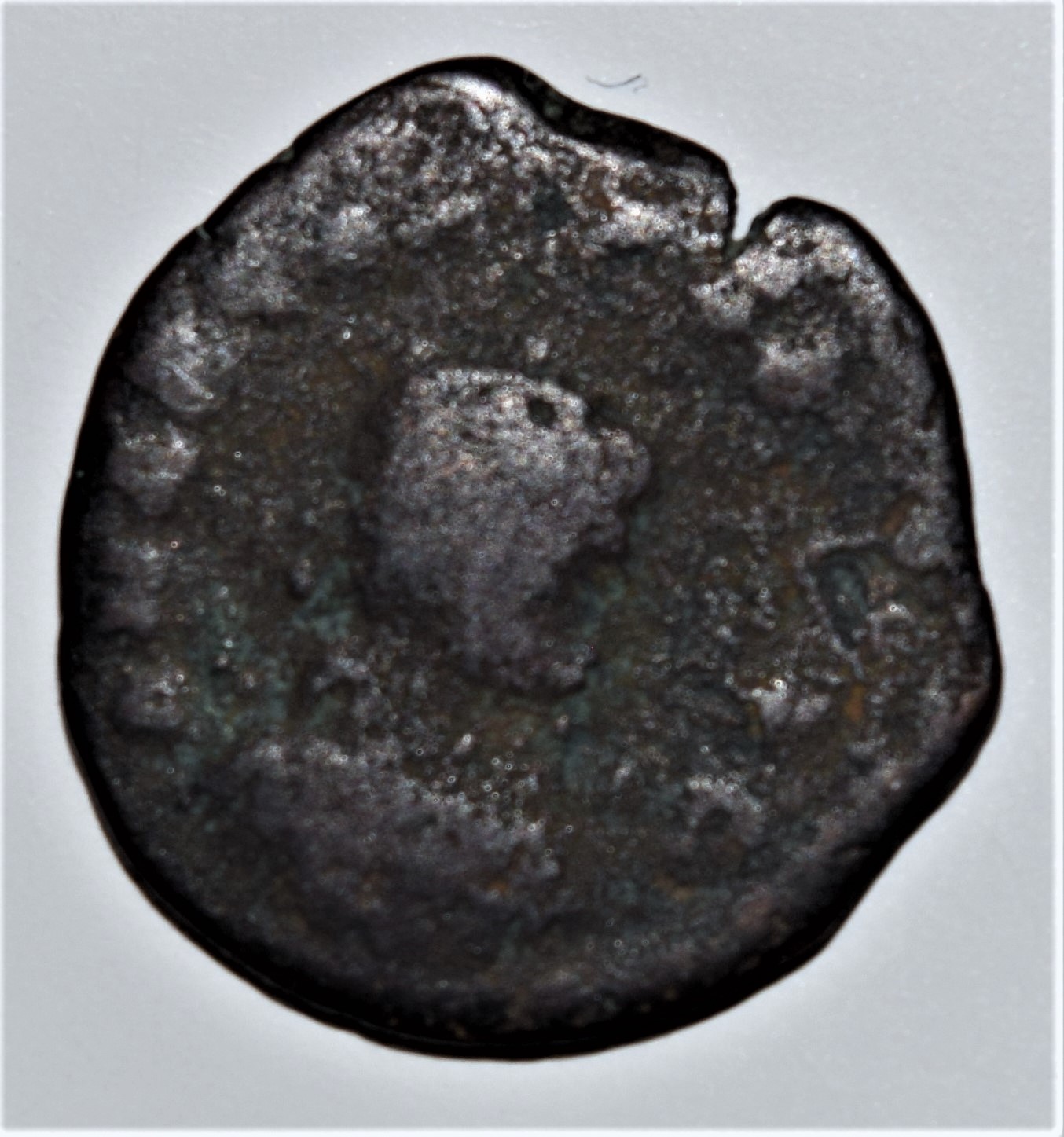 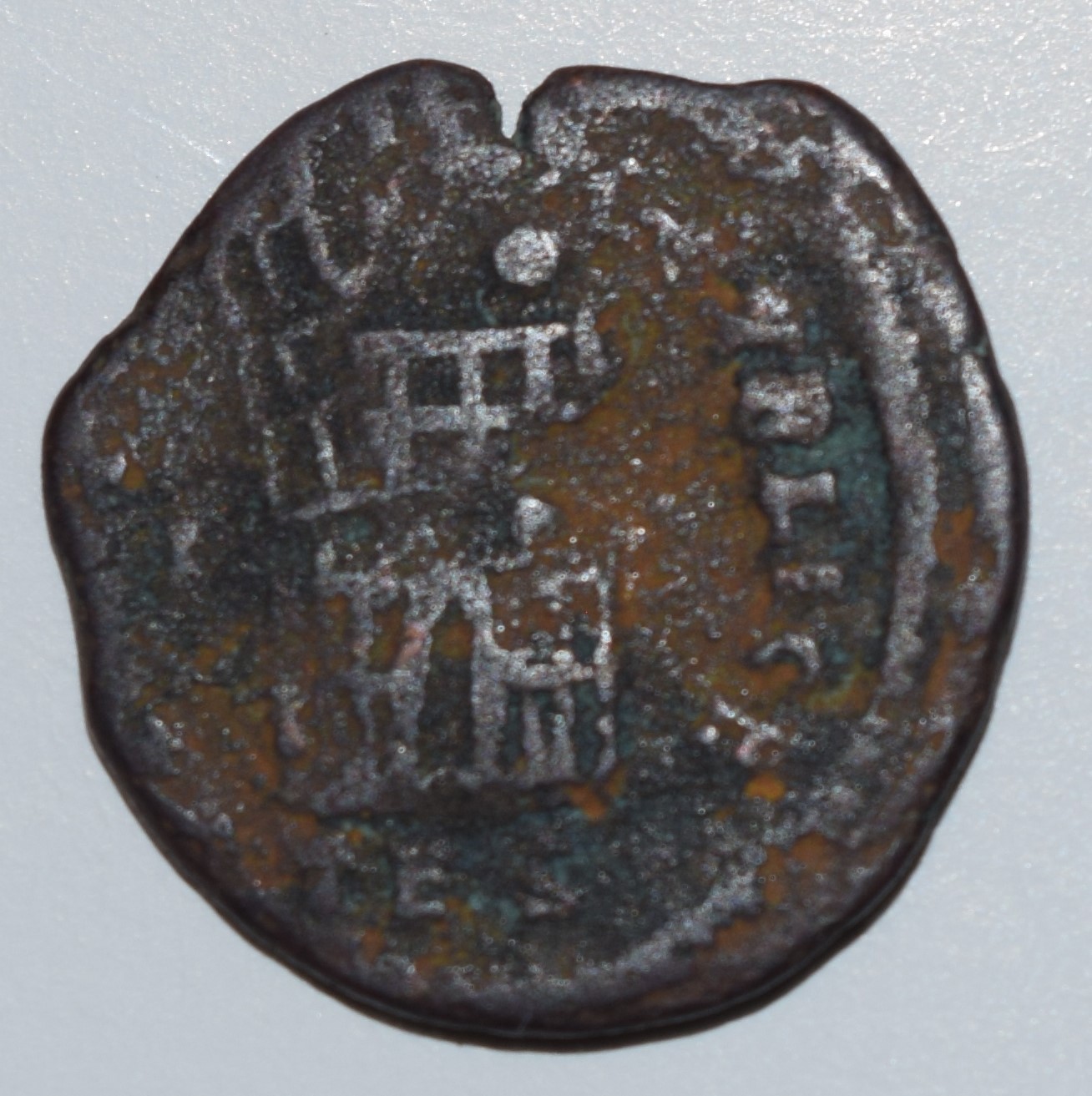 Edited by coin197
03/07/2017 7:30 pm
|
|
Pillar of the Community
Russian Federation
5186 Posts |
It is fairly common for random cheap local ancients to be offered on lower-end coin shows and markets, often among more modern metal detecting finds. In fact, I just bought a dozen ancient and medieval coins for a total of $35; I wouldn't quite say, however, that those prices were particularly repeatable (though in my case it was less about the coins being misattributed - some were, but it didn't seem to change much - and more about the dealer being overjoyed that someone finally rid him of those useless ancients). This one is definitely repeatable though...   Constantius II, Fallen Horseman (Fel Temp) bronze (AE4 size, but supposed to be AE3), mintmark illegible but my guess is Thessalonica mint (due to apparent field letter). Metal detecting find, Kalinigrad Oblast (formerly East Prussia). As you can probably notice from its condition, this little coin must have seen a lot; I suspect it was traded to the Prussians for amber sometime around the 6th or 7th century. I bought this coin for 50 rubles (about 80 cents); the seller had a few more that were similar. |
|
Moderator
 United States
23731 Posts |
Here is a group of Kushan and Bactrian coins is bought for less than $2 a piece. 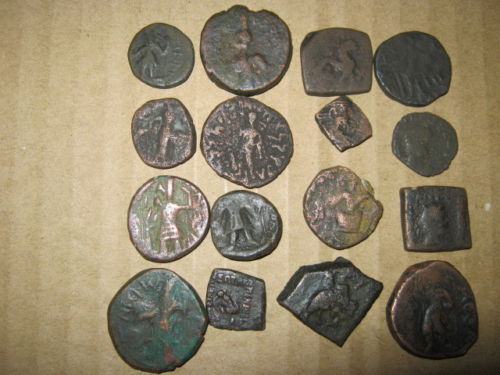 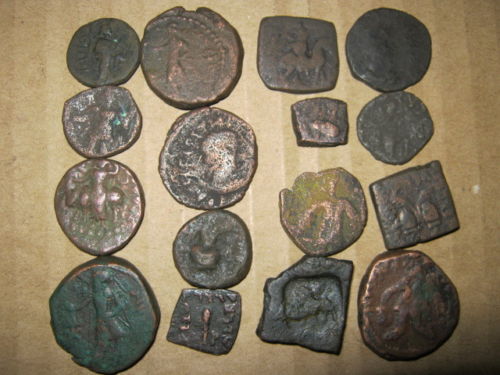 |
|
Pillar of the Community
 Spain
2752 Posts |
Budget Indian dynasty coins can be had very cheaply...Just make sure you buy from a reputable dealer. This is one of mine I aquired for $5 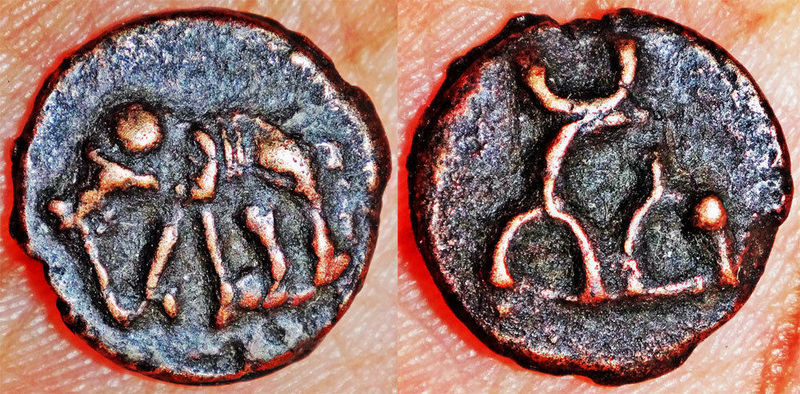 This is a 1/4 Karshapana 185-73 BC from the Shunga dynasty. Obv - Elephant without rider. Rev - Chaitya..Three arched hill with crescent above....A chaitya is a Buddhist shrine or prayer hall with a stupa at one end. Country: India. Composition: Copper. Weight: 1.70 gr. Size: 13.85 mm Mitchiner ACW-4366-4370 |
|
Pillar of the Community
Belgium
1194 Posts |
a few years ago , I bought a lot of 16 'premonetary coins' for € 115 . There was one 'rouelle' from Gaul- I don t know the English term - , 13 arrowheads from GReece and 2 'clochettes , - small bells , Glöckchen in German )- from Greece . It is an AE rouelle , diameter 30 mm , 13,6 fr and 7 mm thick anddates from the second or first century BC .albert 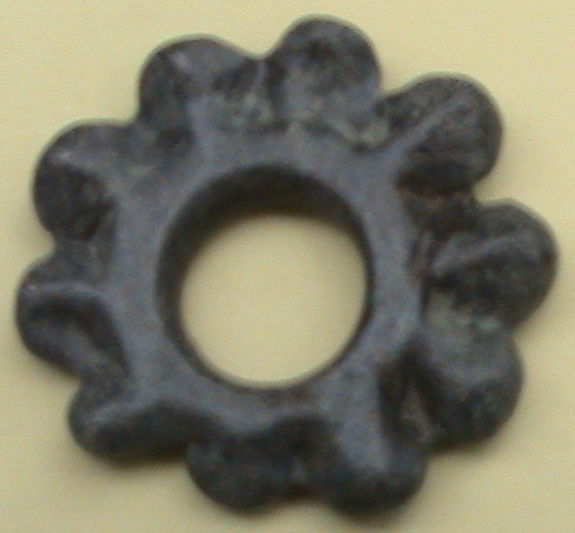 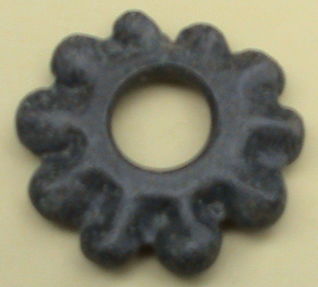 |
|
Pillar of the Community
 United States
6130 Posts |
Nice examples, all! I have a ton of very cheap Indian ancients, but apparently I didn't upload the images to photobucket before clearing off my phone. I have always loved the artwork and portraiture on the issues of the Gallic empire. Won these two Tetricus I antoninianii (base metal double denarius) in a lot for about $3 each; individually they probably wouldn't go much over $10. 1. Sole rule, 271-272 Radiate bust of cruder style right, IMP TETRICVS PF AVG Laetitia (happiness) standing, facing left, holding anchor and wreath, LAETITIA AVG N   2. Joint rule with his son, Tetricus II, 273-274 Radiate bust of very fine style right, IMP TETRICVS PF AVG Hilaritas (Joy) standing, facing left, holding palm branch and cornucopia, HILARITAS AVGG   The Gallic empire was a Secessionist state that broke off from Rome in 260 AD following the total failure of emperor Gallienus to hold things together after his father Valerian was defeated and enslaved by the Sassanid Empire. The army in Gaul (France) killed Gallienus' young son Saloninus and declared the general Postumus as emperor. Gallienus tried and failed to defeat Postumus, and Spain, France, and Britain became a separate political entity with Postumus as its emperor. Postumus ruled for 8 years and after some fairly rapid successions, the provincial governor Tetricus was nominated as emperor and more or less against his will accepted the title. He kept the empire from succumbing to the invading barbarians, but barely attempted to put up a resistance when the new emperor Aurelian came knocking. His armies were defeated, and Tetricus surrendered, reportedly quoting Virgil: "Rescue me--o undefeated one--from these troubles!" Tetricus and his son were brought back to Rome as trophies in Aurelian's triumph, and were spared. Tetricus was made the governor of a small province of Italy, and his son eventually went on to become a senator. These are extremely common coins, and not especially rare, even in high grades, although a silvered example is much more scarce. To my knowledge they are not counterfeited today, although they were extensively counterfeited in antiquity to make a series known today as "barbarous radiates". Edited by Finn235
03/08/2017 1:50 pm
|
|
Pillar of the Community
United States
582 Posts |
Thrace, Mesembria. 450 - 350 BC. AE-10. 10.66mm, 0.92g. Facing Helmet. / META within the spokes of a radiate wheel. $7.00 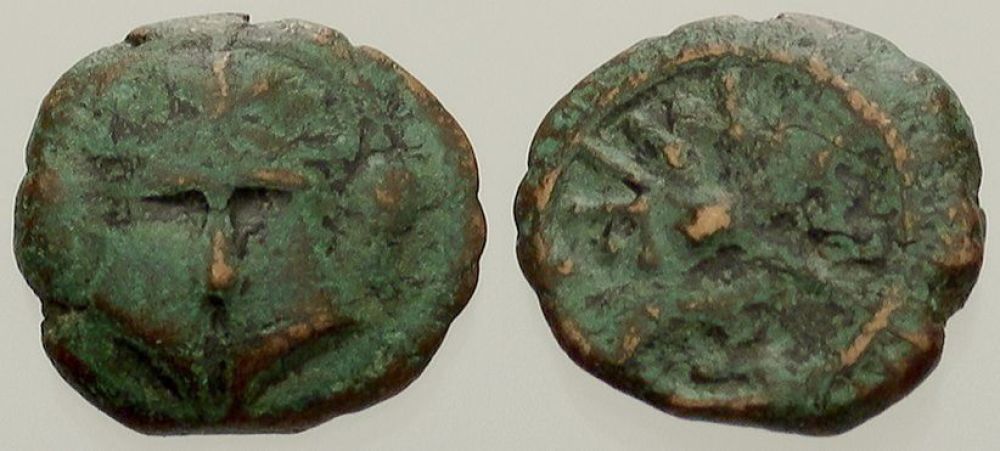 |
|
Pillar of the Community
Spain
2752 Posts |
@ Finn235...Really like those 2 Tetricus I antoninianii. Heres another Indian ancient from my collection..Picked this one up for $8. This one is particularly nice as the Bull and Horse are both well centered.  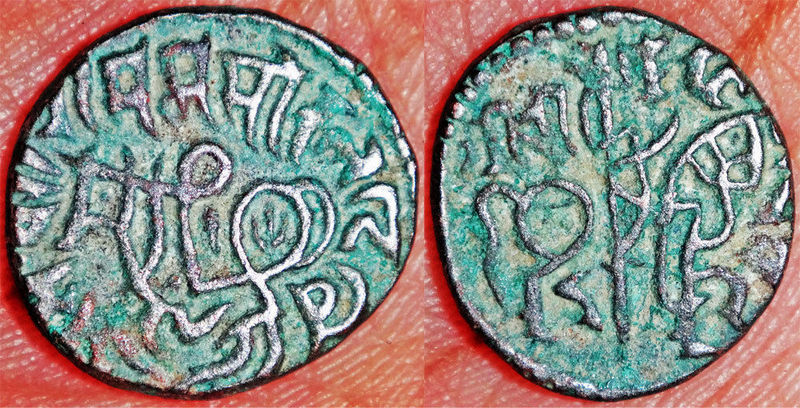 ANCIENT - CHUHANS OF AJMER & DELHI - KING CHAHADA DEVA (1172-1191) BILLON JITAL REF: DEYALL#220, COMPOSITION: BILLON, WEIGHT: 3.2 GRAM, DIAMETER: 14.85 MM Obverse, Bull Left Legend in Nagari Above, Lettering: #2358;#2381;#2352;#2368; #2360;#2366;#2350;#2344;#2381;#2340; #2342;#2375;#2357; (Sri Samanta Deva), Engraver: Delhi mint Reverse King Chahada Deva on Horse Back, Legend in Nagari, Lettering: #2358;#2381;#2352;#2368; #2330;#2366;#2361;#2342; #2342;#2375;#2348; (Sri Chahada Deva) RULER: CHAHADA DEVA : 1172-1191 AD Saludos Paul |
|
Pillar of the Community
United States
6130 Posts |
This thread needs some silver! Gandhara (India/Pakistan/Afghanistan) AR 1/8 Shatamana 600-327 BC Paid $6 for this bad boy!  Gandhara was one of three or four sites (depending on whether you want to include Yap) where coinage was invented independently. When the Achaemenids arrived in the 6th century BC, the area was saturated with coins like the one above, and also full Shatamana in the form of curved bars of silver stamped with the same design. Cyrus listed the region as one of the richest in the empire, and permitted them to make their own currency until Alexander's armies arrived almost 300 years later. The kingdom at Gandhara was weakened, and appears to have stopped producing these coins. The bars are quite pricy, but the smaller cup-shaped "coins" are readily available and attainable for less than $10 with patience. Edited by Finn235
03/11/2017 09:08 am
|
|
Pillar of the Community
United States
949 Posts |
Steve, what is the value relation between the Shatamana and the Janapada? You have this coin as 1/8 janapada.
I have one of these scyphate babies, but it was sold to me as a 1/8 Satamana, which I later identified as ~Reigor 472; a janapada. I assumed from this that 1 janapada = 1/8 shatamana. No?
I got it because of the temporal connection with the Achaemenid Persians, but its really out of my field, so the tip would be helpful.
|
|
Pillar of the Community
United States
6130 Posts |
Whoops, careless mistake on my part. Janapada is roughly synonymous with kingdom or satrapy; Shatamana is the name for the bent bar coin. I had seen Gandhara Janapada so much, that it stuck in my head just like Roman Denarius or US Dollar.
I fixed the mistake, thanks for pointing that out.
Also @Paul, that is a really nice later bull and horseman! I have a small assortment of the generic Samanta Deva types, but only one post-conquest piece that I haven't even identified yet.
Also @Ron, I wish I had gotten into Kushan types earlier, they are not that cheap anymore!
|
|
Pillar of the Community
United States
6130 Posts |
A slightly less old but similarly cheap Indian silver: Mauryan Empire AR Karshapana I'm led to believe Ashoka the Great, 268-232 BC These are crazy common. High grade examples go for reasonable amounts, but I have seen these sell for 99 cents in lower grades. These were $3-5 if memory serves.   The Maurya Empire (323-187 BC) was at its zenith the largest empire to ever exist in the Indian subcontinent, larger even than the current Republic of India. It was a product of both fortune and skill; the young prince Chandragupta Maurya was able to usurp the throne of the powerful Maghada kingdom, whose formidable army had forced Alexander the Great to move his battle fatigued troops back to Babylon. By sparking a civil war that saw him installed at the head of the most powerful army in India, he took advantage of the chaos caused by Alexander to expand rapidly. Ashoka was the third king of the empire, and was a young and brilliant general. However after taking heavy losses to secure a victory, he renounced his violent ways and expanded through preaching the ways of Buddha. The empire entered a period of decline after Ashoka, and was finally toppled by the Shunga kingdom in about 187 BC. I don't profess to know these coins well, but they are common as dirt. They were made by cutting a sheet of silver to the proper weight, then stamping it with five symbols on the front, and one on the back. The caduceus symbol on both of these, supposedly means it was struck under Ashoka. |
|
Pillar of the Community
United States
2643 Posts |
Gordian III Antoninianus. Purchased at $8/lb. from the LCS in a bulk world coin buy. 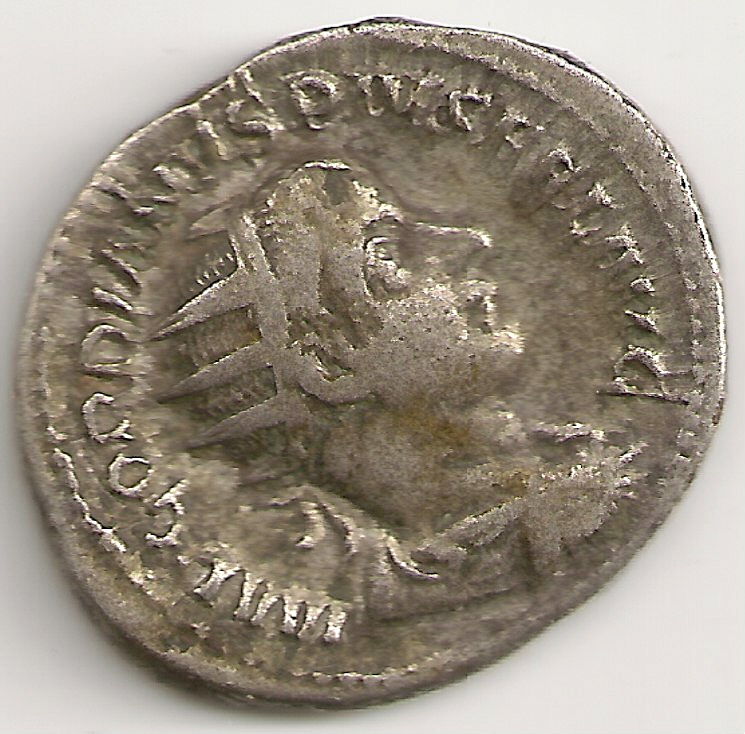 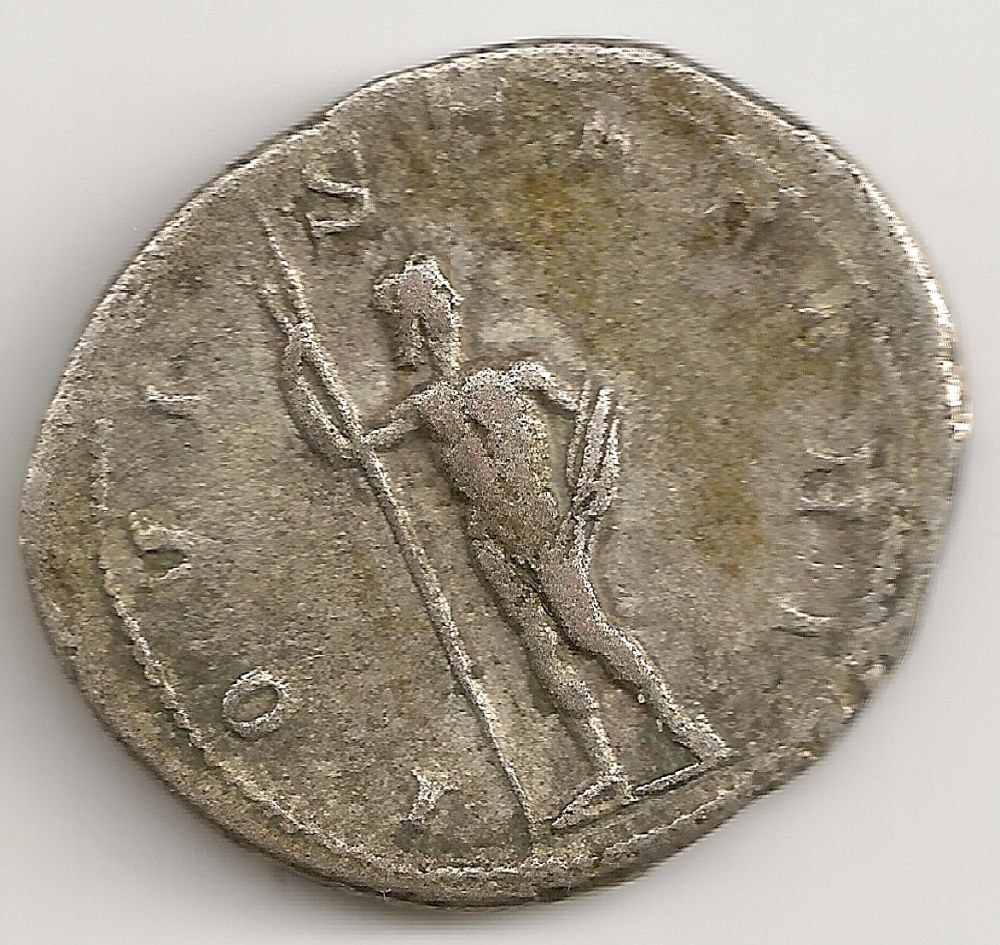 |
| |
Replies: 13 / Views: 2,920 |
|








 Posted 03/07/2017 8:18 pm


