| Author |
 Replies: 17 / Views: 3,579 Replies: 17 / Views: 3,579 |
|
Pillar of the Community
United States
6130 Posts |
After noticing a generally uncertain attitude towards ancients and medievals from the general pool of collectors, I figured we could benefit from a thread to showcase and discuss coins that can be collected within a certain beginner's budget.
For this thread, the budget will be $100, not accounting for shipping.
Contributors, please feel free to share any coin from your collection that you feel meets this budget requirement. Price paid is not necessarily a factor, as long as the results would be repeatable; e.g. a mis-attributed coin purchased for $5 that is "worth" $50 would not belong here, because the coin may never be available for that price again.
In addition to the pictures of the coin, please also feel free to elaborate:
- When and where was this coin made?
- Who made it?
- How common or scarce is it?
- What is special about it?
- What level of experience would you recommend before pursuing a similar piece (How common are fakes? How available is literature on these coins?)
For those who are still learning (e.g. all of us here) please feel free to chime in with questions or discussion points!
|
|
|
|
Moderator
 United States
34549 Posts |
@finn, I hope that you are permitting medieval coins in these threads too. If you are looking to restrict the posts to ancient coins only, then it is ok to delete this post... Please find below a Grosso Agontano of the Italian City State of Rimini. It dates to between 1256 and 1385 AD. The obv inscription is PPS GAV DENCIVS and the rev inscription is DE ARIMINIO. It is an anonymous issuance, but does have a sweet image of St. Gaudenzio of Novara. It is listed in Biaggi as "common (easily acquired)", although I don't see one for sale on vcoins right now. I paid almost exactly $100 for this example. The attribution is Biaggi 2001. The letters and other details of this coin are particularly clear--that was the main draw for me. I am not aware of fakes of these being particularly common, but <sigh>, I'm sure that they exist. Medieval Italian coins are somewhat difficult to collect if only because the primary work on this subject (Elio Biaggi's Monete e Zecche Medievali Italiane) is wicked hard to find. I searched for more than five years to get my copy of this book. So often we are given the advice to "buy the book" before buying the coin. That is quite difficult with these coins. 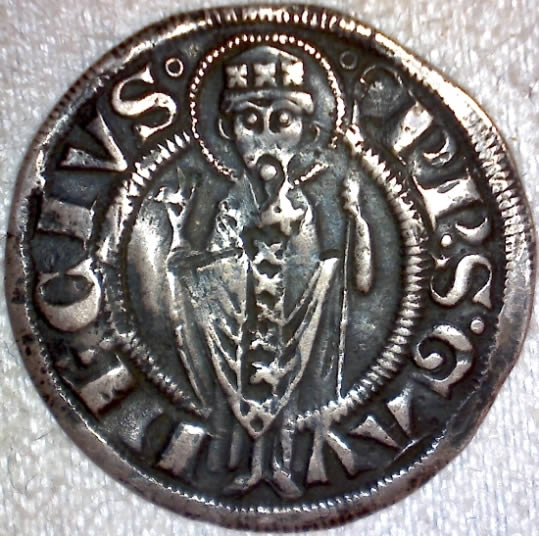 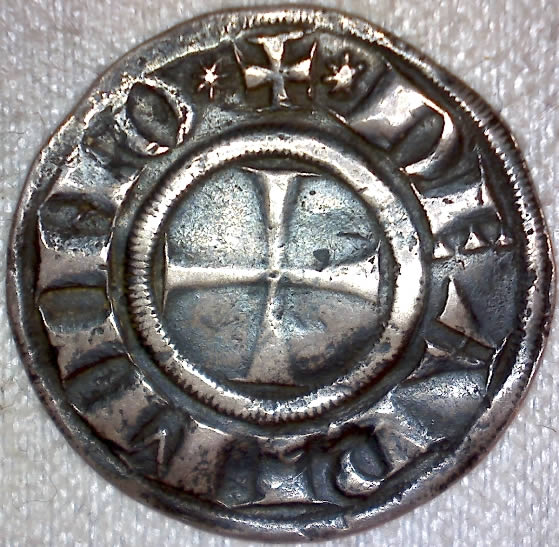 "If you climb a good tree, you get a push."
-----Ghanaian proverb
"The danger we all now face is distinguishing between what is authentic and what is performed."
-----King Adz
|
|
Moderator
United States
23731 Posts |
|
|
Moderator
United States
34549 Posts |
Thanks! It was nice to see your two new Eleaen coins over in the $10-$25 thread.
"If you climb a good tree, you get a push."
-----Ghanaian proverb
"The danger we all now face is distinguishing between what is authentic and what is performed."
-----King Adz
|
|
Moderator
United States
23731 Posts |
|
|
Pillar of the Community
United States
616 Posts |
Here's a $100 win from Heritage Auctions 2 years ago. It's not the prettiest coin in my collection (I'm enamored with the Severan ladies) but it is a relative rare emperor, Nerva 96-8AD graded Ch F. And for $95.35 including BP and shipping. 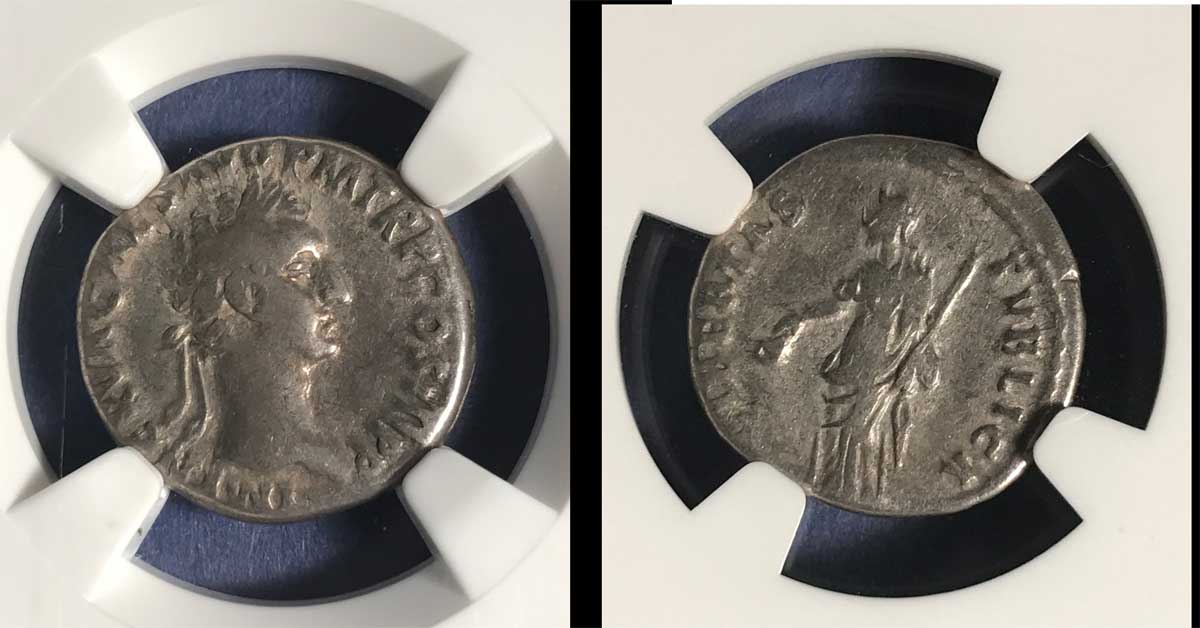 Had to edit this thread and slip in one of the Severan ladies. They are so irresistable! Julia Maeasa 219-20AD purchased for $87.75 including shipping from my favorite VCoins dealer. 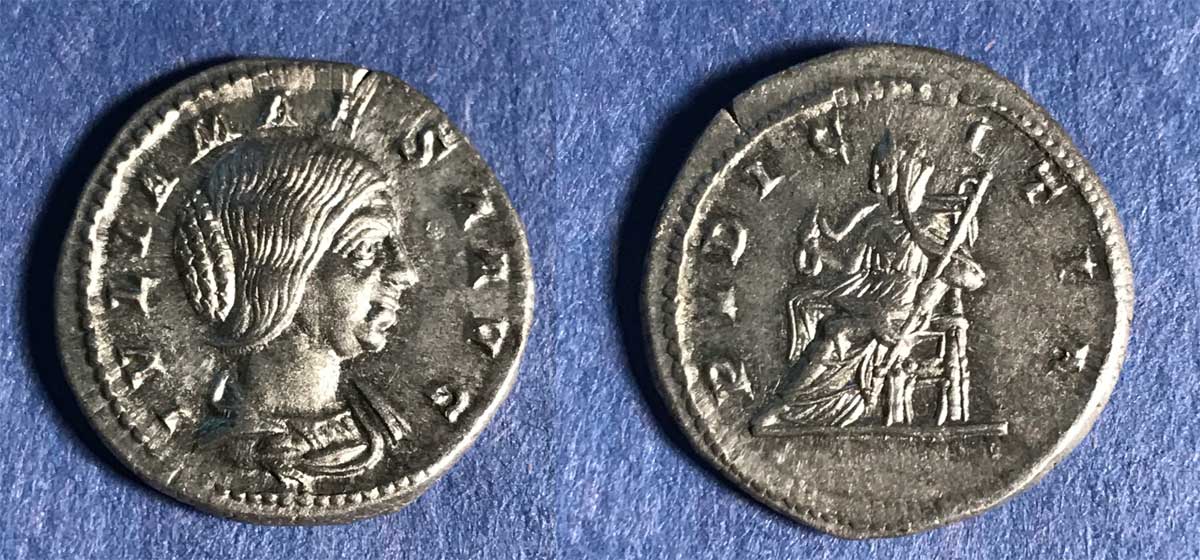 Edited by jskirwin
03/07/2017 10:46 pm
|
|
Pillar of the Community
United States
870 Posts |
Here is a nice little Hadrian right around 100.00  |
|
Pillar of the Community
Canada
1269 Posts |
There are some great coins in this thread. Mine is a denarius of Domitian I won for 57.00. Not a rare coin but I bought it for the Romulus and Remus reverse. The portrait is also quite nice. Domitian Caesar, 69-81 Denarius circa 77-78, AR (18.95mm., 2.85g). Obv: Ceasar Aug F Domitianus Laureate head right. Rev. She-wolf standing l., suckling the twins Romulus and Remus; in exergue, boat. RIC Vespasian 961. C 51. Ex: Naville Numismatics Auction #25 Lot# 430 September 25, 2016 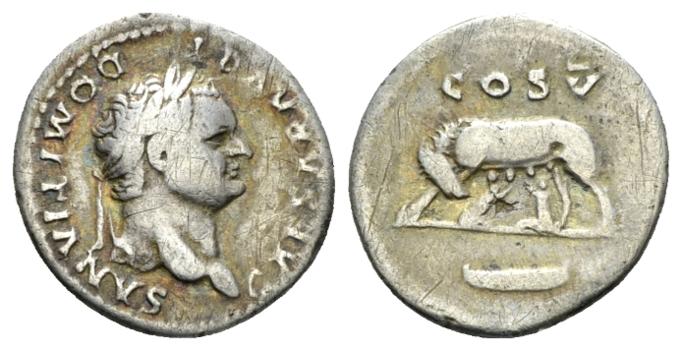 Edited by orfew
03/07/2017 11:58 pm
|
|
Pillar of the Community
 United States
6130 Posts |
Some real stunners here! And @Spence, of course medievals are welcome! My apologies for omitting them from the title and OP! Here's my favorite that I have both sides imaged: Parthia Mithradates II 121-91 BC AR Drachm Diademed bust of Mithradates left Arsaces seated, holding bow, 5 line legend BASILEWS BASILEWN MEGALOU ARSAKOU EPIPHANOS (Translated: King of Kings, The Great Arsaces, God-Manifest) Rhagae mint Sellwood 27.1   Paid almost exactly $100 after the seller accepted my best offer. Parthia was the spiritual successor state of the Persian Achamenid empire, which had been toppled by the forces of Alexander the Great and replaced by the Greek Seleucid empire a few decades later. The empire flourished for about 500 years until it was weakened enough by near-perpetual war with Rome to be overthrown by their client state of Persis, who established the more firmly Persian Sassanid Empire. Mithradates II is usually regarded as the greatest of the Parthian kings, recovering some of the land lost to the nomadic Scythians by his predecessor, and stabilizing Parthia internally. In 120 BC he received an ambassador from the Han Chinese emperor Wu, and opened the trade relations that would become the Silk Road. His coins are large, sturdy, well-struck, and very well crafted. They are frequently found in very high grades, and only the top, most flawless of grades command a significant premium. Thanks to the efforts of Sellwood, there are nearly-comprehensive guides for Parthian coins, and most of the information is available online for free. Edited by Finn235
03/08/2017 11:25 am
|
|
Moderator
United States
34549 Posts |
Here is another coin that cost me just about $100. I have posted it previously http://goccf.com/t/256790), but am also including it here. It is a Siglos of the Persian Empire of the Achaemenids. It dates from about 455 to 420 BC and was made under Artaxerxes I to Darius II. It is attributed at Carrad IV A Plate XIII, 33 with countermark #56. I bought my coin after re-watching the movie 300.  These silver Siglos are readily available for between $60 and $150 on vcoins, depending on the level of wear and details showing. If you want to step up to a gold Daric with a similar design, you will need to pony up $2K or more. 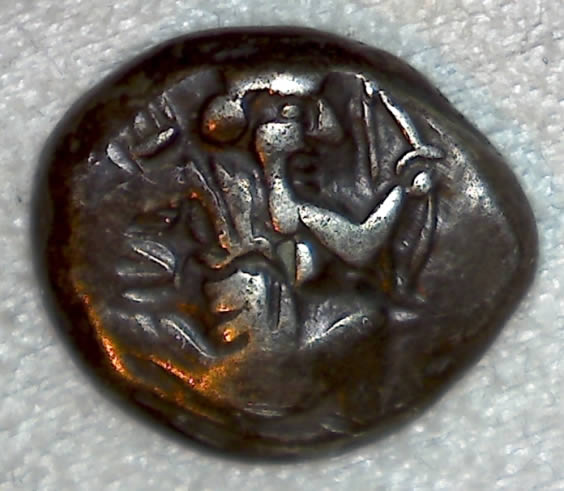 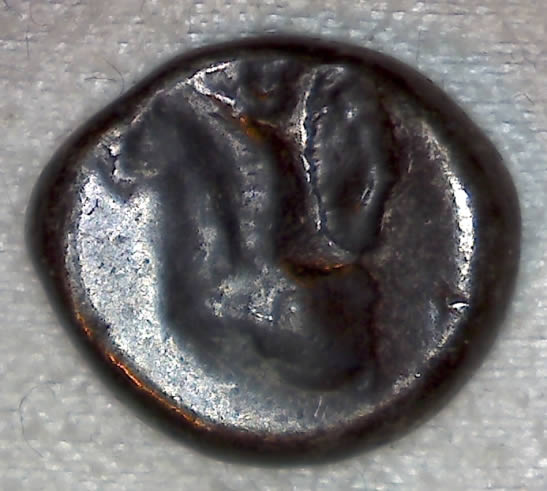 "If you climb a good tree, you get a push."
-----Ghanaian proverb
"The danger we all now face is distinguishing between what is authentic and what is performed."
-----King Adz
|
|
Moderator
United States
23731 Posts |
Beautiful Mithradates II Steve.
|
|
Pillar of the Community
United States
4778 Posts |
Tiberius II Constantine, Byzantine EmpireAE half-follis Obv: D M TIB CONSTANT P P A, crowned, cuirassed bust facing, holding cross on globe and shield Rev: Large XX, dot in center, cross above Mint: Rome Mintmark: ROM Date: 578-582 AD Ref: SB 467  This half-follis or 20-nummi coin (a nummus being the smallest denomination of late Roman/Byzantine coins) of the Byzantine Empire (aka Eastern Roman Empire, the half that survived the 5th century AD Germanic migrations). This denomination and Byzantine coins as a whole are plentiful and many can be had at low prices. An exception are the rarer coins struck in Byzantine Italy, which usually command higher prices than coins of the same denomination from the more common eastern mints like Constantinople, Antioch, etc. This Rome-mint issue of Tiberius II Constantine I acquired for close to $80. Italy had been under Germanic control after the dissolution of the Western Roman Empire in 476 AD (the start of the European Middle Ages, by the way). 60 years later, the Byzantines under Justinian set out to reclaim Italy and other former Roman territories, with the most significant prize being the city of Rome itself, by which time had become very depopulated and rundown due to the economic conditions of the era and the Byzantine invasion. During and after the war, the Byzantines started minting their own coins, the chief mints being at Rome, Ravenna (the provincial capital), and Syracuse. Coinage was not used on a large scale in Western Europe after the fall of the Western Empire, so there was significantly less coin production in general. A lot of people know about the Roman Republic and early Empire, but not as many are aware of the circumstances of Rome's fall in the west, its aftermath, and the Empire's continuation in the east as the Byzantine Empire (the empire was never called "Byzantine" during its lifetime by the way. Up until its conquest by the Ottomans in 1453, the Empire was referred to by its inhabitants as the "Roman Empire". "Byzantine" was later coined to differentiate the Eastern Empire from the classical ancient Roman Empire).
|
|
Moderator
United States
34549 Posts |
Here is a half drachm from Persis, one of the confederate states of Parthia. I have previously posted this coin http://goccf.com/t/272412), which was minted in 75 to 25 BC under the authority of King Artaxerxes II. I believe that the best attribution is Tyler-Smith 68, but am open to other opinions and interpretations of the available literature. I paid almost exactly $100 for it. There are a few similar coins for sale right now on vcoins. 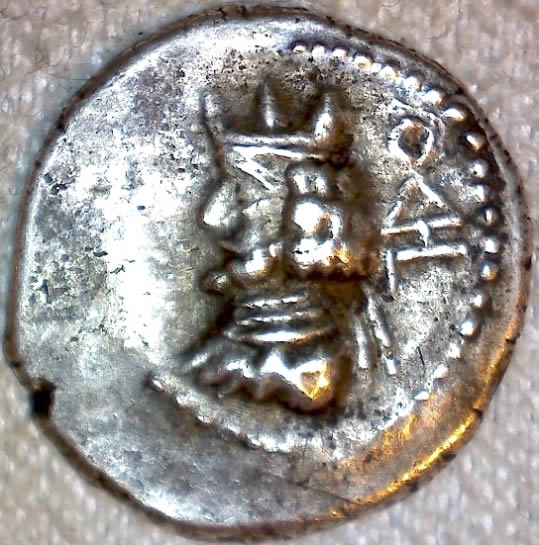 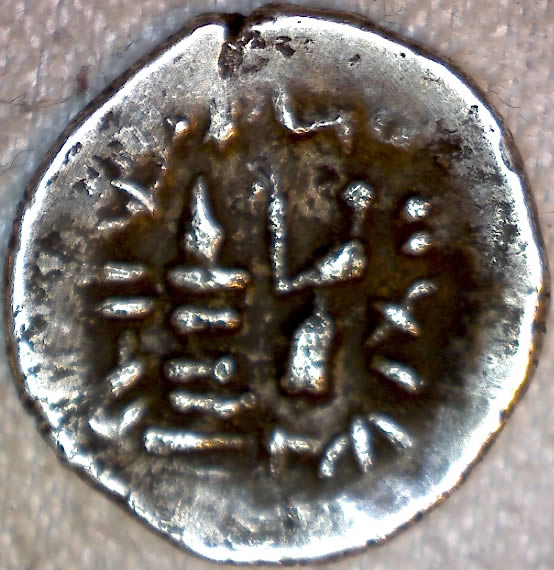 "If you climb a good tree, you get a push."
-----Ghanaian proverb
"The danger we all now face is distinguishing between what is authentic and what is performed."
-----King Adz
|
|
Pillar of the Community
United States
6130 Posts |
Nice ones! I've been wanting a Persis silver for a while, but they are not cheap coins for being so small! This one was right at $100. Although it isn't my most expensive coin, I think it might be my favorite in my collection: Caracalla AR Denarius 213-217 Laureate head right, ANTONINVS PIVS AVG GERM Liberalitas, the goddess of generosity, holding cornucopia and coin counter, LIBERAL - AVG - VIIII RIC 302 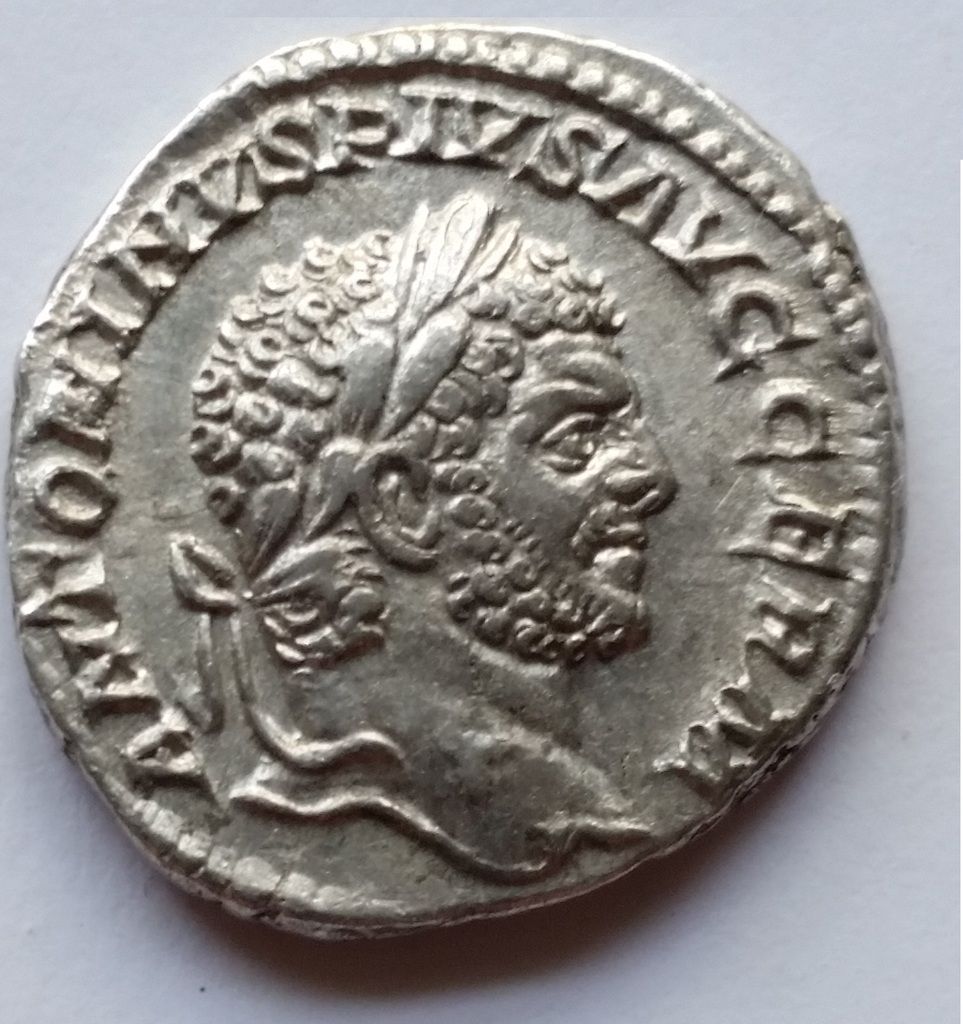  Since straying away from willy-nilly hoarding of medium grade Romans from lots, my focus has been portraiture on Imperial issues. I'm still a relative newbie to Romans, but I'll go ahead and boast that this is the finest Caracalla portrait I have seen on any of his denarii. Not that it's without flaw--there are some flat spots on a few of the hairs and on the ears--but I have never seen such attention to detail. The furrowed brow, the tiny lines at the top of his scrunched nose, the lip drawn back into a sneer, and the sheer intensity of that stare... it's a 1,800 year old work of art; a piece from an entire school of art that was completely lost three hundred years later. It's the embodiment of why I love ancient coins. Edit to add: A small curiosity about this coin is the use of word stops in the reverse, which was rarely used on coins and had largely fallen out of favor by the early 3rd century. A cautionary note to the newcomer, Roman denarii are very heavily faked. Lower end coins are usually silver plated base metal castings, but upper end coins can be made in period-correct silver from hand-made dies. It's extremely important to do your homework on the seller, the coin, and "sleep on it" to see if the coin looks better or worse the next day. Even I only buy from a handful of well established and trusted sellers on ebay, and Vcoins thanks to their universal, unconditional, lifetime guarantee on behalf of their sellers. Edited by Finn235
03/10/2017 09:24 am
|
|
Pillar of the Community
United States
1304 Posts |
Cappadocia - Ariobarzanes I AR Drachm circa 96-63BC Less than $100 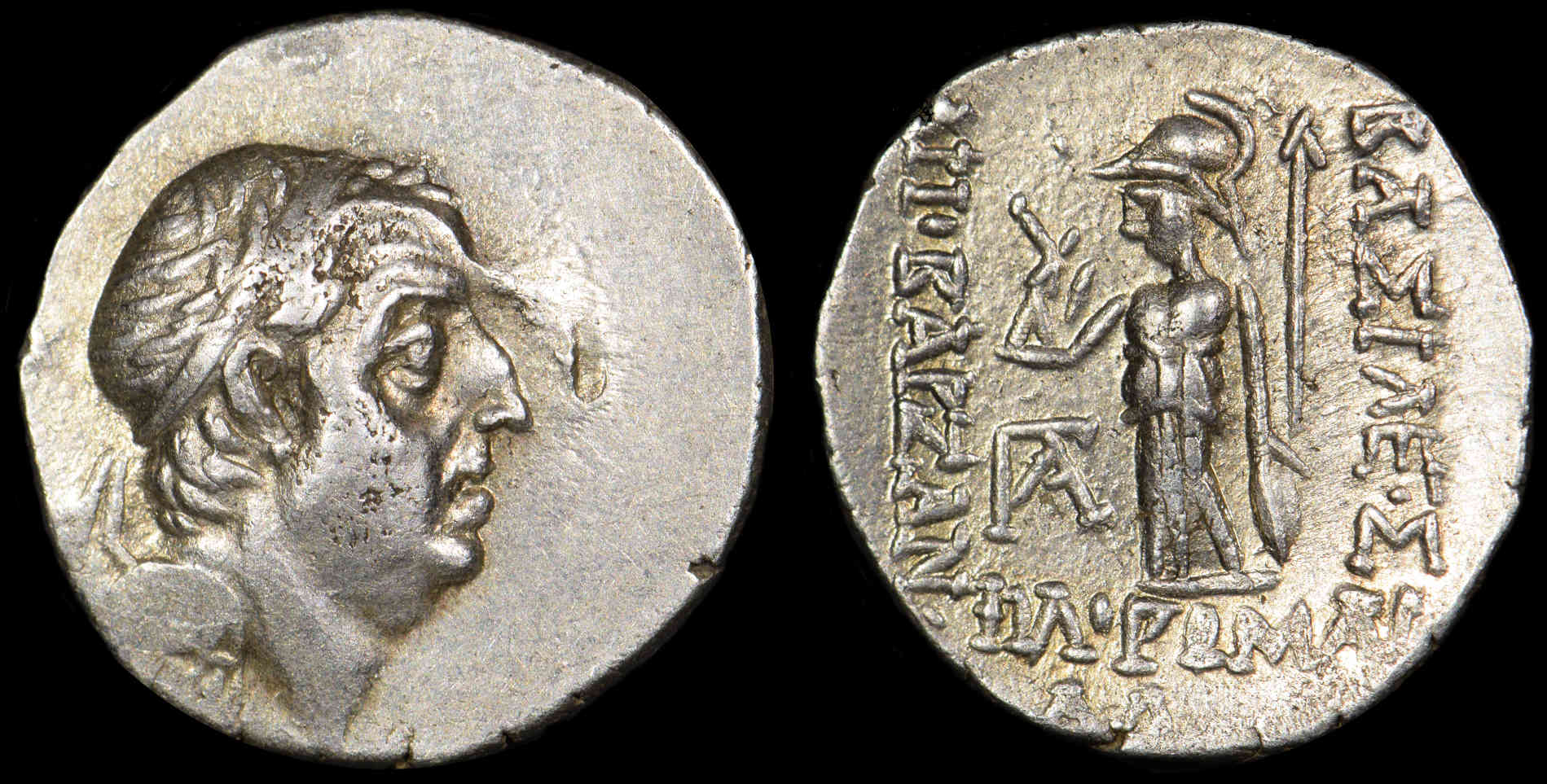 |
|
Moderator
United States
34549 Posts |
Here is a Drachm from the Hephthalite Empire that cost me almost exactly $100. It was minted between 570 and 580 AD and is attributed as Goebl AN 2404. Here is more info from a previous discussion: http://goccf.com/t/276162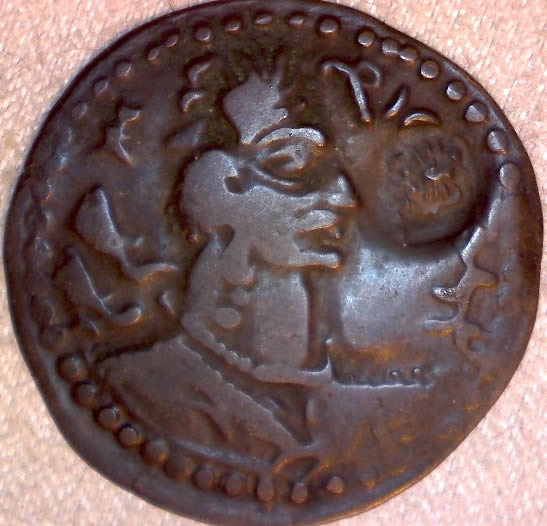 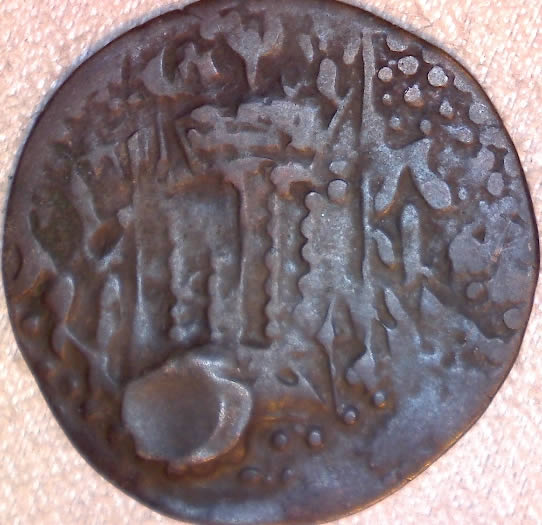 "If you climb a good tree, you get a push."
-----Ghanaian proverb
"The danger we all now face is distinguishing between what is authentic and what is performed."
-----King Adz
|
| |
Replies: 17 / Views: 3,579 |







 Posted 03/07/2017 9:13 pm





