| Author |
 Replies: 14 / Views: 1,614 Replies: 14 / Views: 1,614 |
|
|
Valued Member
United States
52 Posts |
I was looking at the costs of certification and I am wondering, when does it make sense to certify a coin? I noticed that certified coins are more expensive; however, it looks like ungraded coins also sell on ebay.
|
|
|
|
Moderator
 United States
56855 Posts |
The retail value needs to be at least $100 to justify slabbing a coin. John1  |
|
Pillar of the Community
 United States
4616 Posts |
Cost of coin + certification costs <= sale price certified
You need an honest grade to estimate the cost and price. Don't be overly optimistic.
-----Burton 50+ year / Life / Emeritus ANA member (joined 12/1/1973) Life member: Numismatics International, CONECA Member: TNA, FtWCC, NETCC, EveryCountry (online) coin club Owned by three cats and a wife of 40+ years (joined 1983) Author: 3rd Edition of the Sample Slabs book, https://www.sampleslabs.info/ |
|
Pillar of the Community
Canada
2785 Posts |
Short answer... never.
I used to think $250 would be a minimum, but then figured if I am spending $250 on a little metal disc shouldn't I educate myself to the point where I know what it is I'm buying - without paying a stranger to do think for me?
I also prefer my coins accessible to handle, rather than be encased in a plastic coffin.
|
|
Pillar of the Community
United States
1119 Posts |
|
|
Pillar of the Community
United States
869 Posts |
|
|
Valued Member
 United States
52 Posts |
Quote:
Never I like that answer. Besides. I don't think I'm going to be purchasing coins over $100 |
|
Pillar of the Community
United States
5825 Posts |
Quote:
The retail value needs to be at least $100 to justify slabbing a coin. I disagree. My level is at least $200. People tend to forget S&H and considering that they are generally shipped Registered both ways that's a big added cost. And I see 4 reasons for getting coins slabbed; this is my high to low priority order. 1. Authentication - is the coin what it appears to be; not a fake or counterfeit. 2. Originality - has the coin been cleaned or altered 3. Grade 4. Conservation - avoiding environmental impacts but there are other as good or better ways to do this. Actually there is sometimes a 5th reason. 5. Sentimentality - in memory of a person that was close to you. Edited by kanga
03/23/2017 08:56 am
|
|
Pillar of the Community
United States
7288 Posts |
I would say depends on the coins in question and your future goals. If you have a raw coin that is often counterfeited or have a specific VAM or variation it may be time to certify. Case in point 1875 s/cc Trade dollar purchased raw as an 1875 s. 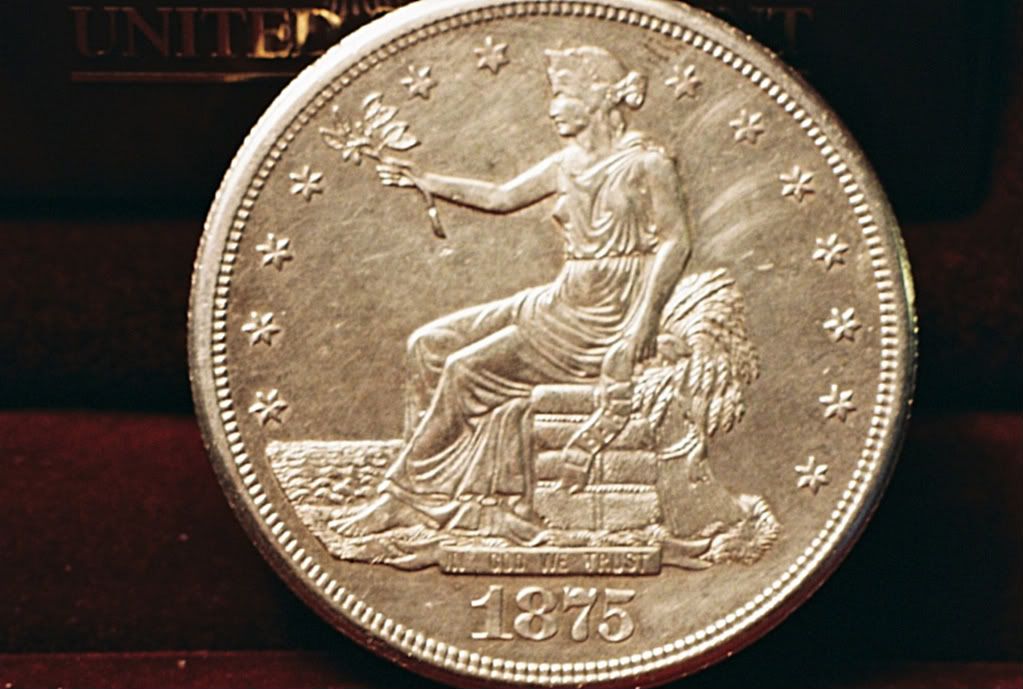 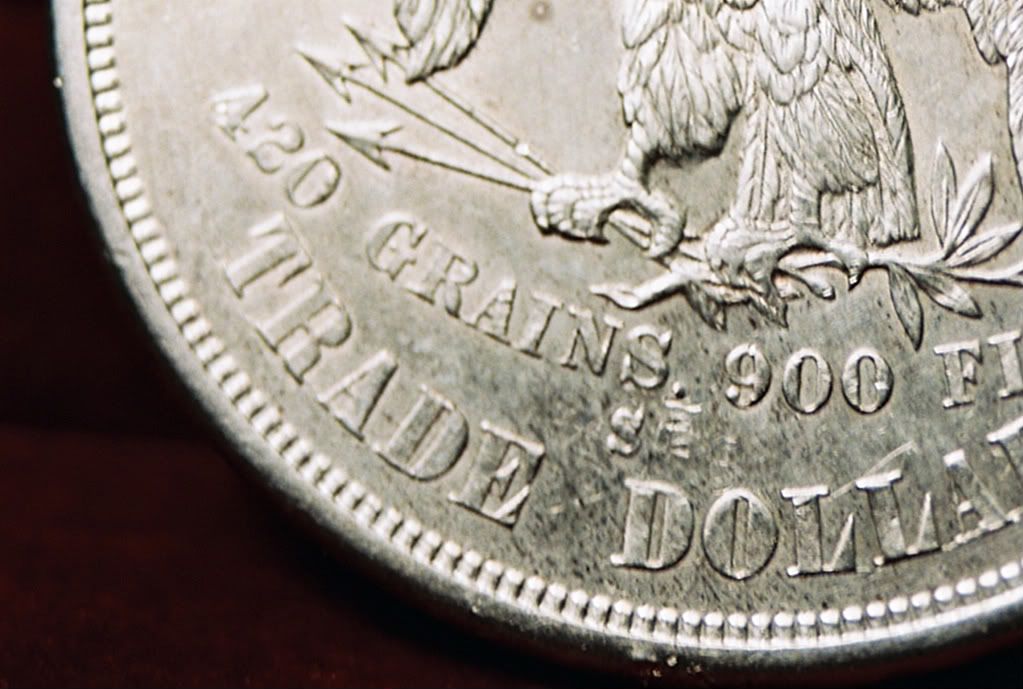 Verified  |
|
Bedrock of the Community
United States
17884 Posts |
Quote:Case in point 1875 s/cc Trade dollar purchased raw as an 1875 s. It was an S/CC before it was slabbed as well, so that isn't a reason except it does make it easier to sell to someone that doesn't really know what he is buying, but who CAN read slabs. |
|
Bedrock of the Community
United States
20753 Posts |
I don't collect plastic so my answer is never.
|
|
Moderator
United States
195045 Posts |
Quote:
Short answer... never. I agree. I doubt I would ever send a coin off to be certified. However, buying a certified coin for the right price (the value of the coin only) is totally okay.  |
|
Valued Member
United States
52 Posts |
So in the second photo of the Quote:
1875 s/cc trade dollar What am I looking at, how do you know it was CC? I'm a noob sorry. See I would need the certification to know. LOL. |
|
Pillar of the Community
United States
7288 Posts |
As for the s/cc there is a remnant "c" to the right of the "s" that is the removed CC from the San Francisco mint die back in 1875. The second photograph shows it but there is also a bag mark that partially obscures it. That is why I had it certified.
|
|
Bedrock of the Community
United States
94367 Posts |
What different worlds we all live in!  |
| |
Replies: 14 / Views: 1,614 |
|










 Posted 03/22/2017 7:34 pm


