| Author |
 Replies: 15 / Views: 1,461 Replies: 15 / Views: 1,461 |
|
|
Valued Member
United States
196 Posts |
Okay so going through my 25.00 box this morning, I found this. Last night I was reading about extremely rare pennies and this 1990 came up. Is this truly correct. Is this a rare coin, and if so what should I do next? Please and thank you in advance for your opinion.  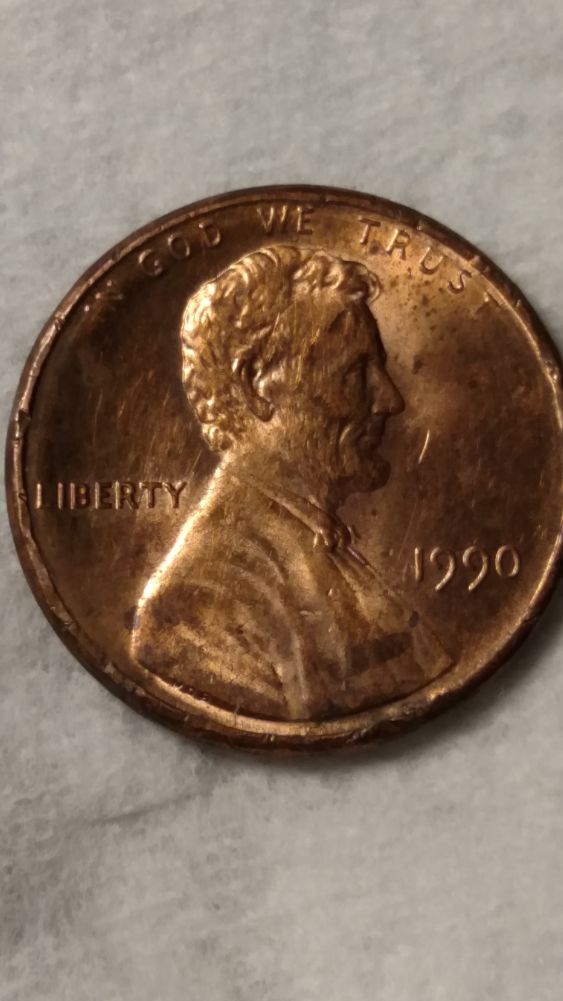 |
|
|
|
Pillar of the Community
 United States
2843 Posts |
Looks like PMD or damage to me. Edited by BigSilver
03/23/2017 09:57 am
|
|
Valued Member
 United States
196 Posts |
What's PSD. I found this in pocket change |
|
Valued Member
United States
196 Posts |
Not pocket change but. Circulated coins in a 25.00 box.
|
|
Valued Member
United States
196 Posts |
|
|
Moderator
 United States
194970 Posts |
There is a proof cent in 1990 that was missing the mint mark. This is not one of those. Is that what you were thinking here?
|
|
Valued Member
United States
196 Posts |
Yes, so I'm confused. Where's the mint mark on here?
|
|
Valued Member
United States
196 Posts |
OK and what is Proof cent? I was looking at the pic online and it looks exactly like that
|
|
Pillar of the Community
United States
7577 Posts |
Definition
A proof coin is a coin struck using a special, high-quality minting process, and made especially for collectors. Modern proof coins often have mirror-like fields and frosted devices, although proof coins struck prior to the mid twentieth century are often distinguished only by their high quality surfaces. In all cases, the term proof always refers to a type of coin, or the way it was struck, and not to a coin's grade
Production of Modern Proof Coins
Thought United States Mint now employs a special process that allows the mint technician to selectively frost specific areas of the coin. The coin die that will be used to produce proof coins his first polished to a brilliant mirrored surface. The die is then loaded into a machine that is computer controlled and selectively uses a laser to frost specific areas of the die. They also have the ability to control the density and depth of the frosting process to yield different finishes on the same coin.
Edited by Chase007
03/23/2017 12:05 pm
|
|
Rest in Peace
United States
7075 Posts |
There is no mint mark on this coin because it was minted in Philadelphia and those cents do not get a mint mark. The definition of a proof coin is available in the glossary -- select "glossary" from the column to the left. To see what mint marks appears on coins for every year, see "US Coin Fact" -- also in the column on the left. Hope that helps. If you have any more questions, ask away! |
|
Valued Member
United States
196 Posts |
Thank you for everyone's I do. I do feel like a dummy though. Lol oh well.
|
|
Valued Member
United States
196 Posts |
I meant to say info. I am typing off my phone it has auto correct
|
|
Pillar of the Community
United States
3463 Posts |
PMD Post Mint Damage
PSD Post Strike Damage
|
|
Rest in Peace
10197 Posts |
One hint, some of those " find riches in your pocket" books are pretty vague, most listings there cover quite rare coins. The "one-in-30 billion coins minted that year for that error. I would suggest investing in an Official Red Book which lists pricing and other info on US coins. Also, stick with the more common KNOWN die varieties and error coins until you get the knack for those. I still add one more error coin at least per month to the list I check when CRHing. Stick around here and learn how to spot PMD, PSD and other strange happenings to coins, once you do, those error coins seem to pop right out at you! Edited by Crazyb0
03/23/2017 4:00 pm
|
|
Bedrock of the Community
Canada
10743 Posts |
hi Lelah, You can 'edit' your posts in the original post instead of making 5 posts on the same subject, just trying to help..  |
|
Valued Member
United States
196 Posts |
|
| |
Replies: 15 / Views: 1,461 |
|







 Posted 03/23/2017 09:57 am





