Coin Community Family of Web Sites Join Thousands of Coin, Bullion, & Money Collectors
Join Thousands of Coin, Bullion, & Money Collectors 300,000 items to help build your collection! Specializing in Modern Numismatics Royal Canadian Mint products, Canadian, Polish, American, and world coins and banknotes. Vancouvers #1 Coin and Paper Money Dealer Shop for APMEX Bullion on eBay!Coin, Banknote and Medal Collectors's Online Mall


Username:
Password:
Save Password
Forgot your Password?


This page may contain links that result in small commissions to keep this free site up and running.

Welcome Guest! Registering and/or logging in will remove the anchor (bottom) ads. It's Free!

Strange Mexico Republic 8R Z Om 1842 Mintmark Error Zacatecas

To participate in the forum you must log in or register.
Author Previous TopicReplies: 8 / Views: 2,539Next Topic  
New Member

United States
14 Posts
 Posted 03/29/2017  3:06 pm Show Profile   Bookmark this topic Add Aomori to your friends list Get a Link to this Message Number of Subscribers
Hi there,
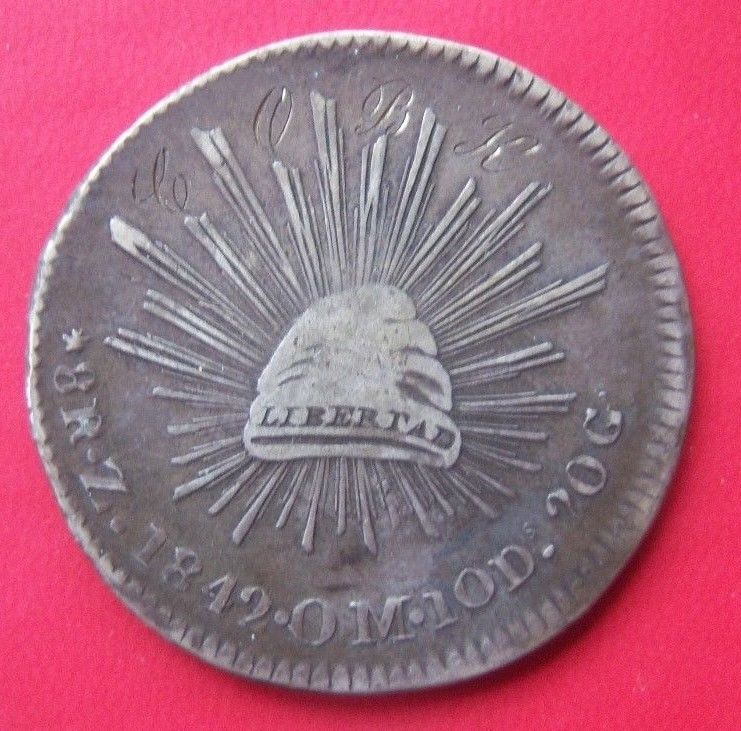
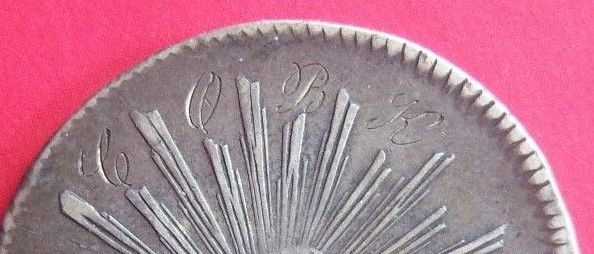
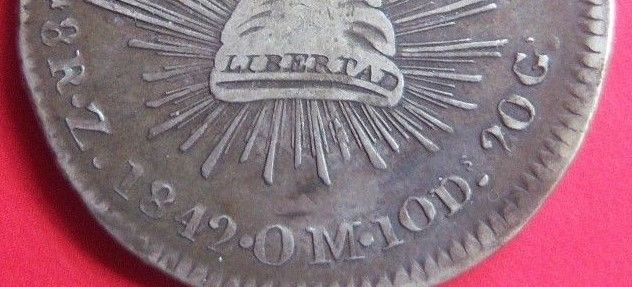
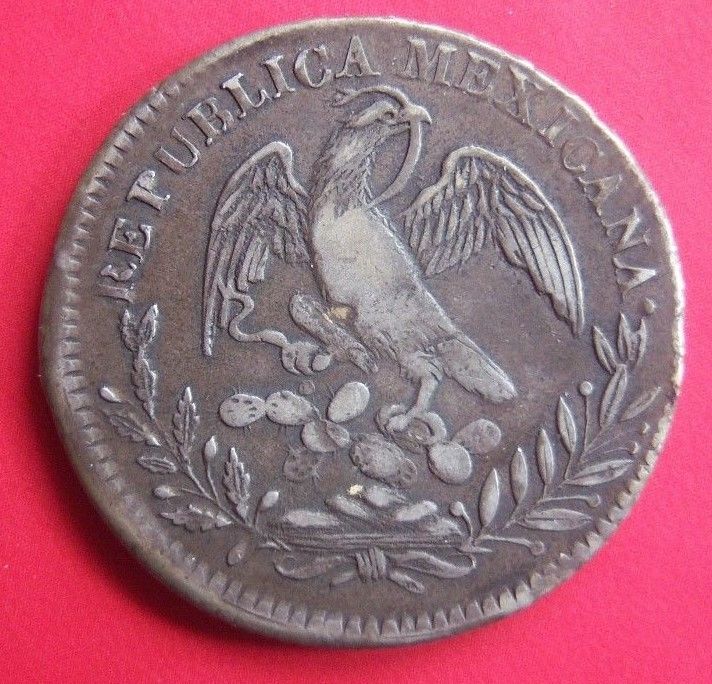
Here is a strange Mexico Republic 8 reales striken in Zacatecas mint in 1842. What's interesting about it is that the mintmark is losing the"s" at the up right corner of "Z". I remember identical error only occurs in those batches of coins in 1877. Besides that, the design of this coin is much different from a regular 1842 Zs OM coin, in addition, there is a strange counterstamp on it.
Does anyone know something about this strange piece of eight? I guess it may be a contemporary counterfeit.

Strange-Mexico-Republic-8R-Z-Om-1842-Mintmark-Error-Zacatecas

Strange-Mexico-Republic-8R-Z-Om-1842-Mintmark-Error-Zacatecas

Strange-Mexico-Republic-8R-Z-Om-1842-Mintmark-Error-Zacatecas

Strange-Mexico-Republic-8R-Z-Om-1842-Mintmark-Error-Zacatecas
Pillar of the Community
Lucky Cuss's Avatar
United States
4883 Posts
 Posted 03/29/2017  8:23 pm  Show Profile   Bookmark this reply Add Lucky Cuss to your friends list Get a Link to this Reply
First off, welcome.


Quote:
I guess it may be a contemporary counterfeit.


It vertainly has the earmarks of one, which were rife during this period. Besides the absent superscript "s" in the mint mark, there're also missing dots between the "O" and the "M" of the assayer's initials as well as after the "G". And as you note, it just pverall looks "off".

You might take an accurate weight, and give us a peek at the edge.

The added engraving could've been done for any of a myiad of specific reasons, but I think it would generally fall into the category of personalization.

Colligo ergo sum
Edited by Lucky Cuss
03/29/2017 8:56 pm
Pillar of the Community
swamperbob's Avatar
United States
5362 Posts
 Posted 03/29/2017  10:09 pm  Show Profile   Bookmark this reply Add swamperbob to your friends list Get a Link to this Reply
Aomori I believe I recall your coin. I remember one like it being auctioned but I lost the auction because I was out of town. It is not "counterstamped" - the 4 initials were engraved into the coin - possibly by a jeweler. The reason was most likely to create a "love token" with the initials of a pair of people rather than a token for one person with 4 initials. However, since each engraved coin is unique - the reasons for the engraving are rarely known with absolute certainty.

It is a contemporary counterfeit as you surmised - the eagle die (obverse die) is listed in John L. Riddell's 1845 book "Monogram of the Silver Dollar, Good and Bad" as the obverse of the coin he numbered 237. That particular coin is an 1834 Zs OM so you may have missed the reference.

The 237 Eagle die was used in just two different matings (1834 ZS OM and 1842 Zs OM). In addition there is a very late state die variety that created by a very significant re-engraving of the die. The only scarce major variety is the revised die. The head of the snake was revised on the re-cut die to actually look like a snake and not simply a couple lines. The tip of the bird's right wing was also substantially re-cut. The new and the old feathers at the tip are visible on the revised die. Other changes in the details are minor and were needed to strengthen the image.

You noted the loss of the superscripts. That happened over time so there are a series of minor sub-varieties as the superscript s's gradually disappear from the mint mark and the assayer statement. These superscripts were actually re-cut at one point so that they do return but in slightly different shapes and positions. I have seen pictures of a die that appears to have a different position for the Z superscript, however that may be due to post strike damage.

I do not classify any strike as a Z variety but rather I believe they are all Zs with a worn or filled s.

There is also a cast version of the same coin that was made with a small clip present. The consistency of the location of the clip and other die(mold) features make me believe the clip was an intentional feature - perhaps to give a reason for some examples being underweight.

I wrote an Article that was in the old Mexican Coin Magic monthly on-line publication that covered all of the variations (up to that date) of this particular counterfeit perhaps 10 years ago.

Struck versions were made in a series of different metals. German silver is the most commonly seen alloy. Debased silver is much less common and I have yet to locate an example with silver in as high a content as Riddell stipulates (630 fine silver). Also I find more examples of this coin that are underweight as opposed to what Riddell believed. His example of the 1834 was the correct weight. I have also noted a very few copies that are significantly heavy. I have seen a single copper strike and there are a few examples struck in Sheffield plate. I have not yet seen an electroplated version with the exception of a re-plated Sheffield. This replating was done to continue to pass the coin off as genuine after the Sheffield plate had worn through.

The eagle design used on this coin is the one I use for my avatar on this coin forum and it was one of my very first counterfeits that got me going on Contemporary Circulating Counterfeit Cap and Ray 8Rs back in 1960. I bought that example also an 1842 from a dealer who insisted it was genuine. He called it the "small eagle" 1842 and insisted that both the small and large eagle coins were genuine. Since I was only 13 at the time, my opinion that the coin was not genuine did not sway the old dealer. I bought it anyway and I was very relieved to find the picture in Riddell's book proving I was correct.

I was interested in the engraved coin because I collect every variation of the coin I can find. At present I own over 100 examples. Only one of the 100 plus examples has a full snake crossing the eagle's breast. I had (before that coin came into my possession) believed that the original die lacked the full snake. So I would call the "full snake" version a rather rare coin but not actually a distinct variety.

If you include all of the numerous varieties and sub-varieties this counterfeit is one of the 4 most commonly seen counterfeits in the Cap and Ray 8R series which is also documented in Riddell's book.

If you ever want to sell it please let me know. I will always have a place for another "chicken eagle".

New Member
United States
14 Posts
 Posted 04/03/2017  4:01 pm  Show Profile   Bookmark this reply Add Aomori to your friends list Get a Link to this Reply
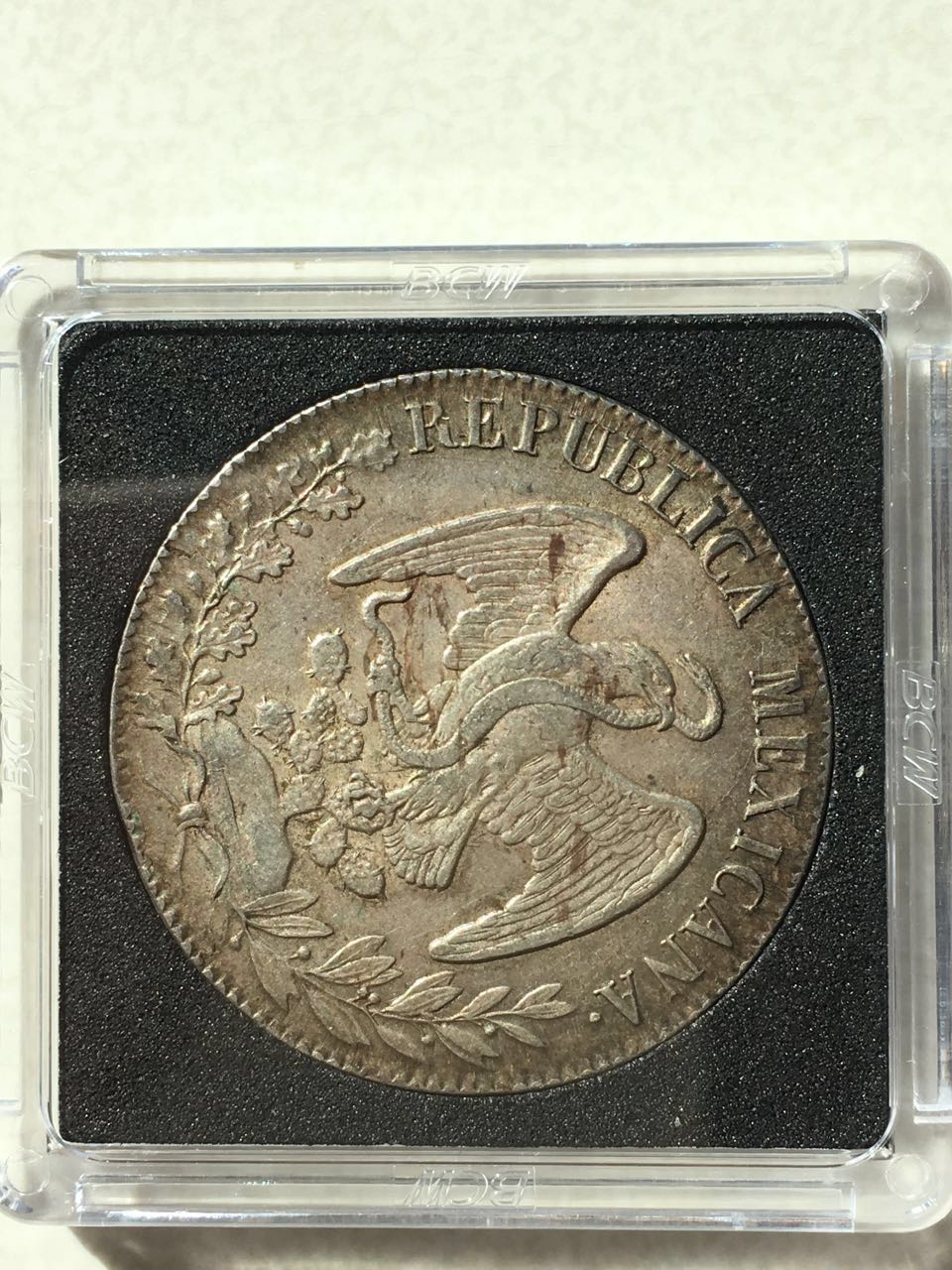
Thank you very much for providing me abundant information about the coin. Looks like you are a professional in the realm of Contemporary Conterfeit 8R. Since this coin is a contemporary counterfeit, how rare is it compared to similar early-date Zs mint 8R and what about its market price? I bought for $70.

I am fascinated in this coin and want to keep it myself. But if I want to sell it in the future I will let you know.

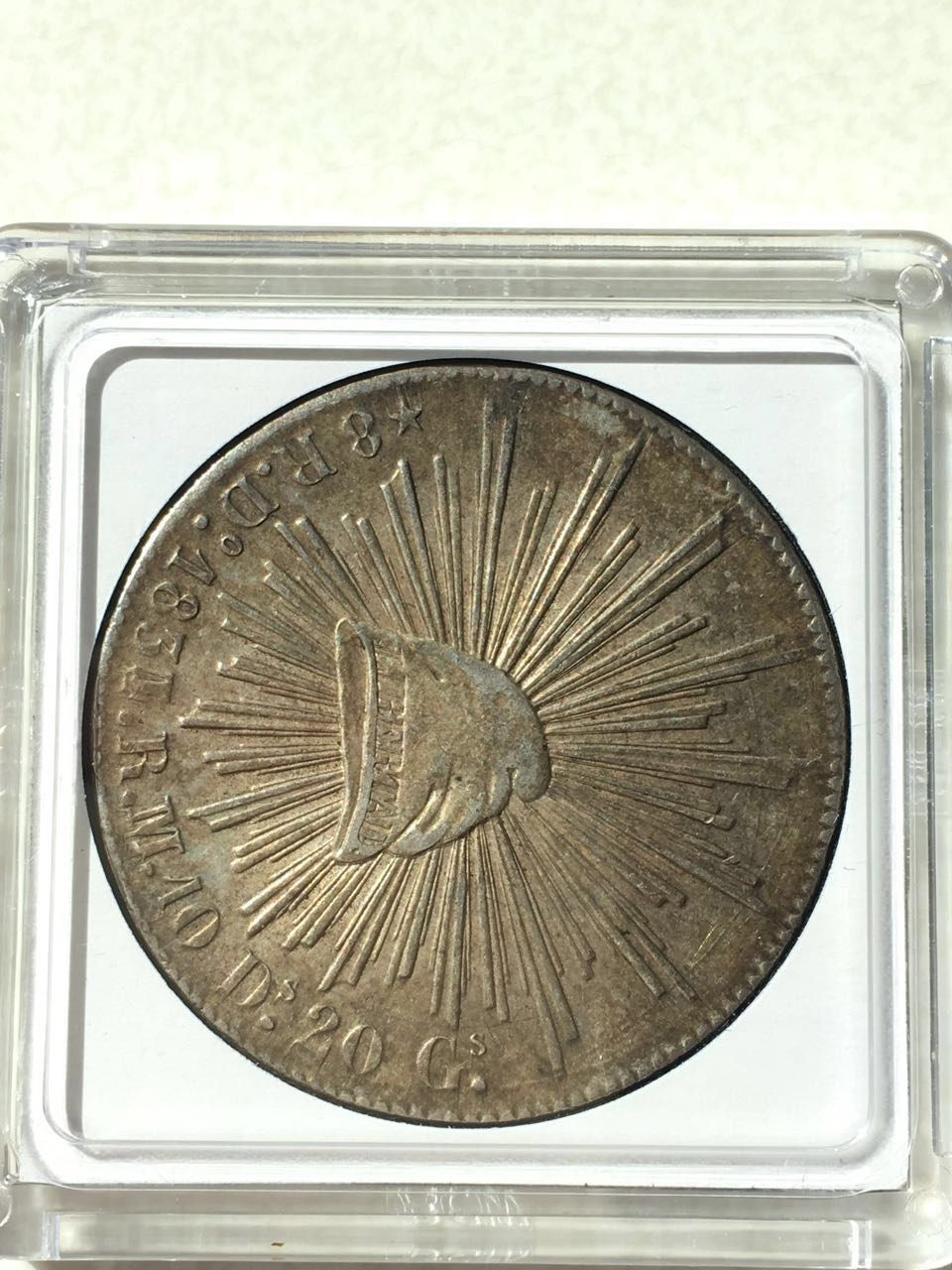
Btw, I also have a Durango 8R 1834/3/2 RM/L. It looks so good (it even has mint luster) that I don't believe the it was original. That's because my friend told me France made a batch of comtemporary conterfeit to flood US market, and these were striken better than Durango did. Can you help me judge if this coin is geniue? In addition, how would you grade this coin? I am consider to send it to NGC because high-grade French eagles are extremely rare.


Thank you very much and looking forward to discuss 8R with you in the future!

Best,
Aomori


Strange-Mexico-Republic-8R-Z-Om-1842-Mintmark-Error-Zacatecas

Strange-Mexico-Republic-8R-Z-Om-1842-Mintmark-Error-Zacatecas
Pillar of the Community
swamperbob's Avatar
United States
5362 Posts
 Posted 04/03/2017  5:26 pm  Show Profile   Bookmark this reply Add swamperbob to your friends list Get a Link to this Reply
Unless there is something not visible in the photographs - your coin is in my opinion genuine. If the weight and density are correct and the edge has proper overlaps, I see nothing that condemns the coin.

When the master hubs were delivered to Mexico there was a hub where the eagle lacked a crest on his head. The older renditions of the seal of the Aztecs always shows a crest. So after this missing detail was noticed each die sinker added a crest to working dies. That is why so many different shape and length crests appear on these coins. J.L. Riddell believed that 8Rs with no crest were counterfeit (see # 365) but he was in my opinion incorrect. At least some of the genuine coins do not have a crest and some of the counterfeits do have a crest.

Determining a coin to be counterfeit involves knowing how the coins were made. In this case the hubs used at the Durango mint all contained the full date 1831 and the assayer initials RL. The die hubs were French but they were made complete because the maker expected the mint to order new hubs each year. So any working die created from the hub(s) would have the wrong date and the incorrect second assayer initial. This correction appears on all genuine Durango strikes and is usually clearly visible as it is in this case. The counterfeits made in France do not have these corrections. The die sinkers who made the counterfeits apparently had better hubs which were NOT complete. This is one very positive fact that supports my belief that you have a genuine coin.

One of the theories advanced for the large number of very well made counterfeits dated 1832 and 1834 was that the die makers either decided to make the counterfeits themselves or they sold the die making tools and masters to a group or groups of counterfeiters to recover the costs of making the dies. The fact that the operators of the mint chose to cut corners by re-using the trial hubs for years (at the expense of the French company) would be a case of instant karma in that case.

Regarding grade - I do not grade using the Sheldon scale. It is a foolish system for coins struck on a screw press. It is an inaccurate method for these coins. Rarity, strike and state of preservation relative to the technology employed are infinitely more important than technical wear.

You can tell that the fools now investing in high number slabbed C&R 8Rs are in the game when an MS example of a late date second republic issue (generally the only type that qualify as MS due to strike issues) brings over a thousand dollars more than an exceptional (but not MS) Hookneck at auction. I just laugh when I see that. They are IMO wasting thousands of dollars chasing a dream that really does not exist in this series.

So I would not get the coin graded. It is NOT any where near what I would call a premium coin because the planchet was not very well upset when the blank was edged. The result is very low relief lettering at the perimeter and extremely weak dentils. Some of the coins of this date are spectacular when struck well on properly made planchets. Those are premium coins. In the Hookneck series a fully struck up coin that shows breast feathers and a full snake is far scarcer in high XF than a poorly struck MS example.

Most of the truly high grade French Eagle coins are in collections of people who are expert enough to realize that grading their coins is a waste of money. The "populations" are skewed because of this and rarity level is way off.

When the market breaks and it will, do not expect an experienced collector to be interested in a "technical" grade coin.

So value I would place relatively low because if you wait you can get a better piece for the same money.
Edited by swamperbob
04/03/2017 5:36 pm
New Member
United States
14 Posts
 Posted 04/03/2017  7:33 pm  Show Profile   Bookmark this reply Add Aomori to your friends list Get a Link to this Reply
I agree. Actually I have never use technical grading before. I think this piece is beautiful and want to find a proper way to preserve it. So I thought of NGC. I am not just looking for a grade for my coin.

Actually I'm a east Asia coin collector and these are my first several pieces of Eagle reales. The same thing also happen on Japanese Silver Dollars. People would rather buy MS later date coins which are priced hundreds dollars that are not rare at all instead of hunting rare species, which usually have lower grades. Had you ever seen a kind of eagle 8 reales dated from 1846-1859 that are C/S by Tokugawa Shogunate, named "Ansei Trade dollar". It is so rare that it's my ultimate target.

But actually, most people are making investment in silver coins and they think graded coin is more "market valuable".

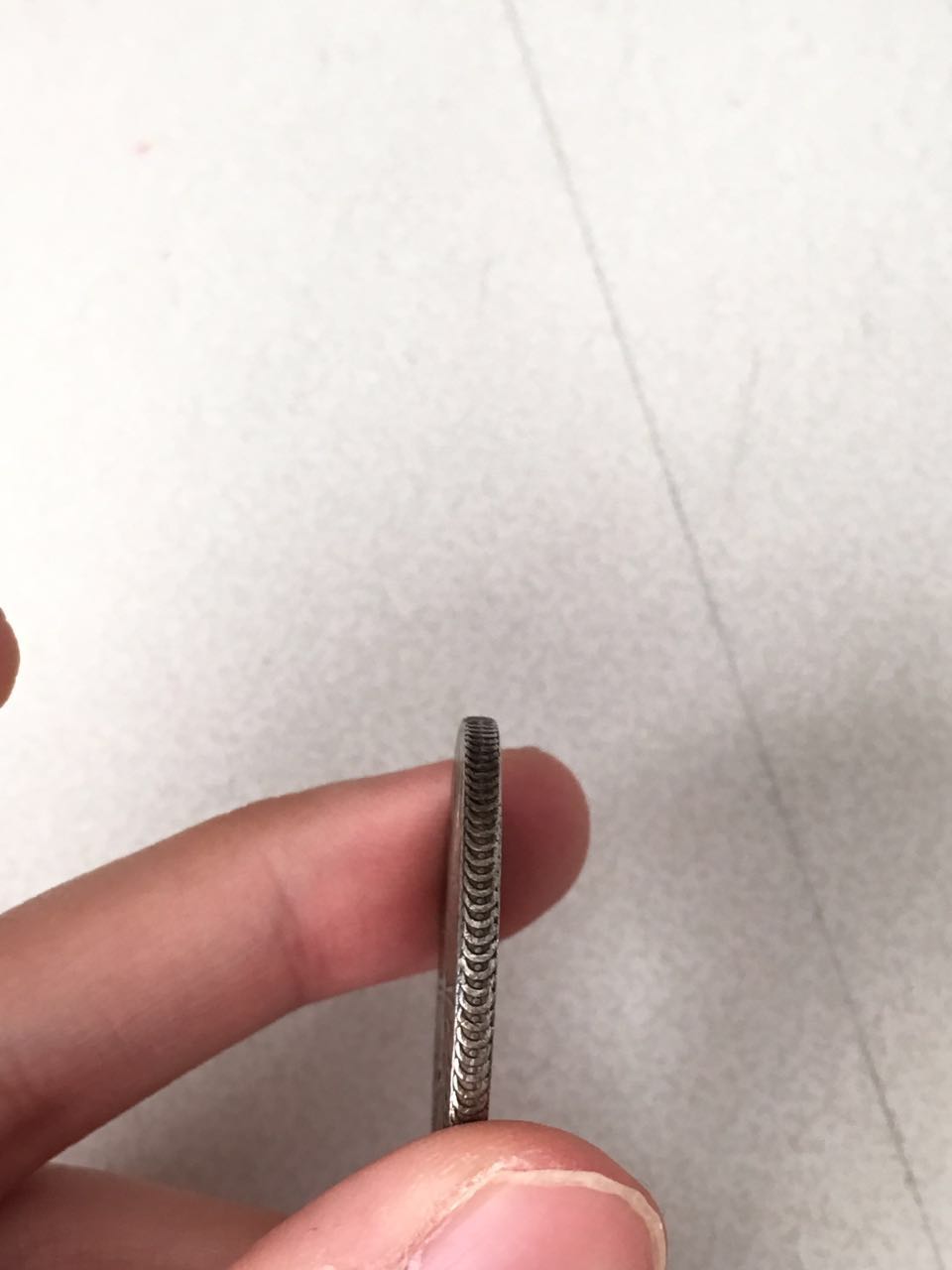
Finally, here's the edge picture of the piece. What is interesting is that this Durango piece is much lighter than the Zacatecas conterfeit.... I do not have a scale but I can feel the weight difference by hand. How interesting.


Strange-Mexico-Republic-8R-Z-Om-1842-Mintmark-Error-Zacatecas
Pillar of the Community
Lucky Cuss's Avatar
United States
4883 Posts
 Posted 04/03/2017  7:55 pm  Show Profile   Bookmark this reply Add Lucky Cuss to your friends list Get a Link to this Reply

Quote:
I also have a Durango 8R 1834/3/2 RM/L.


Aomori, I posted pics of one of these here a bit over a year ago, albeit mine's not nearly so nice as yours.

See: http://goccf.com/t/256668

A year before that I posted an 1833/2 M/L that initially gave me some cause for concern. Note that with this specimen the eagle has a crest.

See: http://goccf.com/t/215306

Here's another more recent acquisition, again with a crest.

See: http://goccf.com/t/278877


Quote:
You can tell that the fools now investing in high number slabbed C&R 8Rs are in the game when an MS example of a late date second republic issue (generally the only type that qualify as MS due to strike issues) brings over a thousand dollars more than an exceptional (but not MS) Hookneck at auction. I just laugh when I see that. They are IMO wasting thousands of dollars chasing a dream that really does not exist in this series.


I also currently see an unhealthy and probably unsustainable overpricing of standardized die issues when certified as MS.

Colligo ergo sum
Edited by Lucky Cuss
04/03/2017 10:48 pm
New Member
United States
14 Posts
 Posted 04/03/2017  8:14 pm  Show Profile   Bookmark this reply Add Aomori to your friends list Get a Link to this Reply
Thanks! Mine still have remained mint luster. I feel its a little bit light-weighted. What do those usually weigh?
Pillar of the Community
swamperbob's Avatar
United States
5362 Posts
 Posted 04/04/2017  12:27 am  Show Profile   Bookmark this reply Add swamperbob to your friends list Get a Link to this Reply
The eight reales had a legal standard weight of 27.07 grams. The weight of individual 8Rs were subject to a tolerance of +/- 0.2 grams. I have read that any lightweight coins were used to pay the mint employees and the heavy coins went to bankers who were friends of the mint officials. So lightweight coins were not seen much after the first few years of operation of the Durango mint. If the workers got sloppy they made less money.

The legal limit for circulation (even at a discount) was 95% of standard weight, so any 8R that reached 25.72 grams was supposed to be returned to the mint for melting. So the range of possible weight loss is very narrow. A coin of minimum weight is also worn nearly smooth so never accept a high grade coin as genuine if the weight is 26 grams or less.

Counterfeits on the other hand were very variable in weight. Many were made overweight to make them "feel good".

Finally, there is always a possibility that a genuine coin can be subject to silver removal, so I suggest that you need to get an accurate weight. Feel is not enough. Silver was removed in many ways but two methods do not show from the outside. First a coin can be drilled from the edge to remove 25% or more weight. The hole in the edge is plugged and then bumped to cover the damage. The other way was to slice the coin along one face and then remove the core with a lathe. The core was replaced with a lead tin mixture and the face was soldered back in place.

PS: You must always be aware that counterfeits and altered coins (drilled or cored) are actually collectable. The only ones that are nearly worthless are the recently made numismatic forgeries - coins made to defraud collectors.
  Previous TopicReplies: 8 / Views: 2,539Next Topic  

To participate in the forum you must log in or register.


Disclaimer: While a tremendous amount of effort goes into ensuring the accuracy of the information contained in this site, Coin Community assumes no liability for errors. Copyright 2005 - 2026 Coin Community Family- all rights reserved worldwide. Use of any images or content on this website without prior written permission of Coin Community or the original lender is strictly prohibited.
Contact Us  |  Advertise Here  |  Privacy Policy / Terms of Use

Coin Community Forum © 2005 - 2026 Coin Community Forums
It took 0.36 seconds to rattle this change. Forums