Posted 04/07/2017 10:40 pm


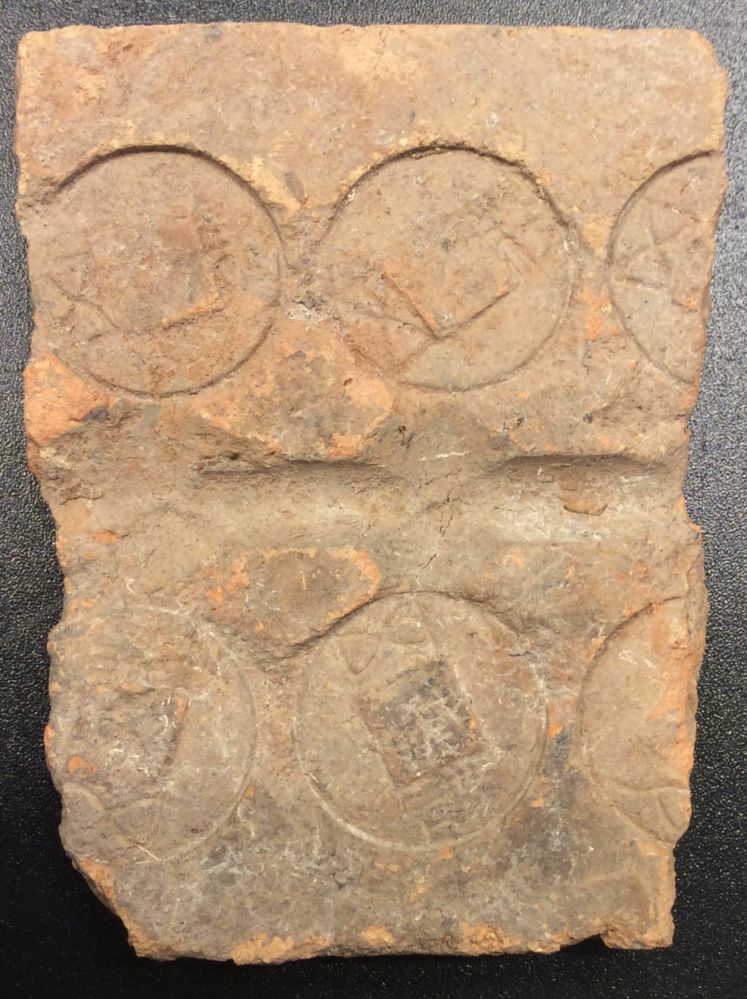
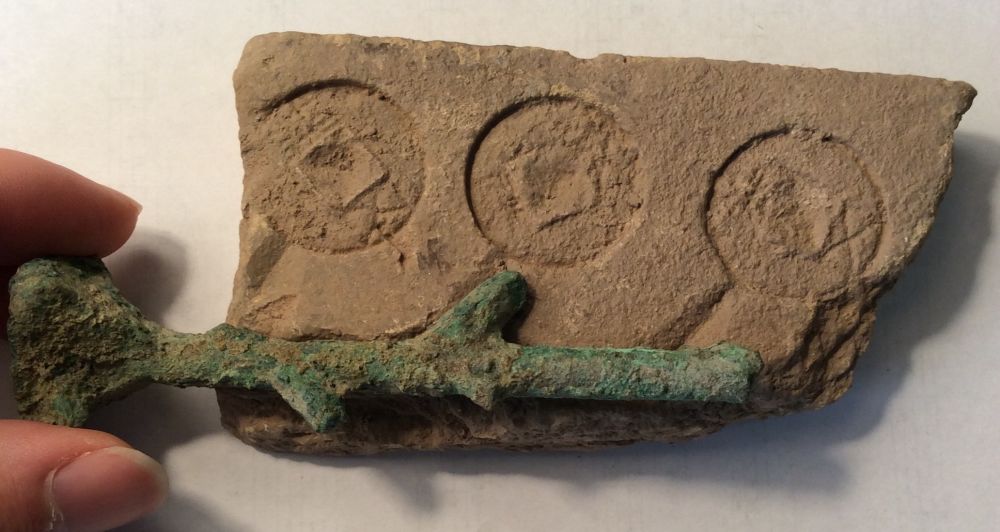
Hello! Those are mine that I have for sale. I guarantee their authenticity.
What you are thinking about are the Qi knives. There were cast in the manner you speak of. Also, those molds were not all in one piece; they were several obverse and reverse molds that were stacked on top of each other. They were effectively glued together when the bronze was poured in and cooled, so they had to be broken apart to get to the coins. (Read more here: http://chinesecoins.lyq.dk/casting/...n_Zhou.html) And, to be fair, how would you propose precisely engraving a mold without having one side completely visible?
However, this process was incredibly inefficient, especially for issues where hundreds of millions were cast. The new adopted process was to make a "mother mold," analagous to a master die today, which would be a carefully-carved positive image used for stamping into clay tamblets to turn them into molds. These molds would have two halves: one side for the obverse and one side for the reverse. They would fit together via an interlocking design and then tied together to ensure no slippage or leakage. I will post a picture of the molds in my collection later; I just put them up and do not feel like getting them out again.
I hope this answers your question.
What you are thinking about are the Qi knives. There were cast in the manner you speak of. Also, those molds were not all in one piece; they were several obverse and reverse molds that were stacked on top of each other. They were effectively glued together when the bronze was poured in and cooled, so they had to be broken apart to get to the coins. (Read more here: http://chinesecoins.lyq.dk/casting/...n_Zhou.html) And, to be fair, how would you propose precisely engraving a mold without having one side completely visible?
However, this process was incredibly inefficient, especially for issues where hundreds of millions were cast. The new adopted process was to make a "mother mold," analagous to a master die today, which would be a carefully-carved positive image used for stamping into clay tamblets to turn them into molds. These molds would have two halves: one side for the obverse and one side for the reverse. They would fit together via an interlocking design and then tied together to ensure no slippage or leakage. I will post a picture of the molds in my collection later; I just put them up and do not feel like getting them out again.
I hope this answers your question.