|
This page may contain links that result in small commissions to keep this free site up and running.

Welcome Guest! Registering and/or logging in will remove the anchor (bottom) ads. It's Free!
To participate in the forum you must log in or register. | Author |
 Replies: 5 / Views: 1,710 Replies: 5 / Views: 1,710 |
|
|
Press Manager
 United States
1420 Posts |
American Numismatic Society - Coins first appeared in the western world some 2,700 years ago. During most of this long history, coins were entirely handmade. The metals were excavated and smelted by hand; the coin blanks were manufactured by hand; the dies were engraved by hand; and the coins were struck by hand. Their use as monetary instruments required that coins be standardized, but because coins were handmade each individual coin differed in some way from all the others produced at roughly the same time: the alloys would differ from batch to batch depending on the metal sources; individual weights within a single batch would vary; dies would wear and be recut; or different obverse and reverse die combinations would be used. Of the billions of handmade coins produced over the centuries, only a very small proportion of them remain today. The detailed study of every existing coin thus helps us to piece together the bigger picture of a state's fiscal and monetary policies, particularly the decisions made about how many coins to strike in a given year, in which denominations, and in which alloys. Detailed study also helps us to understand how mints operated as both government institutions and factories, how they developed organizational structures and production processes to meet demand. 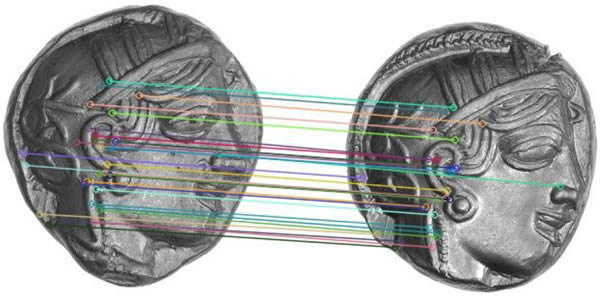 For numismatists working on ancient Greek coinage particularly die studies of individual series remain the hallmark of our contributions to our overall understanding of ancient monetary systems. But to complete a die study, especially on larger issues, is a mind-numbingly difficult task, requiring not just the laborious and time-consuming gathering from a multitude of sources of images or casts of all known specimens, which can number in the thousands, but also the tedious and arduous task of comparing the images to find examples struck from the same die(s). The largest die study of ancient Greek coinage completed to date, Wolfgang Fischer-Bossert's study of the didrachms of Tarentum included roughly 8,000 coins. This monumental undertaking cost Fischer-Bossert nearly a decade of his life and a good deal of his eyesight to complete. To try to tackle a die study the size of the late 5th c. Athenian "owl" coinage, of which ca. 60,000 coins probably exist today, would undoubtedly take a lifetime. Read the Entire Article
|
|
|
|
Moderator
United States
23731 Posts |
Would love to see this program.
|
|
Moderator
United States
34542 Posts |
An example of the power of "big data". Imagine if someone sifted through all the coin images that have been posted here on CCF...
"If you climb a good tree, you get a push."
-----Ghanaian proverb
"The danger we all now face is distinguishing between what is authentic and what is performed."
-----King Adz
|
|
Pillar of the Community
United States
7067 Posts |
Well, if we're lucky, when computers eventually become sentient this software will inspire them to collect coins rather than take over the planet. (That's potentially the worst scifi plot since "Plan 9 from Outer Space"...but I'd sure still see it)
|
|
Pillar of the Community
Spain
629 Posts |
No Bob...
When computers became sentient our future will be to work as slaves making hand-made coins for our new masters...
but don´t worry, in Spain we have experimented with life forms without any human attributions or feelings to study how to survive to their rule and we are still alive (we call them "politics" among a lot of names that I´m not allowed to use here...)
Edited by Athalbert
04/25/2017 08:40 am
|
|
Moderator
United States
34542 Posts |
I think that when the computers take over the world, those who become numismatists will collect only Bitcoins.  "If you climb a good tree, you get a push."
-----Ghanaian proverb
"The danger we all now face is distinguishing between what is authentic and what is performed."
-----King Adz
|
| |
Replies: 5 / Views: 1,710 |
|
To participate in the forum you must log in or register.
 
- Help With Identification Please.
- 1969-S Lincoln Cent Machine Doubling Or Double Die Obverse
- 1999 Lincoln Cent - Die Clash
- 1809 Half Cent For Grading
- 1987 - D Lincoln Cent Grade Check
- 1987- D Lhc Possible RPM Or DDO In Date
- You Know What I Want That Final Number To Be
- Bronze Coin To Id. Greek Or Roman?
- A Ridiculously Badly Written Computer Aided Book, Coin Collecting Bible, 2024
- Liberty Head 10/11 Stars Obverse With A Sick Looking Eagle On The Reverse Holed 0.59g 13.06mm
- The Tyrant Collector - PCGS Youtube Interview
- Counterfeit Detection: ANA Video - Introduction, With Brian Silliman And Jim Robinson Ep. 1
- Counterfeit Detection: ANA Video - Mistakes, Risk Factors, And Counterfeits & Alterations, Ep. 2
- Counterfeit Detection: ANA Video - Pimples And Pits, Looking At Cast Counterfeits, Ep. 4
- Counterfeit Detection: ANA Video - What Year Is That Cent? Key Date Coins, Ep. 5
- Counterfeit Detection: ANA Video - Diagnostics Of The 3, 5, And 10 Cent Coins, Ep. 6
- Counterfeit Detection: ANA Video, Counterfeit Quarter Dollar Diagnostics, Ep. 7
- Counterfeit Detection: ANA Video, Counterfeit Classic Commemorative Coins Diagnostics, Ep. 8
- Counterfeit Detection: ANA Video, Counterfeit Silver Dollar Diagnostics, Ep. 9
- Counterfeit Detectection: ANA Video, Classic US Gold Coin Diagnostics, Ep. 10
Disclaimer: While a tremendous amount of effort goes into ensuring the accuracy of the information contained in this site, Coin Community assumes no liability for errors. Copyright 2005 - 2026 Coin Community Family- all rights reserved worldwide. Use of any images or content on this website without prior written permission of Coin Community or the original lender is strictly prohibited.
Contact Us | Advertise Here | Privacy Policy / Terms of Use
|
| Coin Community Forum |
© 2005 - 2026 Coin Community Forums |
| It took 0.24 seconds to rattle this change. |
 |
|
| |
| |







 Posted 04/24/2017 9:54 pm


