









 Posted 04/28/2017 6:37 pm


Wikipedia:
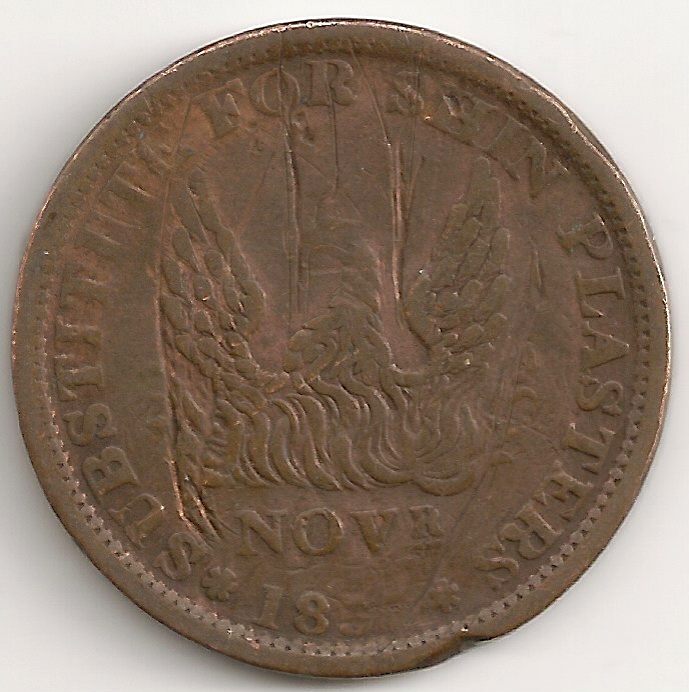
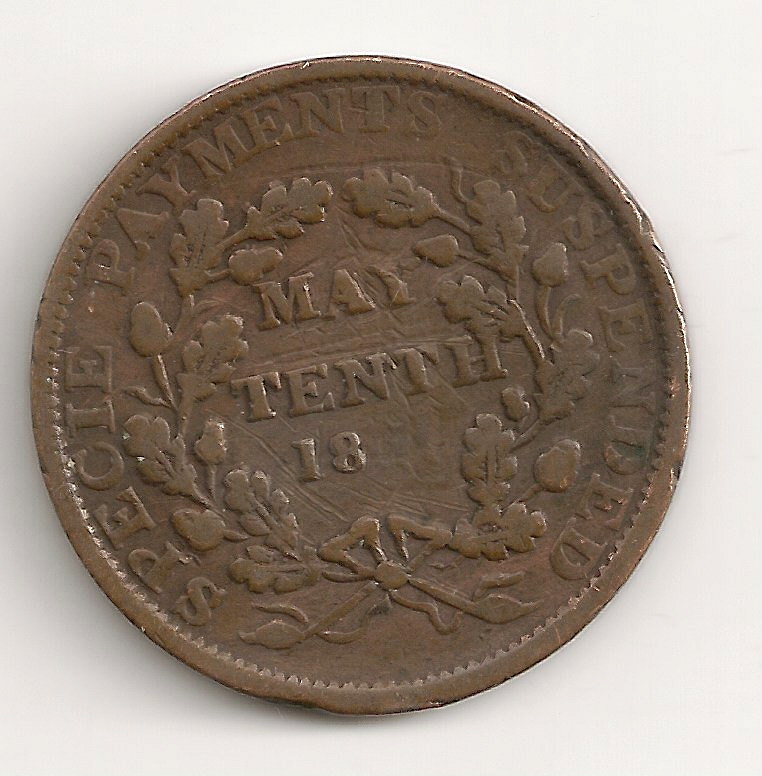
Shinplaster was a common name for paper money of low denomination circulating widely in the frontier economies of the 19th century. These notes were in various places issued by banks, merchants, wealthy individuals and associations, either as banknotes, or circulating IOUs. They were often a variety of token intended to alleviate a shortage of small change in growing frontier regions. They were sometimes used in company shop economies or peonages in place of legal tender.
According to the Oxford English Dictionary, the name comes from the quality of the paper, which was so cheap that with a bit of starch it could be used to make paper mache-like plasters to go under socks and warm shins.
A book roughly contemporary with the term, John Russell Bartlett's The Dictionary of Americanisms, defines a shinplaster as "A cant term for a bank-note, or any paper money. It probably came into use in 1837, when the banks suspended specie payment, and when paper money became depreciated in value." Then the book quotes the New York Tribune of December 3, 1845: "The people may whistle for protection, and put up with what shinplaster rags they can get."[1]
According to Merriam-Webster, Shinplaster referred to a small, square piece of paper that could be used as plaster to treat sore legs.[2]
Shinplaster was a common name for paper money of low denomination circulating widely in the frontier economies of the 19th century. These notes were in various places issued by banks, merchants, wealthy individuals and associations, either as banknotes, or circulating IOUs. They were often a variety of token intended to alleviate a shortage of small change in growing frontier regions. They were sometimes used in company shop economies or peonages in place of legal tender.
According to the Oxford English Dictionary, the name comes from the quality of the paper, which was so cheap that with a bit of starch it could be used to make paper mache-like plasters to go under socks and warm shins.
A book roughly contemporary with the term, John Russell Bartlett's The Dictionary of Americanisms, defines a shinplaster as "A cant term for a bank-note, or any paper money. It probably came into use in 1837, when the banks suspended specie payment, and when paper money became depreciated in value." Then the book quotes the New York Tribune of December 3, 1845: "The people may whistle for protection, and put up with what shinplaster rags they can get."[1]
According to Merriam-Webster, Shinplaster referred to a small, square piece of paper that could be used as plaster to treat sore legs.[2]


