This denarius I purchased some time back was shown on the dealer's invoice as being from Laodicea. If so, I think it'd have to be be RIC 491a (RSC 592, Sear 6356).
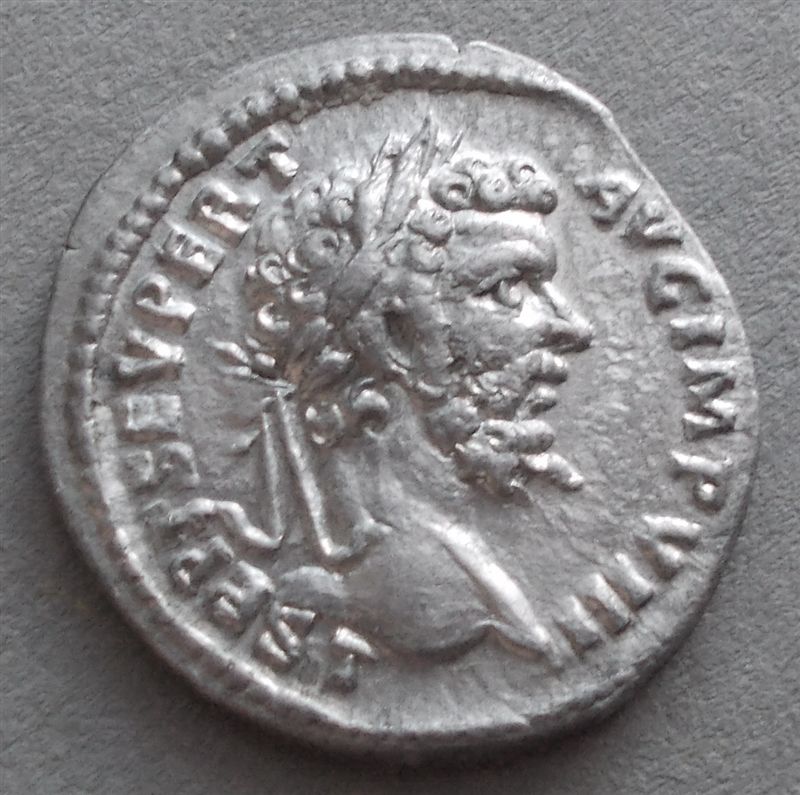
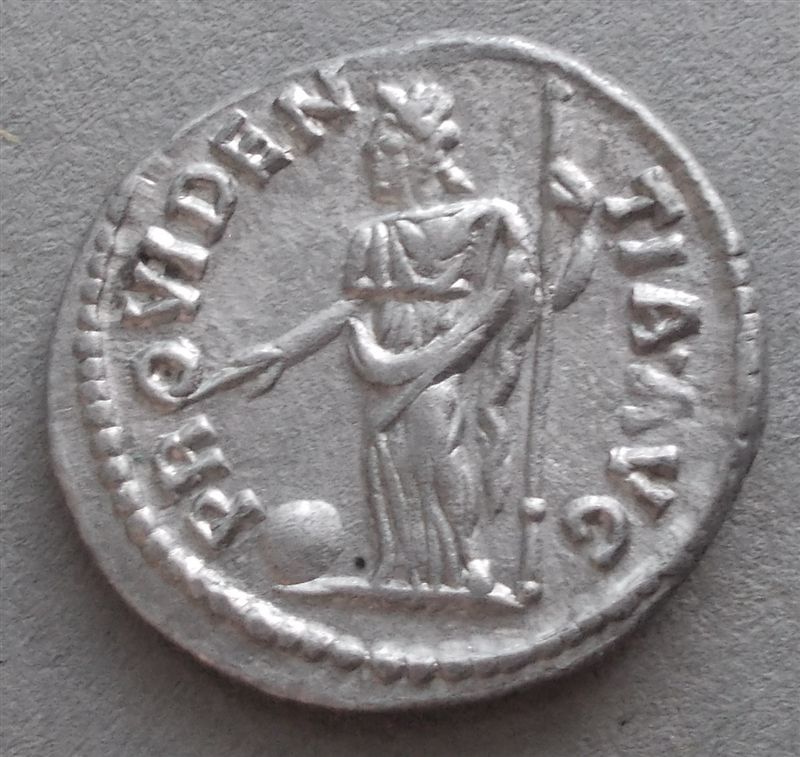
The reverse lettering seems large, and I note a distinct claw-like aspect to Providentia's hands. Another visual cue that stands out is the oversized globe.
Here's the Wildwinds webpage for this variety:
http://www.wildwinds.com/coins/sear...ml#RIC_0491aConfusing matters is an image of a specimen that's purported to be RIC 92a:
http://www.wildwinds.com/coins/ric/..._0092a.1.jpgThis clearly seems to have the some of the same reverse characteristics observed with my specimen, so I'm unsure of how you're expected to definitively differentiate between the two types.
Here's yet another image from Wildwinds that muddies the waters further yet:
http://www.wildwinds.com/coins/ric/...IC_0491b.jpgThe oversized globe is obvious in this case. This is supposed to be an example of RIC 491b (RSC 593), but I believe this is mistaken as the obverse legend looks to me to end with "IMPVIII" instead of "IMPVIIII". I'd take it to be another RIC 491a (or 92a).
I'll wrap this up with a coin from a 2015 Heritage auction catalog, also identified as being from the Laodicea mint:
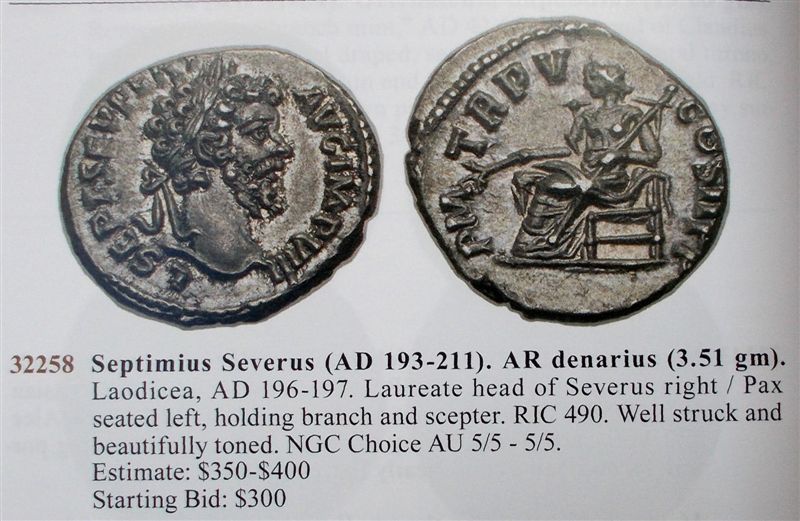
I'd remark that this seems to represent some relatively recent trends in the ancient coins marketplace. Certification is now really an absolute requirement if any major auction house is going to handle the sale. And if NGC pegs it as "Choice" and "5/5", then the price gets significantly amplified over that of an equivalent raw coin. What I'm left wondering in this particular instance is to what degree the Laodicea attribution contributes to that lofty starting bid.








 Posted 05/09/2017 2:55 pm


