











 Posted 05/13/2017 08:04 am


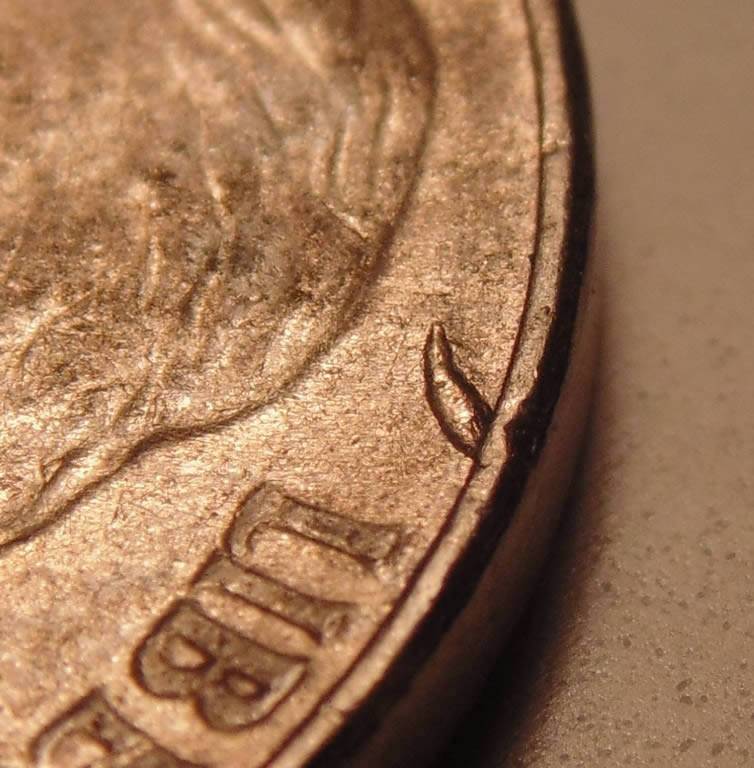
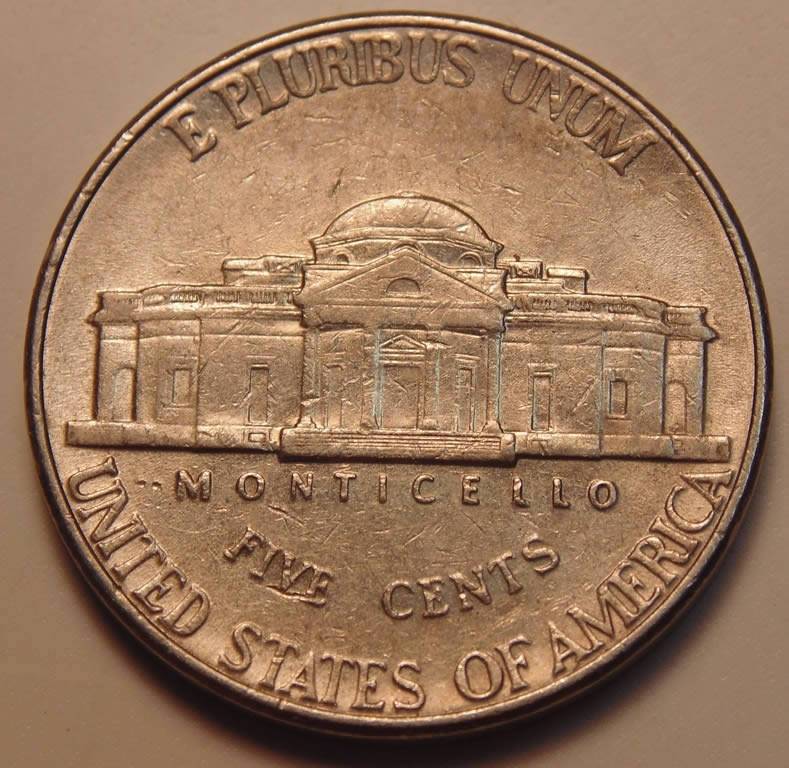
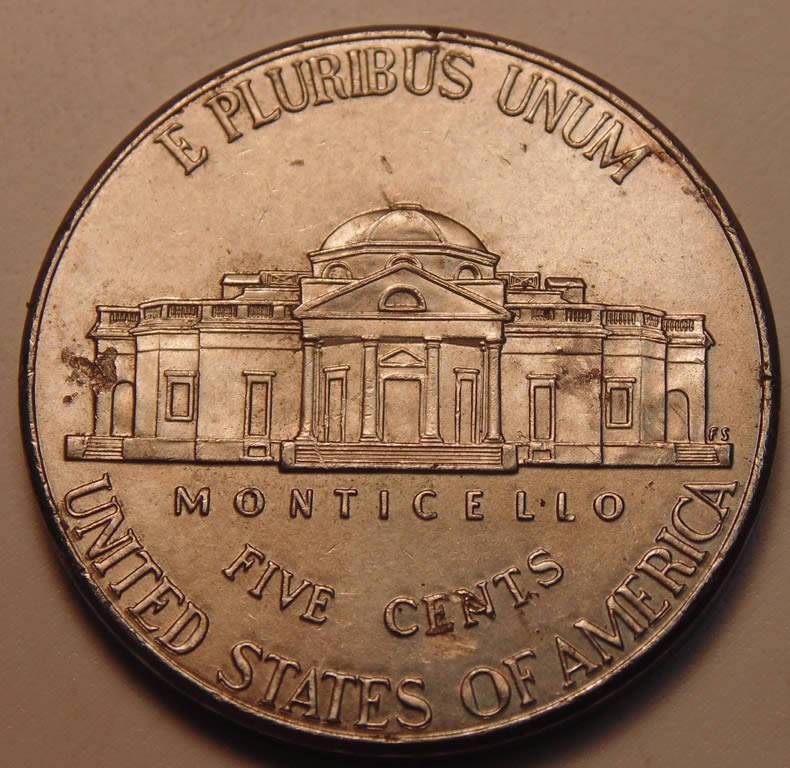
No, yes, no, in my opinion.
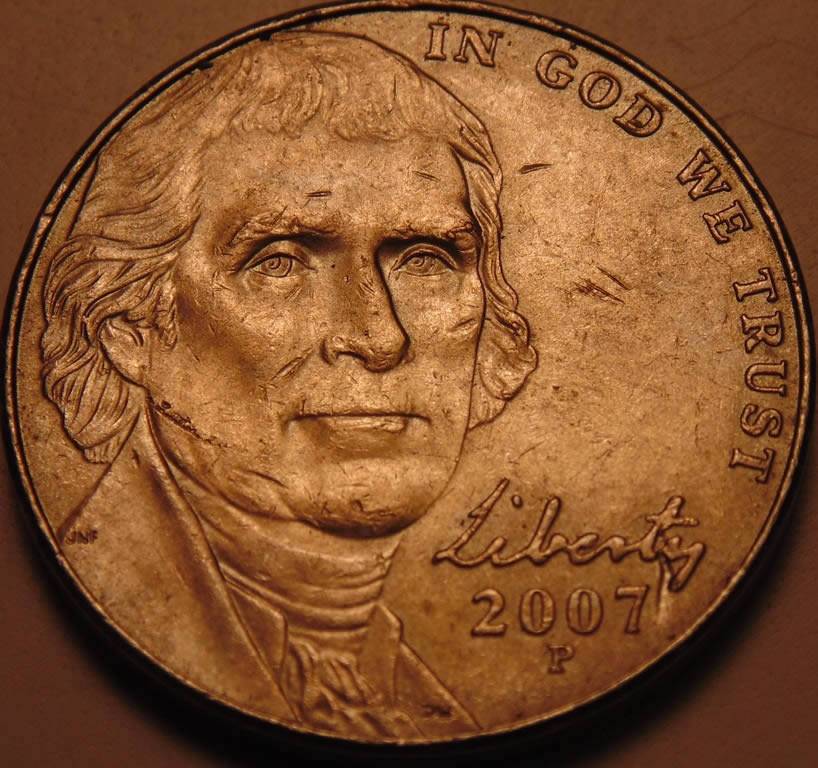
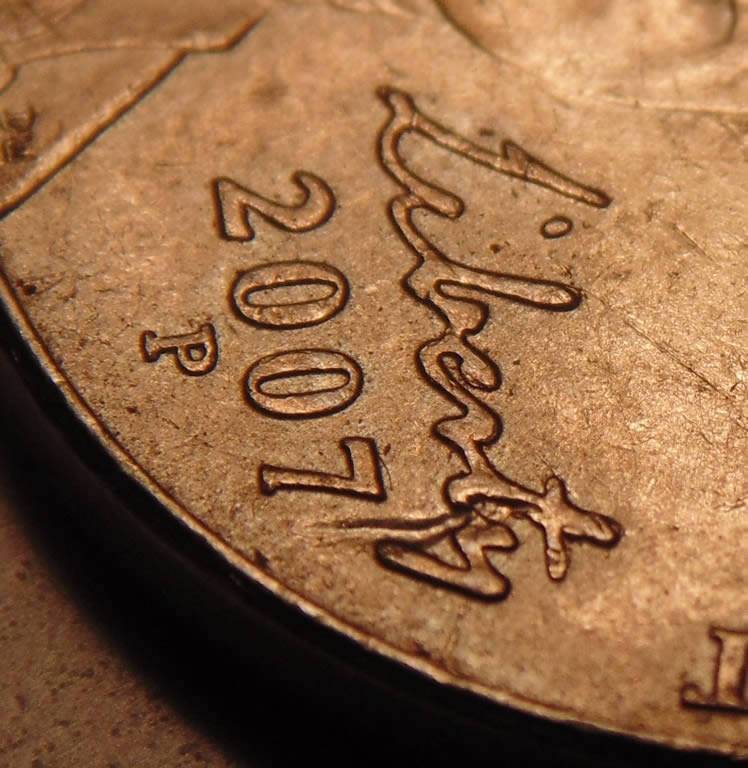
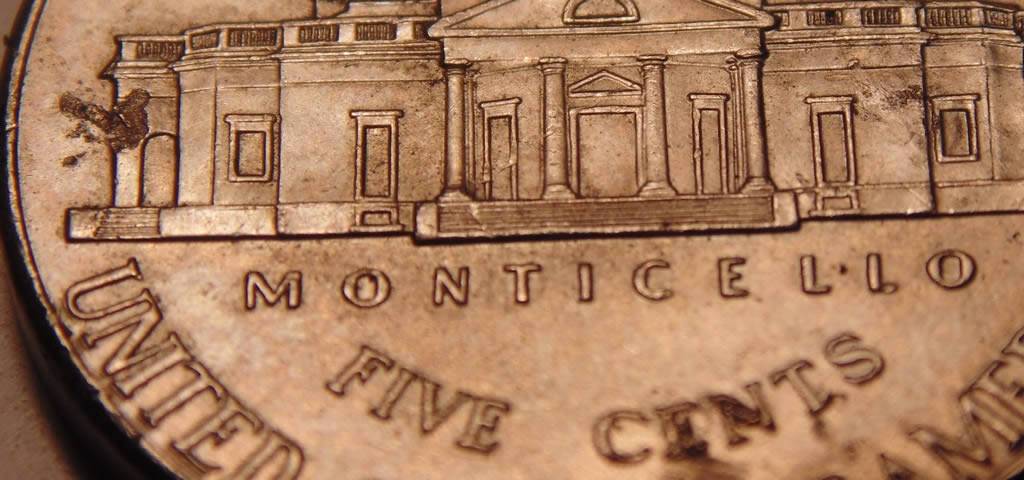
The first one is tough, but there appears to be a minor pressure ridge along the mark. Also, the bottom end of the mark slowly merges into the joining field. In my experience a strike through (non-grease), will have a fistinct edge.
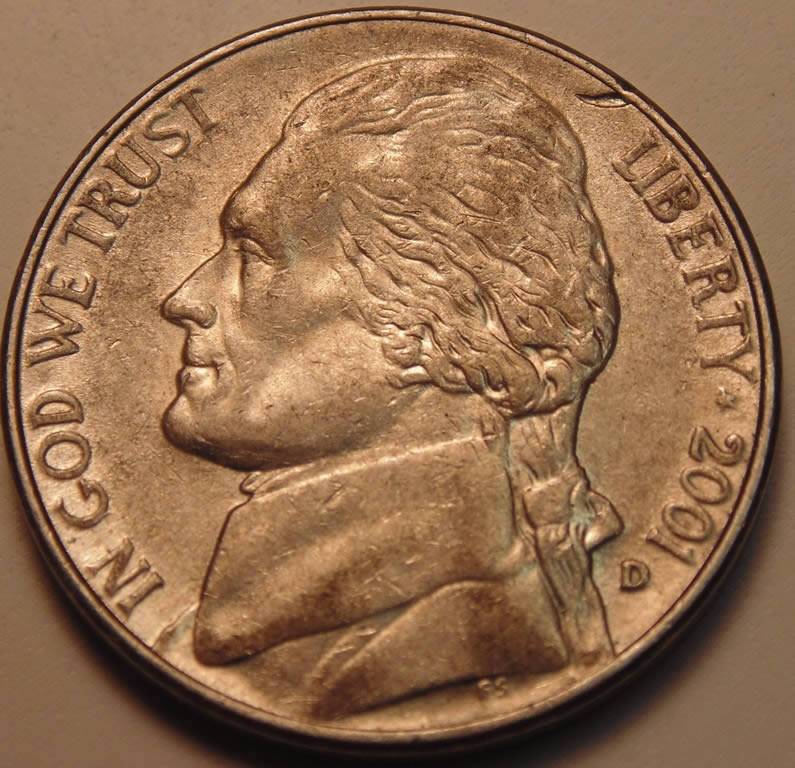
The second was likely struck through a rim burr, that was later detached from the coin. Often, rim burrs will be found retained in the coin.
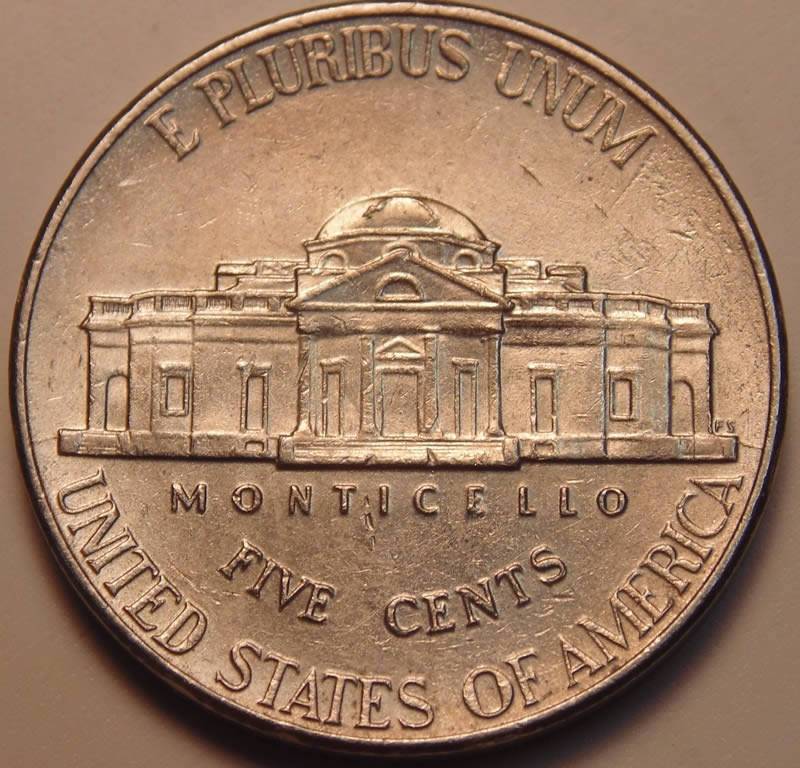
The last one shows displacement of the metal that made up Monticello at thr bottom of the mark.
The first one is tough, but there appears to be a minor pressure ridge along the mark. Also, the bottom end of the mark slowly merges into the joining field. In my experience a strike through (non-grease), will have a fistinct edge.
The second was likely struck through a rim burr, that was later detached from the coin. Often, rim burrs will be found retained in the coin.
The last one shows displacement of the metal that made up Monticello at thr bottom of the mark.


