I picked up this cull early last week, as I'm a sucker for cheap early copper, and it would be a decent hole filler. It was labeled as 1802, and it's so close to slick, it's hard to tell the date with the naked eye. I photo-document all my coins, and looking at the photo, I saw it was a 1798, and not an 1802. Cool, I thought to myself.
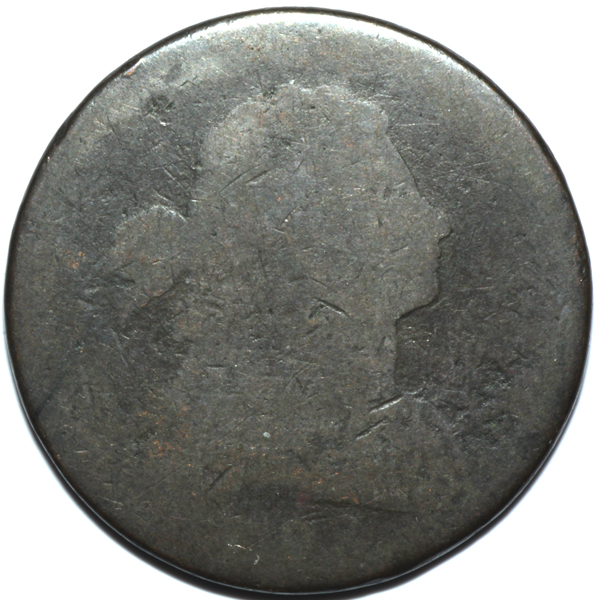
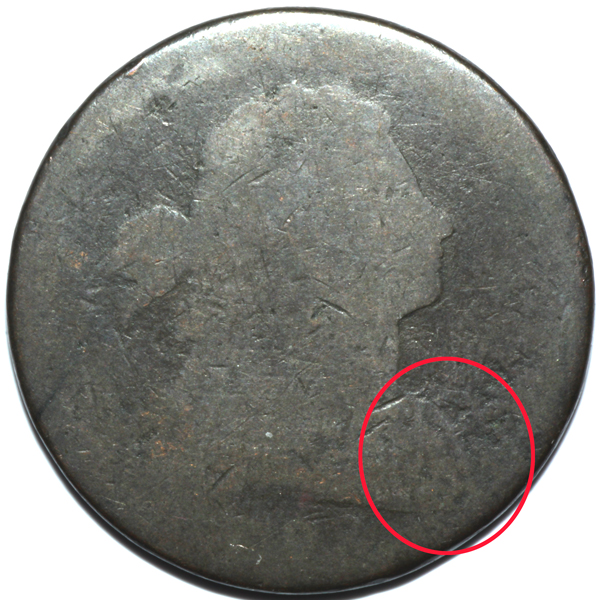
Then I got to looking at it, and something seemed off. Where the bust's breasts swoop up on the right, mine seems to fall sharply down, and come to a 90 degree point near the denticles (or denticle area).
I told my local shop guy about it, and he wanted me to bring it in, in hopes of figuring out why it is the way it is, and if if was from wear or something else. So today I showed it to him, and he was intrigued. He put it under his microscope to see if he could see anything that would indicate
PMD (modification by a previous possessor) or just maybe a weird wear pattern. He saw nothing indicative of either, or anything saying the outline is anything other than original.
He has a graded from NGC coming into the shop tomorrow, and he's going to show it to him, to see if he says it should be further evaluated. But, I'm a little impatient, and want to see if anyone here has some guesses.
First image is the obverse of the coin.
In the second photo, the area of interest is circled. You can see that the 'breast' area comes to a sharp point near the denticles, and there is a well-defined line from that point to the shoulder (?) area.
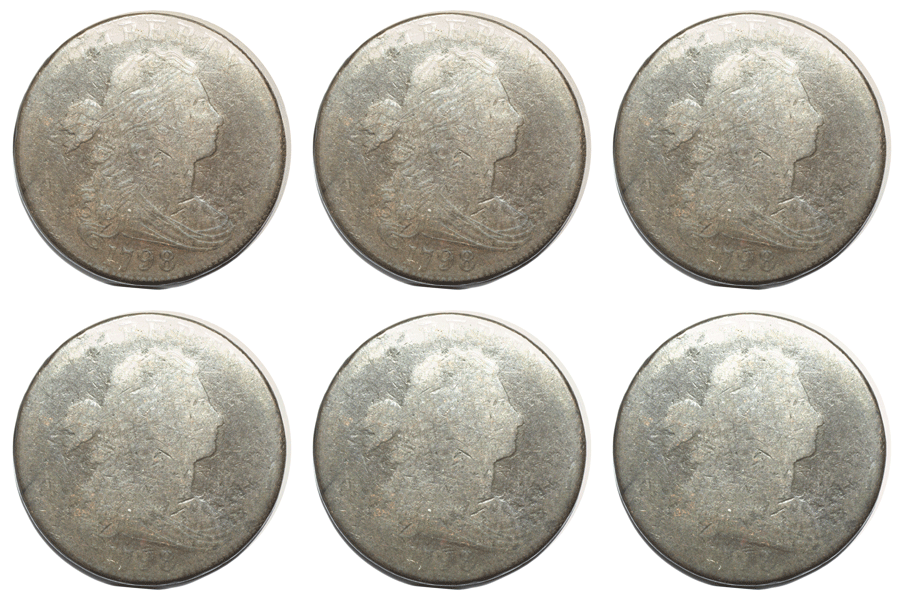
The animation is an overlay of a 1798 DBC on top of my coin, showing how a 'normal' DBC looks, blending into mine. I tried to line the two images up as exactly as I could, and the bust's facial profile is a match.
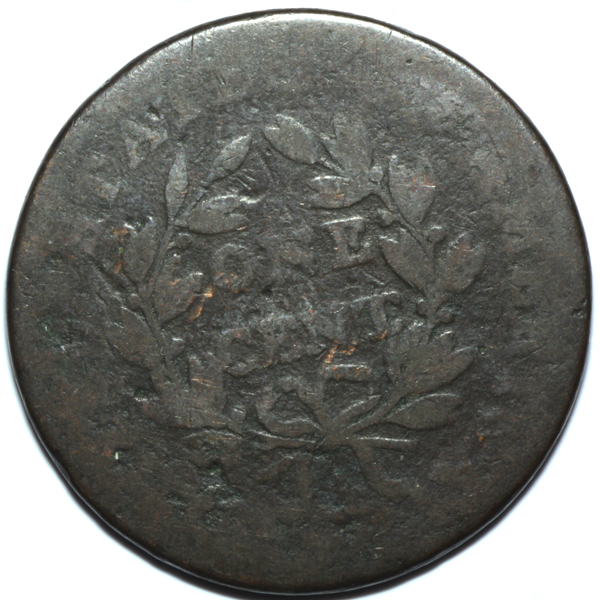
Third is an image of the reverse of my coin, which seems to match up fine with a 'normal' example.
So what do you guys think?










 Posted 06/05/2017 8:26 pm


