
to the CCF, NumismaticNovice.
Brunk listed a
ROFF counterstamp (# R-446) on a 1797 two real piece. He also listed a
D. ROFF counterstamp. As these are not pictured in Brunk's book, the stamps can't be matched.
Lacking initials, a location, an occupation, etc. it's nearly impossible to positively attribute this apparent maverick. That said, on rare occasions, when similar pieces come to light, attribution is possible.
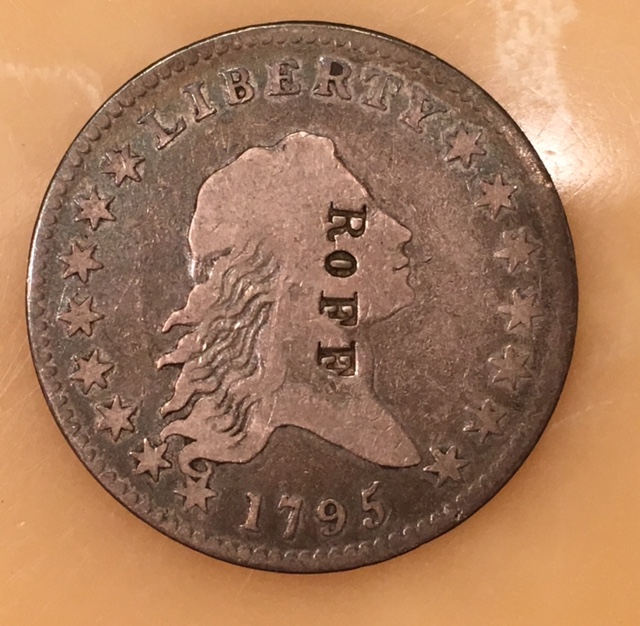
It looks to me like individual letter punches were used to apply the
RoFF name with one lower case vowel. The neat alignment and central placement of the name suggests to me that the stamper did this with some specific purpose in mind. Possibly, he was a member of a masononic order, and this was a calling card of sorts? If this stamp matches that on the silver, two real piece, Roff may have been a silversmith or similar trade. I doubt that this piece was a merchant advertising issue, as were a great many counterstamped coins in the early 1800's.
I'm inclined to view this style of letters as likely being a pre-Civil War issue. A cursory search of early NY City directories resulted in a half dozen folks by that name in 1822 and 1847, respectively. The name is quite uncommon but not all that rare. So, important as the surname is, it really doesn't help narrow the field of possibilities.
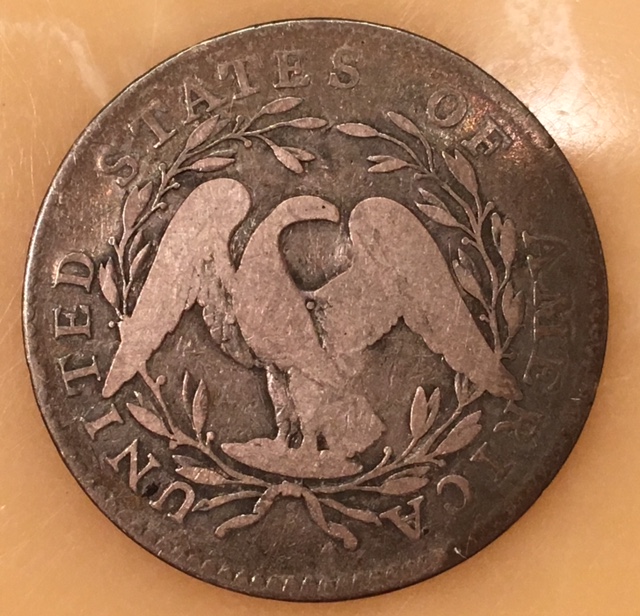
In the case of this 1795 dollar, the counterstamp appears to hinder rather than help its' value. If it was say an important silversmith who stamped this lower grade coin, the value of it might be enhanced by a desirable hallmark.
Last year, a dealer offered to sell to me an attractive 1795 dollar in VF condition, bearing a counterstamped name with two preceding initials for $1,500. As I could attach no history to the name, I declined the offer. I thought, in time, he'd get more for it from a type coin guy.
Getting back to the "Roff" piece, I'll do some further checking and chime in, again, if I find any interesting info.









 Posted 07/12/2017 08:59 am


 and
and 




