| Author |
 Replies: 9 / Views: 2,143 Replies: 9 / Views: 2,143 |
|
|
Pillar of the Community
United States
1609 Posts |
I've been wanting to buy a small roman coin just for the history. I found an ebay BIN that looked promising, but a review on it concerned me. The reviewer said that they bought one of these coins and couldn't see much on it. So, they soaked it in WD-40 for two weeks, then burned it in a pile of thermite, then scrubbed it with a wire brush. As a more modern-coin-person, that description made me cringe. But really, is that necessary for crusty old coins?   |
|
|
|
Pillar of the Community
United Kingdom
2624 Posts |
Well that sounds pretty harsh to me.
Most people clean using some mildly acidic bath such as olive oil... the use of tooth picks and porcupine quills for scraping or even dental equipment seems justifiable in the correct hands.
Electrolisis is one that can be harsh too.
It seems you can have a good result or a quick result but not always both.
I guess the end result is what matters.
|
|
Pillar of the Community
United States
6130 Posts |
Depends on the metal. Bronze is usually cleaned with distilled water or olive oil, and brushed with a toothbrush or picked with a non-scratching object, as DavidUK mentioned. Some use electrolysis as a last-ditch effort, but it ruins the visual appeal of the coin. Silver is hardier and can safely be cleaned with chemicals. I have never done it, but some apparently soak silver coins in windex to dissolve the dirt off. Gold of course is nonvolatile and can be tossed in a vat of acid to remove encrustations. Silver-plated (silvered) coins are more delicate and shouldn't be cleaned by a novice. All that said, the "1 uncleaned genuine Roman coin" listings on ebay are criminally overpriced for what you will get. Go for small lots or individual coins. |
|
Pillar of the Community
United States
616 Posts |
Burned it in a pile of thermite?  Edited by jskirwin
08/14/2017 10:26 am
|
|
Pillar of the Community
United States
949 Posts |
Impatient people should have nothing to do with ancients, for they will destroy more than they know. Many times a neophyte, who struggles with recognition of language and imagery, thinks that the encrustation is the reason s/he cannot "read" the coin, when in fact that person might be mystified by a clear example. But when that failure happens they cannot clean the coin fast enough, and it gets abusive treatment. Ancients may be cleaned and cleaned very well, but only if you are patient and familiar with the effects of various chemicals and methods. Let me illustrate. Here is a silver coin that was offered recently, for which I paid a couple of hundred dollars in this condition. 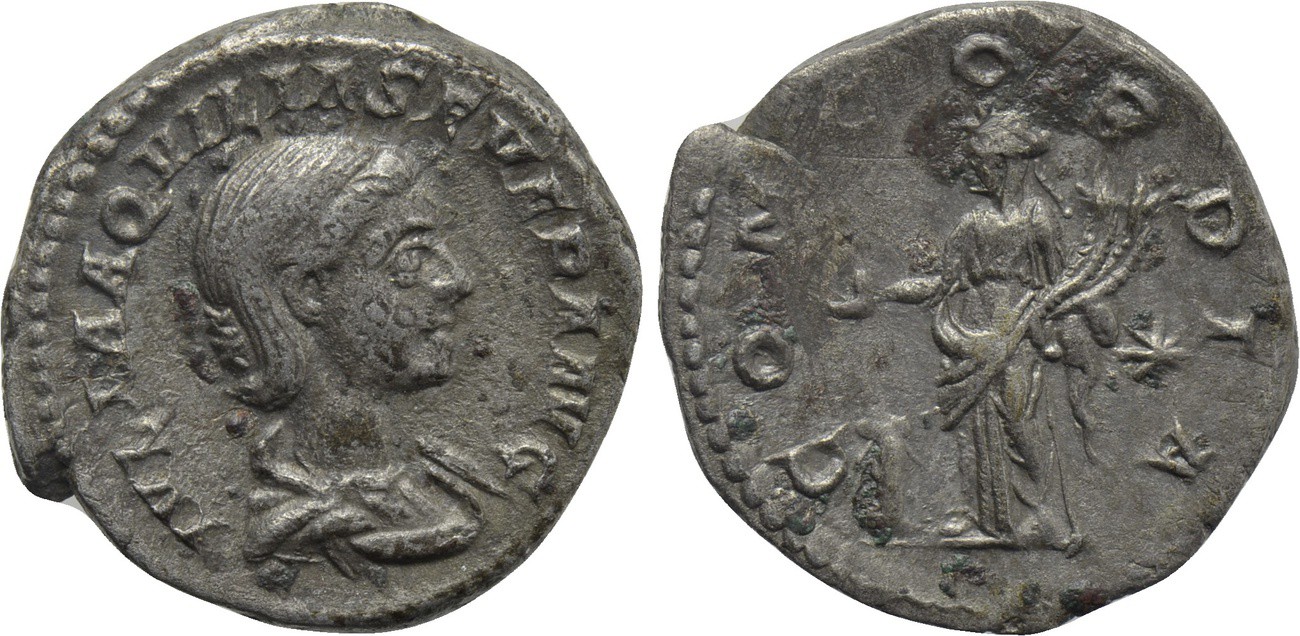 The coin is basically well preserved, but disrupted by patches of encrustation. How does one go about removing something like that on a coin that is not a "throwaway? At this price point, many collectors would be unwilling to tackle further cleaning. I'm not that bright, so I went ahead and applied my tried-and-true method. It is still a work in progress, but here is the reverse, before (on left) and at present (on right): 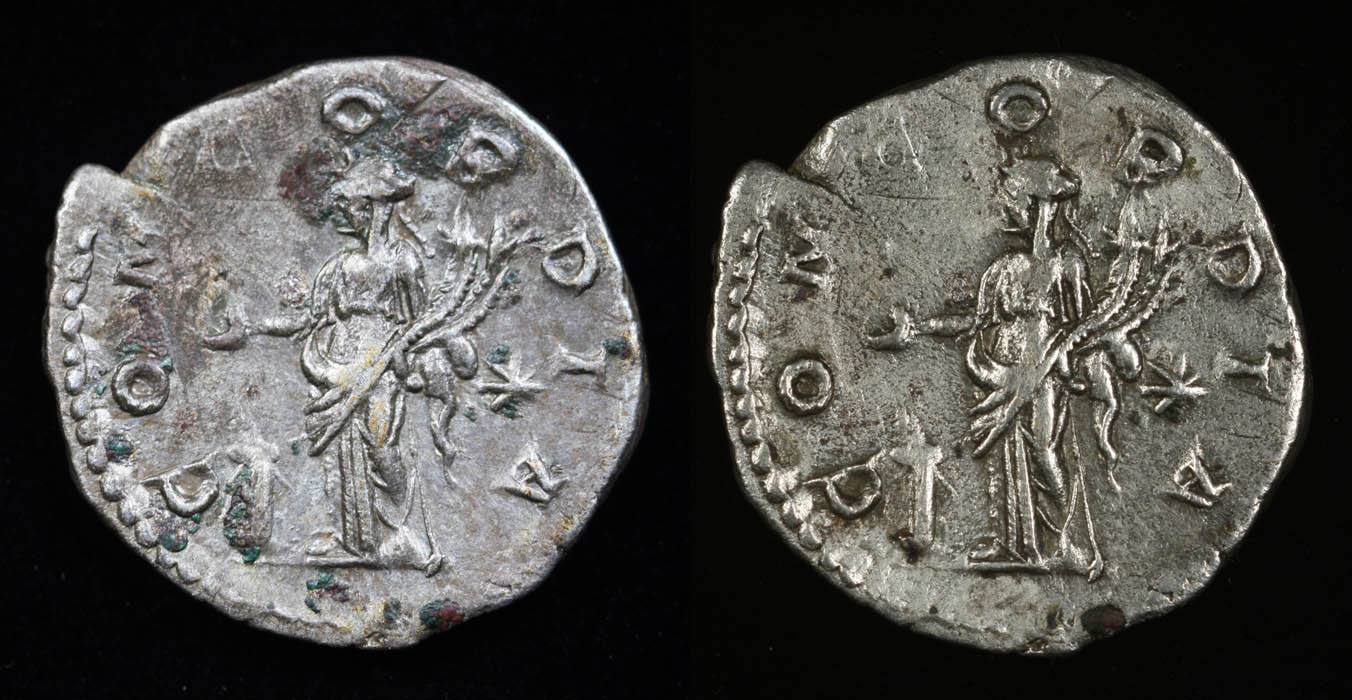 The work still has a ways to go. The image on the right is lit somewhat differently, but the patches of encrustation are significantly reduced without significant disruption of the coin surface and no staining. Where I have worked on the encrustation I have been able to take it all the way down to the silver surface, but not below. The method used for this is direct application of a sharp steel needle to the encrustation while viewed under a microscope (10x to 30x). If I could match the lighting angles exactly you would see that there are no new scratch lines visible on the surface of the coin. In order for that to be true, the pressure on the needle point must be so light as to have little effect in each movement. One does not remove masses of material that way, and it takes a while. Yet when it is completed, I believe this coin will be significantly improved without altering its original surface in any way. That I think should be the goal of cleaning, and the guide to the approach one uses. Edited by lrbguy
08/14/2017 10:36 am
|
|
Bedrock of the Community
Australia
21789 Posts |
To me, an ancient coin has been harshly cleaned when it's condition has been downgraded, together with loss of eye appeal.
There are all sorts of factors which contribute to eye appeal, and a lot of those factors also contribute to the overall grading of an ancient coin.
Because of this, grading and eye appeal are a lot more subjective, rather than objective, than with a modern coin.
The grading of an ancient coin has a lot of contributing factors that are not needed to be considered with a modern coin. One of those factors include how the ancient coin was cleaned, after recovery from burial.
The cleaning of ANY coin is a risky business, but with ancient coins, cleaning after recovery from burial is unavoidable.
I have had very little experience at it, and so it is quite easy for me to ask for expert advice, or much better, only buy ancient coins that have already been expertly cleaned.
I have never felt compelled enough to send a coin away to have it cleaned, although I have contacts who can get ancient coins cleaned professionally.
Edited by sel_69l
08/14/2017 6:43 pm
|
|
Rest in Peace
United States
17900 Posts |
I've had good luck with electrolysis. It gets a lot of the chunks off before olive oil forever.
|
|
Pillar of the Community
Belgium
1194 Posts |
@ Irbguy , fantastic result , did you also use any liquid or only a steel needle ? How many time to have this result ? I don t think I have enough patience to do that . albert
|
|
Moderator
 United States
34541 Posts |
Quote:
Burned it in a pile of thermite? I agree that this doesn't make sense. Thermite burns at something like 4000°F. Seemingly there are plenty of other better ways. "If you climb a good tree, you get a push."
-----Ghanaian proverb
"The danger we all now face is distinguishing between what is authentic and what is performed."
-----King Adz
|
|
Pillar of the Community
 United States
1609 Posts |
|
| |
Replies: 9 / Views: 2,143 |
|









 Posted 08/14/2017 10:07 am





