










 Posted 08/18/2017 3:27 pm


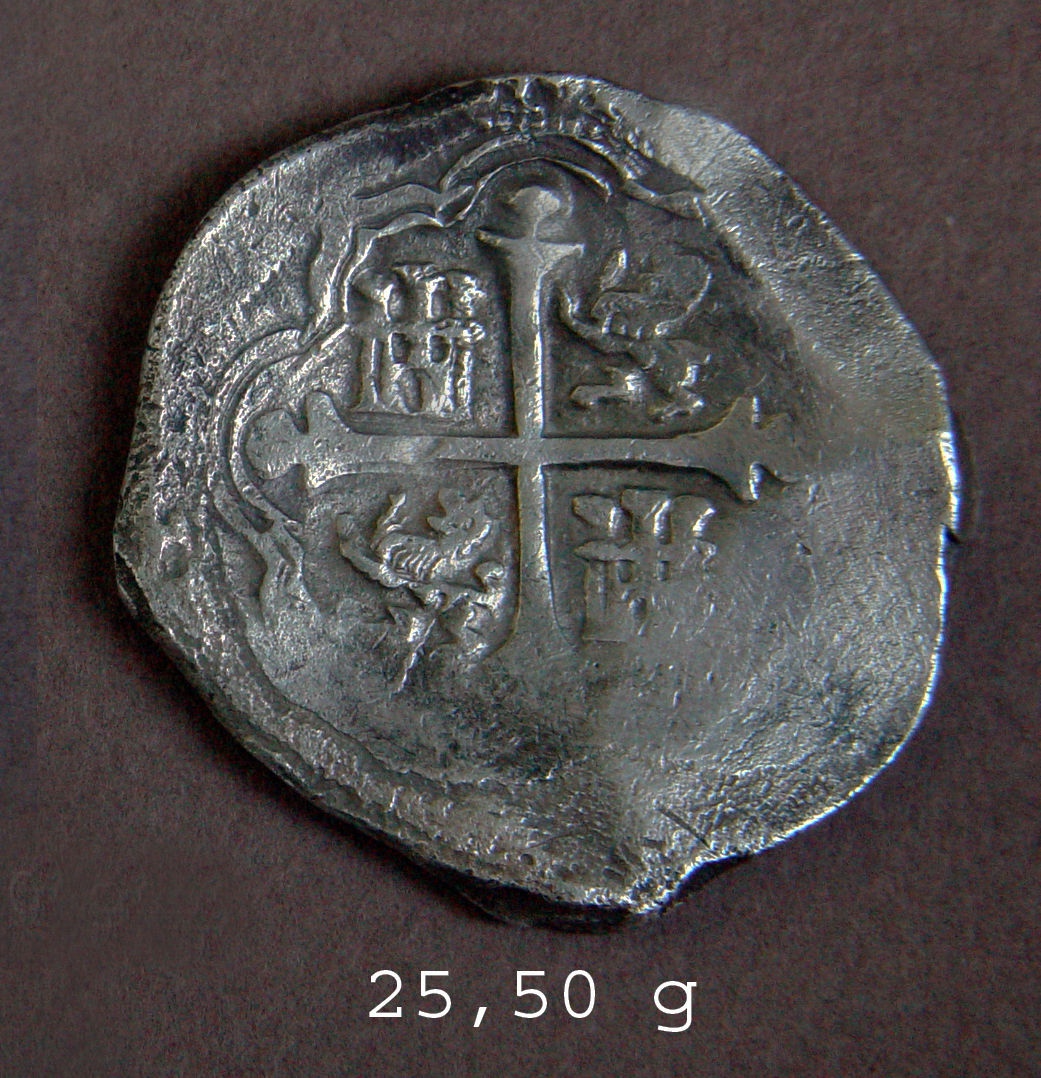
You see several situations with cobs where, to the untrained eye, the basic design is essentially the same on either side of the transition from one king to his successor. Sometimes they're the same to the TRAINED eye as well.
I've seen people claim that one can discern the difference, for example, between Philip II and Philip III for the later Potosi assayer B issues. Assayer B's tenure of course has notably defined "periods" based on clear stylistic differences... but then it gets asserted that slight changes exist in the shield which differentiate II from III during, I guess, 5th Period.
You also often see people try to differentiate the peninsular Spain OMNIVM types between Philip II and III... That style did not use an ordinal, but definitively began under Philip II in 1597... then continued through the first 10-12 years of Philip III - same legend was used throughout.
For my purposes, I really don't care which side of the fence a piece happens to be on, so I never have studied the issue closely. I DO, though, know my Mexican cobs pretty well and keep a good database of them... and I've not noted any particular difference between dated 1620 and 1621 1/0 pieces vs., say, 1623 or 1624 pieces.
Also note that there exists in this period an especially numerous amount of overdated dies... pretty much every year during assayer D has at least one. Some display multiple overdates (e.g., 4 over 3 over 2) as well... Specifically, the existence of 1622/1 and 1623/2 probably suggests that there was in fact no change to the shield from III to IIII.
I've seen people claim that one can discern the difference, for example, between Philip II and Philip III for the later Potosi assayer B issues. Assayer B's tenure of course has notably defined "periods" based on clear stylistic differences... but then it gets asserted that slight changes exist in the shield which differentiate II from III during, I guess, 5th Period.
You also often see people try to differentiate the peninsular Spain OMNIVM types between Philip II and III... That style did not use an ordinal, but definitively began under Philip II in 1597... then continued through the first 10-12 years of Philip III - same legend was used throughout.
For my purposes, I really don't care which side of the fence a piece happens to be on, so I never have studied the issue closely. I DO, though, know my Mexican cobs pretty well and keep a good database of them... and I've not noted any particular difference between dated 1620 and 1621 1/0 pieces vs., say, 1623 or 1624 pieces.
Also note that there exists in this period an especially numerous amount of overdated dies... pretty much every year during assayer D has at least one. Some display multiple overdates (e.g., 4 over 3 over 2) as well... Specifically, the existence of 1622/1 and 1623/2 probably suggests that there was in fact no change to the shield from III to IIII.


