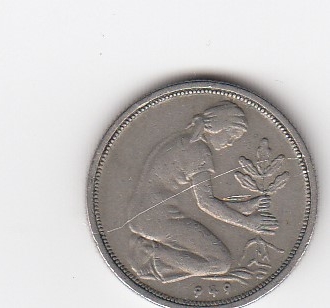
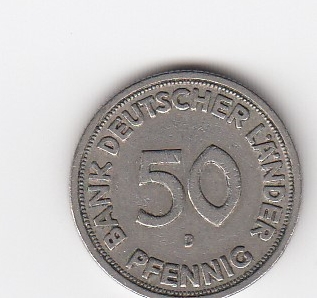
In the years right after World War II, a lot of German coins were struck both fast and as cheap as possible. As a result, a lot of error coins in early post-war Germany appeared. (Partially) missing dates are part of that. As such, this coin is fun to illustrate that point, but it doesn't add much value as there are so many of them.
A possible reason, as mentioned above, is a greased die or filled die. A die is the stamp used to struck the coins (planchets) with. Sometimes grease gets stuck in the lower parts of the dies, which results in those parts being less visible or even completely missing. In this case, there are many possible reasons, including 'faulty' dies, because errors are plenty in early post-war German coinage.
If you like to know more, then have a look in the menu on the left. There's a link to a glossary there which contains a load of terms and explanations. It's very useful to learn 'coin language'.
https://www.coincommunity.com/dictionary/Edited by UltraRant
09/13/2017 06:04 am












 Posted 09/08/2017 6:17 pm


 filled die


