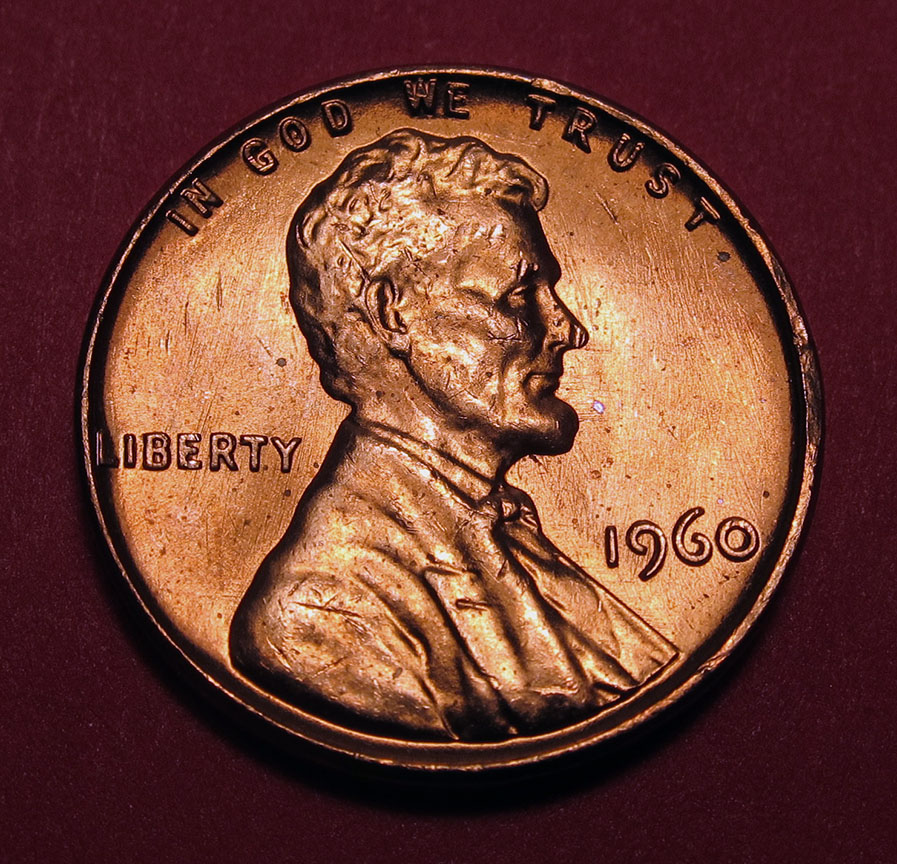
I bought a fair-sized lot of 1960 cents and am pretty much certain they are from an original mint bag. Die markers show lots of coins from a certain few dies so not a random assortment and all have almost exactly the same condition and toning.
So, what's with this coin?

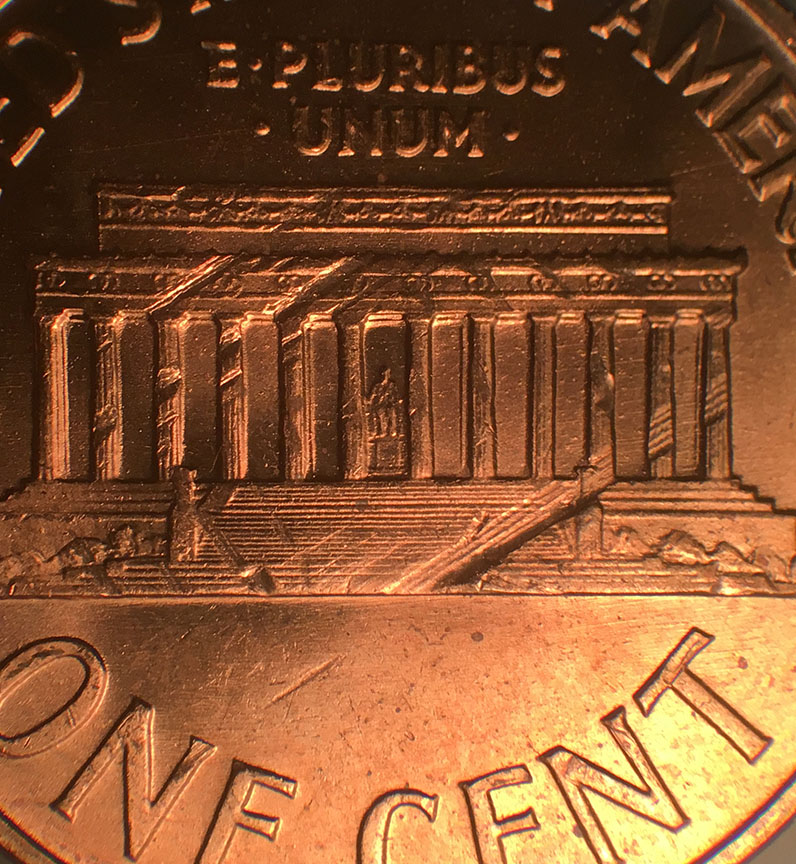
The obvious damage to the reverse is a memorial design and is incuse. I am quick to call such a thing normal damage from one coin getting vised or hammered onto another coin, but from a mint bag? Here is a close up to show the imprinted design.
So to figure things out I wanted to know if it were the typical "reversed" memorial which would be another coin hitting it and leaving an impression. This makes sense as the coin is strongly convex on the obvserse (how you get a convex coin is a different question). An overlay shows that it is a reversed memorial.
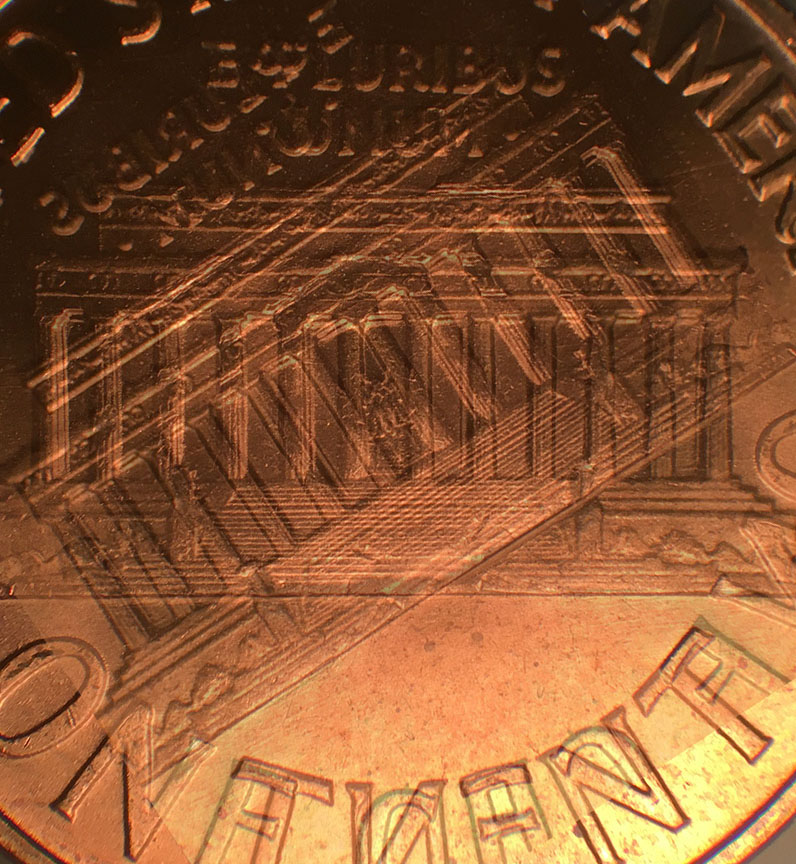
So that would be my question, how would something like this occur to end up in a mint bag? Possibly a second coin sitting on the first one and struck a second time? Seems like a stretch but where else in the process could something be hit hard enough to bend it convex and leave that mark?
And all that would be a mystery, but then a second one popped up. This coin is strongly concave on the obverse (opposite of the first coin) so that mark on the memorial on this coin is well below rim level.
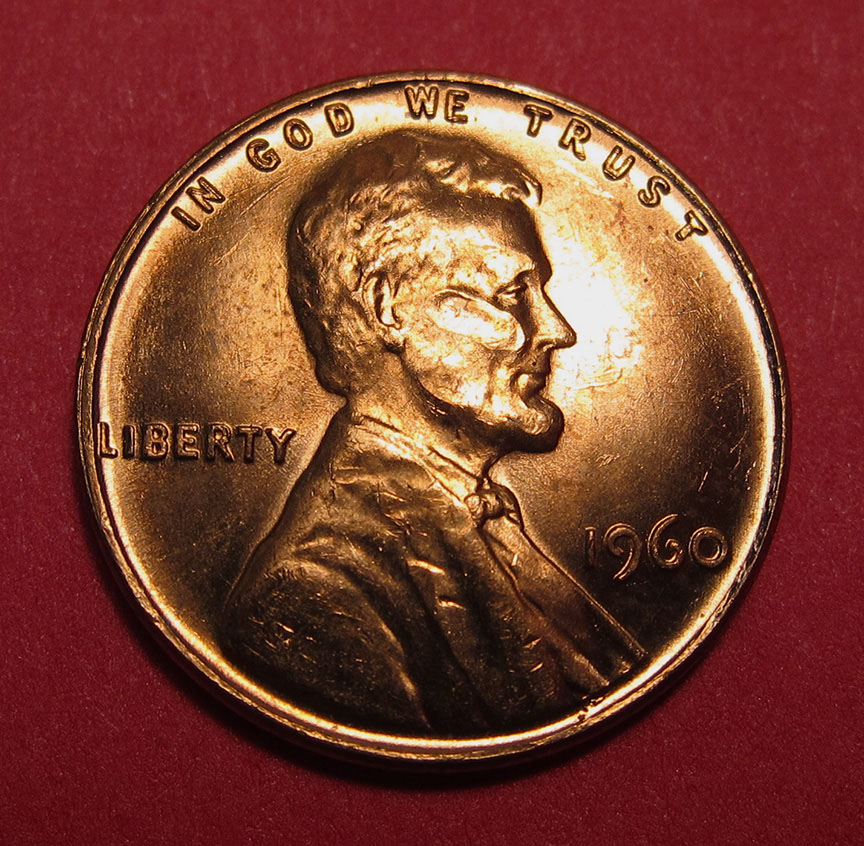
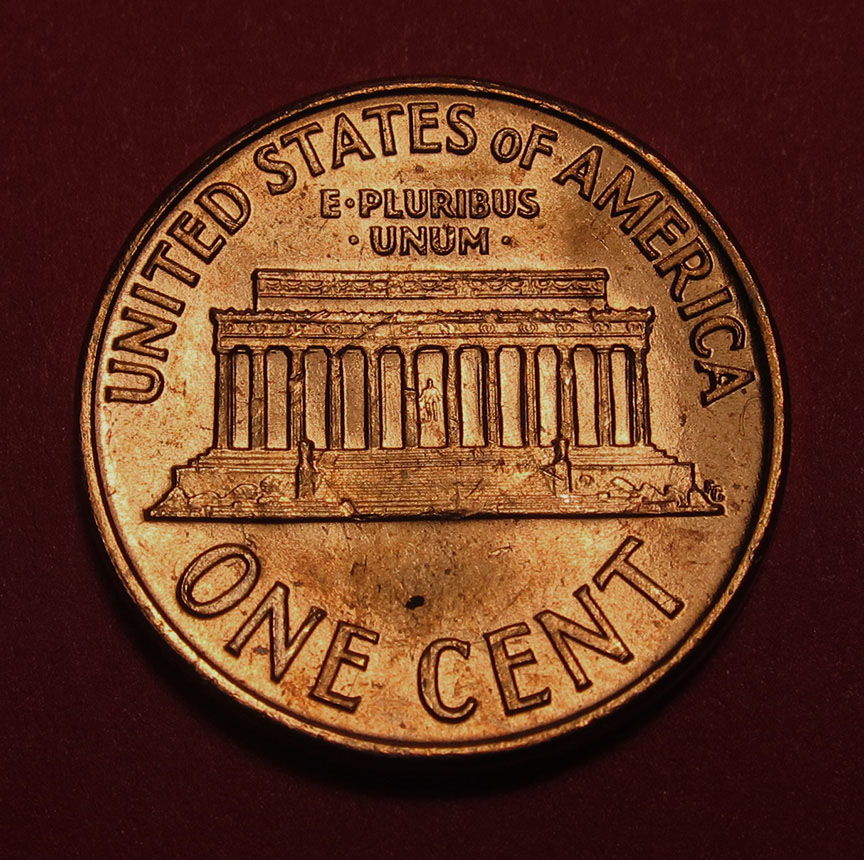
While less strong than the first coin, what jumped out at me was that the imprint is in almost exactly the same spot and rotational degree. Note the pillar tops (on stairs and column 10) and the lower left of the memorial nicking the top of the N in ONE.
Just curious if anyone has an idea that would make sense here, as I really don't know what is going on to make these come out this way. Thanks!






 - limited the amount of damage caused by the impact.

 Posted 09/12/2017 10:09 am




 even coins in a mint bag get plenty of smacks moving from one place to another. That's the reason so many mint state coins grade in the MS-60 to 62 range.

 ...how do you think I know so much about Little Johnnie in the Garage...


