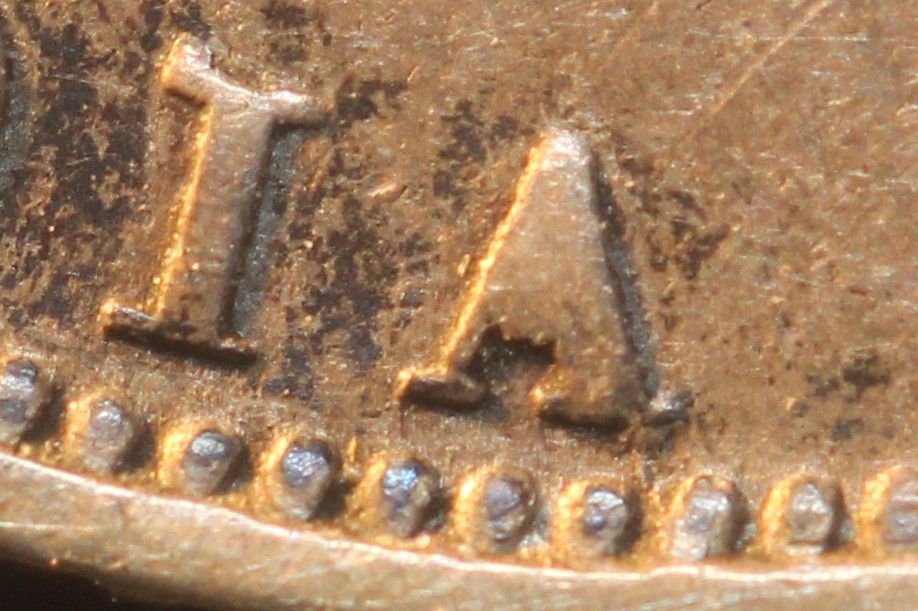
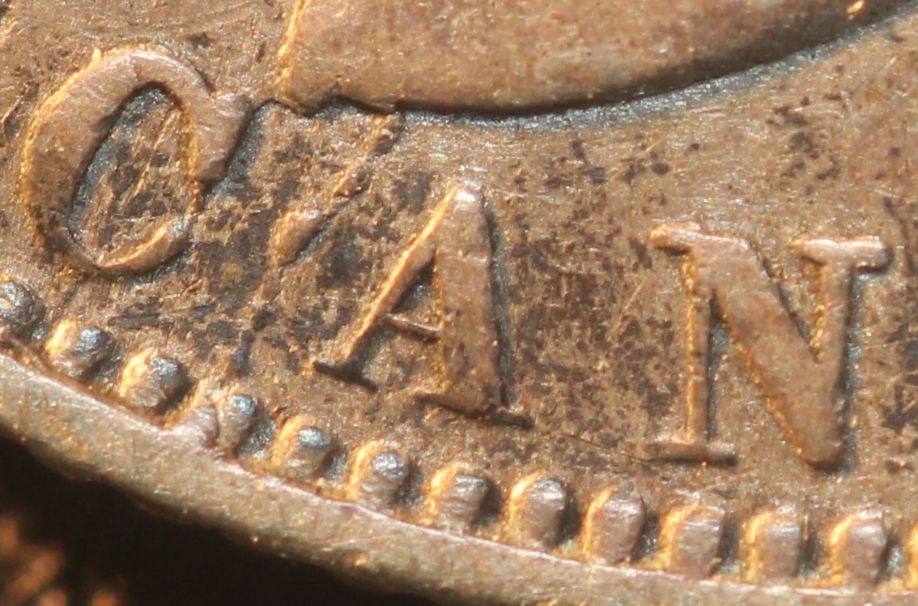
I'm the finder (with Zonad) and owner of the first coin identified with this error, which was shown in Canadian Coin News July 13 2004. There was much discussion of this error on a now defunct coin site. The consensus seemed to be that it was a die crack.
My problem with that is that the inner part of the V is a solid raised area on the die. A piece would have to break off the raised triangle to cause the flowing metal to fill the area. Either the chunk broke off by itself (very unlikely), or someone repunching A's, did the V by mistake, which would cause a deep grove or a larger broken piece. So my idea is that it's a broken die caused by trying to repunch the V with an A-punch.
In one of the photos, you can see that the height of the V "crossbar" is even to the rest of the V, which means the raised inner V on the die is broken down to the depth of the lettering.
If you look at the point of the V, you can see that it has been repunched longer. Imagine the A punch is set over the V; the crossbar of the punch would be on top of the raised inner V, so when hit, the crossbar knocks a piece out of the die (and possibly breaks the crossbar off the punch) and the top of the A-punch leaves doubling on the point as it wouldn't fit into the original incused V.
If you're going to ask why the crossbar is lower than on an A, then I respond that the punch did not go into the raised part at 90 degrees, but moved towards the top of the V as it broke out the piece of the die.
As well, if the crossbar, a very narrow raised piece on the A-punch, broke off, that could be a reason for the seemingly upside-down V for A's on other coins, which are caused by an A-punch missing the crossbar, not wrongly using a V-punch.
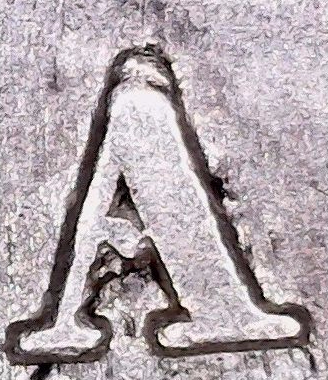
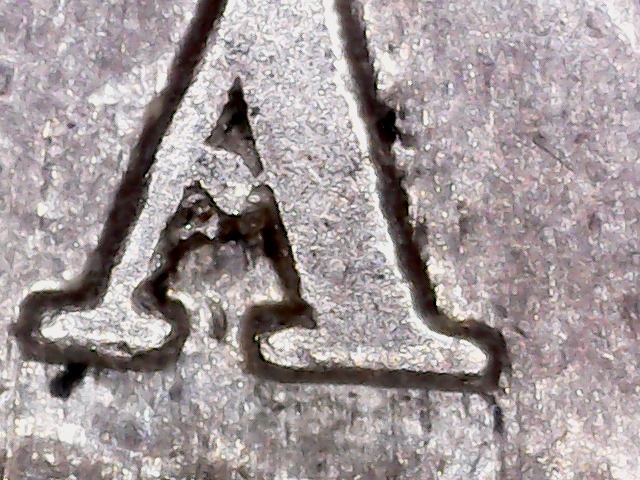
Here are some more errors on the same coin;
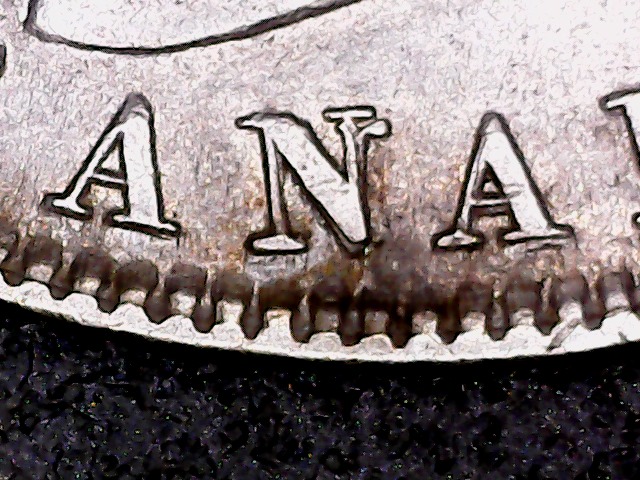
Doubled N and A's.
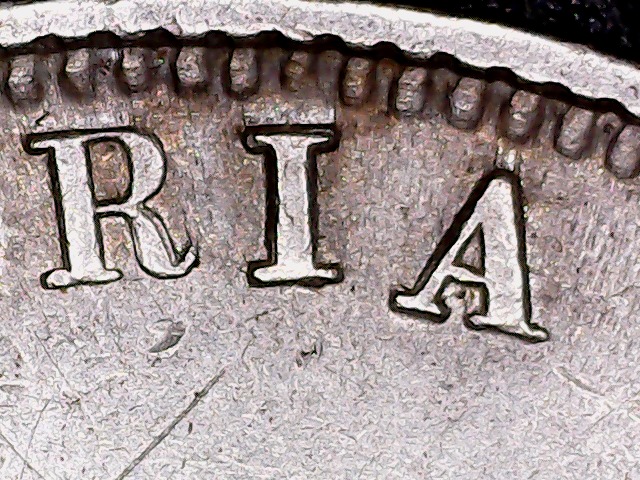
Uneven letters and doubling. The IA are out of alignment.
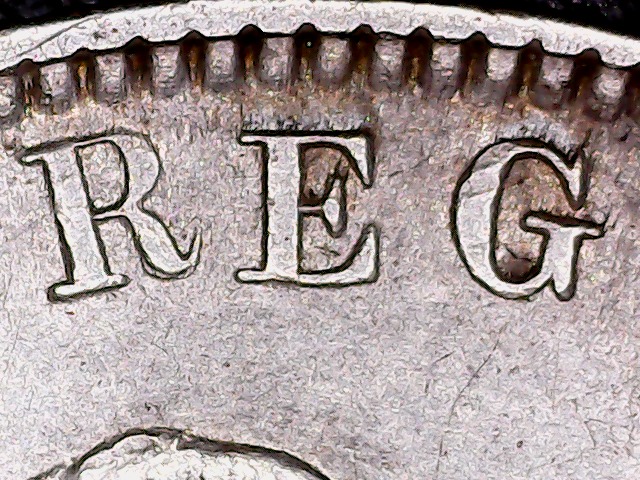
Repunched R.










 Posted 09/17/2017 5:56 pm