| Author |
 Replies: 14 / Views: 2,248 Replies: 14 / Views: 2,248 |
|
|
Pillar of the Community
United States
4233 Posts |
Gave my daughter a microscope with USB camera attachment for her birthday, and now we'll have to fight over it. 1947 Maple Leaf dollar. Not sure if the H qualifies as double HP. 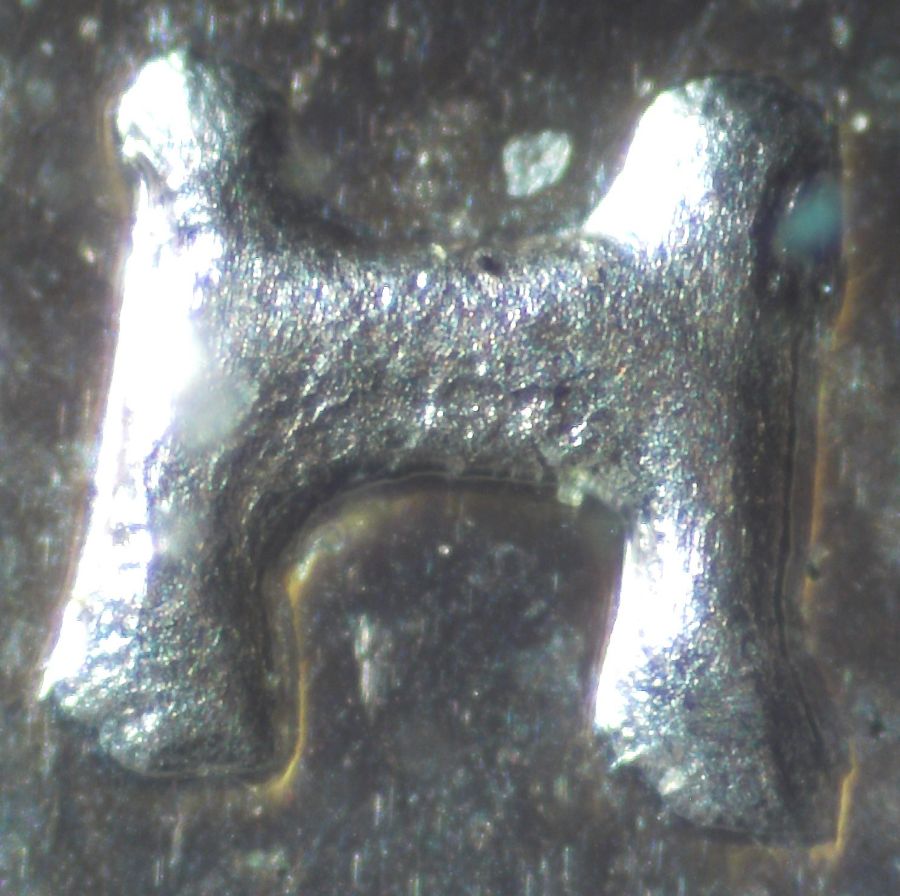 but the P sure has some stuff going on. 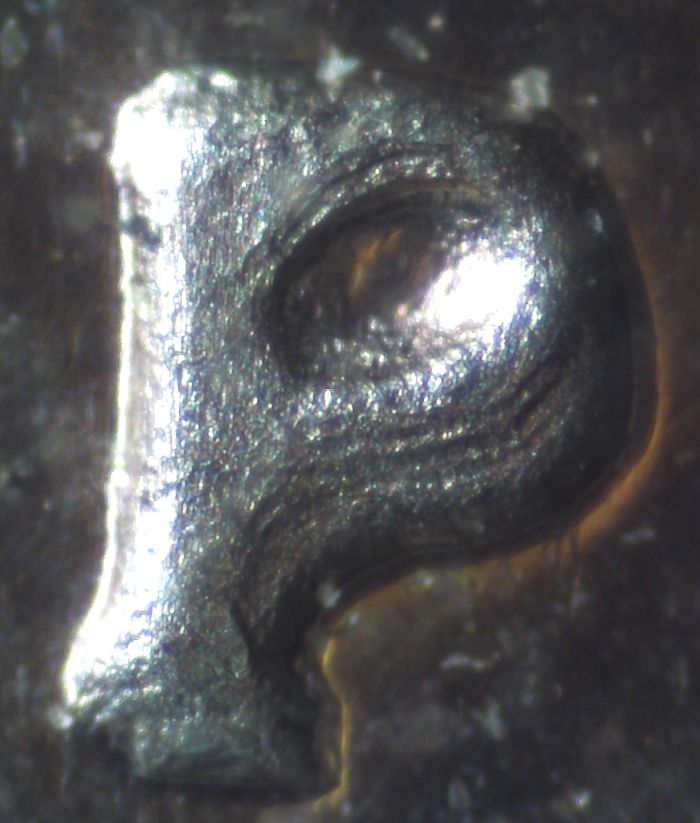 The maple leaf is pretty cool. 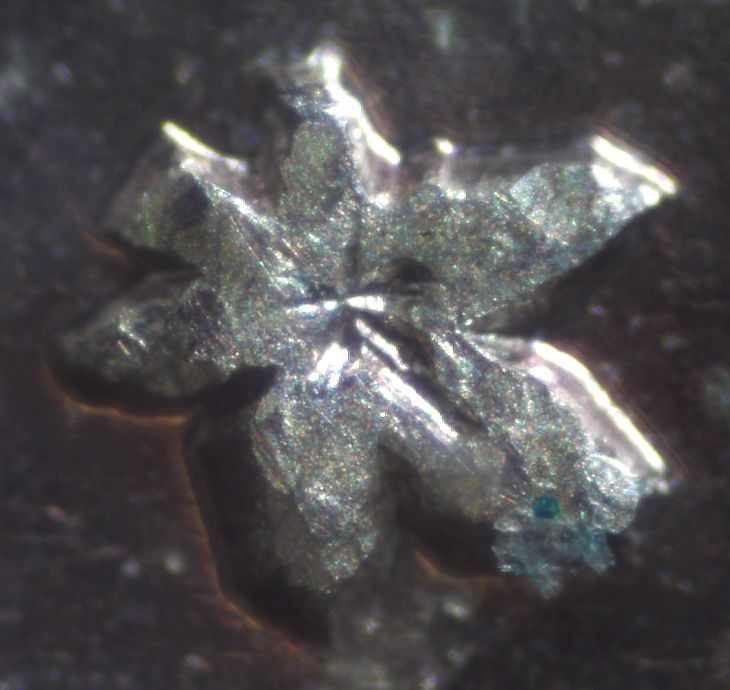 I had previously posted here somewhere that I thought the left side of N in Canada on the 1948 and 1947ML 50 cents looked tripled. Here's the 48. The 47ML looks the same. Not sure if this counts as "true" tripling or if it's just an artifact of annealing the dies. 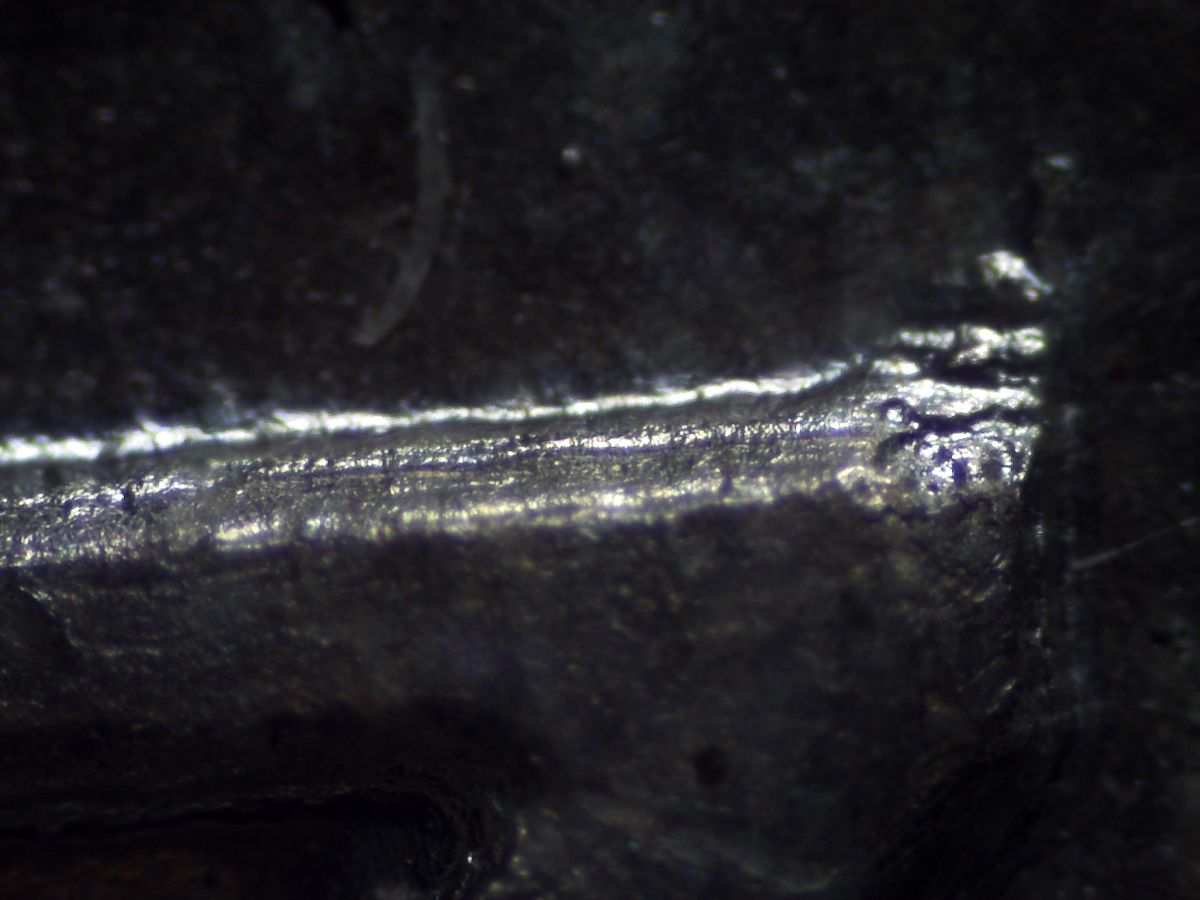 Here's part of the 4/4 on the 48. 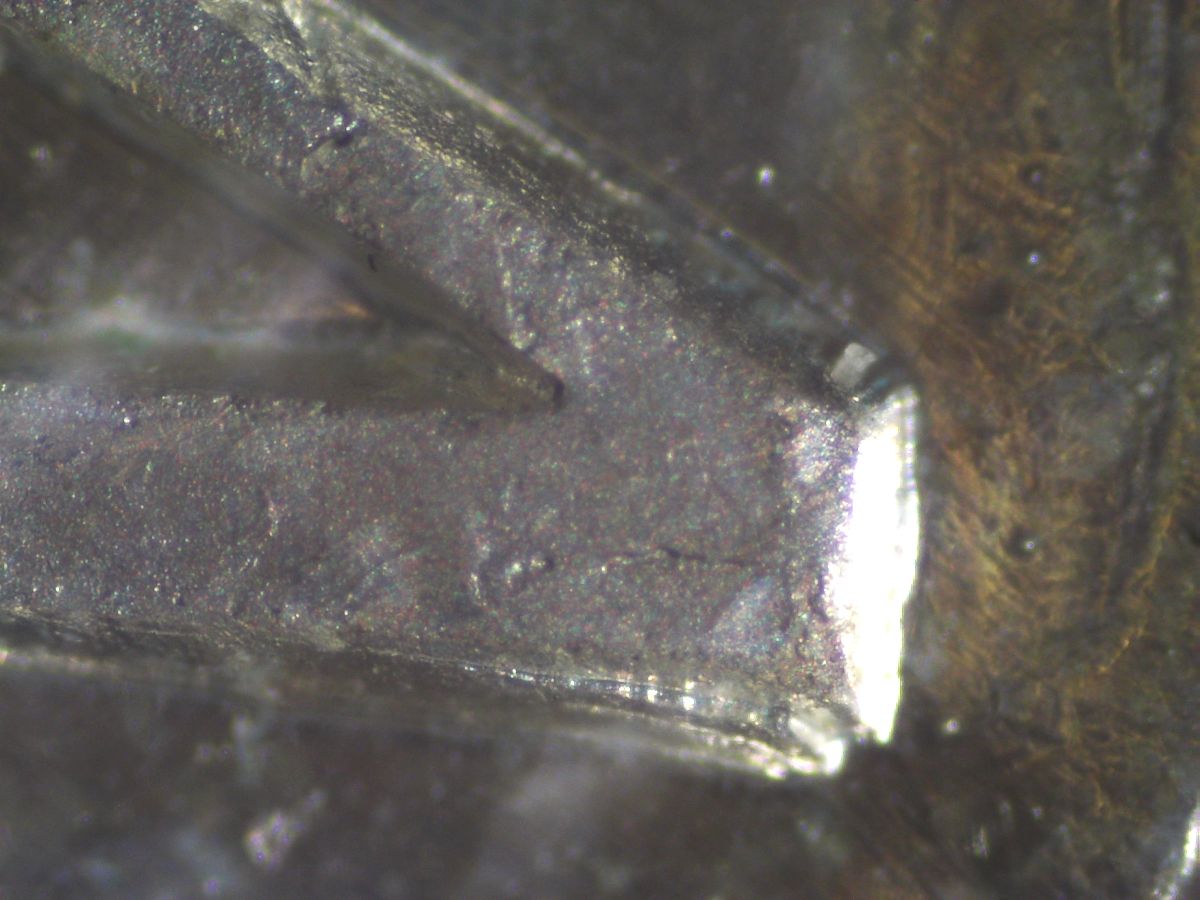 Could be 8/8 as well. 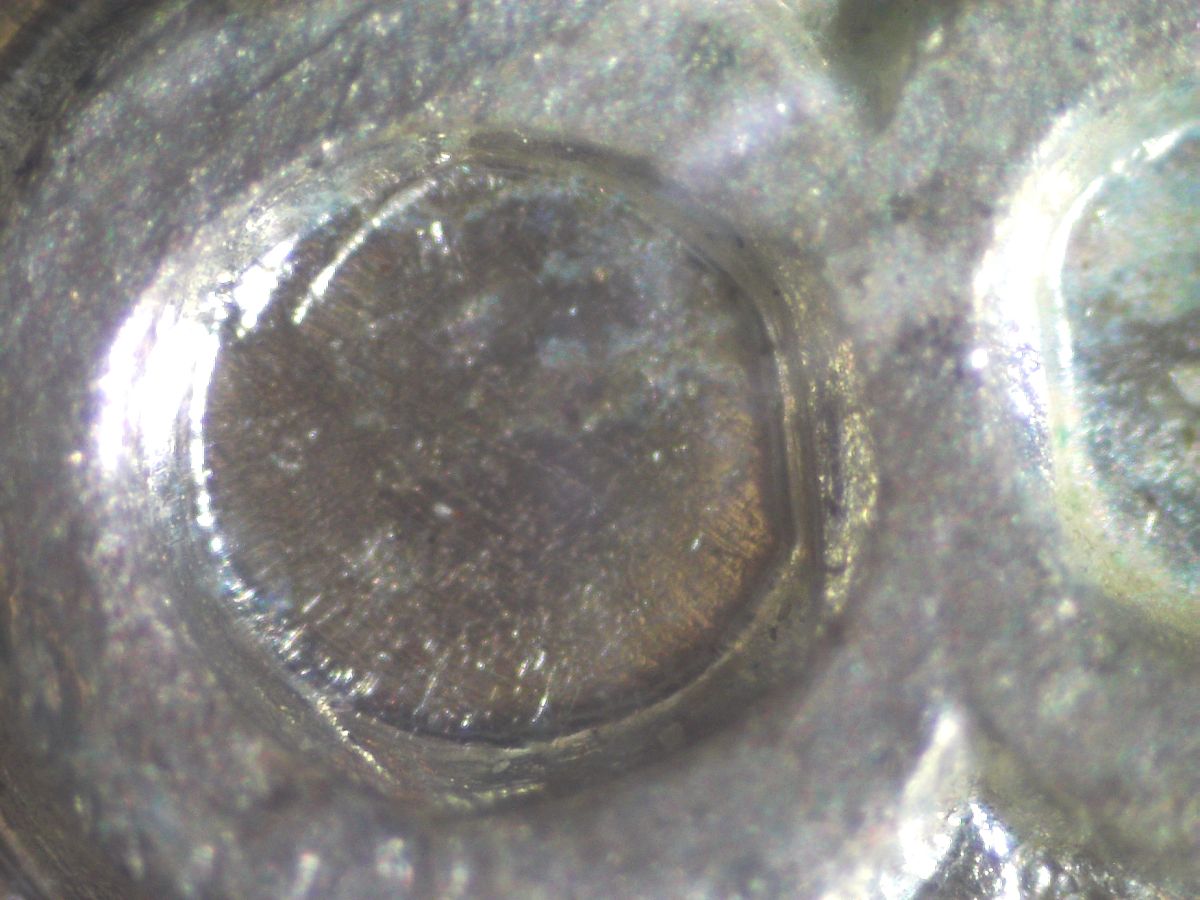 I need to figure out how to get less magnification out of this thing. It's on 10x at the scope. I need to figure out the new image optimizer too. These pics would also have been better if they weren't through 45 year old plastic. Edited by kbbpll
09/16/2017 02:50 am
|
|
|
|
Moderator
 United States
56855 Posts |
What brand and model of scope? John1  |
|
Pillar of the Community
7234 Posts |
Hope you figure it out soon - the pictures look good but way too much magnification.
|
|
Pillar of the Community
 United States
4233 Posts |
John, it's an AmScope M158C-E5 http://www.amscope.com/40x-1000x-bi...-camera.html I went straight to some coins I could never see clearly with magnifying glass but wondered about. I guess I'll read the manual now. The objective was on 4x but the digital camera eyepiece seems to go to 1000x or something... there must be a software knob I can turn. First time with one of these. Edited by kbbpll
09/16/2017 11:57 am
|
|
Pillar of the Community
7234 Posts |
There are five magnification settings, 40X, 100X, 250X, 400X and 1000X.
That seems like too much of a scope for coins. The 40X level of mag would be good but the rest seem too high for any useful purpose for coin collecting. JMHO,
Edited by Mark1959
09/16/2017 11:53 am
|
|
Pillar of the Community
United States
4233 Posts |
Yeah, I didn't buy it for coins, I just thought it would be interesting to check out some stuff I was always curious about but couldn't determine conclusively with a magnifying glass. The MD500 digital camera apparently is automatically around 40x, the lowest objective is 4x, so without a more expensive camera and a reduction lens, so far it looks like 160x is the lowest I can do pictures. I think there's a 5x eyepiece I could purchase to get normal viewing down to 20x.
I thought the P in HP was interesting - looks like they punched that die 5-6 times. And the tripling of the left side of N is something I suspect is common across George VI 50 cents.
|
|
Moderator
United States
23522 Posts |
That kind of magnification has possibilities in certain applications, it's just a narrow niche. Look into focus stacking. Your 'scope has pretty sharp focus albeit in a very narrow depth of field, and stacking can turn your images into pretty professional efforts. If the software has the ability to generate monochrome images instead of color, use that; it lessens the amount of data needing to be processed and can lead to greater sharpness. It's not like what you're shooting is color-dependent, anyway.  Another possibility - and I see it mentioned as a capability in Mac usage - is to use the system as purely an image acquisition component, and do all image processing in outside software. Third-party softwares like Photoshop and the Gimp are undoubtedly far more powerful than any included software, and relieving the camera of any processing responsibility at all will result in better images. There looks to be a lot of promise in this hardware. There's a certain subset of collectors among variety hounds - raises hand - who are as much interested in why and how it happened as the fact that it did. The sort of minute detail images like this show is necessary to answer those questions. |
|
Pillar of the Community
United States
4233 Posts |
Thanks SsuperDdave, I did see a pdf since my original post on how to merge multiple images with different focus to get one with better depth of field. Just taking them out of the plastic would probably help immensely, but I'm lazy. I too am interested in the how and why it happened, as well as confirming what I think I've seen previously and perhaps discovering new things (at least new to me). Not as interested in making pretty pictures, just good enough to confirm what's there. For example, the 4 in a 1948 dollar shows evidence of doubling/tripling. 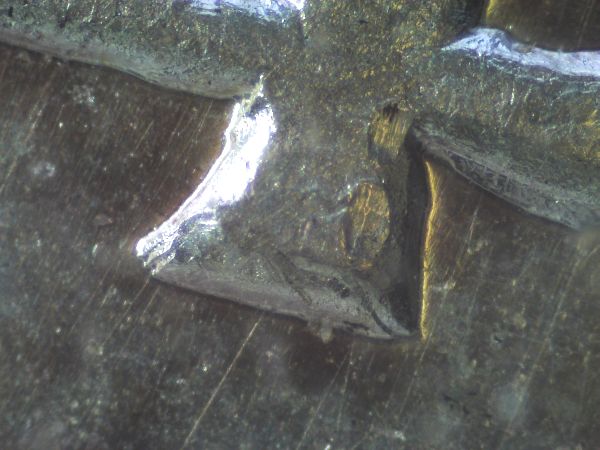 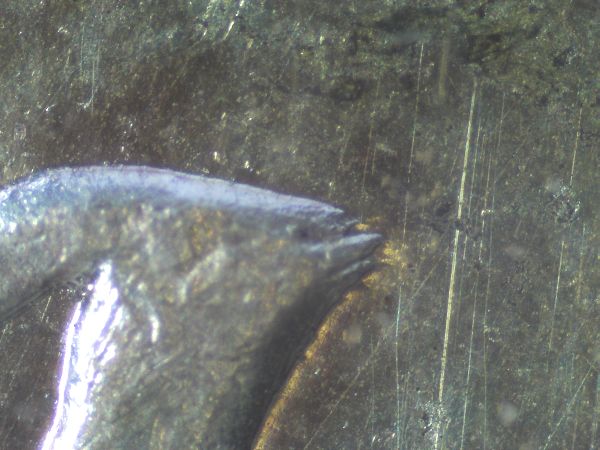 The HP is also doubled, which I have not seen documented. 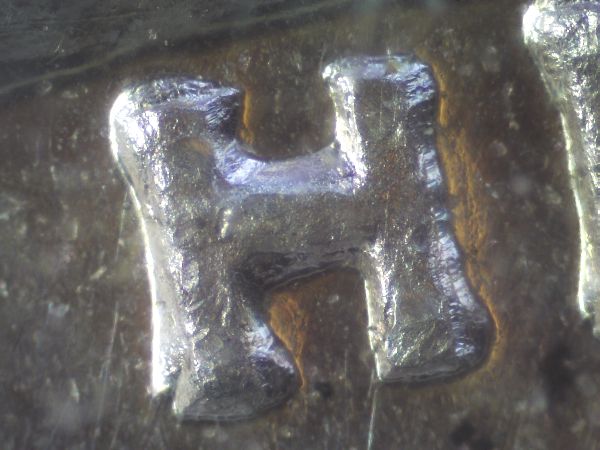 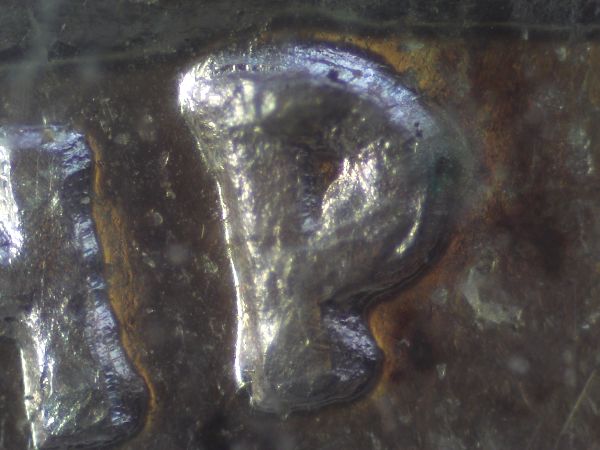 Of course, these both are probably too subtle to get recognized as "varieties", but it does make me ponder, how did it get there? Are all 48s the same? Another view of the 1948 50 cents "N" tripling effect. These are for a continuation of an email discussion from a couple years ago with @pginrh, who "wrote the book" on George VI 50 cent varieties. He concluded that this "abraded serif" started appearing in 1940 and continued through 1952. 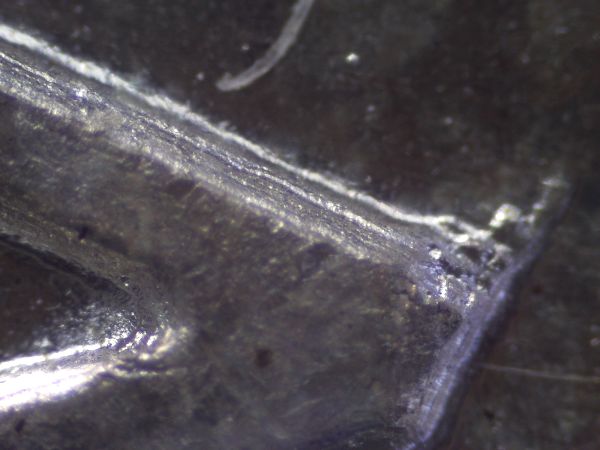 It also appears on the 9. What's interesting to me is that the edges of other letters/numbers seems quite smooth by comparison. Probably something with the pressing/annealing cycle, and I just find it interesting. 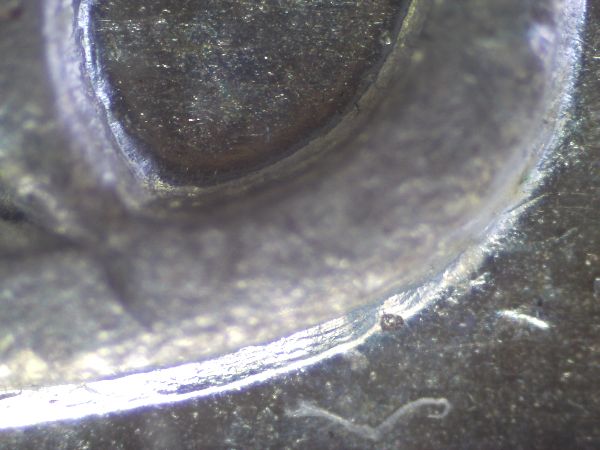 Again, continuing a discussion from here http://goccf.com/t/194753&SearchTerms=kbbpll@pginrh Quote:
On the 1948, there has been some speculation that the 8 is double punched, but not enough to catalogue. Another view of the 8. Looks doubled to me (three areas where a previous punch shows artifacts in the fields). Do all "low 4" have it? 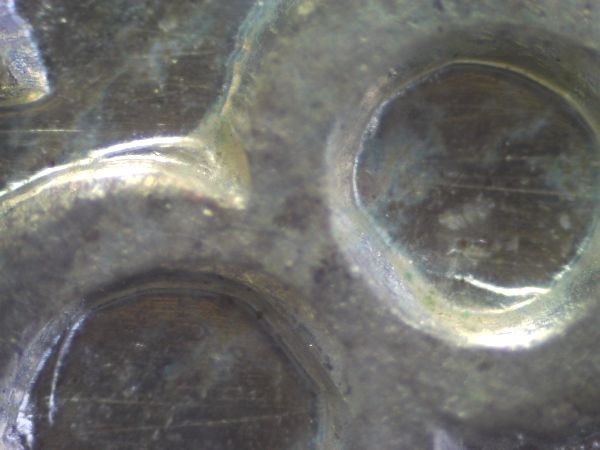 |
|
Moderator
Canada
10477 Posts |
The die doubling in the 1948 sounds interesting... interesting enough to make one almost want to write about it...  "Discovery follows discovery, each both raising and answering questions, each ending a long search, and each providing the new instruments for a new search." -- J. Robert OppenheimerContent of this post is licensed under a Creative Commons Attribution-NonCommercial 3.0 Unported License. See: http://creativecommons.org/licenses...0/deed.en_USMy eBay store
|
|
Pillar of the Community
United States
3510 Posts |
What do you see through your new microscope when you look at a modern proof coin? Are the problem free?
|
|
Pillar of the Community
United States
4233 Posts |
SPP - do I get credit for a "discovery coin"? :)
nfine - I don't have any Canadian modern proofs. I have a couple US I can look at, will be interesting. I think the age of finding this stuff might be long past since they don't do die transfer or punching anymore, if I remember right.
|
|
Valued Member
Canada
456 Posts |
The doubling on the 8 of the 1948 is more pronounced than on any coin that I have seen previously.. Nice. Will have to add it to my listings....
|
|
Moderator
United States
23522 Posts |
If there's anything in numismatics more fun than completely losing yourself in arcane details, I don't know what it is.  |
|
Pillar of the Community
Canada
3234 Posts |
With this amount of clear enlargement (it is fantastic), I would expect to have ton of new varieties coming out of this microscope..
Every coin will show something new to reflect on..
..but really nice images for our viewing pleasure..
|
|
Pillar of the Community
United States
4233 Posts |
Through the eyepiece turned out better than I thought it would. 1948 50 cent at 40x. Sorry about the annoying pointer inside the eyepiece. 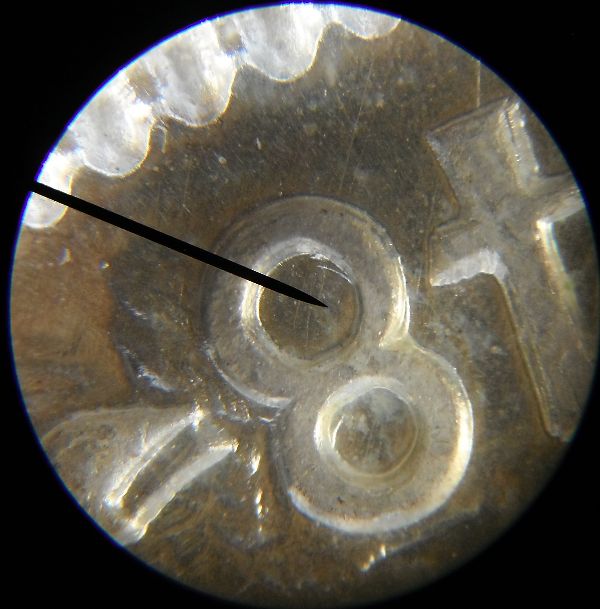 |
| |
Replies: 14 / Views: 2,248 |
|







 Posted 09/16/2017 11:20 am





