Jernigan's Lottery medal. By J.S. Tanner. Dated 1736.
This medal was given to those who purchased tickets for Jernigan's Lottery, which offered a silver cistern as a prize.
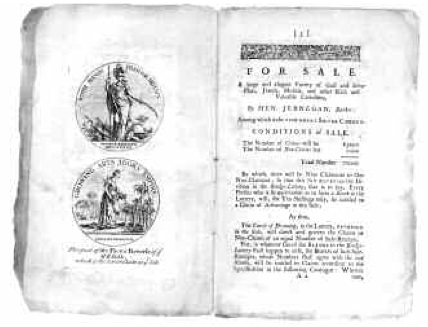
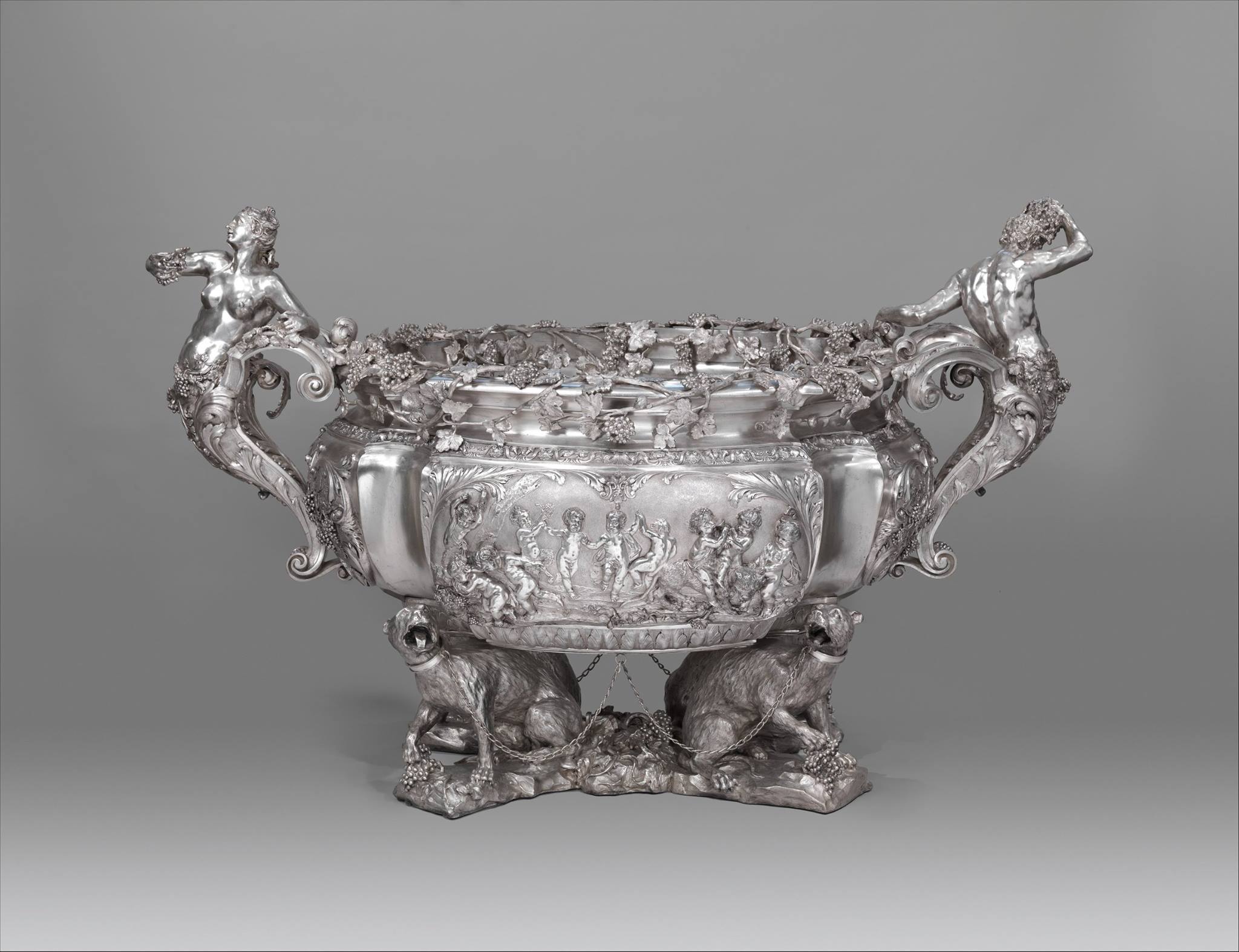
'On the 2nd of March, 1735, ., one Henry Jernegan, goldsmith, petitioned the House, stating that he had made a silver cistern, that had been acknowledged by all persons of skill . to excel whatever of the kind had been attempted in this kingdom'. (Knight 1842, p.87). Jernegan had commissioned his cistern in 1734-5 as the largest ever wine cooler, to be decorated with Bacchanalian scenes, but having failed to dispose of it, offered it as prize in a lottery; funds from the sale of tickets would go towards the rebuilding of Westminster Bridge. Lottery tickets costing five or six shillings each were sold for it, and each ticket holder was also given a silver medal, valued at about three shillings. About 30,000 tickets were sold, and much money raised for the bridge works. The medal was designed by H.F. Gravelot and cut by John Tanner of
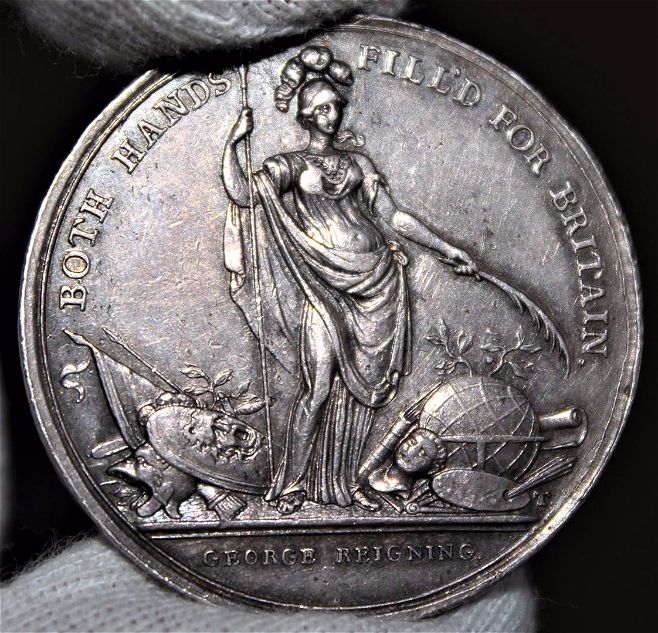
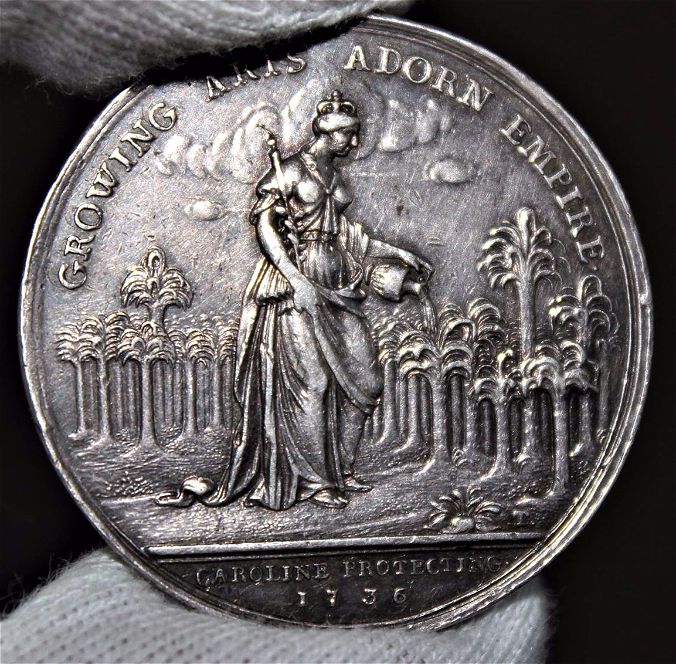
The Royal Mint. It depicted Minerva with spear and palm branch standing between a pile of arms and emblems of the arts and sciences on the obverse, and on the reverse, Queen Caroline watering a grove of young palm trees, referring to her well known love of botany, as well as the nurturing of 'green shoots' of knowledge.
The cistern was commissioned 1734-5 in London by Henry Jernegan (Jerningham) of Russell Street, a London goldsmith-banker, whose client, Littleton Poyntz Meynell, wanted to have the largest ever silver wine cistern ever to have been made. Jernegan employed the sculptor John Michael Rysbrack to model the Bacchanalian scenes on the bowl, the crouching panthers beneath and the satyr handles. It took a team of silversmiths, chasers and engravers four years to make and weighed 8,000 ozs. The leading silversmith, whose mark is struck on the cistern, was the German immigrant, Charles Kandler (probably Carl Rudolf Kaendler, elder brother of the famous Meissen porcelain modeler). When asked by Henry Jernegan to pay the final bill for the cistern, however, Meynell refused and in 1737, Jernegan offered the cooler as a lottery prize. The smallest prizes in the lottery were specially struck medals about five or six shillings each. The winner, Major William Battine of East Marden, Sussex, appears to have sold the cooler to the regent Grand Duchess Anna Leopoldovna of Russia in 1738. Since 1743 the cooler has been in the Hermitage Museum, St. Petersburg.
The Cistern Medal or the Carolina Medal, as it is commonly known, has an erroneous history due to the inaccurate cataloging of Mr. W. H. Strobridge, who believed the medal was created to commemorate the division between North and South Carolina. In actuality, 30,000 medals were created as a lottery ticket of sorts for the ownership of an excellent wine cistern, created by London goldsmith Henry Jernegan. Obverse depicts Britannia with a spear and palm branch, standing on war trophies. Around the image states, "Both hands fill'd for Britain" and exergue, "George reigning". Reverse depicts the Queen watering young palmetto trees, while holding a scepter. The Queen's protection over the artist is indicated by her consent to be featured on the medal.





 Posted 09/22/2017 7:03 pm





