| Author |
 Replies: 12 / Views: 2,495 Replies: 12 / Views: 2,495 |
|
|
New Member
United Kingdom
8 Posts |
Hi guys, I have found what I think is a sestertius of Domitian, but I'm really having trouble finding an exact example of the same coin,the obverse legend has COS XII , similar items I've researched have different numerals on it, can anyone help with the identification of this coin 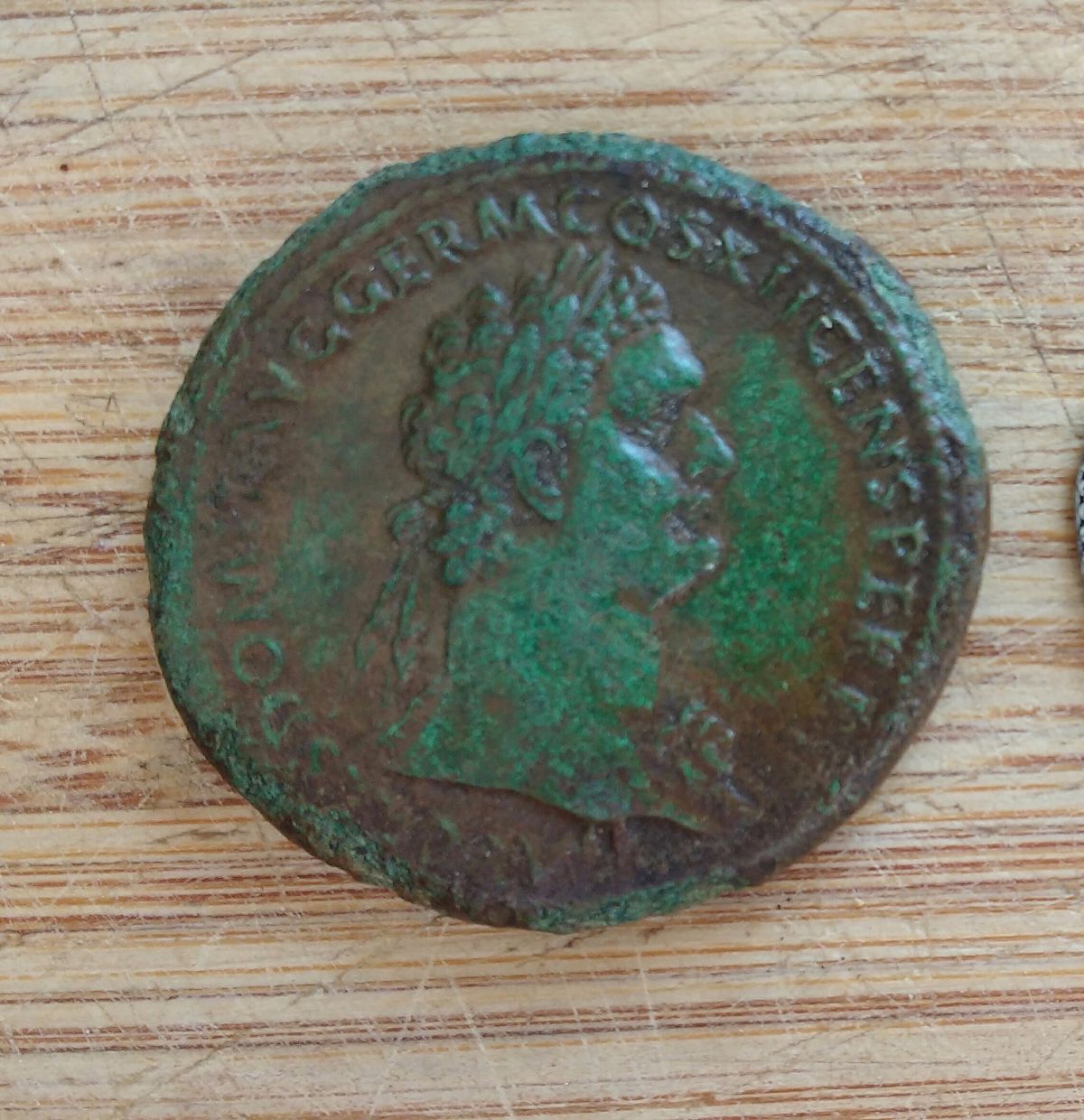 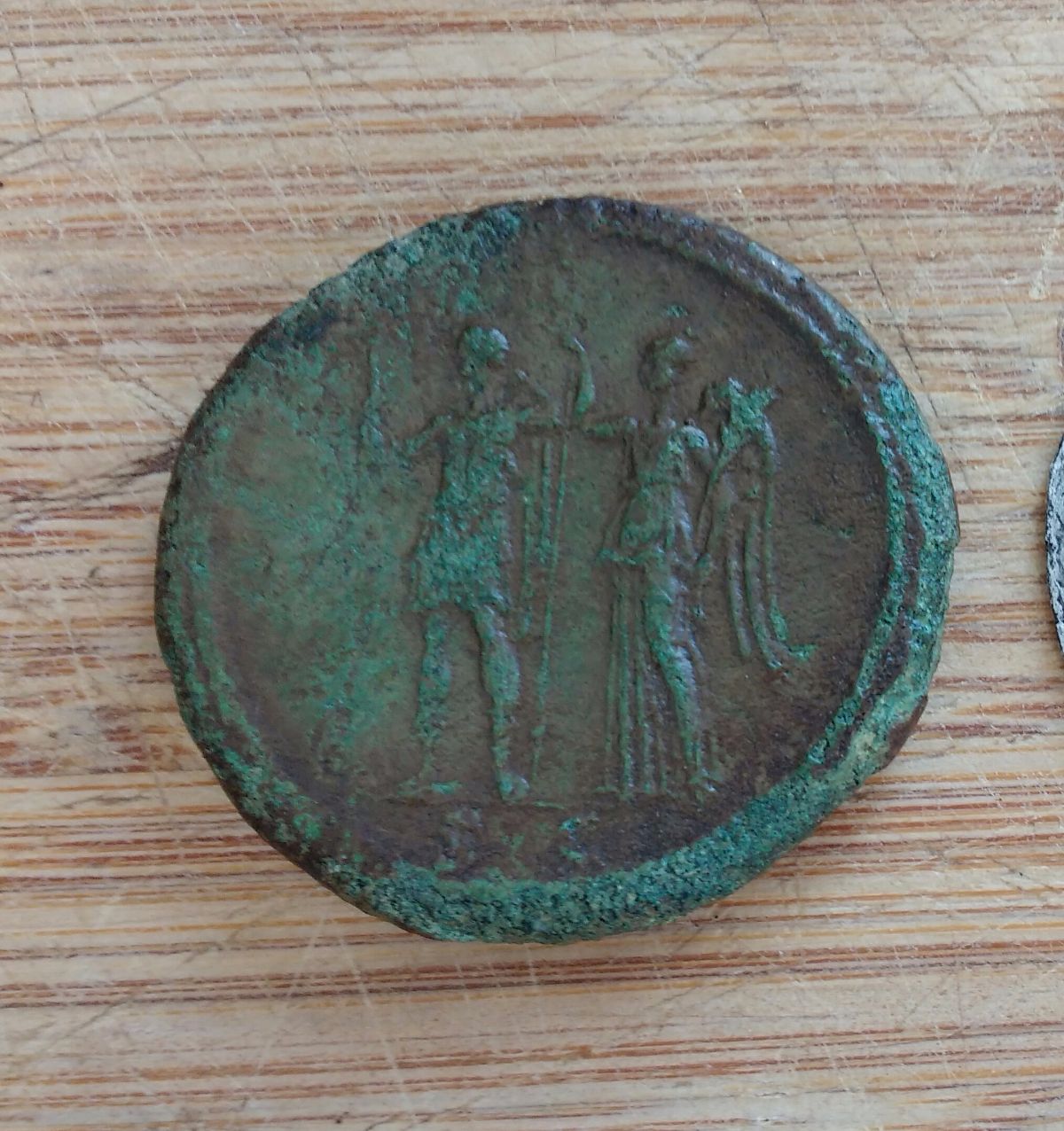 |
|
|
|
Pillar of the Community
United States
3495 Posts |
Funny someone I know was trying to tempt me with the same type just last week.
From my discussion with my friend he told me that this type was produced through most of Domitians reign. If that is true (likely) then the COS numbers would change several times at least !
If you google Roman consuls you can find the list to narrow the year this one was issued.
I notice some edge corrosion which is somewhat troubling.
This coin may have bronze disease and be coated with something to forestall it crumbling into dust.
The weight may help indicate if it is serious.
Corrosion weighs less than bronze !
|
|
Pillar of the Community
Netherlands
534 Posts |
A really nice find! Congrats! Domitian, AE sestertius, AD 86, Rome. Legend: IMP CAES DOMIT AVG GERM COS XII CENS PER P P, Obv: laureate head right, aegis on shoulder Rev: SC beneath Domitian standing left, holding thunderbolt and spear, crowned by Victory standing left behind him. Ref: RIC 474; Cohen 406; BMCRE 381; Sear 2774. 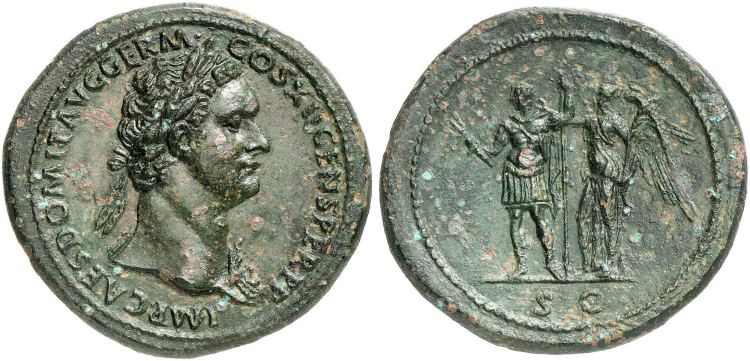 Edited by Archeo1982
10/19/2017 5:31 pm
|
|
Moderator
 United States
34543 Posts |
Quote:
This coin may have bronze disease @michael 1965, I am very concerned about the bright green color on most of the surfaces of your coin. I would recommend first a soak in acetone to make sure that it wasn't added recently. Then I would read other posts here on CCF about treating bronze disease, starting with this one: http://goccf.com/t/61519"If you climb a good tree, you get a push."
-----Ghanaian proverb
"The danger we all now face is distinguishing between what is authentic and what is performed."
-----King Adz
|
|
Moderator
United States
23731 Posts |
Very nice looking coin. The edge on the reverse might be the start of bronze disease, If it is powdery and co m e off when you rub it than you have to worry. The rest of the green color on the surface looks OK and is the patina on the coin.
|
|
Valued Member
Australia
205 Posts |
Nice coin! Here is one I used to own 12 years ago and now I wish I had never sold. Domitian; Sestertius;92-94 AD; IMP CAES DOMIT AVG GERM COS XV CENS PER P P laureate head of Domitian facing right / IOVI VICTORI, Jupiter seated left holding Victory in extended right hand; S C in exergue; 24.78 grams; RIC II 388; BMCRE 439; BN 476; Cohen 314 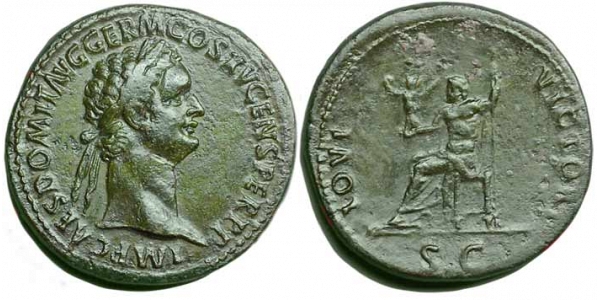 Edited by greekandromancoins
10/20/2017 03:00 am
|
|
New Member
 United Kingdom
8 Posts |
Hi all thankyou for your replies, I can confirm this coin was found by myself so I know it's genuine,it does have a bit of bronze disease but I'm hoping that when I have it recorded that the museum will offer to do it for me, if not does anyone know if it worth paying someone to clean and preserve it properly? Thanks for all your helps,
|
|
Pillar of the Community
United States
3495 Posts |
One problem with the BD is that you need determine how far the disease has spread.
Getting the precise weight of the coin would help me in diagnosis. BD can often spread beneath the surfaces that seem to be okay. The edges look like they may have it bad. If there is no solid bronze beneath the areas of corrosion the diagnosis is not good. The overall weight will be indicative. Corrosion is light while bronze is heavy.
Edited by FVRIVS RVFVS
10/20/2017 1:48 pm
|
|
New Member
United Kingdom
8 Posts |
Hi there, it weighs 26.5 grand,if that helps, I don't know what it's supposed to weigh? Regards Michael
|
|
New Member
United Kingdom
8 Posts |
Reference my last reply, it weighs 26.5 grams
|
|
Pillar of the Community
United States
3495 Posts |
26.5 is very encouraging !
Weights can and do vary conciderably. But at this weight the coin must be metal.
I once had a Postumus double Sestertius with a similar appearance. Despite its size it had a very low weight. I put it through the 'cure' and the results were disappointing to say the least. Removal of the diseased areas led to chipping of the beautiful green patina which exposed even more BD which had spread beneath the surfaces.
Proceed slowly whatever you do !
A short bath in acetone followed by a long bath in distilled water might be enough to start.
|
|
New Member
United Kingdom
8 Posts |
Thankyou very much for your help,its going in to the museum in a few weeks,should I do this now or can I wait until then? Is acetone what is used to remove nail varnish? And when you say a short bath in how long should I leave it in the acetone?
Edited by Michael 1965
10/22/2017 02:47 am
|
|
Pillar of the Community
United States
3495 Posts |
You have indicated that you found it yourself so it would be rather surprising if acetone changed it very much !
Acetone will remove most artificial coatings and dissolve any oils covering the surfaces.
In this case the acetone should remove minor amounts of dirt but the primary purpose is as a desiccant. Half an hour should leave it bone dry.
This is the ideal starting point for further treatments. Immersion in distilled water or another chemical bath like sodium sesquicarbonate
|
| |
Replies: 12 / Views: 2,495 |
|










 Posted 10/19/2017 5:29 pm


