| Author |
 Replies: 9 / Views: 4,065 Replies: 9 / Views: 4,065 |
|
|
Valued Member
United States
114 Posts |
First, CCF members! Thank you for being so kind and supportive to a newbie that's trying to learn!
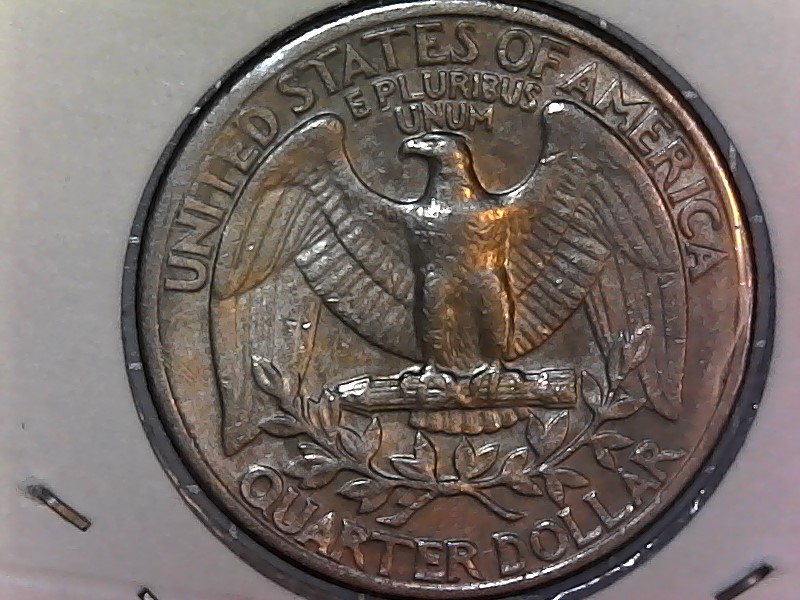
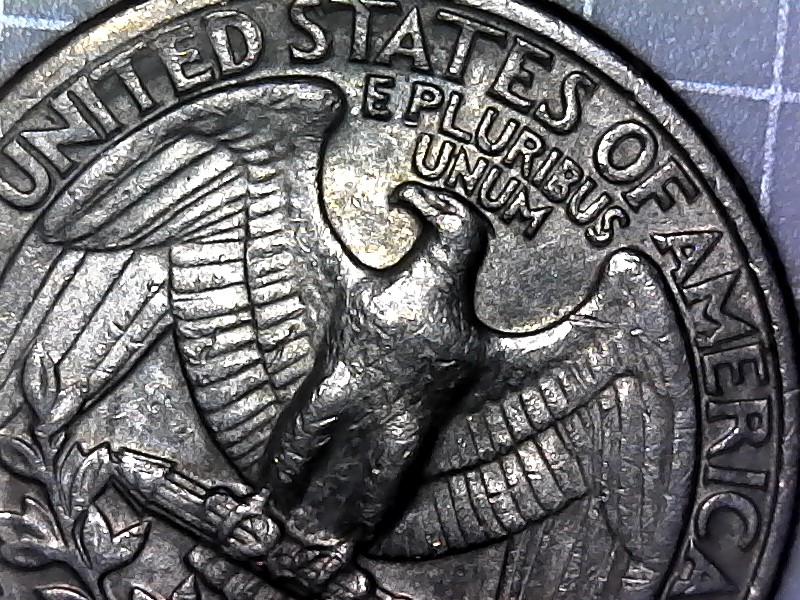
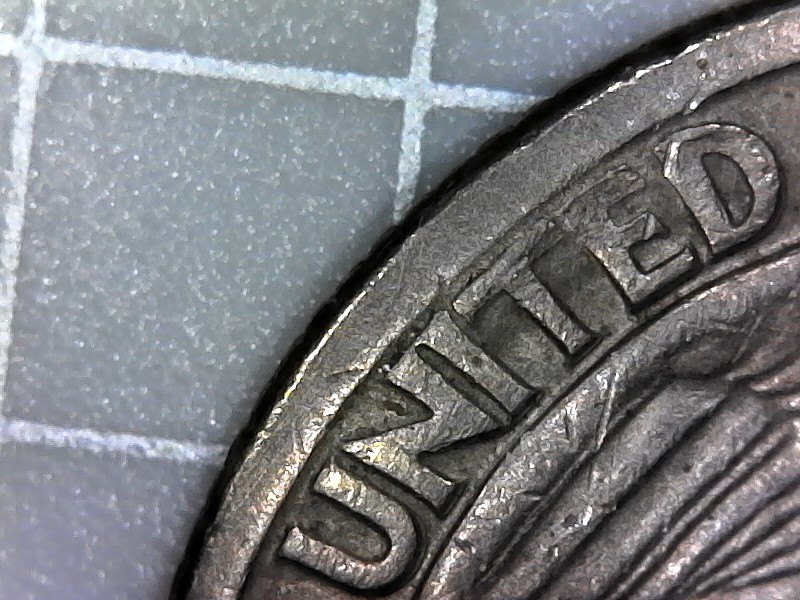
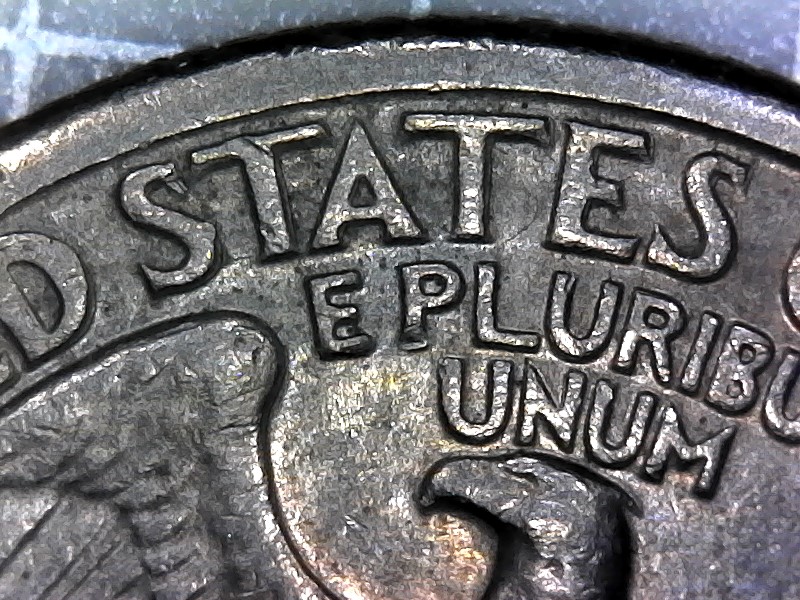
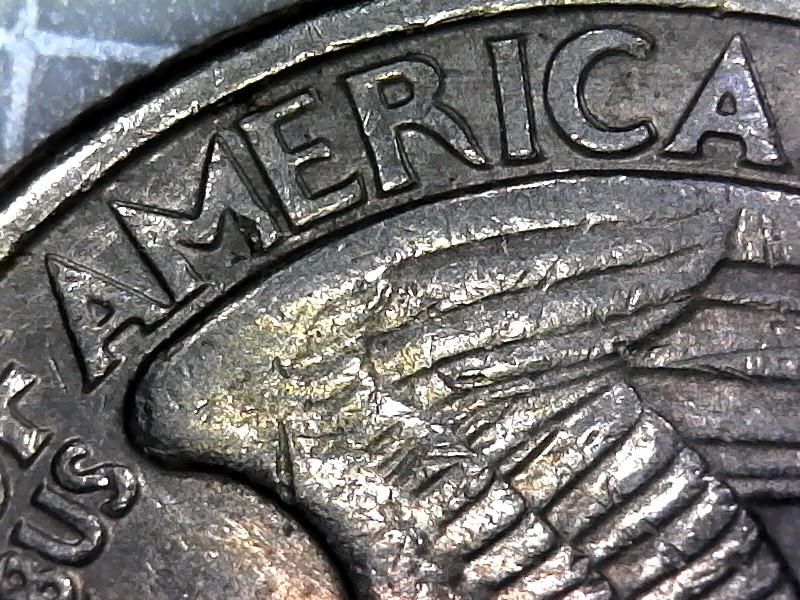
On the Reverse, my uncle caught the doubling of UNITED STATES OF AMERICA which took me a while to see.
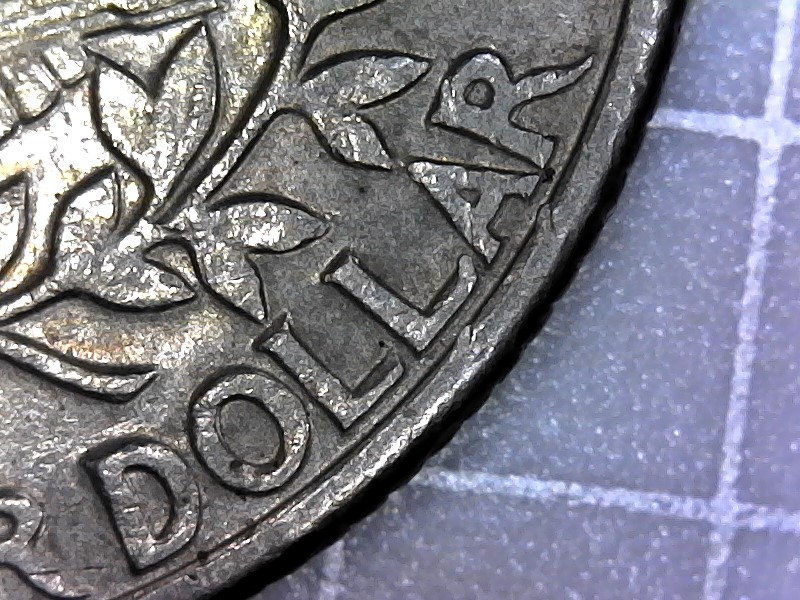
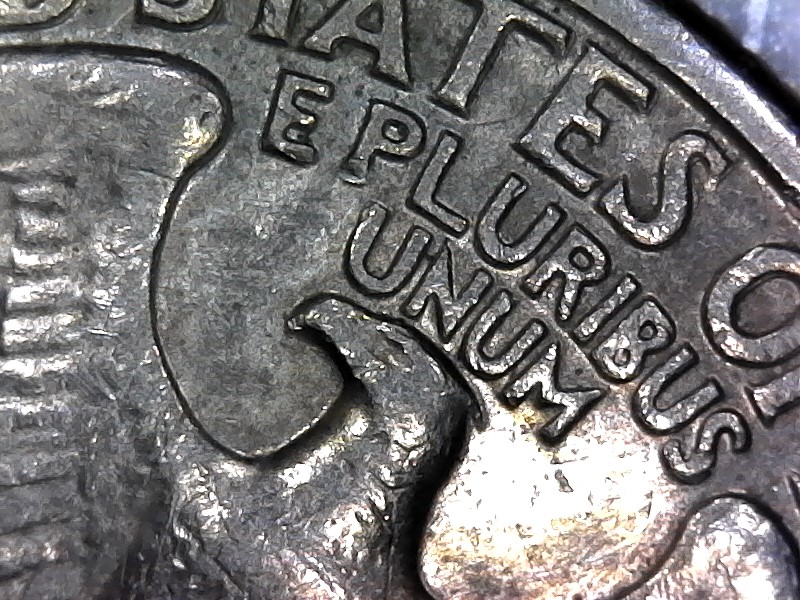
So I then looked at QUARTER DOLLAR and see some doubling there yet don't see it on E PLURIBUS UNUM.
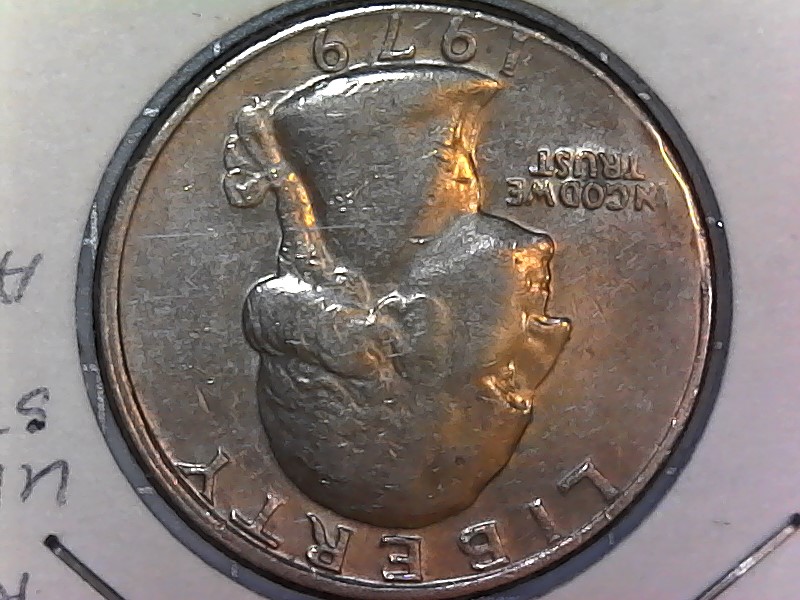
I looked further a other letter on Obverse as well and didn't see any more examples nor in the general coin design.
Is this common for letters to be double struck like this yet not the rest of the coin?
Thanks for your help!
Edited by Bluevase
11/03/2017 2:39 pm
|
|
|
|
Valued Member
 United States
114 Posts |
|
|
Pillar of the Community
 United States
2843 Posts |
That is what is called MD. It is not double struck, but the die shifted during the strike, resulting in damage to the lettering.
|
|
Valued Member
United States
114 Posts |
MD - Mechanical Doubling. Hmmm, new term and since the glossary's double die definition says the die is struck more than once, this is not the case for this coin. double(d) die A die that has been struck more than once by a hub in misaligned positions, resulting in doubling of design elements. Before the introduction of hubbing, the individual elements of a coin's design were either engraved or punched into the die, so any doubling was limited to a specific element. With hubbed dies, multiple impressions are needed from the hub to make a single die with adequate detail. When shifting occurs in the alignment between the hub and the die, the die ends up with some of its features doubled - then imparts this doubling to every coin it strikes. The most famous doubled die is the 1955 Doubled Die Lincoln Cent. PCGS uses doubled die as the designation. So what is the difference between Mechanical Doubling, "not double struck" and Double Die "struck more than once by a hub in misaligned positions, resulting in doubling of design elements"? Sorry for my ignorance and thank you for your help! |
|
Bedrock of the Community
United States
94367 Posts |
|
|
Pillar of the Community
United States
7587 Posts |
Definition Mechanical Doubling, also called Machine Doubling or Strike Doubling, a form of doubling which appears on a coin and is easily confused with doubled die strikes. On a true doubled die coin, the doubling comes from a mistake in the process used to make the coin die itself. In mechanical, or Machine Doubling, the doubled image results from mechanical issues during the striking of the coin, such as the coin shifting during striking, or the die itself being jarred out of position as a result of vibration or improper coin press maintenance. Mechanical, machine, and strike doubling are all considered by purists to be forms of damage, and are therefore not collectible as an error coin. Doubled Die CoinsA doubled die coin is a coin that was struck from a coin die that had a partial or full doubled image on it. The doubling comes from mistakes in the die hubbing process, where more than one image is transferred from the hub to the coin die. The 1955 doubled die Lincoln Cent (see photo) is the classic example of a doubled die, and sparked the start of the error coin collecting hobby in the U.S. Although no other doubled die types exhibiting the remarkable degree of doubling seen on the 1955 cent have emerged from the U.S. Mint, noteworthy doubling has also been found on 1972 and 1995 Lincoln Cents. Not Double StruckMany people mistake double struck coins for doubled die coins. The key difference between the two is that double struck coins are struck while the coin is in the coining chamber of the coin press. When this happens, the first impression is flattened, or sometimes obliterated by the second strike. Subsequent strikes will also flatten or obliterate the design from earlier strikes. Doubled die coins are manufactured from coin dies that were not properly made. As indicated above, it takes several impressions from the coin hub to make a coin die. If the mint employee does not align the hub perfectly above the coin die, a second impression will result on the coin die that is slightly off center from the first. If this coin die is used to make coins, all coins made from the die will have this doubling effect.
Edited by Chase007
11/03/2017 3:22 pm
|
|
Valued Member
United States
114 Posts |
Chase007, Wonderful. This is going into my personal glossary of coin definitions. Thanks for taking the time to help me understand this. And, since purists are going to be the most avid coin collectors, this is not collectible as an error coin, as you stated. Whew! Exponential learning here!! Thanks CCF for incredible tool!
|
|
Rest in Peace
10197 Posts |
Bluevase Check this out. Will help you see the differences
|
|
Pillar of the Community
United States
7587 Posts |
Bluevase,
You are welcome,glad to be of help.
|
|
Valued Member
United States
114 Posts |
Crazyb0,
Thanks, will reference that before any further posting of error coins.
|
| |
Replies: 9 / Views: 4,065 |
|










 Posted 11/03/2017 2:26 pm





