| Author |
 Replies: 12 / Views: 1,133 Replies: 12 / Views: 1,133 |
|
|
Valued Member
United States
51 Posts |
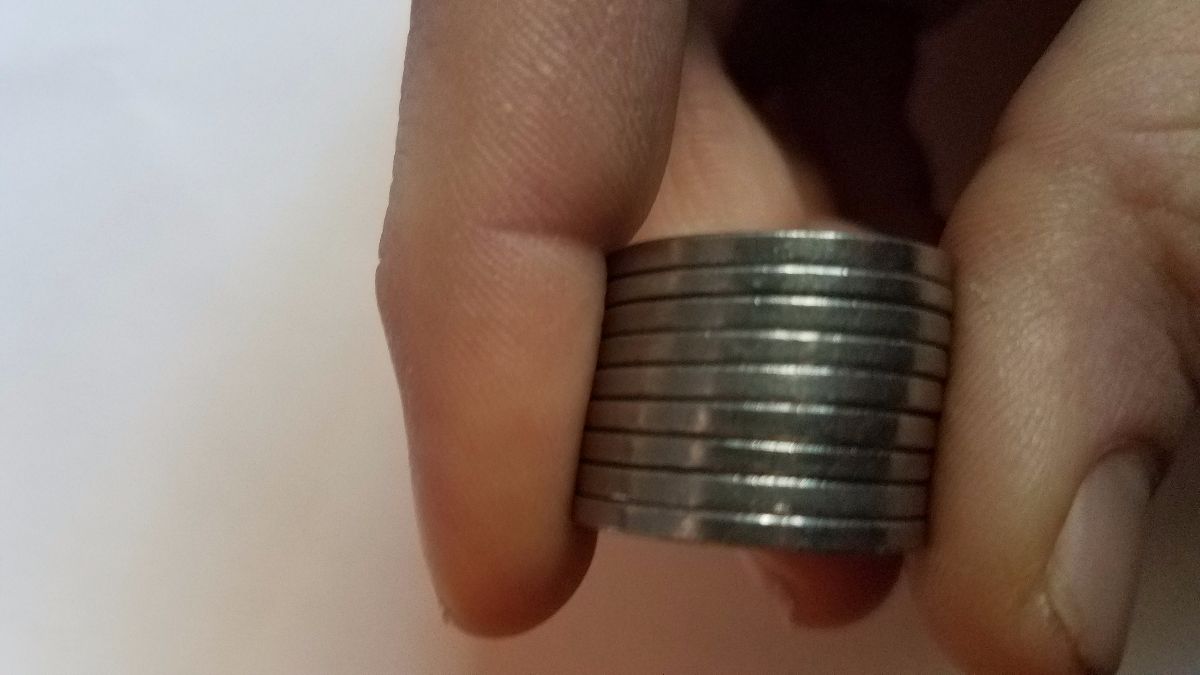
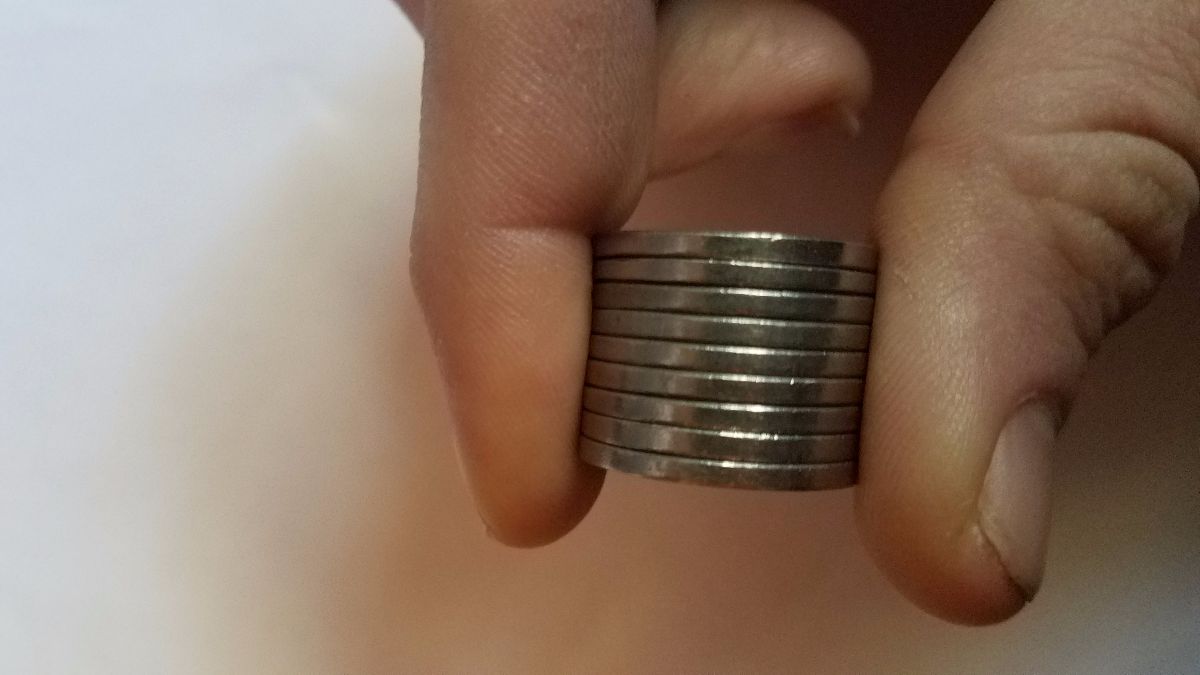
I'm finding it's sort of hard to take a picture, I'd like to show you guys but I'm going to explain it and see if maybe you guys can help me out that way. So I found a few nickels, specifically from the years 1998, 1970, 2000, and 3 from 2003, all of these had the thinnest area of the coin located near the neck. I have found a few another dates including the 1980s that have thinning located in a different section, but I only pulled the ones that had the thinning on the neck. The outside Ridge is definitely normal as far as impression goes and distance in word. I found it while I was looking over the coin sides for small exerted lines on the edges witch I read about in my research, and that's when I noticed that some of the coins seemed either warped or thinner in certain places, I have doubles of a lot of the years and have looked at them next to each other and there is definitely a difference. I would chalk it up to just being where from someone using it on lottery tickets or something like that but As seeing that it seems to fall into the same sections almost like the way they would cut out a piece of metal out of a sheet I thought I would ask in case it was something like a faulty metal press machine. By the way I've noticed it on coin starting in the 1970s and going up to at least 2001. Thanks
*** Moved by Staff to a more appropriate forum. ***
|
|
|
|
Rest in Peace
10197 Posts |
Grease filled strikes perhaps? Don't really understand. If you're talking directly on the chin/neck to field area? That could be a strike pressure difference, all aren't the exact same. Now there is the chance of thinner rolled stock, but this would put the finished coin at lighter weight. You seem to be indicating a design/element change, disappearing(?)...that may be a die polishing that has gone deep into the die to remove a clash effected area( try overlay to see if area matches up to where the reverse Monticello might hit). All guesses, need pix w/ arrows indicating what you're asking.
|
|
Valued Member
 United States
51 Posts |
Well the design elements are all normal, even the bridge around the outside of the coin is it normal thickness and all areas and there are no areas jutting out around the external edge of the coins, there is no indication that this coin is any different and I currently don't have a scale to test my theory. I'll work on getting a picture of it but so far I've just had no luck, although the specific coins I am talking about had the thinning near the neck, these are the only ones I pulled out. I found coins starting in the 1970s all the way up to 2004 that had a thinner section and it doesn't seem to be isolated to the neck area, other common areas I found it at are near the word Liberty and towards Jefferson's head, it almost looks like a machine they set up in the 70s and used up until recent years for the thinning of the metal before punching the planchets, it almost looks like the mint could have very easily had multiple thinned areas before punching which would explain why the thinning areas don't always line up especially for the same date and especially for all the coins of different dates that have thinning in the same area, maybe I can take pictures of the coins when I have a legitimate measuring tool or better camera. But it seems to be more apparent on the coins from 2000 and 2003 but I have found it on a coin from 1970 with the same area.
|
|
Valued Member
United States
51 Posts |
What I mean about same area is like how I said it and the first post, the same area being the neck area, or the area next to the word Liberty, or the area towards the top of Jefferson head. And when I say area I'm talking about the area of the wall of the coin so not the obverse or reverse face, it is the outside of the coin that seems to show the thinning
|
|
Valued Member
United States
51 Posts |
|
|
Valued Member
United States
51 Posts |
Ok the top is the wide or normal side and the second is the thinned side,hope these pics help.
|
|
Rest in Peace
10197 Posts |
Sounds much like a polishing affect. Like a portion of the neck "disappears"? Areas you are describing are called "fields", the flat areas on a coin. Remember to think in reverse when talking dies//coins. The field of the coin IS the flat upper surface of the die, the devices are infused into the die so images can be transferred. The field area on the dies get affected by all kinds of problems, clashes, debris, feeder finger and ejector scratches, small chunks of crap that become imbedded through repetitive poundings. These are removed from the die face through polishing with a diamond paste/solutions and if necessary wire brushes. At times if the blemish is deep, a hard buffing will take off more surface on different points of the dies. This can also cause the "grease-filled" strikes, that compound isn't completely wiped off, gets into the "holes" (devices/details) causing loss of definition in specific areas. This fill is quite hard and compacted, hard as if not harder than the metal allowed of the die itself. At times these fills will "fall out" of the device causing a "struckthru debris" effect on future coins.
|
|
Valued Member
United States
51 Posts |
Thanks, it's starting to sound like a possibility, especially because it shows up in different places on the same year over multiple years. Upon closer inspection it does seem that the Rim just below the neck is indeed closer to the flat of the obverse. What would you call this then, is it a mint error or a mint error repair or can it be classified as just part of the normal process of making coins
|
|
Rest in Peace
10197 Posts |
Strikethrus are "collateral damages"!  Jut normal machining problems of the process. Like that "floating roof" on the back of 69D/70D Lincoln cents, or the "no FG" on Kennedy's. Polishing does these, now some, may have value like the no FG, IF, and only IF the mint itself polished the initials ALL THE WAY GONE! These can be faker coins, if ANY residual is there, it ain't the error. Greasers generally don't hold any premium values, some just can really look neat! Now, on your pix, laterally side to side? Wedge shaped? That's normal. When coins are stamped, there's a period after the downward strike where high hydraulic pressure is applied. Because there are alignments, some flexiblites are built in. Things may shift a bit naturally(stress reduction) so breakage doesn't occur,or could just be loose. Think of it like walking, how you shift weight along points of our foot. Edited by Crazyb0
11/28/2017 1:42 pm
|
|
New Member
49 Posts |
At what magnification did you find this at? Nothing to see here folks move along move along. It's called a normal coin sorry. Same mistake I see a lot of people make. LOOK AT YOUR COINS WITH YOUR EYES AND A 5X MAGNAFYING GLASS. under extreme magnification everything looks like an error!!! IF you see something odd pull it and reinspect under no more that 50X to 60X magnification. Try it it has worked for me for over 40 years
|
|
Rest in Peace
10197 Posts |
Reeds253, some people may need an answer instead of outright egotistical criticism. So you've "done it for 40 years", so have a lot of us. How may I inquire did you "divine" your info rewarding OPs mag factor?
|
|
Moderator
 United States
196744 Posts |
Let us all pause here for a moment and remember why we are here. We are here to help.
|
|
Valued Member
United States
51 Posts |
I don't own any magnification tools yet and at the moment I only have a ruler,I'll look into those specifications when I am buying gear. I was thinking of getting an automotive style spacer or something along the lines of that in order to tell acute variations. Its cool to know how it can occur .I did post for knowledge and all critiques is new info to add to the bank,thanks everyone for your input.
|
| |
Replies: 12 / Views: 1,133 |
|







 Posted 11/28/2017 11:56 am