| Author |
 Replies: 23 / Views: 2,354 Replies: 23 / Views: 2,354 |
|
Pillar of the Community
United States
1450 Posts |
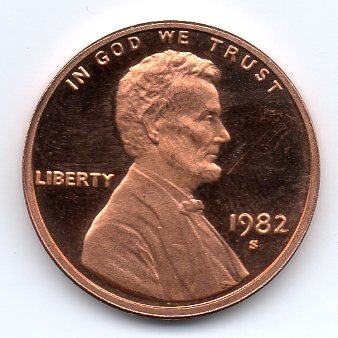
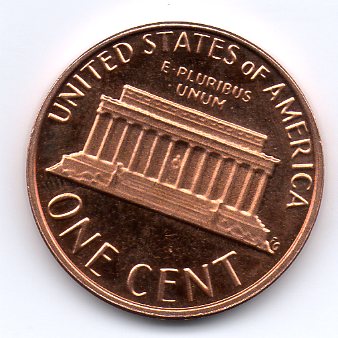
I just pulled this penny from a roll and it looks like it may have begun life as a proof. With the high reflective background and matte finish on the raised portions, could it be anything else? What condition(ballpark of course)would you say it is now? I am very new at this so please forgive me if these are ignorant questions! P.S.: it weighs out at 3.1 grams so it is 95% copper. Image:  img022.jpg img022.jpg39.32 KB Image: img023.jpg44.43 KB |
|
|
|
Pillar of the Community
United States
1208 Posts |
|
|
Pillar of the Community
United States
656 Posts |
I back up ratio411 on this one. very nice coin. -64s  |
|
Pillar of the Community
 United States
1450 Posts |
What is the best way to clean fingerprints off of it and how do I store it to keep in in good condition?
|
|
Pillar of the Community
United States
1208 Posts |
|
|
Pillar of the Community
United States
656 Posts |
Cleaning coins may cause scratches on the coin and bring done the value of the coin drastically. -64s |
|
Pillar of the Community
United States
2269 Posts |
A mylar flip should be adequate for your coin.
|
|
Pillar of the Community
United States
1450 Posts |
Thanks for the help folks. I will follow your advice.
|
|
Pillar of the Community
United States
1713 Posts |
All coins after 1975 (I believe) with the "S" mintmark are proofs. Nice find! I've never found a proof in a roll.
|
|
Pillar of the Community
Australia
1360 Posts |
Quote:
Originally posted by hockingzig
What is the best way to clean fingerprints off of it and how do I store it to keep in in good condition? I personally believe the following advice from Sap is the best: Quote:
Originally posted by Sap
If you've got a proof or unc coin that you can see a fingerprint on, and it's changed the colour of the metal and/or oxidized the surface, it's probably already too late - anything you do to "clean" it will probably make it worse. An old fingerprint on a coin (especially a bronze/copper one) won't come off without acid.
A fresh print is different. If you've got a proof or unc coin that has just been pulled from circulation or accidentally mishandled, in such a way that you are fairly certain that a fingerprint stain will develop on it in time even though you can't really see anything there now, a quick swish in acetone will remove the fingerprint oil before it can do damage.
If a fingerprint is fresh, trying to wipe it away might even make the problem greater, by smearing the oil over a wider surface. Have a read of this thread: https://goccf.com/t/28919 |
|
Pillar of the Community
Australia
1360 Posts |
As for the best way to store it? That depends completely upon your budget!
I would probably use a 2x2 to keep it safe, however a mylar flip would work too.
If you have a large budget, you could always use an air-tite, but this is probably unnecessary.
|
|
New Member
United States
3 Posts |
Hi all..I'm a newb so bear with me, but about cleaning- I thought that acetone was an acceptable way to remove light dirt and/or finger oils. Is everyone saying that you should not even clean with that method?
I understand that any sort of wiping might cause grit to make scratches, but isn't it ok to put a coin in enough acetone to cover it. let it soak a bit, and gently wipe the surface while it's still immersed?
|
|
Pillar of the Community
Australia
1360 Posts |
JD4x4, In my post above yours I mentioned the use of acetone. QUOTE: "If you've got a proof or unc coin that has just been pulled from circulation or accidentally mishandled, in such a way that you are fairly certain that a fingerprint stain will develop on it in time even though you can't really see anything there now, a quick swish in acetone will remove the fingerprint oil before it can do damage." Acetone used carefully and cautiously is not harmful to coins, in my opinion. Snooba.  |
|
Pillar of the Community
United States
1208 Posts |
I worry about what gets between the coin and the cloth
for the most part. Any tiny bit of something that is there
could travel with the cloth and turn it into 'sandpaper'
essentially. Stuff too small to see will create scratches.
Then there is the cloth itself. If it is not the correct
material, the cloth itself can create damage.
Now, I haven't studied the subject of what to use to clean
coins, as I never have believed in it... However I have
studied how to clean and polish black cars, notorious
for scratching and swirling if you look at them funny.
You have to use a new, USA made 100% cotton cloth.
Any blends or substandard cottons will scratch.
I know it sounds funny to use this as a comparison, but
it actually fits nicely if you are familiar with trying
to keep black cars show quality clean.
Anyway, I still don't believe in cleaning, but if you do
try it, BE VERY CAREFUL and mindful of the methods and
materials you use. You can make things worse in a millsecond.
With a car, you can buff it out... with a coin,
you have no second chance. But let's face it, we're
talking about a coin worth 10c here. If you mess it up
you are only out about 9c since you paid face value for
it.
Edit:
Actually you can't lose any money on this.
You can clean it with a belt sander and still break even
as it will always be worth what you paid for it.
Edited by ratio411
05/17/2008 10:56 am
|
|
Pillar of the Community
United States
1713 Posts |
If you're using acetone you shouldn't have to wipe the coin at all. Acetone evaporates very quickly. Once you remove the coin from the solution it will evaporate off of the coin.
As has already been said, don't clean the coin unless you absolutely have to. Coins can be damaged very easily especially proofs.
|
|
Member
United States
3242 Posts |
 handle with care  |
| |
Replies: 23 / Views: 2,354 |




 img022.jpg
 img023.jpg


 Posted 05/16/2008 8:56 pm





