Someone asked me once how much condition mattered when collecting in this field. The answer is "less than you'd think." Stocks and bonds are not like currency. Even though I've seen a few "graded" by third party grading companies, almost no collectors buy them encased, like coins and paper money. There's an understanding that these certificates don't need to be in pristine condition and most issued examples rarely are.
That said, there are probably some that beginners should avoid. I thought I'd share some of the worst examples I own as a lesson on what you might
not want to buy. Most of these will be pretty self-evident. And all of these were dirt cheap so, I don't feel too bad about them.
I picked up this $1000 bond for the C. Benton Cooper Building in Philadelphia
because it was so ugly. I have never seen so many legal disclaimers added to a bond. I think there are nine blocks of text printed or rubber stamped on top of the original text. It's a work of ugly art.

When I bought this stock certificate for the CCC&I Railroad on
ebay, I was fascinated by the vignettes, including a little one at the bottom, as well as the intricate "twisted" frame I had never seen before. I thought I could overlook the stain on the left side. It wasn't until I had it in hand that I realized all the margins had been trimmed off! It should have at least half an inch or more of white space around it, but there was likely a lot of edge damage, so somebody got busy with scissors.


Here's another example of a deal I should have passed up. At the time, I couldn't afford a nice example of the CNO&TP Railway, but this one with deep cut cancels was in my budget. Once again I was seduced by the cool vignettes -- which, you may note, is nearly the same as the one I posted above. Will I never learn?


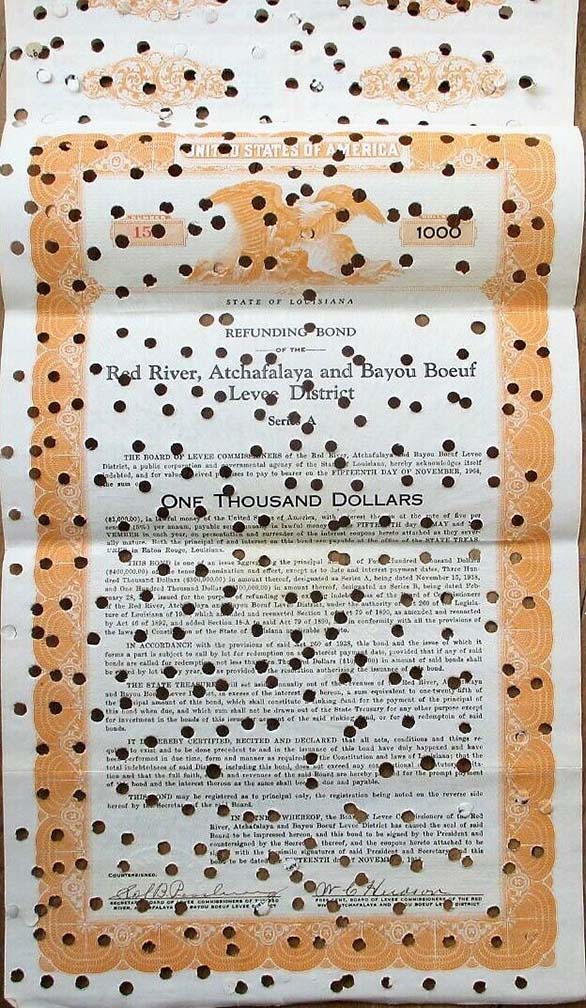
This Chicago Great Western stock is fairly inexpensive to begin with, but when I was just getting started collecting I got a smoking deal because of the punch cancels through the vignette. Generally punch canceling through other areas of the certificate is no big deal; you see it all the time. But this locomotive scene would look a lot nicer without the holes.

This KC Northwestern bond has a nice overall design but oy! those holes. At least they aren't a major intrusion on the attractive vignette, and that's why I talked myself into acquiring it. Why put so much effort into the punch canceling? The answer is on the back. A full page of bond coupons are attached and apparently the company wanted to be certain these all got cancelled, too.


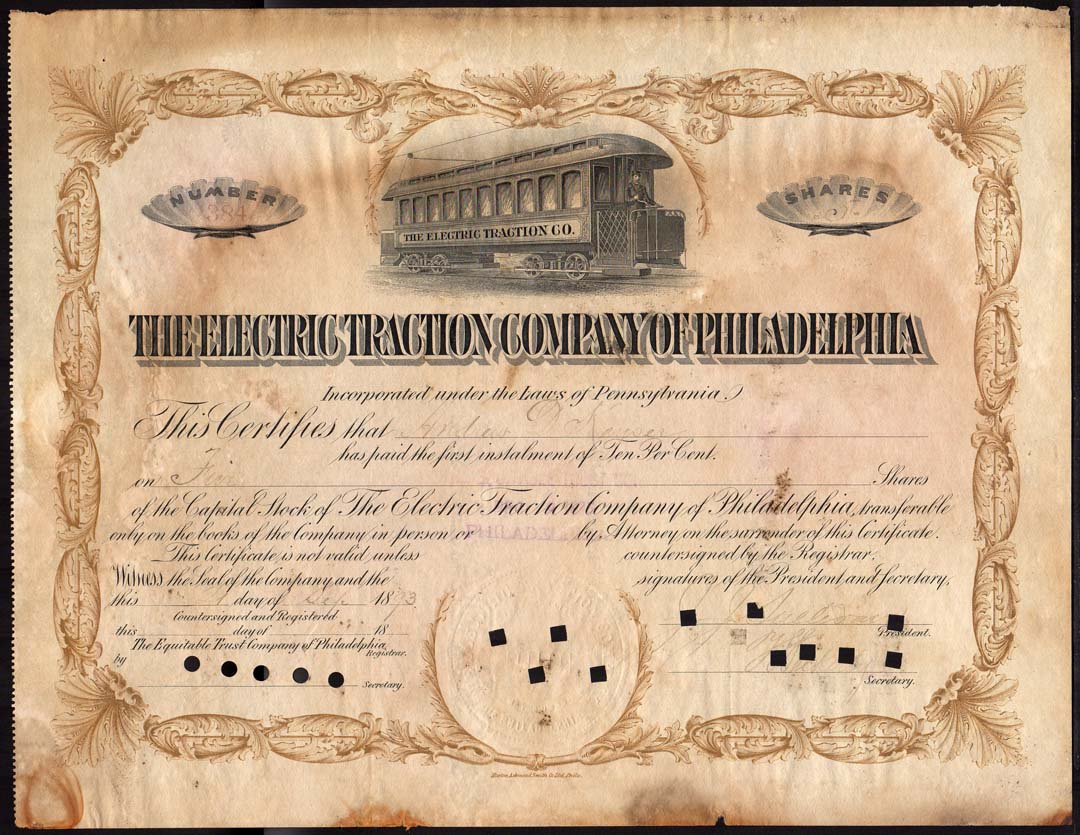
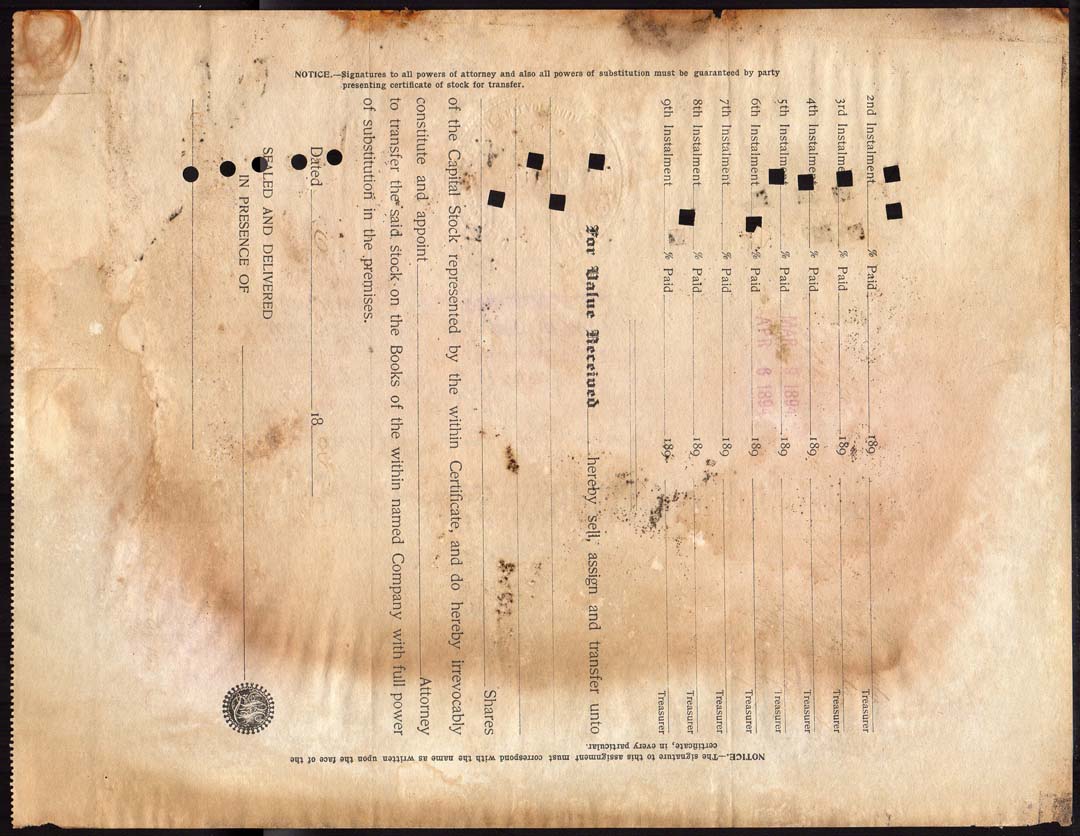
Lastly, a stock certificate for the PA&M Traction Co. This example is actually on the way out, as I currently have a nicer stock without the stain nearly halfway across. But this one looks better now than when I bought it. Most of the left side was covered with a re-attached stub, generously glued in place. I was able to soak it off, but the glue stains remained.

Anyone got something worse they want to add?






 Posted 01/12/2018 08:41 am