| Author |
 Replies: 14 / Views: 9,285 Replies: 14 / Views: 9,285 |
|
|
Pillar of the Community
United States
3499 Posts |
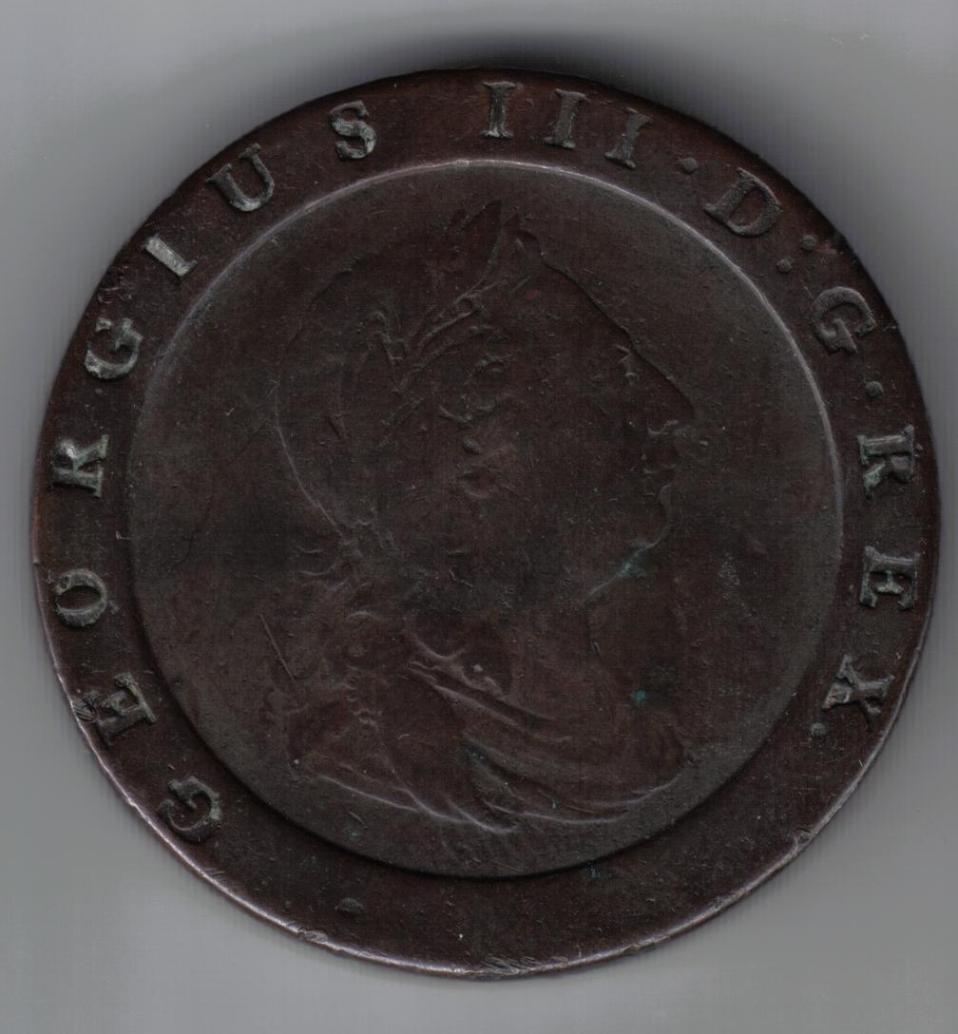
I have a few questions about this type of coin. While they are quite scarce due to a mintage that was less than a million, were many melted over the centuries? Also, how good were the strikes on these coins? I picked one up a few months back and am not entirely sure how to grade it since it is such an unusual coin. Thanks! Image:  GreatBritaintwopenceobv.jpg GreatBritaintwopenceobv.jpg100.25 KB Image: GreatBritaintwopencerev.jpg87.67 KB |
|
|
|
Pillar of the Community
United States
5318 Posts |
Those were sure interesting coins...I want to get one someday. The reverse also appears to have two old chop marks--to test metal content perhaps?  |
|
Pillar of the Community
Australia
2830 Posts |
G'day, there was an absolutely beautiful one of these on the CCF Grading sub-forum a few months ago.
They were minted upto 1848, all bearing the 1797 date. They were often holed and kept as weights, as the 2d weighed exactly two ounces.
I've yet to meet anyone who claims to have got one into a 2x2 properly.
Peter
|
|
Pillar of the Community
 United States
3499 Posts |
Peter THOMAS- Really, these were made up until 1848?! Wow, I really didn't know that. Do you have any idea why they always had the 1797 date? None the less, there were still fewer than a million made between 1797 and 1848. Thanks for that bit of info.
How would you guys grade this example? I think it is a VG-F, but I need a few other opinions.
|
|
Pillar of the Community
United States
5318 Posts |
Quote:
I've yet to meet anyone who claims to have got one into a 2x2 properly. I'd reckon so, as that coin is larger than our Morgan/Peace/Ike dollars by almost 3mm in diameter! I can only guess people didn't carry many of these in their pockets.  With their exacting weight, I wonder if merchants used these coins to measure out goods for sale? I have a 1799 Farthing minted for use as a weight--it originally came in a machined metal casing for protection. Here's some interesting history related to the cartwheel coins.Archraz, while unsure, I'd second your guess of VG-F, although I don't know how the chop marks figure into overall grade. They're interesting in that they look very old--and may suggest where this coin circulated. Edited by KurtS
05/30/2008 7:19 pm
|
|
Pillar of the Community
United States
3499 Posts |
thanks for the info, everyone!
|
|
Moderator
 Australia
17002 Posts |
Quote:
KurtS asked:
The reverse also appears to have two old chop marks--to test metal content perhaps? They're made of copper. Nobody "tested" copper, it wasn't really a bullion metal. It's probably just been casually vandalized, perhaps by a merchant who didn't want to give away his 2-ounce weight in change. Quote:
Archraz exclaimed:
Peter THOMAS- Really, these were made up until 1848?! Wow, I really didn't know that. Neither did I. According to this article, in 1797 the British government ordered 20 tons of twopences; at exactly 2 ounces a twopence, that equates to 358,400 coins. The same order was placed the following year (1798) which were made using 1797 dies, giving a total mintage of 716,800. Krause reports the total mintage to be 722,000, which includes proofs. That only leaves 5,200 coins (including proofs) unaccounted for. If any were struck in subsequent years, they would have been very small in number. Quote:
KurtS pondered:
With their exacting weight, I wonder if merchants used these coins to measure out goods for sale? They certainly did. The merchants were the only folks who were genuinely pleased at the introduction of the "cartwheels", because the government was giving them free balance weights. Everyone else just thought they were too dang heavy. Don't say "infinitely" when you mean "very"; otherwise, you'll have no word left when you want to talk about something really infinite. - C. S. Lewis
|
|
Pillar of the Community
United States
3499 Posts |
Sap- Hmmm, well maybe all of these were minted just within the two year period then. I really wish that there were better mint records of the production of this coin type. Thanks for the additional info.
|
|
Pillar of the Community
Australia
2830 Posts |
|
|
Pillar of the Community
United States
3499 Posts |
Peter THOMAS- Thanks for this link and info. But it sounds like the later strikes would be discernible since they were made "in a variety of metals" and often suffered from the effects of corroded dies. Based on this, I presume that my coin was made during the 1797-98 time period.
|
|
New Member
United States
2 Posts |
I have been looking for mintage figures on the cartwheels for a couple of weeks. I purchased a one-penny cartwheel, PCGS MS65RB, at Long Beach. Since then I have looked incessantly for mintages. I finally found a figure for the twopence - 722,160, given at http://www.coindatabase.com/coin_li...php?pais=370 Now he may have the weight & diameter backward, as 56 mm diameter is inconsistent with what else I have read. Don't know where he got his mintage figure, but sounds good. |
|
Pillar of the Community
United States
3499 Posts |
roark183- yeah I believe that is right since that is what Krause has listed.
|
|
Pillar of the Community
United States
5318 Posts |
Roark183, yes I think those figures should be
Diameter: 41,00 mm
Thickness: 5,00 mm
Weight: 56,70 gr (2 ounces)
|
|
Valued Member
United Kingdom
91 Posts |
"
Roark183, yes I think those figures should be
Diameter: 41,00 mm
Thickness: 5,00 mm
Weight: 56,70 gr (2 ounces)"
That is correct.
|
|
Pillar of the Community
United Kingdom
2217 Posts |
mintage: 722, 160
weight: 2oz/56.7g
diameter: 41mm
thickness: 5mm
From Collectors' Coins GB 2007
|
| |
Replies: 14 / Views: 9,285 |
|










 GreatBritaintwopenceobv.jpg
 GreatBritaintwopencerev.jpg


 Posted 05/30/2008 4:22 pm


