Might be better to just watch for obvious stuff - obvious double struck coins, off-centers that are obvious, brockages (which are obvious), and the well-known more obvious doubled dies and repunched mintmarks.
I believe part of the problem is that you are pulling anything that looks a slight bit odd with magnification, and you're studying the coins too closely, which slows you down and has you missing some of the better stuff because of the lack of volume in your searches.
If you go through 20,000 coins in a month looking for the fast and easy stuff you might pull one or two coins worth $20-$50 each...but if you're searching very closely for anything that looks imperfect thinking all of them are errors or varieties, you end up finding nothing in a couple thousand coins, and you miss the other 18,000.
It takes time to learn how to search for the good stuff and skip over all the minor anomalies...but I can tell you that learning to skip the die cracks, misaligned dies, planchet bubbles, brassy colored coins, and especially
Machine Doubling will help you immensely in the long run to build a collection that actually has some value to someone else when you're ready to liquidate.
My speed: obverse and reverse, I can go through a 50 coin roll under a microscope in less than three minutes (unless I find something). I can go through a $50 bag in a week...and I don't miss much of anything.
My average finds:
Major errors: 1 per six months. (1 in 120,000 coins)
Minor errors worth keeping: 1 per month (1 in 20,000 coins)
Major doubled dies: 1 per three months (1 in 60,000 coins)
Minor doubled dies: 1 per week (1 in 5,000 coins)
RPMs (getting harder to find considering last were in 1989): 3 per week (1 in 1,700 coins)
Key date coins (1960SD, 1970S SD): 1 per year (1 in 250,000 coins)
This is just in Memorials...in the wheats (mixed, unsearched):
Major errors: 1 per two years. (1 in 500,000 coins)
Minor errors worth keeping: 1 per month (1 in 20,000 coins)
Major doubled dies: 1 per week (1 in 1,700 coins)
Minor doubled dies: 10-20 per week (1 in 150 coins)
RPMs: 10-20 per week (1 in 150 coins)
Key date coins (1909S, VDB, 1922 no D, 1931S, 1914D, teens S mint): 1 per 5 years - to never (1 in 1,250,000 coins)
So...people expecting to find an error or variety in every piggy bank worth of coins are sadly mistaken and are expecting WAY too much.
And, by the way, finding doubled dies and repunched mintmarks is far more common in mixed circulated material than in BU rolls...it's just that when you hit them in BU rolls they are in better shape and you usually get a few of the same die, whereas in circulation the opposite is true.





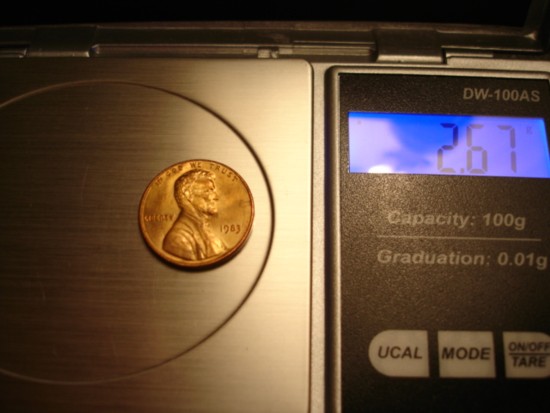 1983BRASSjpeg1.jpg
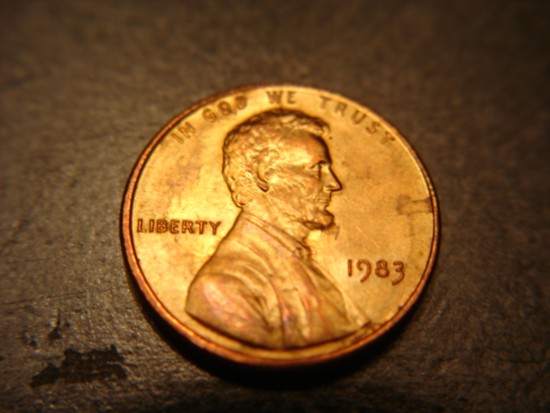 1983BRASSjpeg2.jpg
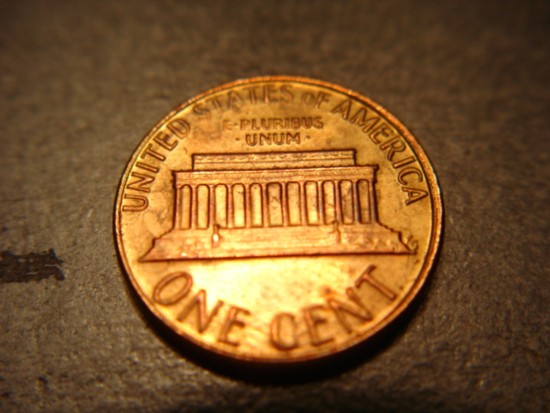 1983BRASSjpeg3.jpg


 Posted 06/05/2008 12:33 am




 . If your going to find a cent error it going to be a a BU roll today.


