| Author |
 Replies: 18 / Views: 4,624 Replies: 18 / Views: 4,624 |
|
Pillar of the Community
Canada
1461 Posts |
|
|
|
|
Rest in Peace
10197 Posts |
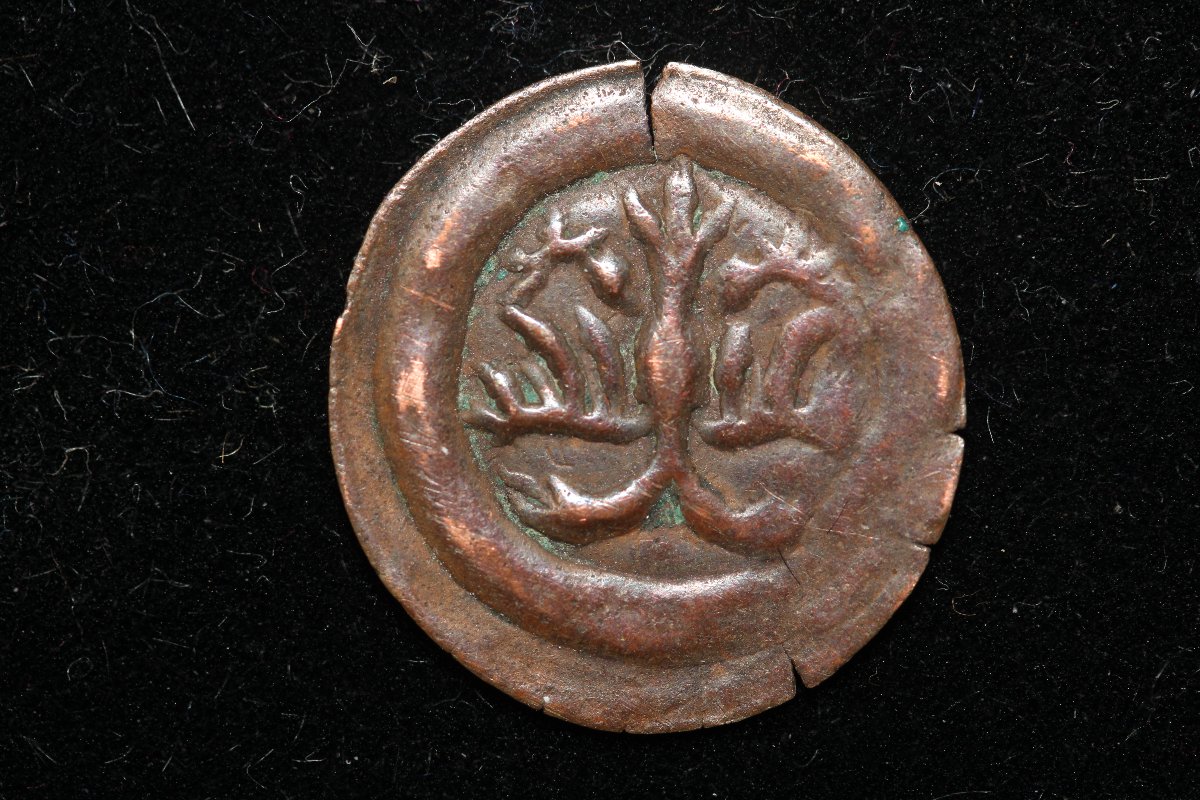
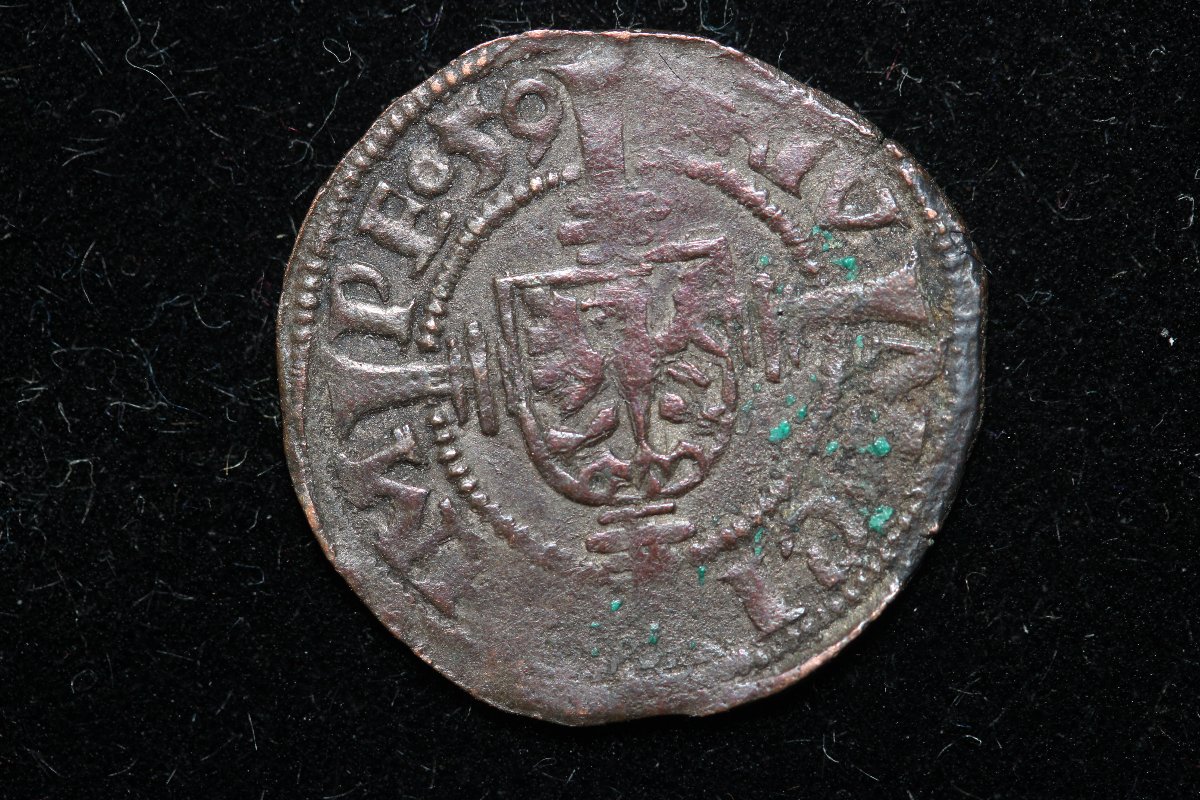
Size and weight are a must. The second appears Polish, perhaps Lithuanian? But can't find it in numista.com Spence would be the one to help with this one he has a Kopecki reference, I don't. The first is some kind of uniface, and doesn't appear to even be a coin, perhaps and old Jeton?
#1 is 180 degrees out, upside down, BTW Two headed eagle is what it's supposed to be. I found no match on Numista in the German states.
Edited by Crazyb0
03/21/2018 5:25 pm
|
|
Pillar of the Community
United States
6130 Posts |
First should be a bracteate, likely from ~13th century Germany or thereabouts.
|
|
Pillar of the Community
 Canada
1461 Posts |
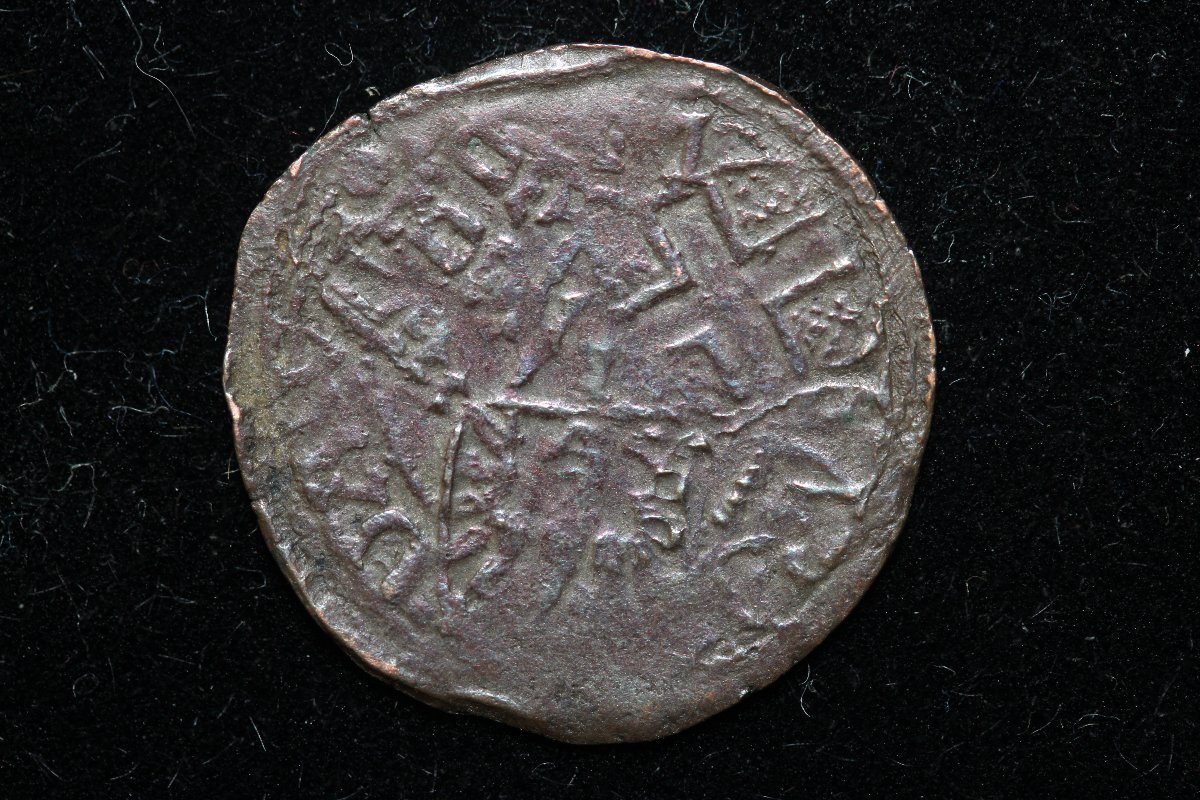
I have no clue on the first "coin". The second does look like a Polish coin but I cannot locate anything similar. Either 1559 or 1659. In my haste I omitted the weights and sizes. Here they are.
1. 0.24 gr, 15 mm irreg.
2. 0.57 gr, 17 mm irreg.
|
|
Pillar of the Community
 United States
8052 Posts |
I agree that the second coin, first photo has a Polish-looking eagle in the center.
If the 59 in that photo is the end of 1559, I cannot find this as a type from the reign of Sigismund Augustus (1547-72).
If it is part of 159? then we have to look through the types of Sigismund III which is a lot more work (and my Gumowski is not so complete on these).
For the first one, agree with @finn. Lots of bracteates with that general form from Silesia in the 1300s (though I can't find that specific one).
Edited by tdziemia
03/21/2018 7:03 pm
|
|
Pillar of the Community
United States
8052 Posts |
Poking around a bit on Saurma, for the second coin, I see Teutonic order coins of 16th c. with similar design to the first photo (cross with shield/eagle in center), but not the opposite side. Also legends are wrong. Between 7:00 and 10:00 can see the leters IM | PE which I am guessing means Holy Roman Empire, hence not Poland. I am a bit new to this sleuthing compared to others out here ... hence the play-by-play  Edited by tdziemia
03/21/2018 9:08 pm
|
|
Moderator
 United States
34549 Posts |
@TCH, very interesting coins that you have there. I'm going to request that the mods move this thread over to the Medieval and Ancient section of CCF as both of these coins are pretty old.
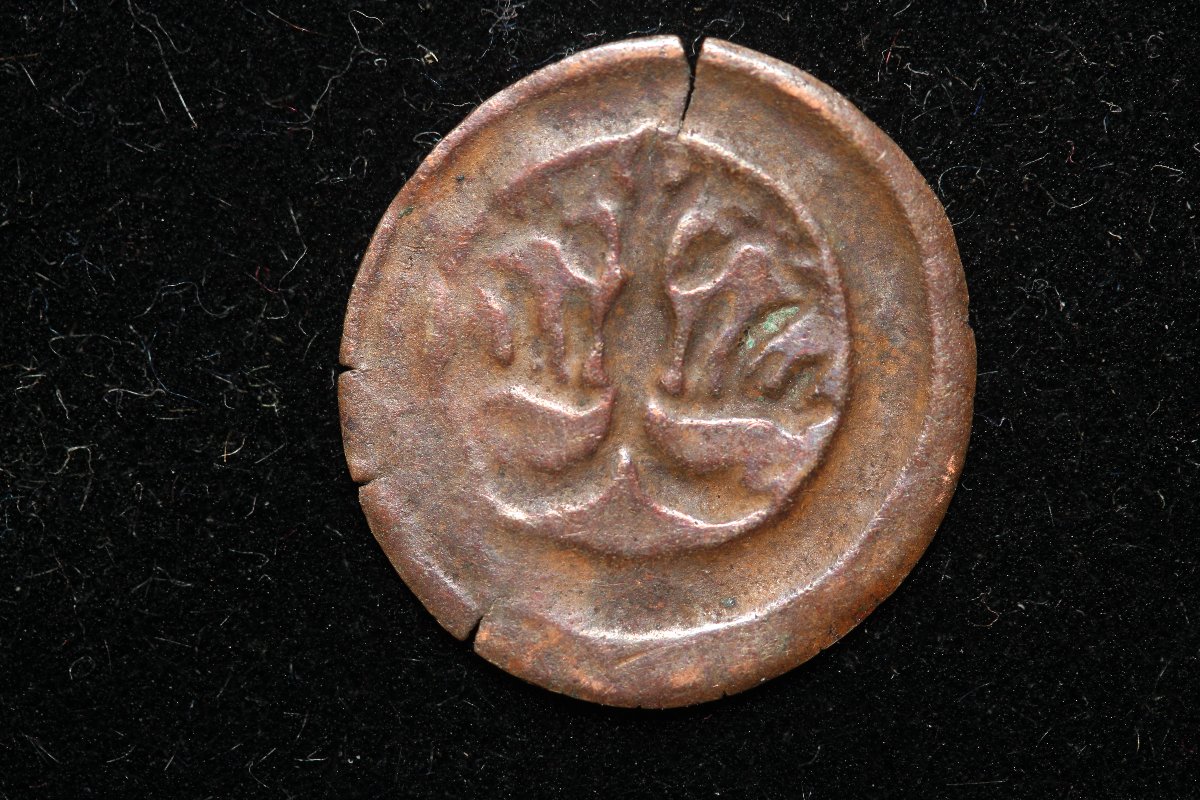
Your first pair of pics are upside down. The coin is uniface, with the second image being the "front". It shows the two-headed eagle. It will take me some digging in my reference books, but I'll try to chase down an attribution for you. It looks a little like the coin is copper-colored. That would be unusual--any chance that it is actually silver and some weird lighting in this pic gave the coin a reddish-cast?
I'm about 90% sure that your second coin is from one of the German states. The design element of a cross patte'e with a shield in the middle is pretty common to that region. I agree that the numbers 59 are the last two digits of the date. I'll check both 1559 and 1659 as possibilities, but the older date seems more likely right now.
Please give me a little time, but I'll work on getting you some more specific answers. I'm sure others will jump into the fray and help too.
"If you climb a good tree, you get a push."
-----Ghanaian proverb
"The danger we all now face is distinguishing between what is authentic and what is performed."
-----King Adz
|
|
Pillar of the Community
United States
8052 Posts |
For reverse of the second coin, I am seeing 3 coats of arms, tips outward: around 2:00 is a cross, around 6:00 is an eagle, and around 10:00 is a castle. There is lettering between the shields that is difficult to make out.
Obverse legend could be (starting at 5:00) CI (V?)IM PE59 (1?)RIU M. Should 1591 also be considered for the date if there could be a numeral 1 to the right of the cross, before the letters RIU?.
|
|
Pillar of the Community
United States
7067 Posts |
|
|
Pillar of the Community
United States
8052 Posts |
 Nice! Edited by tdziemia
03/24/2018 07:58 am
|
|
Moderator
United States
34549 Posts |
Very nice job (as usual) Bob with the ID on that second coin! The coins of the medieval Low Countries are definitely a weak spot of mine. @TCH, I've done a bunch of searching on your first coin and have some interesting information, although not a definitive attribution. As I mentioned before, you have a uniface coin with a double-headed eagle surrounded by a wide, solid ring. The design of the eagle is a little unusual in that there are pretty fine details. I'm also still bothered by the color. If this coin is actually copper, then I'm completely stumped and would lean toward a more modern construction. Assuming that your coin is silver, I have been able to find three medieval, uniface coins with a double-headed eagle as the main design element. They were all made by former German City States: Lübeck (Germany), Glogau (now part of Poland, and Schwazburg (Germany). Although I looked in multiple books, all three are listed in the 1977 Bonhoff auction catalog, which is a great resource for obscure medieval uniface silver coins. In order, the catalog numbers are 167, 1064, and 1293. However, I must say that none of these is a perfect match for your coin. In particular, the 2 Pfennig from Lübeck has a radially ribbed ring around the eagle, while the other two have solid, but more narrow rings than your coin. Also, none of these three have the especially fine detail of your coin. I could only find online examples of the first coin--here is a link so that you can see what I mean about the roughness of the detail in comparison to yours: https://en.numista.com/catalogue/pieces112731.htmlI'm not convinced that any of these three is your coin, but would probably describe it as 14th-15th Century Germany instead. Remember though--only if it actually is silver! "If you climb a good tree, you get a push."
-----Ghanaian proverb
"The danger we all now face is distinguishing between what is authentic and what is performed."
-----King Adz
|
|
Pillar of the Community
United States
7067 Posts |
The first one does seem unusual. Here, below the cut-and-paste of the OP coin, are some Brandenburg single-headed eagles below, with similar skinny bodies, with a comparable level of detail: 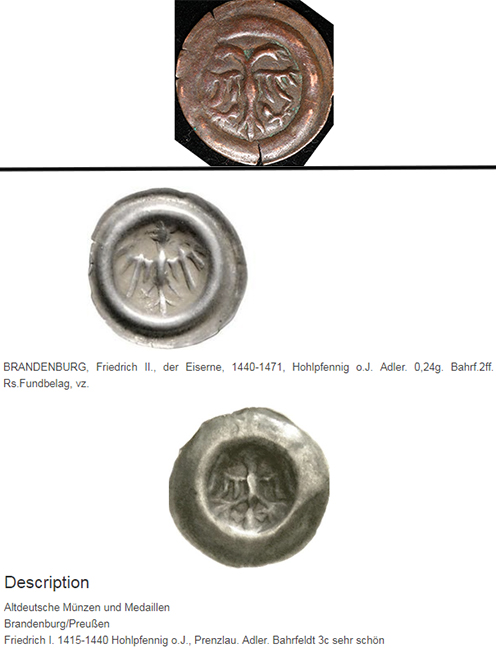 Copper, if that's what it is, does seem to be anomalous. Here's one listed as a copper hohlpfennig, but that seems to be quite the rarity: https://www.acsearch.info/search.html?id=1459797More weirdness, at least for me, is the more visible head of the "eagle." I would have automatically assumed two-headed "eagle" for the OP coin too...but this is kind of a serpenty/dragony looking head there, complete with tongue sticking far out: 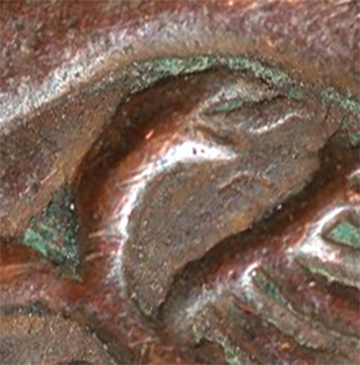 But, then, I don't collect medievals. Dave, does this depiction of an eagle head qualify as unusual, or is it within norms for the eagles on these uniface medievals? Am I right that the horizontality of the wings is also atypical? Definitely out of my area here. |
|
Moderator
United States
34549 Posts |
I glad to hear that copper is rare because I've never even heard of it. The double headed eagle with flat shoulders doesn't seem to be typically Polish, which is why I focused on German states. As far as tongues go, that is not something that I have looked at before.  "If you climb a good tree, you get a push."
-----Ghanaian proverb
"The danger we all now face is distinguishing between what is authentic and what is performed."
-----King Adz
|
|
Pillar of the Community
United States
8052 Posts |
Hapsburg two-headed eagle is sticking its tongue out at least as early as 1606 (Vienna rechenpfennig in the current Rauch auction). 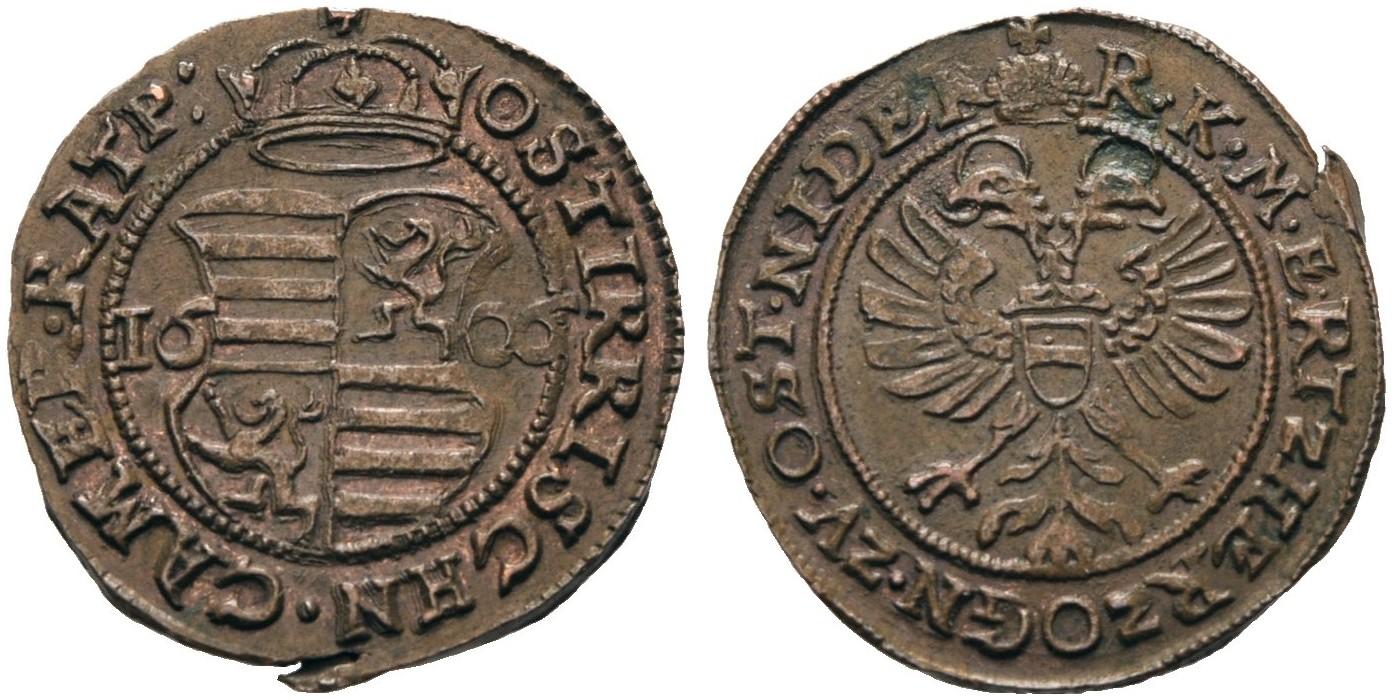 Have been trying to pursue the Austria (Hapsburg) angle, but have not found hohlpfpennig or bracteates that are earlier. Maybe someone had a reference work on that part of the world? |
|
Moderator
United States
34549 Posts |
Quote:
Maybe someone had a reference work on that part of the world? Yep just looked through my copy of Szego's "The coinage of medieval Austria 1156-1521". Virtually all of the pfennigs were struck on both sides, although there were a few uniface coins in there. Nothing was a match for the OP's coin. I did see a tongue on the eagles, so maybe you guys are right that a double-headed eagle with tongues is more of an Austrian symbol than a Germanic one. "If you climb a good tree, you get a push."
-----Ghanaian proverb
"The danger we all now face is distinguishing between what is authentic and what is performed."
-----King Adz
|
|
Pillar of the Community
United States
8052 Posts |
While browsing the newest WAGO catalog, I also noticed that imperial cities in what is now Switzerland (Chur, Luzern, Schaffhausen, Zug, and probably others) were also using the Hapsburg double eagle (with tongues) as early as the mid 1500s.
FWIW
|
| |
Replies: 18 / Views: 4,624 |









 Posted 03/21/2018 2:03 pm





