Funny enough, not long after Echizento posted his example, I found these for sale. I had a lot of
ebay bucks to burn, and got them for free!

Pushkalavati was the capital city of Gandhara in present-day Pakistan, and clearly felt the collapse of the Maurya Empire, as they had already begun striking civic coinage in 200 BC, before the usurpation of the Maurya throne by the Sunga in 185 BC. Unlike the Maurya punchmarked coins that utilized multiple punches, these employed first a single punch on one side, then switched to a more Western style double die method by about 180 BC (coinciding with the arrival of the Greeks from Bactria, capitalizing on the political turmoil of the time).
Unlike the later square coins of the Indo-Greeks, these coins are impressively thick, being poured into molds and then struck while still soft. These coins show rapid development of their artistry, indicating that the local celatores studied under or contracted out to the Greeks.
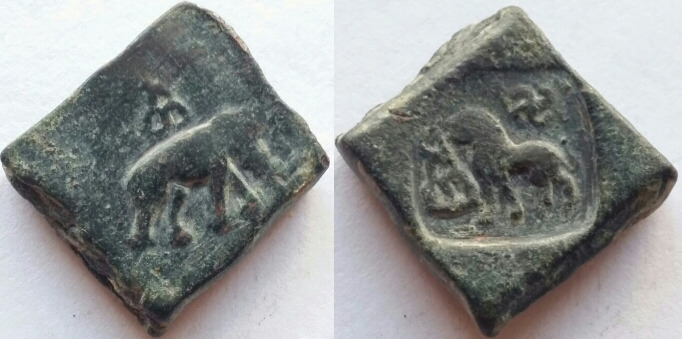
First is a more Indian design:
18x21x4mm, 11.82g
Obv: Elephant walking right, chaitya above
Rev: Lion standing left, Chaitya before and swastika above
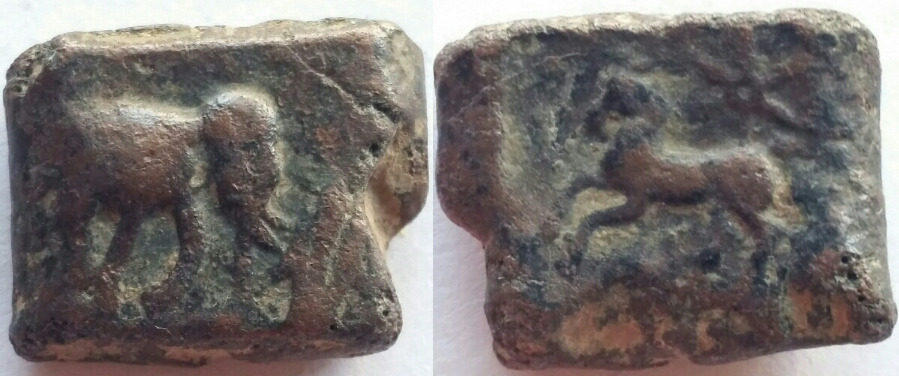
Second is more Greek:
18x15x6mm
10.99g
Obv: Elephant walking right
Rev: Horse galloping left, star above
Haven't had a lot of time to research these, but feel free to contribute any examples or knowledge you have!







 Posted 04/21/2018 7:52 pm


