Quote:
What is it?
A reason to learn google? JUST KIDDING!
In a nutshell -
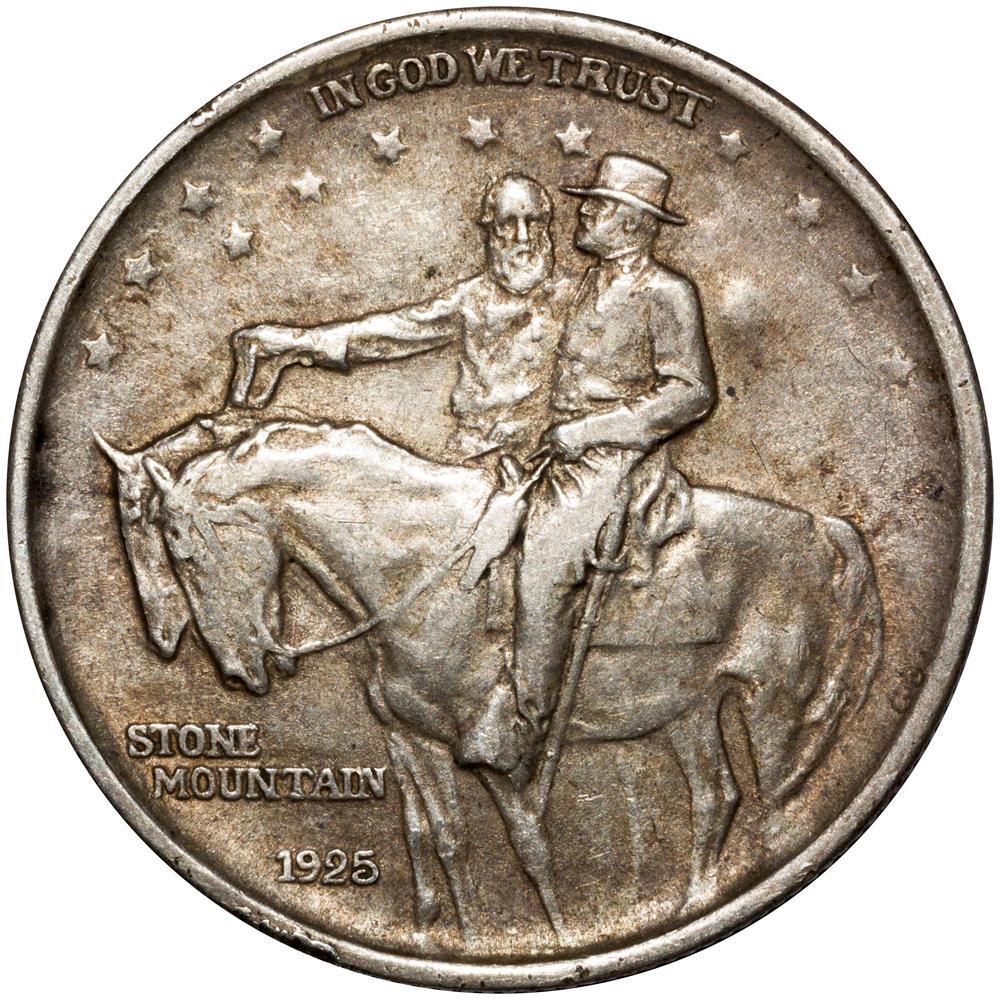
There were so many Stone Mountain commems minted, that they were having a hard time selling them all (they never did). There were over 2.3 million that were actually struck*, and offered for sale at $1 each (2x face). Sales were slow, as such a large quantity hindered the collectibility of the coin from a collector's standpoint, and the combination of cost and appeal mostly to the southern states made the general public not so interested in it (as the case with a number of early commems).
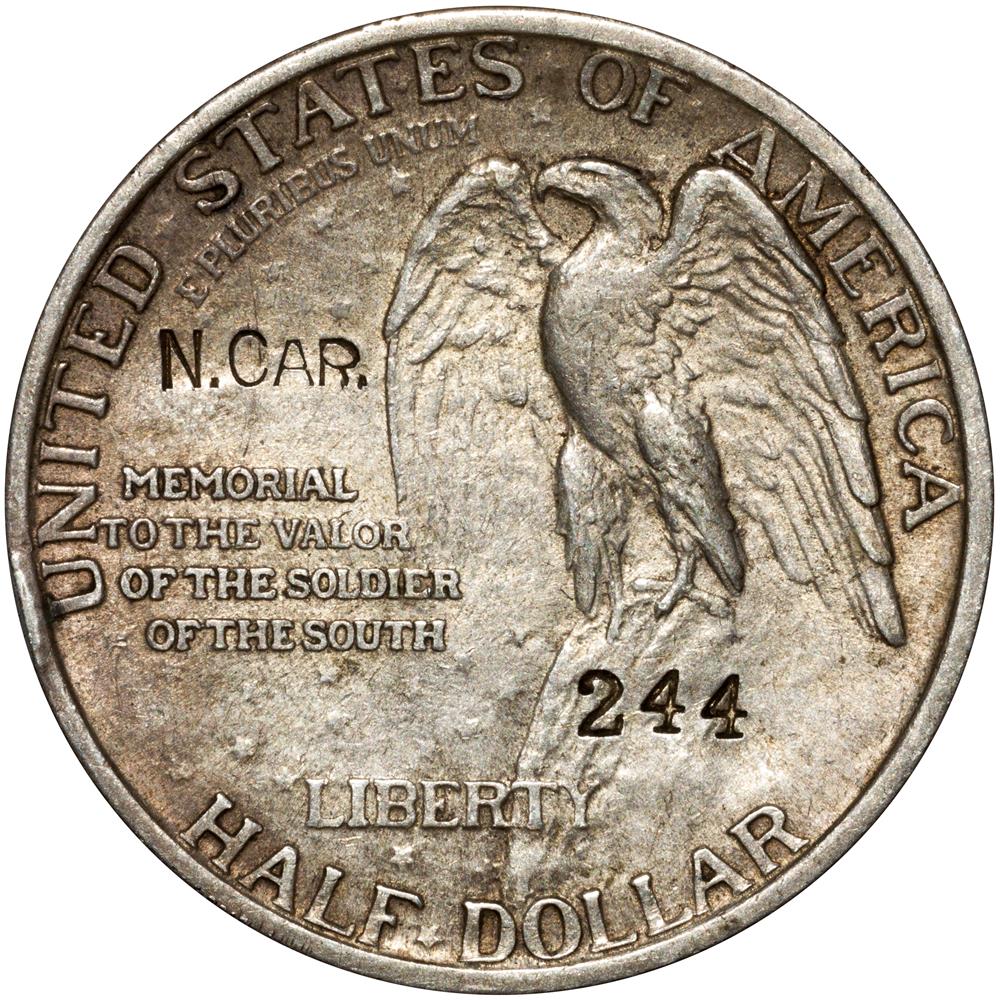
So they came up with a number of different marketing schemes. One was the Great Harvest Campaign, which targeted 13 southern states and DC, by counter-stamping coins with the state and a 'serial number'. Best I can glean is that each state was given 1000 serial numbered coins (pure conjecture on my part), and they were offered at auction as 'one of a kinds'. Historical records show the average was in the $20-$30 range, but there is a report that one sold in Florida for $1,300. That's 1925 dollars!
From what I have been able to determine, it seems that after the initial auction offerings, these were essentially forgotten about. Then in the late 40's (or 50's), Adna Wilde Jr was given one from his grandfather's collection (who had already passsed), and Adna thought he had a damaged coin. With his sentiments, it (to me) solidifies that these were just a footnote in numismatic history. Many years later, he came across another one, and that made him think there was more to the coin and stamp then he initially thought.
Over the years, Adna came across, and in many cases, came to own, many more of these. Through his research he was able to document the existence of 140 of these, including the extra special SL and GL versions. Through my own research, I think there have still been less then 200 of these Great Harvest Campaign coins re-discovered.
If I were to make some guesses, I'd say there were 13,000 Great Harvest Campaign Stone Mountains produced. So where are they?
First guess is that they were put into circulation during the Great Depression. Even though the owner may have paid $30 1925 dollars for the coin, it was still 50¢ of spendable cash in 1932, which had the same buying power as $10 today. In those times, that could feed a family of 4 for a couple of days (bread, eggs, milk, flour, etc), which was way more important then having a shiny coin in your bureau drawer.
Second guess is that those stayed in circulation, which could make the counterstamp less apparent, especially if you're not looking at the reverse, or looking for it at all, so they could have just been overlooked. Keep in mind that from about the mid-40's onward, numerous commemorative coins were used in daily circulation. Chances of falling into the hands of a collector once in circulation decrease dramatically. Then came the end of silver coinage in 1965, and every dang silver coin was stuck in a jar for years and/or decades. Then in 1979, the Hunt brothers came along, and everybody sold all that silver that had been sitting in jars for so long. For melt. But melt value at the time was about $20-22 for a half, which was way more then a circulated Stone Mountain was worth numismatically.
So my guess is that most of these were forgotten, and then melted. We probably will never know if in fact 13,000 of them were offered, and we probably will also never know how many are out there still.
All I know is... I GOT ONE! :)
*net mintage after returns to the mint for melting is 1,314,709









 Posted 04/26/2018 8:50 pm





