











 Posted 04/28/2018 01:01 am


With a split opinion 58-63,
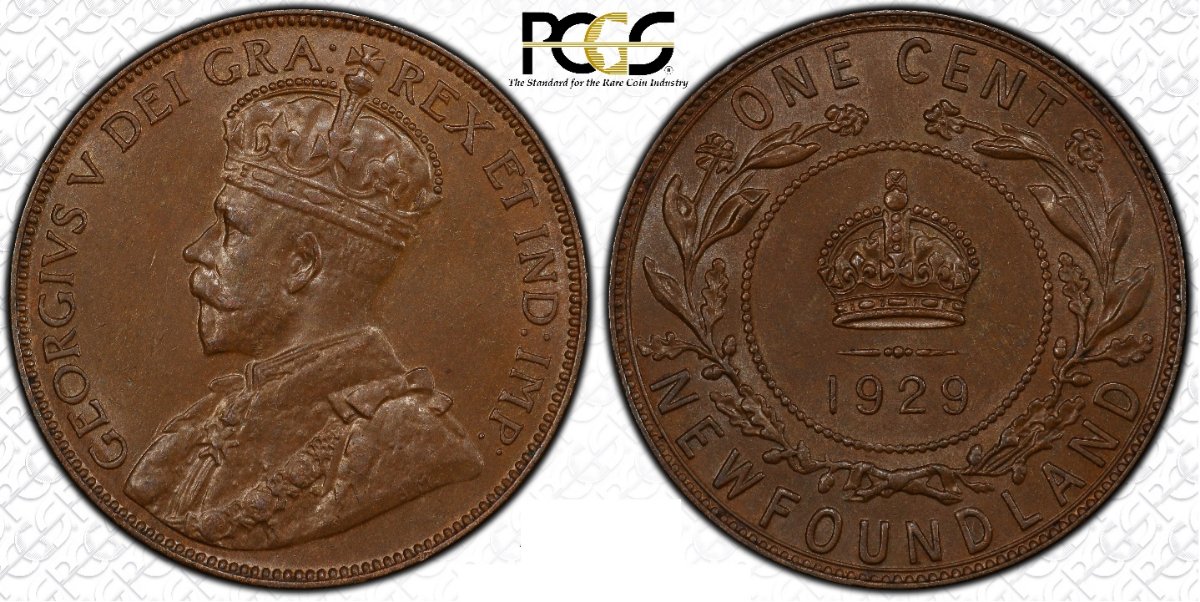
I thought I should have a much closer look at the Mackennal bust obverse, which was also used on Australian coinage 1911-1936.
I have been familiar with these, from the earliest days of my numismatic interest as child in elementary school.
That was more decades ago than I am prepared to admit.
When grading the obverse, look closely for beard, mustache, eyebrow and hair definition, and decide if there is any loss in detail, that is attributable to die wear, or wear on the coin, or a combination.
A bit hard to be 100% sure if there is a loss luster at these high points due to patina, but I am 95% sure that the metal surface is completely undisturbed in this case.
The fields show no signs of minor scratches or dings as well, but also may be partly obscured by the patina, but I don't think so.
Therefore,
MS63.
I thought I should have a much closer look at the Mackennal bust obverse, which was also used on Australian coinage 1911-1936.
I have been familiar with these, from the earliest days of my numismatic interest as child in elementary school.
That was more decades ago than I am prepared to admit.
When grading the obverse, look closely for beard, mustache, eyebrow and hair definition, and decide if there is any loss in detail, that is attributable to die wear, or wear on the coin, or a combination.
A bit hard to be 100% sure if there is a loss luster at these high points due to patina, but I am 95% sure that the metal surface is completely undisturbed in this case.
The fields show no signs of minor scratches or dings as well, but also may be partly obscured by the patina, but I don't think so.
Therefore,
MS63.


