| Author |
 Replies: 14 / Views: 1,847 Replies: 14 / Views: 1,847 |
|
|
Valued Member
United States
90 Posts |
|
|
|
|
Rest in Peace
United States
2684 Posts |
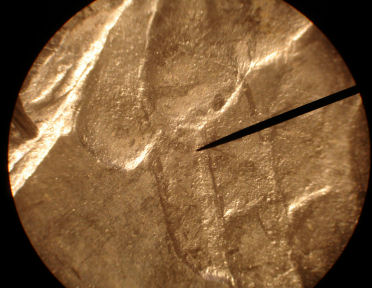
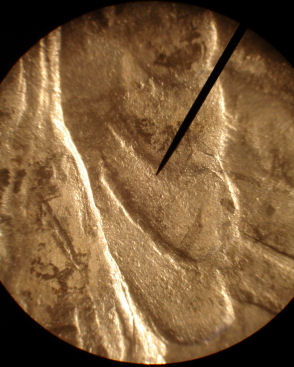
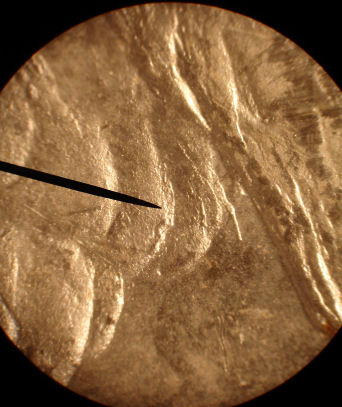
rujam, I went through many of the images you posted in the previous thread. I think what you are asking is the significance of a single Morgan (1878 in this instance) having a large number of varieties. I am not a real big VAM fan unless it's something obvious and unusual such as the 1879 7 tail feather vs 8 TF (and permutations) or 1890-CC tailbar, but I find this single coin with so many variations to be intriguing. While Van Allen and Mallis list over 3000 Morgan varieties, many or most of them are at the microscopic level and are not particularly significant to most collectors. I do not know how many varieties VAM lists for the 1878, but I do know that PCGS will attribute about 82 different 1878 Morgan VAMS. This is in comparison with the total 377 VAMs of ALL Morgans PCGS will attribute, so they must think all those VAMs are significant enough to grade separately from a "standard" 1878, if there is such a thing. More details on PCGS's VAM attribution program at: http://www.pcgs.com/VarietyFAQ.htm . It would be helpful to post a picture of the entire coin so we might put all these variations in perspective. There aren't too many VAM collectors among the larger Morgan collector community unless, as stated above, they are obviously different from the norm. With only one or two exceptions and these being at the high MS end, there is little difference in value between a VAM and a "standard" Morgan. |
|
Forum Mom
 United States
5877 Posts |
quote:
Originally posted by Morgan Fred
rujam, I went through many of the images you posted in the previous thread. I think what you are asking is the significance of a single Morgan (1878 in this instance) having a large number of varieties. I am not a real big VAM fan unless it's something obvious and unusual such as the 1879 7 tail feather vs 8 TF (and permutations) or 1890-CC tailbar, but I find this single coin with so many variations to be intriguing. While Van Allen and Mallis list over 3000 Morgan varieties, many or most of them are at the microscopic level and are not particularly significant to most collectors. I do not know how many varieties VAM lists for the 1878, but I do know that PCGS will attribute about 82 different 1878 Morgan VAMS. This is in comparison with the total 377 VAMs of ALL Morgans PCGS will attribute, so they must think all those VAMs are significant enough to grade separately from a "standard" 1878, if there is such a thing. More details on PCGS's VAM attribution program at: http://www.pcgs.com/VarietyFAQ.htm . It would be helpful to post a picture of the entire coin so we might put all these variations in perspective.
There aren't too many VAM collectors among the larger Morgan collector community unless, as stated above, they are obviously different from the norm. With only one or two exceptions and these being at the high MS end, there is little difference in value between a VAM and a "standard" Morgan.
Unless it's in the Top 50 or 100. |
|
Rest in Peace
United States
2684 Posts |
quote:
Originally posted by Susanlynn9
Unless it's in the Top 50 or 100.
I shudda qualified my response more (it's a time thing at this end; haste makes waste and all that  ). To a VAM collector who wants a specific coin, the significance and value could indeed be very high if s/he wants it bad enough. For that matter, any collector of anything will pay a premium to get it if s/he wants the item so badly that cost is irrelevant. There are new varieties being discovered every day it seems; the "first" is usually valued higher than subsequent discoveries of the same variety and if none are found, then the new variety becomes one-of-a-kind. It is possible rujam has made one of these discoveries, especially with the meticulous detailed research she or he has invested in this particular Morgan. A picture of the complete coin would help us make a better assessment. Fred |
|
Valued Member
 United States
90 Posts |
|
|
Valued Member
United States
90 Posts |
|
|
New Member
United States
15 Posts |
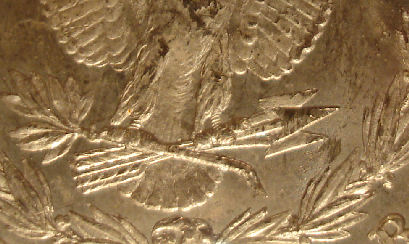
rujam, do you have a clear closeup of the reverse that show the feathers under the wings. This is important in IDing the reverse die that was used on the 8tf. Here's a photo of mine to give you an idea. " target="_blank" rel="nofollow"> |
|
Valued Member
United States
90 Posts |
|
|
Valued Member
United States
90 Posts |
|
|
New Member
United States
15 Posts |
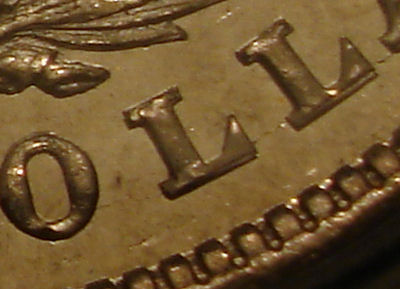
Comparing your photos with the 8tf Attribution Guide,it appears it is a VAM-20. One of the key diagnostics for the VAM-20 is strong doubling along the top and bottom of the LL in DOLLAR.
Edited by wam98
01/05/2006 10:21 am
|
|
Valued Member
United States
90 Posts |
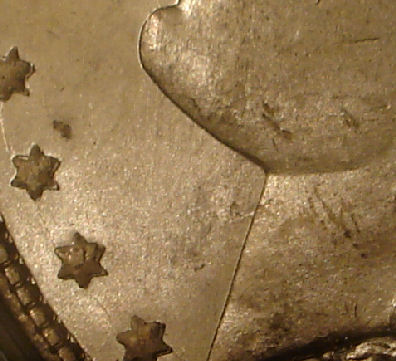
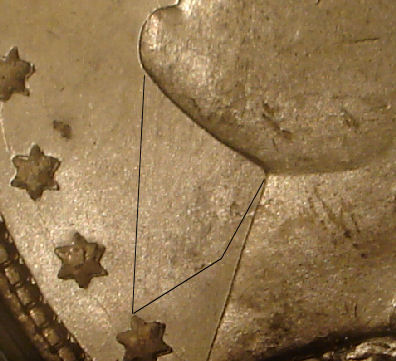
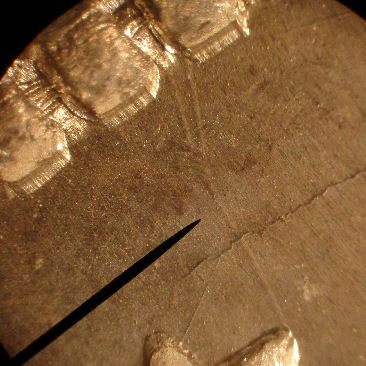
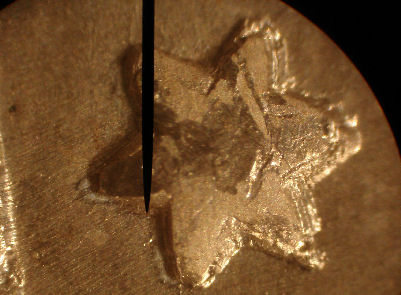
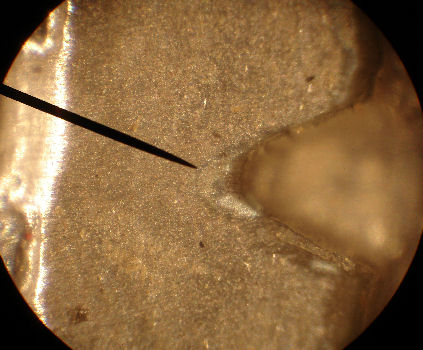
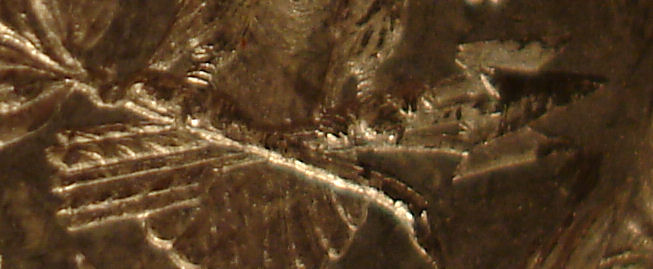
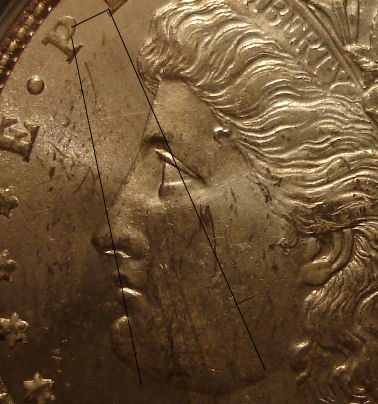
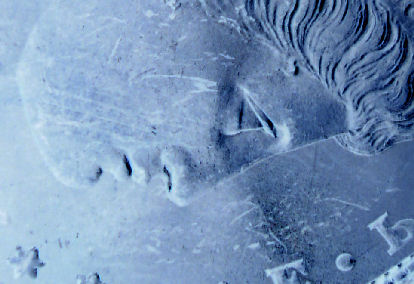
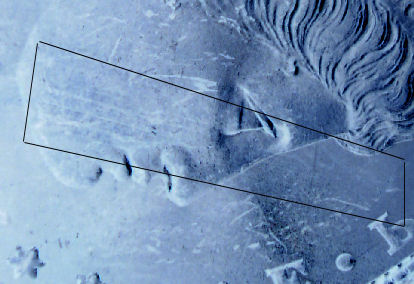
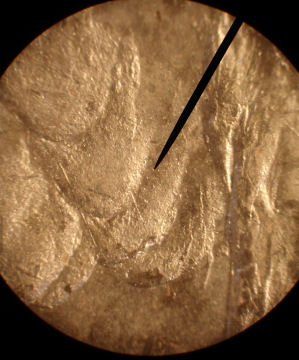
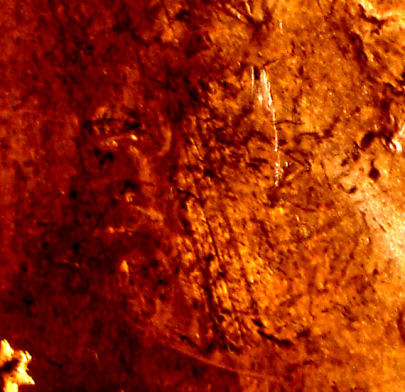
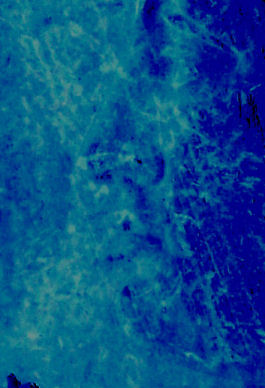
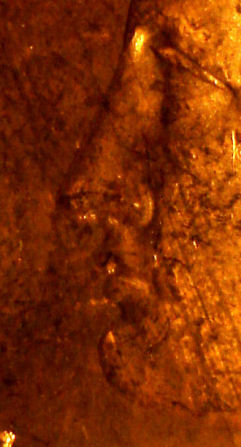
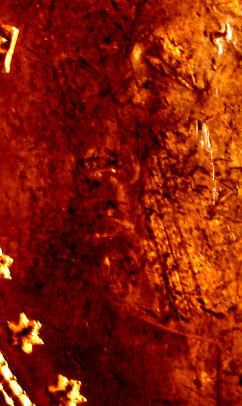
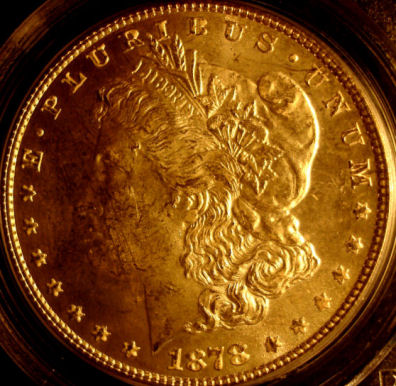
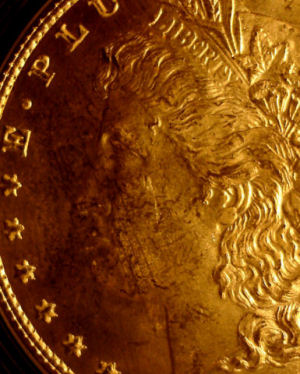
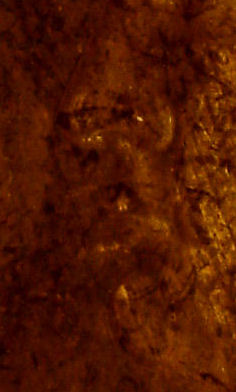
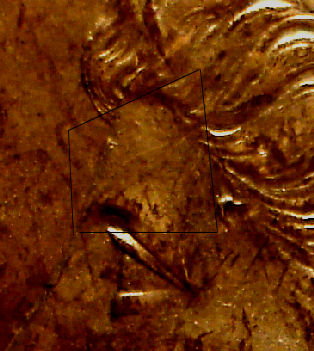
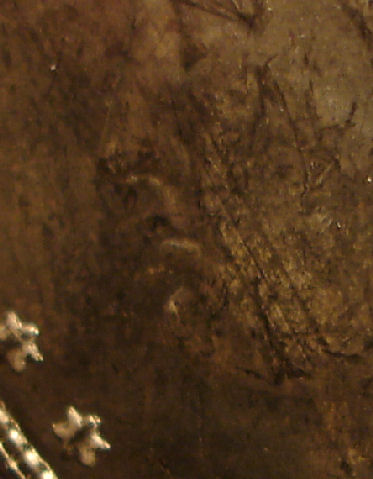
Wam98-- Thank you for that info! From the CoinTalk Forum, Becky and Nesvt said they believe it is a VAM 20 also, so it is looking good  Now I need to ask you this, is it common for a VAM 20 or any other Morgan to have sooo many things happening on it? Is there anyone that you know that recognizes the details of the imprints on the Face side, that they could give me a starting point in mapping out what these shapes on the face of the coin make(wheww Did that make any sense?)? I do not think many people are taking me serious about the fact that I believe somehow the feather portion of the ARROWS are on the Morgans cheek. But if you look at what happens when I take a photo at an angle, so the light shows every imperfection the coin has, it reveals many oddities! When the coin is photo'ed straight on, It looks like a normal mouth. But again when I take the photo with a light angle, adjust the brightness, I have the imprint of Hot or CRAZY LIPS. WHY? Image:  StrangeMouth1.jpg StrangeMouth1.jpg68.38 KB Image: MOUTH5.jpg38.62 KB Image: MOUTH3.jpg37.82 KB Image: MOUTH2.jpg46.78 KB Image: FUULMORGANWMOUTH1.jpg69.38 KB Image: FACEMOUTH6.jpg49.56 KB Image: FACEMOUTH7.jpg27.85 KB Image: LLPROOF1.jpg34.05 KB |
|
Pillar of the Community
United States
954 Posts |
Wow rujam, you have been busy taking pics  It is common for a whole bunch of cool stuff to happen on a Morgan. Sometimes that is what makes it so hard to attribute. You will see something that catches your eye, and it's tough not to focus on that part of the coin, even though that's not the part that's important. Sometimes you will find some extra stuff that doesn't matter, and sometimes Leroy will give the coin a new VAM extention. The only way to find out if it new and important, is to send him the coin. I think the stuff happening on her lips is the clash, it can do strange things. But without the coin in hand, I really don't know. Thanks for sharing all those wonderful pictures, she's a keeper |
|
Valued Member
United States
90 Posts |
My question is this, First How would I send it to Leroy? Second, If PCGS did not at least Grade this Morgan as an 1878 8tf MS63 Double or Tripple Die when it was origanly graded, How can I trust they will take the time to find all that is on this coin and at the very least give it a VAM 20? |
|
Valued Member
United States
90 Posts |
|
|
Forum Mom
United States
5877 Posts |
ANACS will also note VAMs and attributions on their slabs. The cost is only $1 per coin to verify your own research. It is $6 per coin for them to do the attribution. I think these fees are extremely reasonable. As discussed in an earlier thread, their fee structure has changed somewhat and they now have a 10-day service. The cost for the 10-day is $15.00 per coin for authentication/grading. With the return shipping, you would be looking at about $28 for the coin. Here is the link to their site: http://www.anacs.com/index.htmlThe site still needs to be updated with all the new info, but I've spoken with their customer service department and they are very nice to deal with and very helpful. They should be able to answer any questions that you have. Hope this helps. |
| |
Replies: 14 / Views: 1,847 |
|










 Posted 01/04/2006 11:14 am


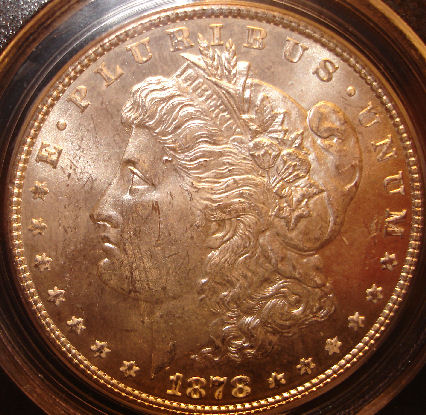 MorganFullFRONT1.jpg
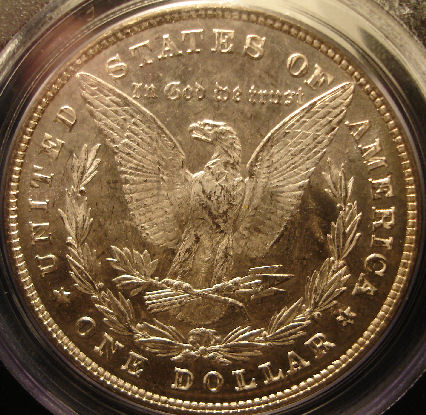 MORGANFULLREVERSE1.jpg
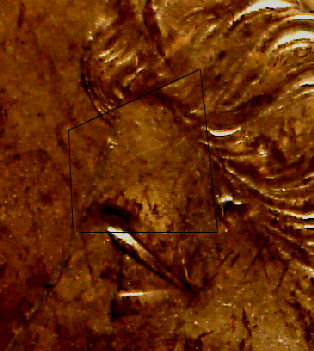 Wreathovereye1.jpg
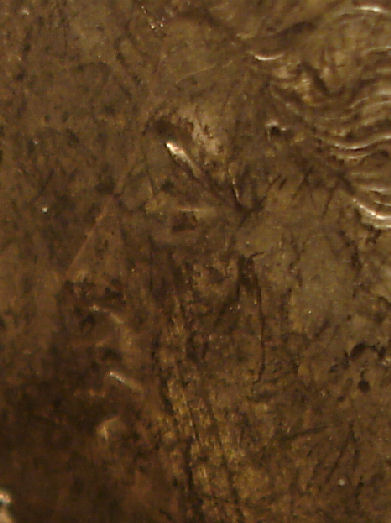 LIghtanglefullface.jpg
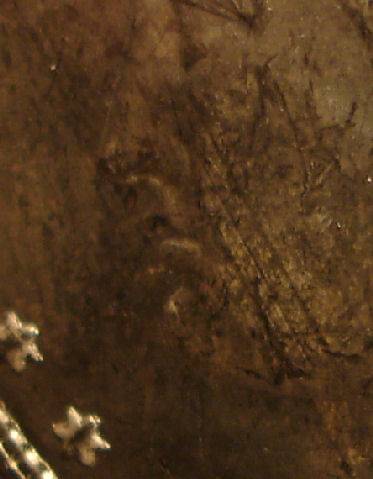 Anotheranglemoredefined.jpg
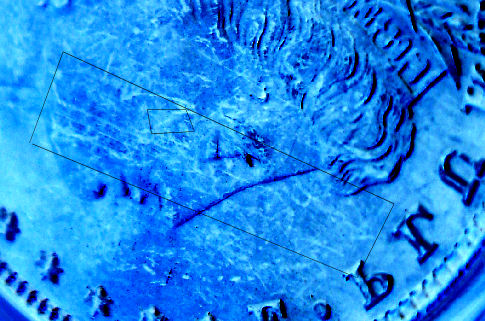 ARROW proof.jpg
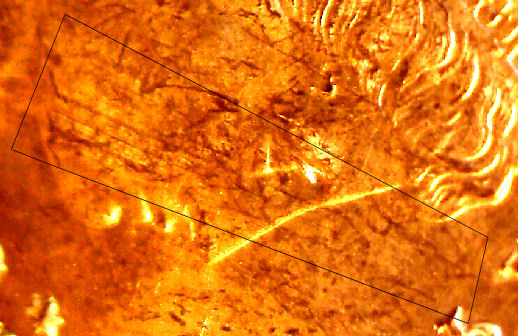 ARROW proof2.jpg
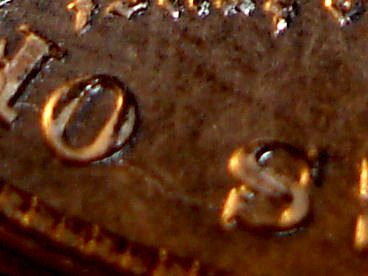 ISITANSOR8.jpg
 MORGANGOATIE.jpg
 MORGANGOATIEoutline.jpg
 OFFOPISITESTAR.jpg
 STARORIGINALPLACE.jpg
 STARORIGINALPLACeclose.jpg
 arrowproofexample.jpg
 morganarrowsdefined2.jpg
 morganIseeyouright.jpg
 morganIseeyourightdefined.jpg
 MorganlowerwingR.jpg
 MorganlowerwingR2.jpg
 MorganlowerwingL.jpg
 MorganlowerwingL2.jpg
 morganarrowsexample.jpg
 StrangeMouth1.jpg
 MOUTH5.jpg
 MOUTH3.jpg
 MOUTH2.jpg
 FUULMORGANWMOUTH1.jpg
 FACEMOUTH6.jpg
 FACEMOUTH7.jpg
 LLPROOF1.jpg
 Wreathovereye1.jpg
 LIghtanglefullface.jpg
 Anotheranglemoredefined.jpg


