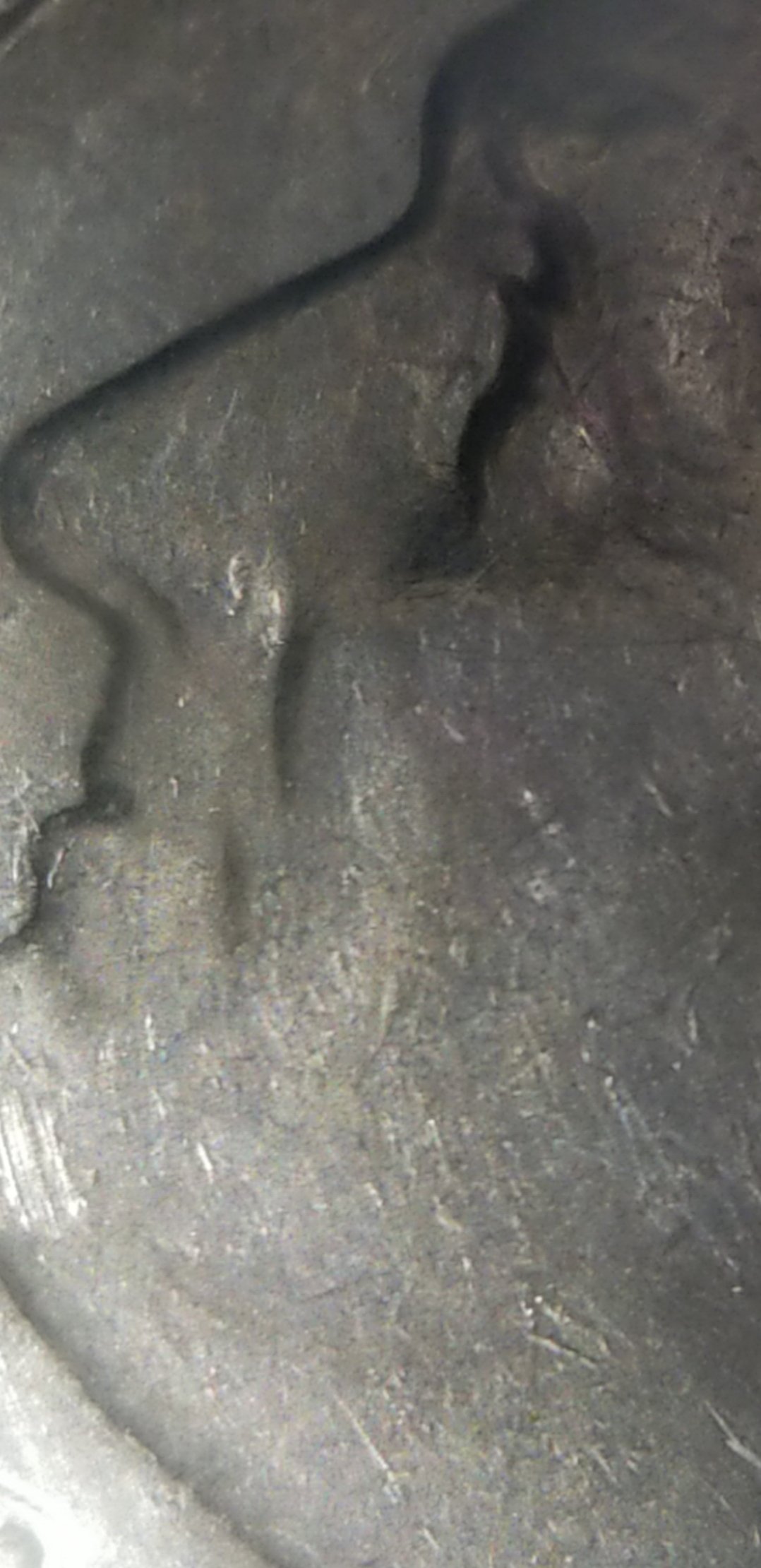
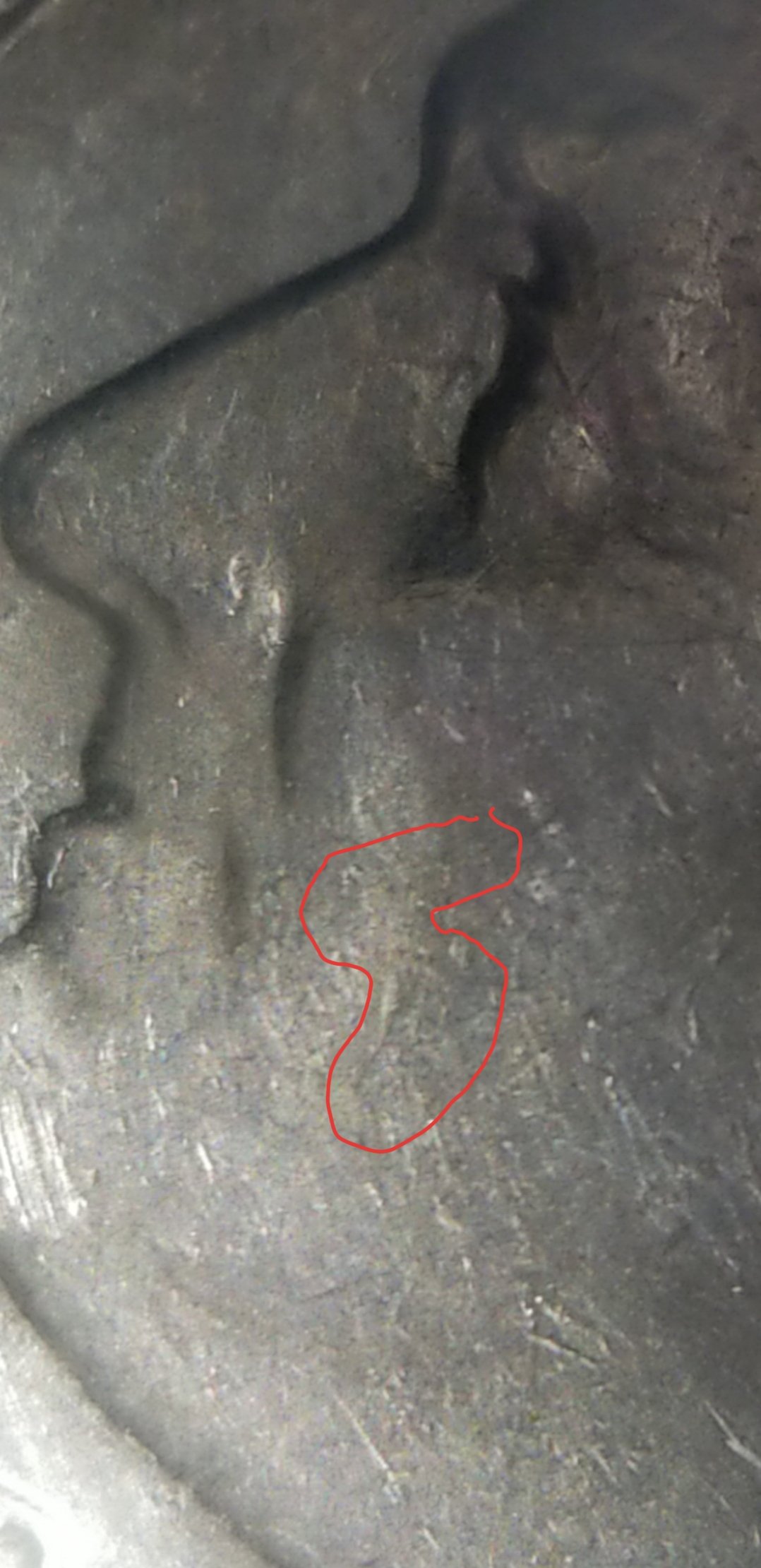
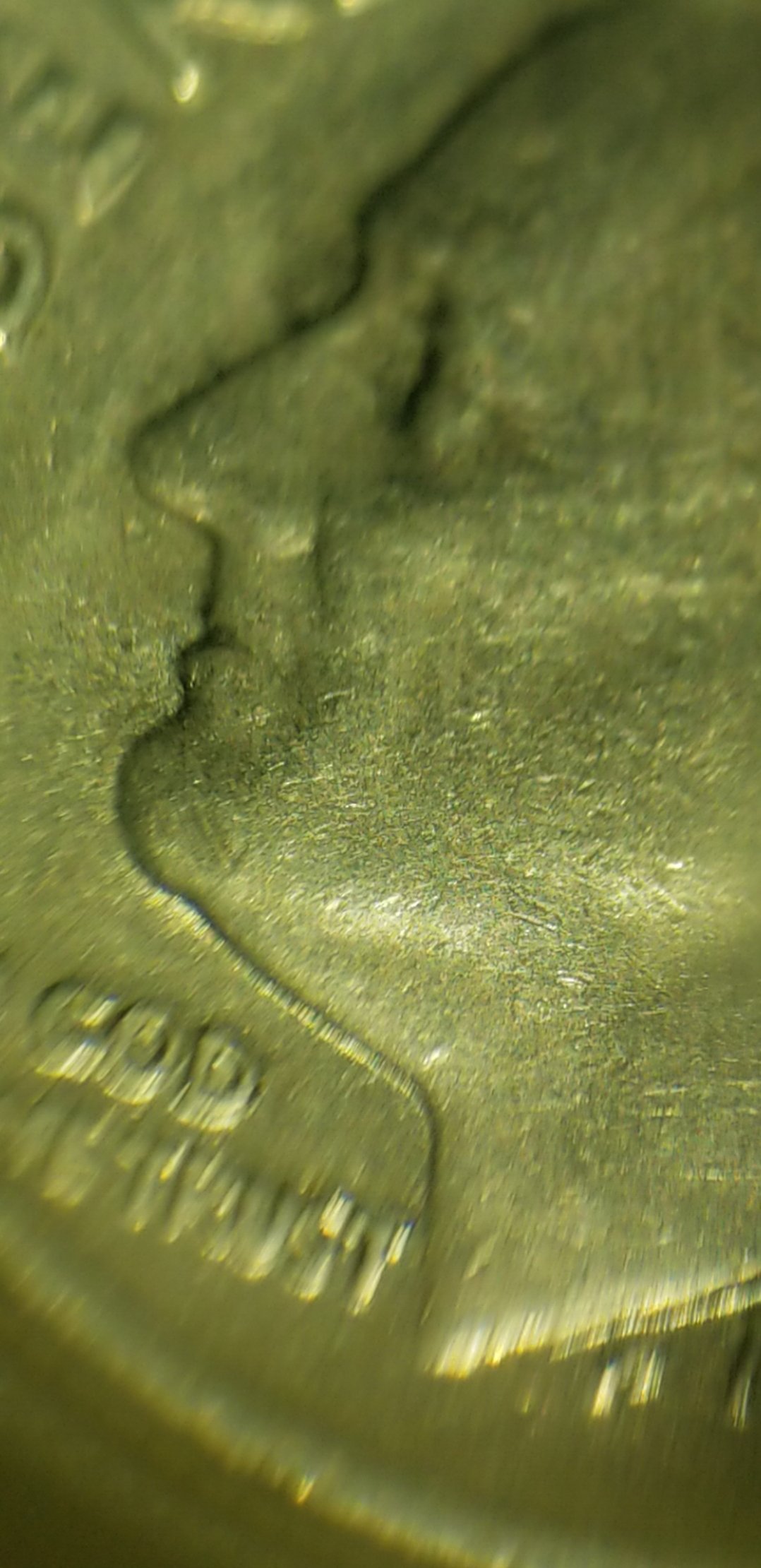
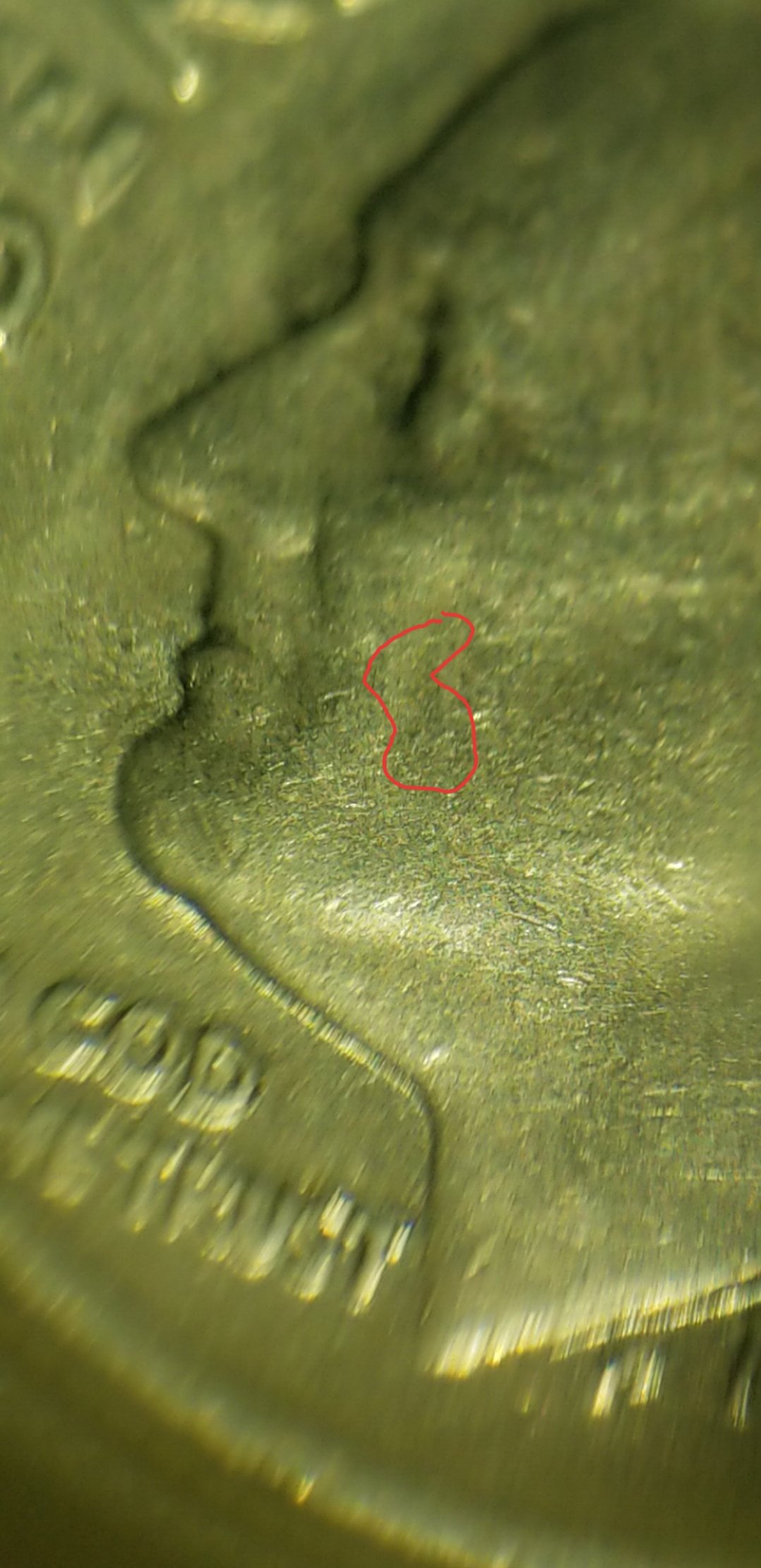
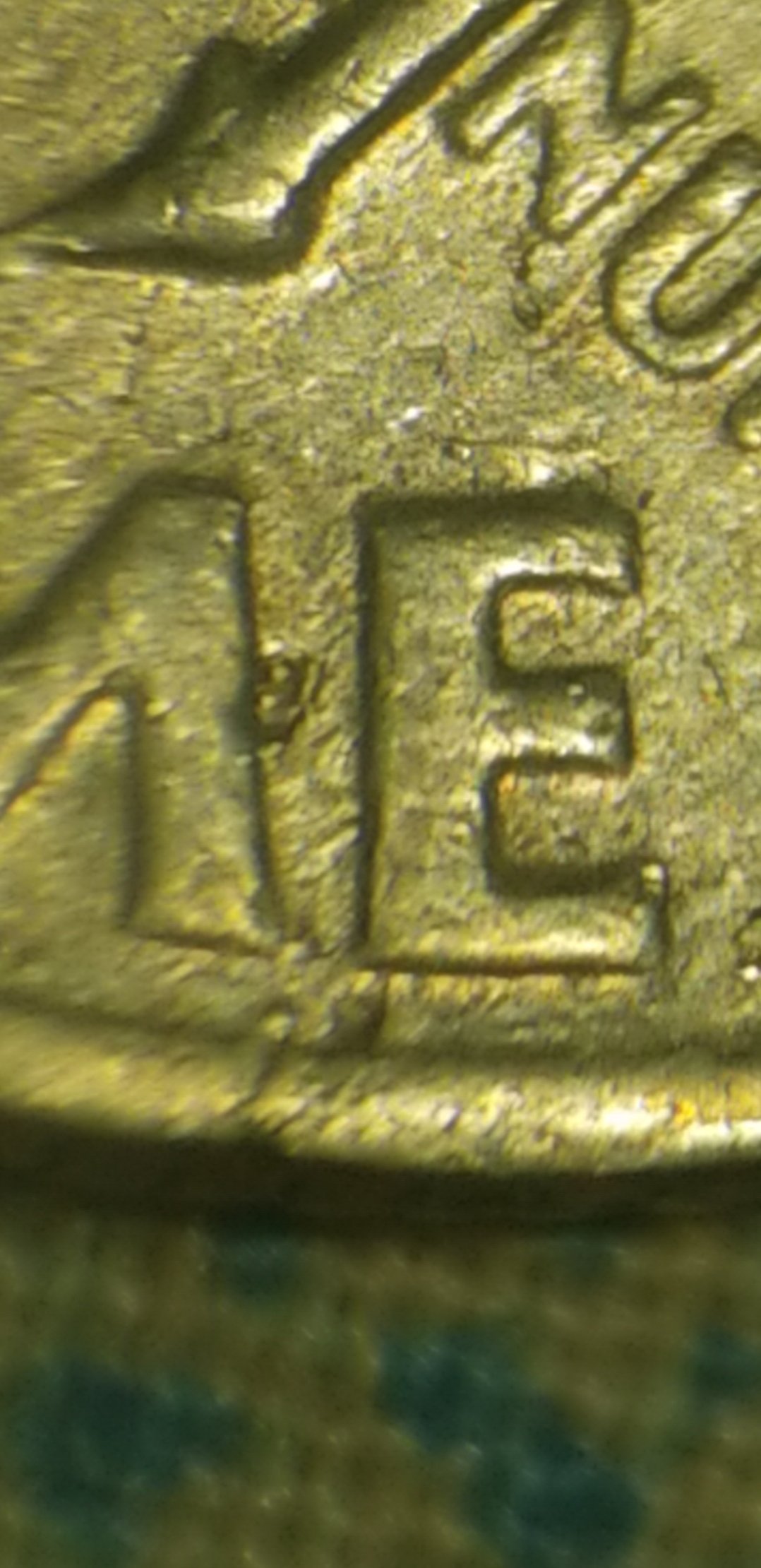
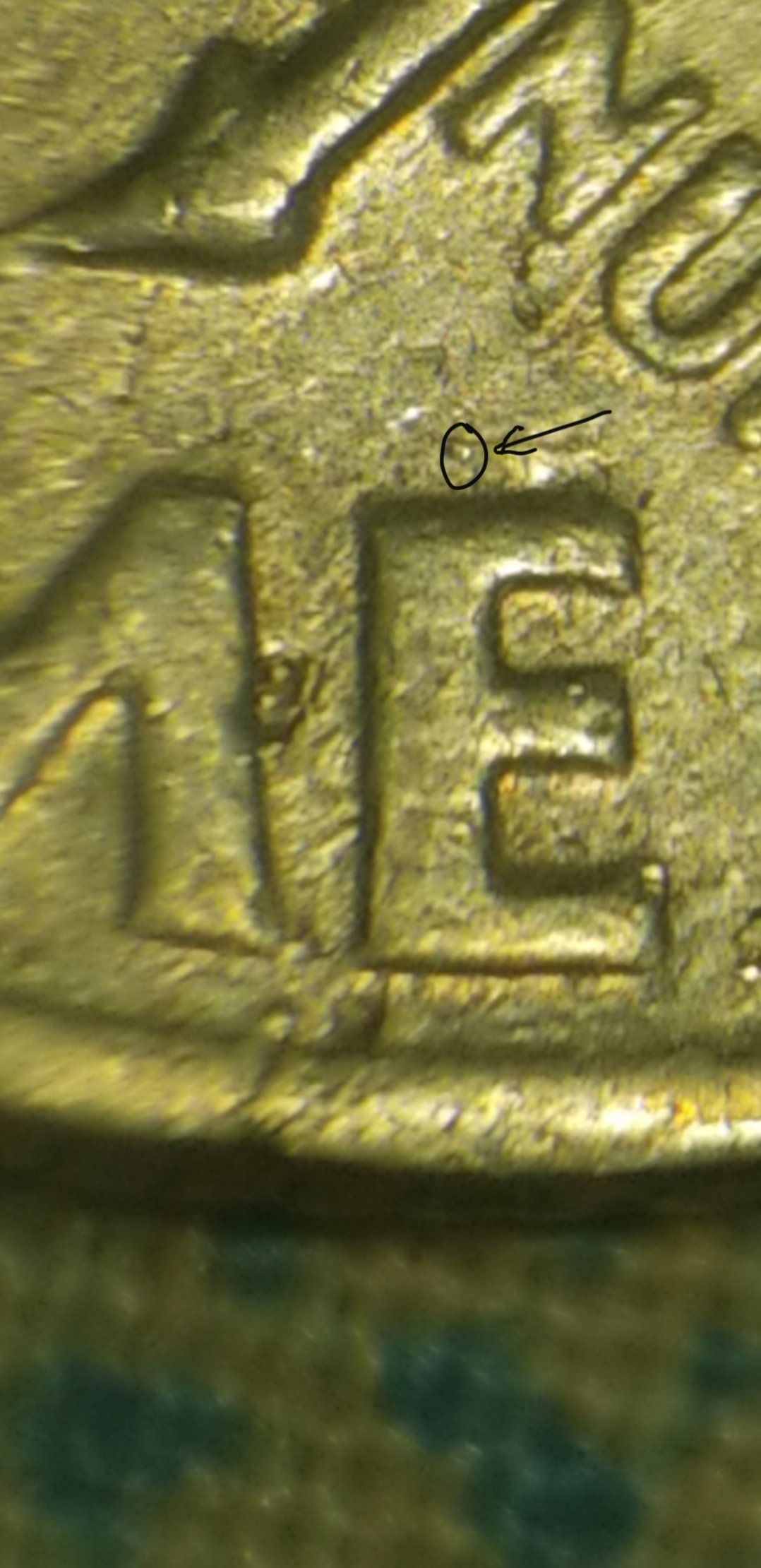
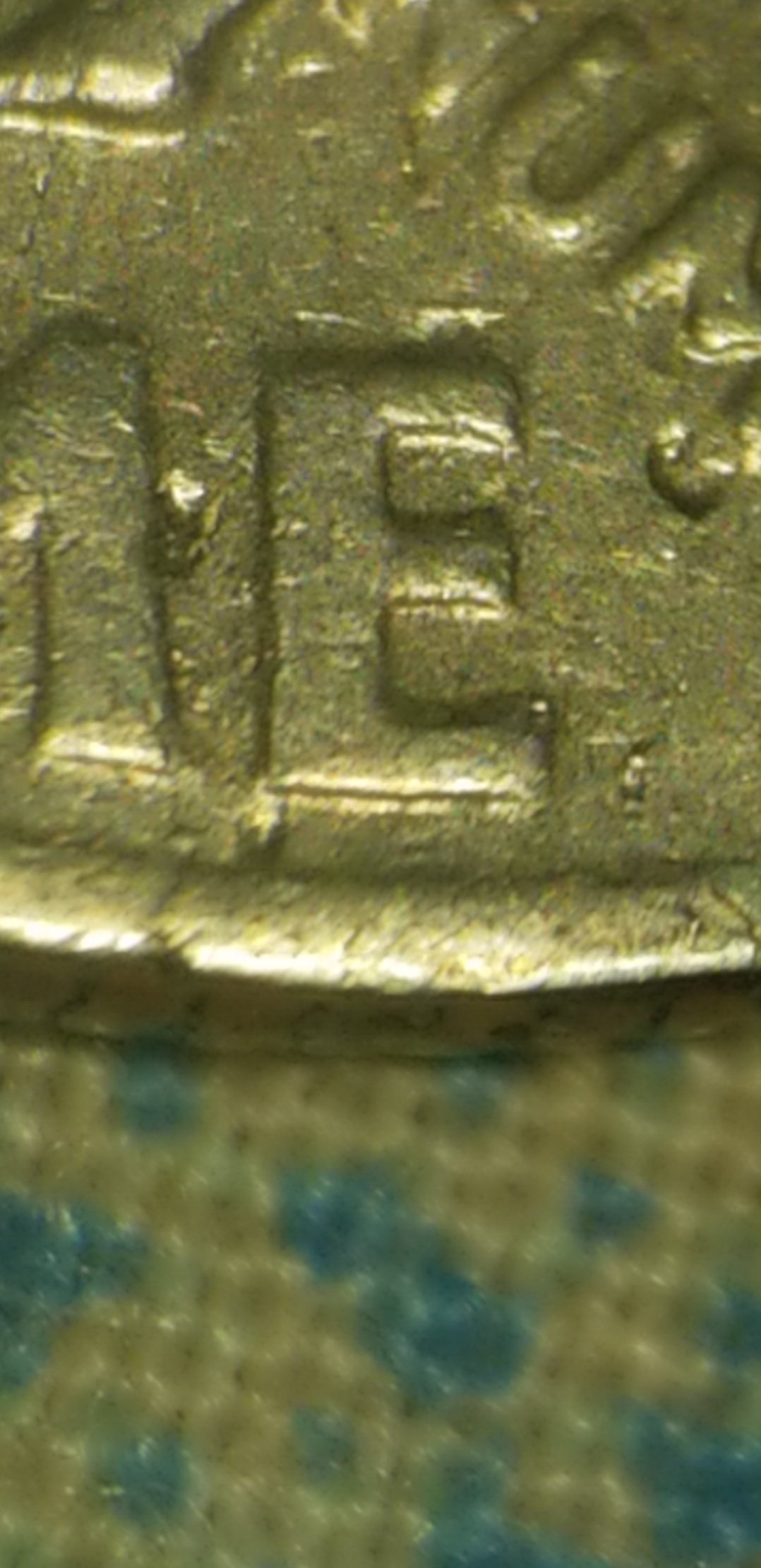
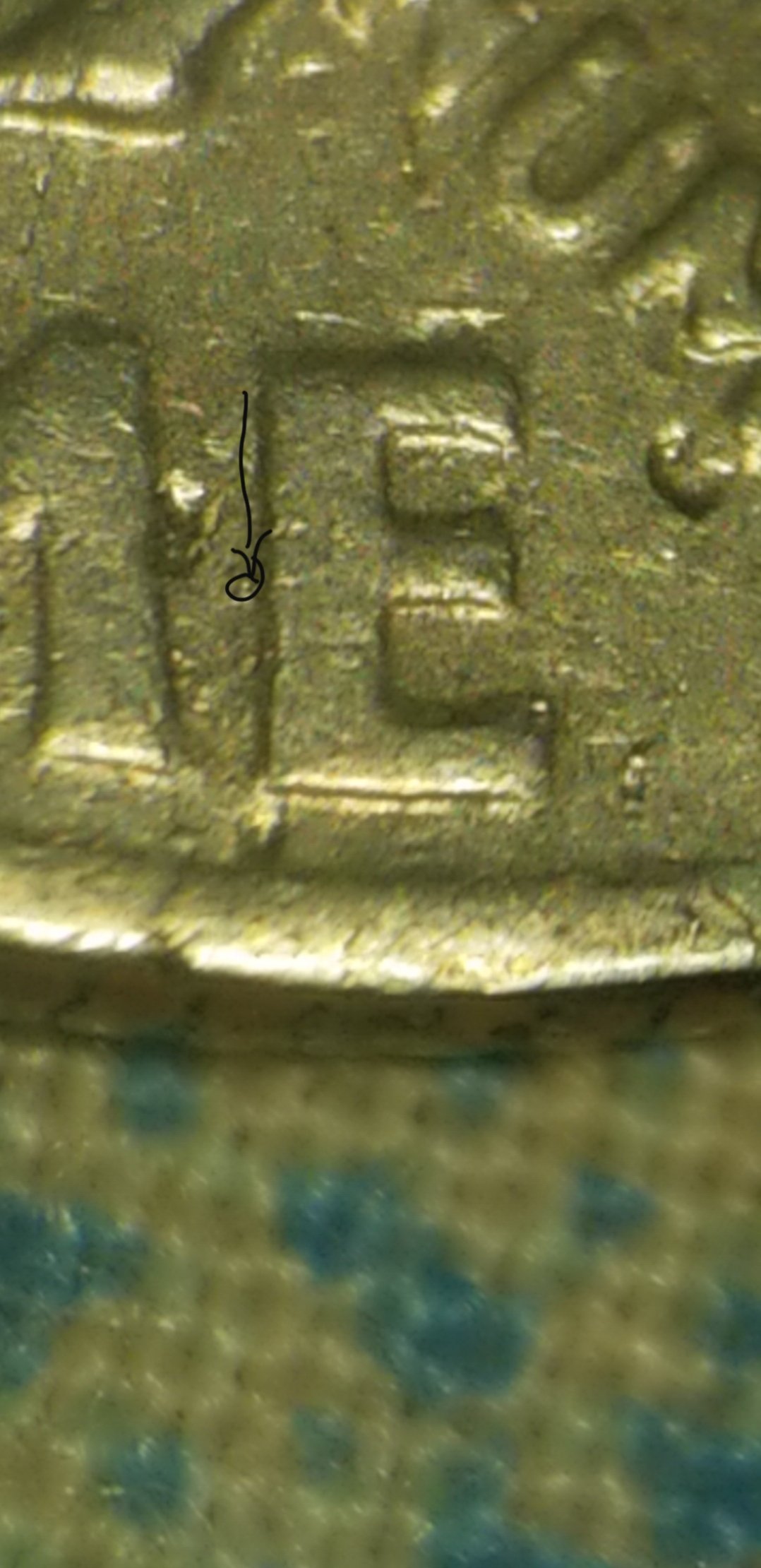
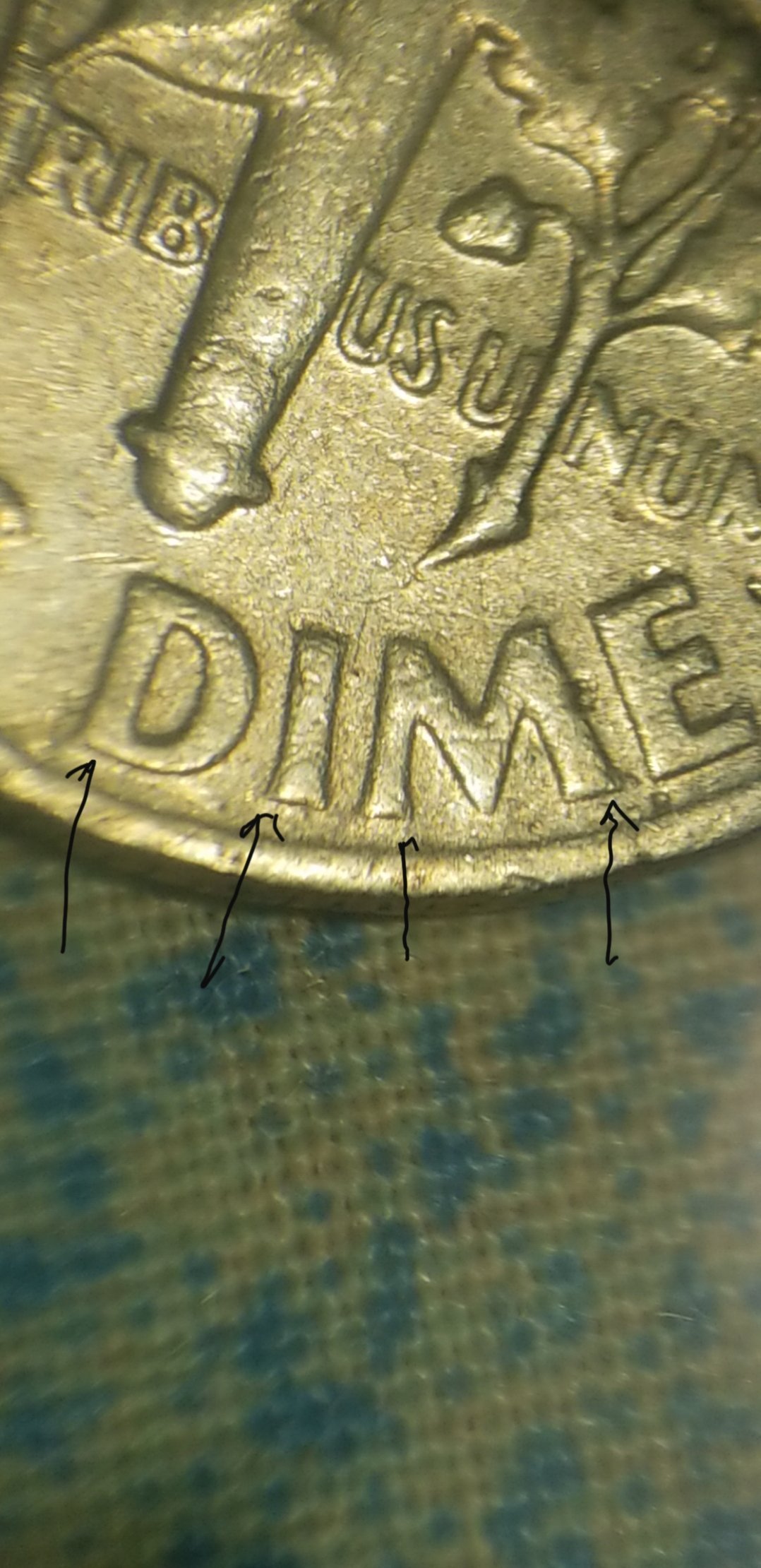
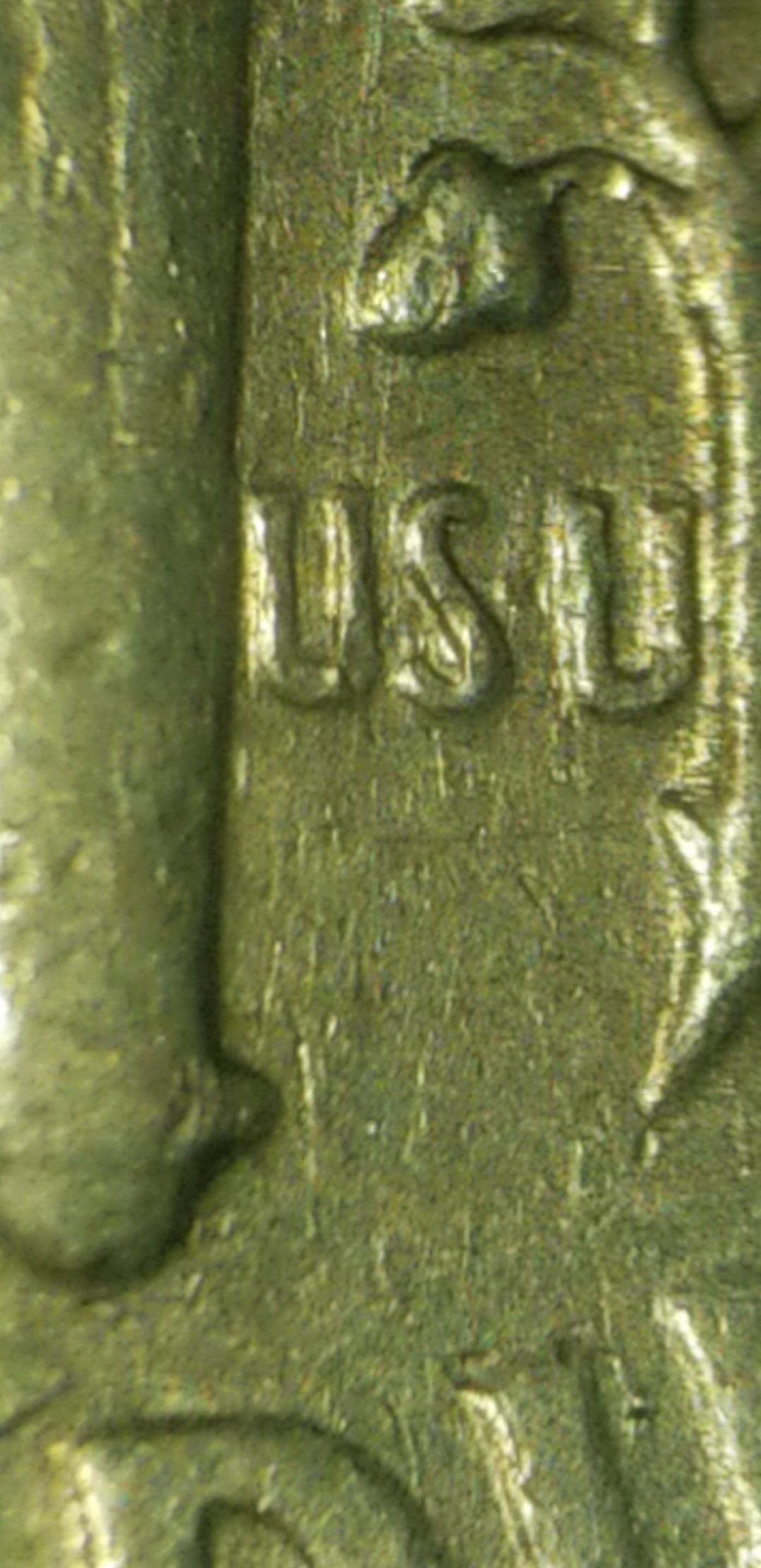
Die scratches are like finger prints. You remember the other day when some thought one thing, the finder thought something else, so I dug in with his images and one example I snagged off Wexler's site. When looking at his coin, I could see the die scratches matching. Even though the images were not showing the hub doubling. (The light was too bright, making the devices look smaller than the
DDR should be) what I needed to see. But by one to another image, I found the matching die scratches. I used these as markers to ID his coin.
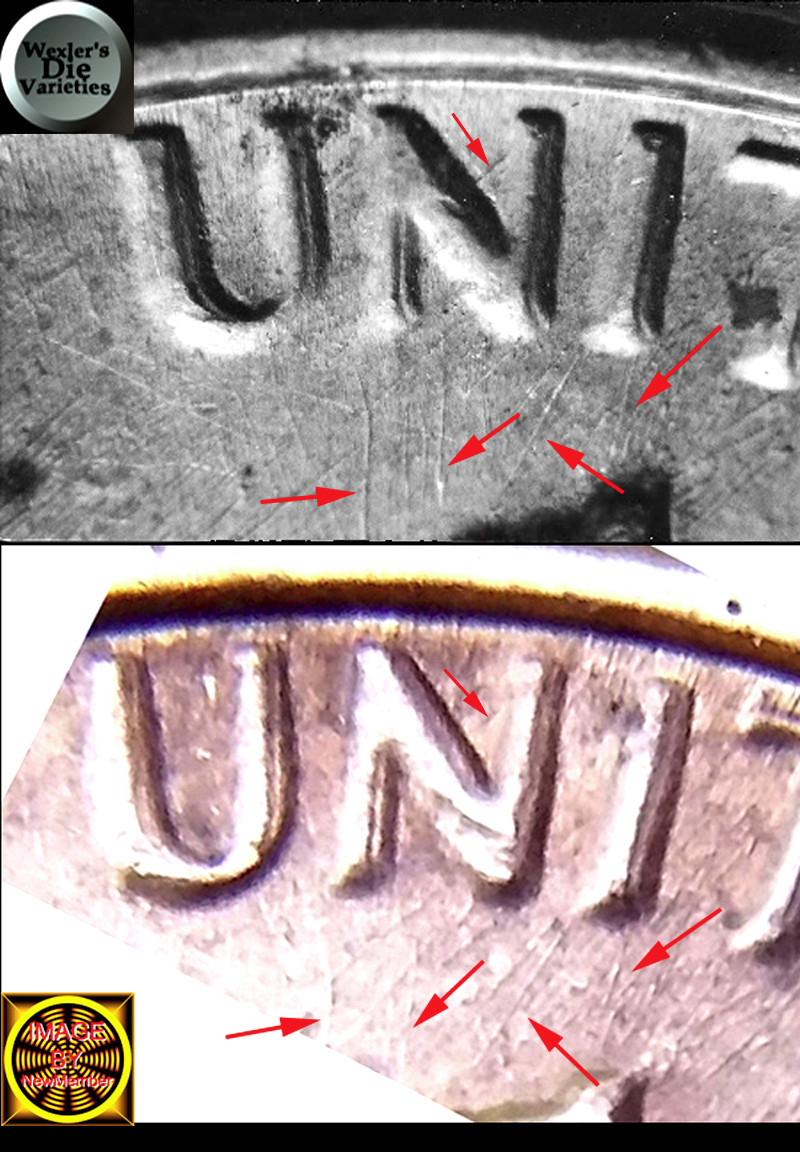
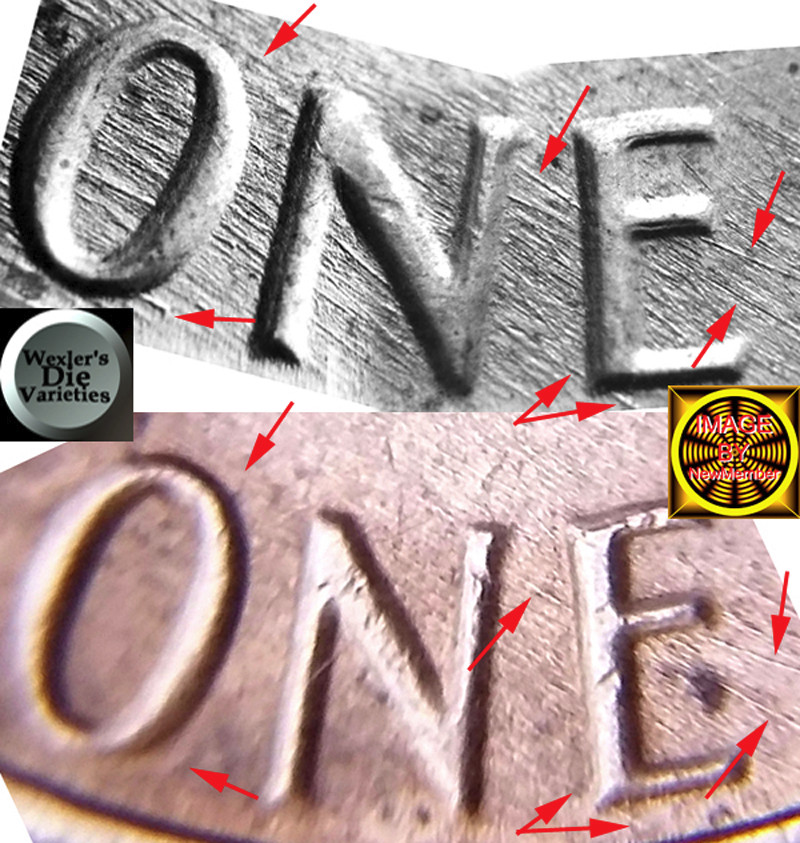
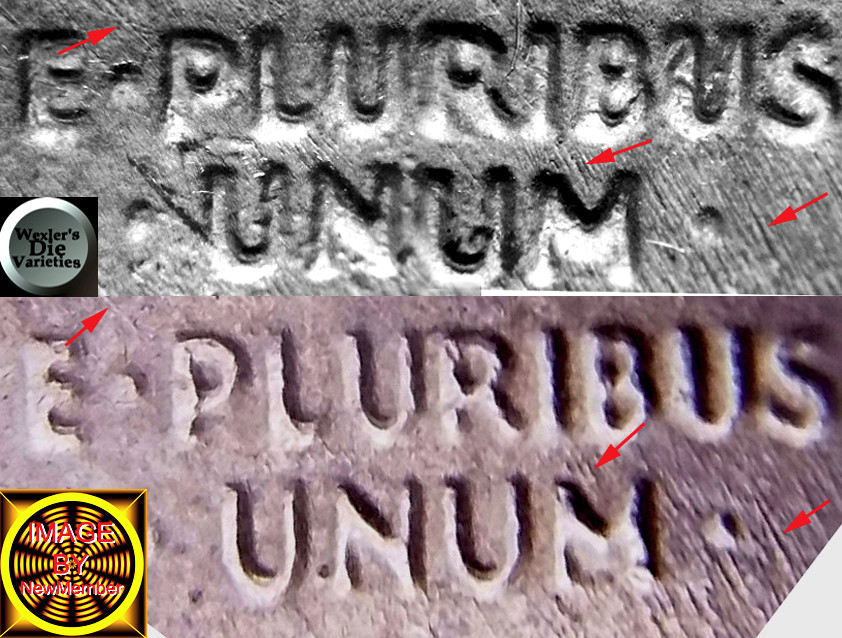
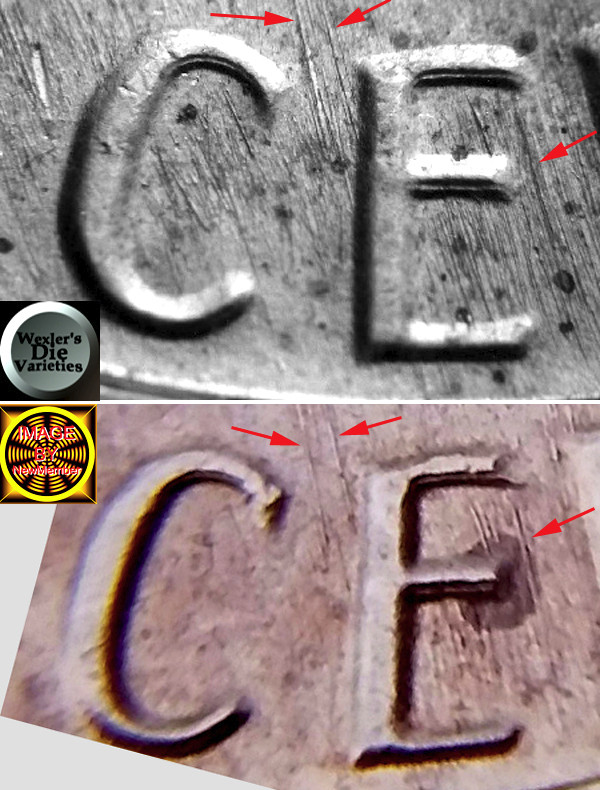
Now on a different die state these might not show. So as markers they help ID the variety, but mostly the die state of the coin. On another set of images of the same die, the markers maybe there, or hadn't formed yet. Good markers are like good finger prints. But don't go the backwards way of looking for the markers first. They don't work that way. Why? Because the dies do the same thing over and over again. Somethings maybe close, but not an exact match. But die scratches are like fingerprints. Only created exactly the same on one die, or perhaps a die state that lasts for just a while.
Markers maybe die cracks. So you see on the list that it is a die crack on letter 'Q'. So you look at your coin and the description. Yes it has a die crack on that letter. But
is it the same exact die crack? If it the die crack went in a different direction would that be a match? No. It could be on the wrong side. But the location must match exactly. So you need to see the visually the die crack, rather than rely on descriptions. So find another reference to see what the die crack looks like, and then see if yours is a match. It has to match exactly. But what if the direction is right, the shape looks right, but it is longer. That OK, the die continues to break and the die crack can take another direction, and still be the right die. Look at the areas where the die crack starts. Your coin maybe a later die state, so it will be longer. But look at the source of where it starts, that should stay the same in that area.
But what if the die scratches are not present? This happens as the die ages. The die cracks in the open fields area can flatten with time. So what can you do? Look at areas where they would intersect with a device or closer to a device. Next to a device they will
last a lot longer. Inside of a device, they will remain sometimes until the die is retired. So look around in these areas to see if any fading die scratces are present. Sometimes a new set of die scratches will be placed over an older set. Again look near the devices, as they may show
both sets. The old and the new ones. Or the die maybe just a fresher die that struck your coin, and they haven't happened yet.
Die chips and
Cuds. These are great to use of they are present, but again your example maybe before, an known
Cud. Chips also continue to get larger as the die ages. Or new dies may not show them yet. (You just have to learn to read the die state of your coin. Is it before fore or after the attributed examples?
Hope this helps a bit more.
CoopHome die markers









 Posted 05/19/2018 12:13 pm





 It looks normal to me. I don't see anything unusual.


