| Author |
 Replies: 12 / Views: 1,993 Replies: 12 / Views: 1,993 |
|
|
Pillar of the Community
 United States
8056 Posts |
I am curious if anyone has a collection which aims for a coin from each mint in a certain place and era. It strikes me that maybe there are some rich possibilities for this in ancients?
In my case, I am looking at 16th century Poland (before that, it's rather boring), which had quite a proliferation of mints in a relatively small geographic area. For coinage under the name of one of the 4 Polish sovereigns who reigned between 1506 and 1599, one can find coins minted at:
Bydgoszcz (Bromberg)
Elbing
Gdansk (Danzig)
Krakow
Lublin
Malbork (Marienburg)
Olkusz
Poznan (Posen)
Riga
Torun (West Prussia)
Vilnius
I'm also curious whether other contemporary kingdoms like England or France had such a a proliferation of mints at or near this time.
|
|
|
|
Moderator
 United States
23731 Posts |
I'm slowly working on mint sets for Sasanian kings.
|
|
Pillar of the Community
United States
6130 Posts |
I know several on here collect certain emperors or empresses by mint; Probus I believe is especially popular, as is Constantine.
|
|
Pillar of the Community
 United States
8056 Posts |
Thanks for the responses. I'm curious how many mints for those empires? I imagine for Constantine it far surpasses what I've mentioned for Poland.
For Poland it looks like the number of mints reaches its height under Sigmund III in the late 1500s, by which time parts of Prussia (and mints like Torun, Elbing and Malbork) had come under Polish rule, as well as Riga as a result of the culmination of the Livonian wars.
Then there is Glogow (Glogau), in Silesia, which paid homage to the King of Bohemia, and hence was not technically Polish land in the early 1500s, but had Polish princes of the Piast dynasty as dukes, some of whom later became kings of Poland. Sometimes Glogow is also counted as Polish at this time (especially for purposes of early dated coins). Confusing enough? Sure is for me.
|
|
Pillar of the Community
United States
6130 Posts |
|
|
Moderator
United States
23731 Posts |
98 mints operated from one time or another in the Sasanian empire.
|
|
Pillar of the Community
United States
8056 Posts |
Quote:
98 mints operated from one time or another in the Sasanian empire  Makes the Romans look like pikers! Since I know nothing of the political history in that part of the world, does that mean it resembled the Holy Roman Empire, in being a collection of somehwat independent fiefdoms? Edited by tdziemia
05/27/2018 1:03 pm
|
|
Moderator
United States
23731 Posts |
No, The Sasanians were Persians. They were the third Persian empire, the first being the early Persians, than the Parthians and than the Sasanians with their reign ending at about the same time as Islam started in the region.
|
|
Pillar of the Community
United States
8056 Posts |
I've tried to compile a map showing the mints in the Polish-Lithuianian Commonwealth in the latter part of the 1500s, as mentioned previously. Key: - black borders are the present day borders of nations - the curving red line is the border for the Polish-Lithuanian commonwealth established by the 1569 Union of Lublin (as best I could translate it to this map). Polish-Lithuanian lands lie to the right of this line. - Mints represented by a BLACK LETTER at upper right are those that were not in ethnically Polish territory, and are no longer in Poland (R=Riga, V=Vilnius). - Mints represented by a RED LETTER are those that are still in Poland (Germanic names in parentheses). From north to south: G = Gdansk(Danzig) M = Malbork (Marienburg) E = Elblag (ELbing) B = Bydgosczsz (Bromberg) T = Torun (Thorn) P = Poznan (Posen) W = Wschowa (Fraustadt) L = Lublin, O = Olkusz, K = Krakow - Mints represented with a GREEN LETTER are those that were in Silesia (fiefs of the Holy Roman Empire), but are now in Poland: G = Glogow (Glogau) L = Legnica (Leignitz) W = Wroclaw (Breslau) B = Brzeg (Brieg) 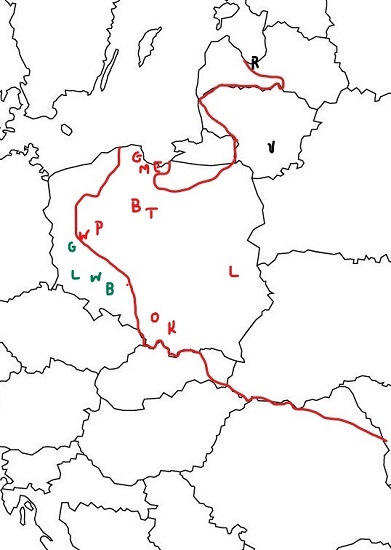 Edited by tdziemia
05/30/2018 6:15 pm
|
|
Pillar of the Community
United States
8056 Posts |
Since the last post, I've nabbed coins from the Olkusz, Poznan, Riga, Lublin and Wschowa mints at various auctions. Here is a trojak (3 groschen) from 1595, Olkusz mint. Olkusz was a noted mining center from medieval times until the modern era. Surface mining and smelting of galena (an ore that yields lead and silver) was carried out on a large scale from the 12th century to the mid 1600s when the surface deposits were exhausted. As Olkusz is a stone's throw (30 km/20 miles)from Krakow, a Royal Mint was established there in 1578. WIth a population today of just 36,000 it's a far less important place than it was 400 years ago (I'd travelled twice to Poland and never heard of it until I began learning about Polish coins). Obverse is a portrait of Sigismund III. Reverse the denomination (III), below it the Polish eagle, the Vasa family coat of arms, and the Lithuanian mounted knight. Legend over several lines: GRO ARG TR R POLONI (Silver triple gros of the Kingdom of Poland). Finally the date (15)95 and the royal treasurer's initials, IF, and shield. 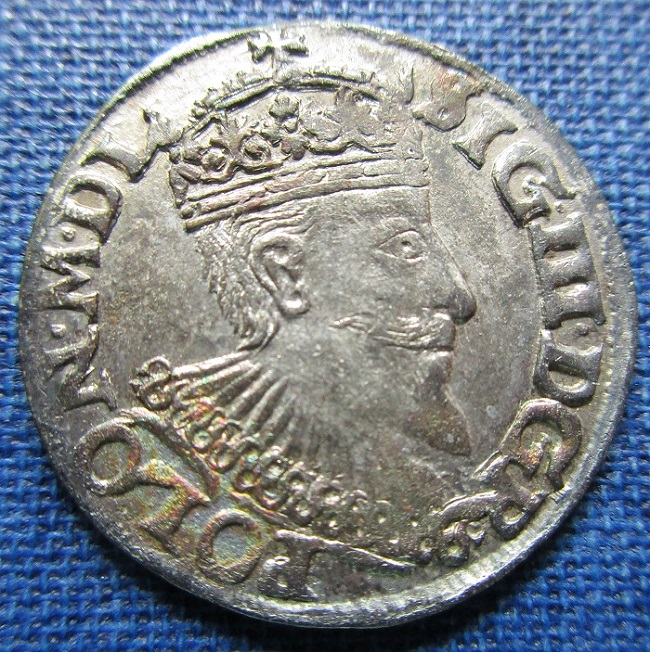 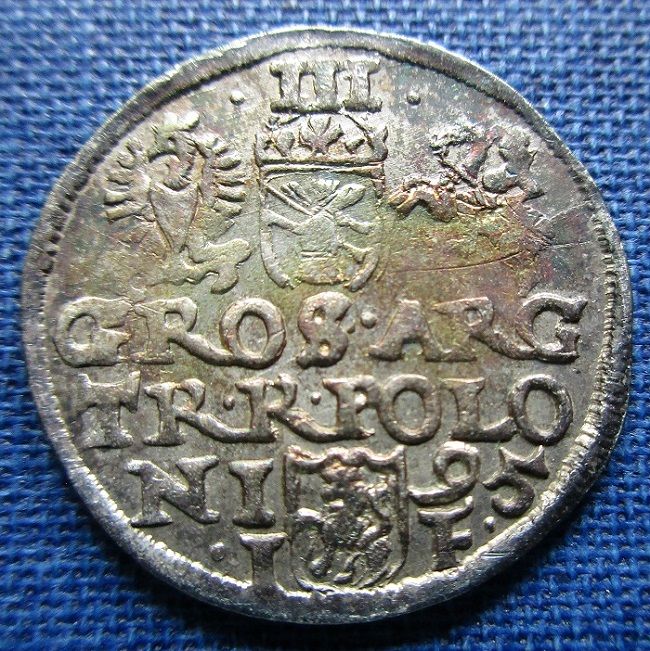 Edited by tdziemia
06/27/2018 5:44 pm
|
|
New Member
Poland
4 Posts |
Hi! *** Edited by Staff - Please review the rules that you agreed to when you registered. *** |
|
Pillar of the Community
United States
8056 Posts |
Sorry, but I am not selling.
|
|
Pillar of the Community
United States
1554 Posts |
Once upon at time, I thought I might try to collect one coin from every Islamic mint. Diler compiled some 1,845 mint names in his 3-volume opus. There are surely even more. Needless to say, I didn't get very far.
|
| |
Replies: 12 / Views: 1,993 |
|







 Posted 05/25/2018 3:51 pm





