| Author |
 Replies: 9 / Views: 1,610 Replies: 9 / Views: 1,610 |
|
|
Valued Member
United States
319 Posts |
|
|
|
|
Valued Member
France
332 Posts |
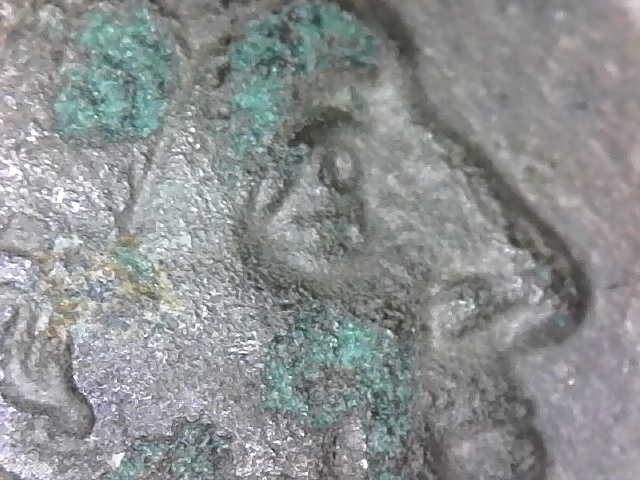
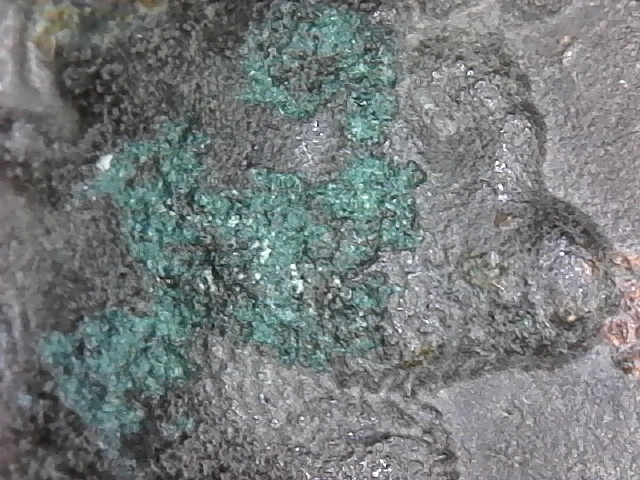
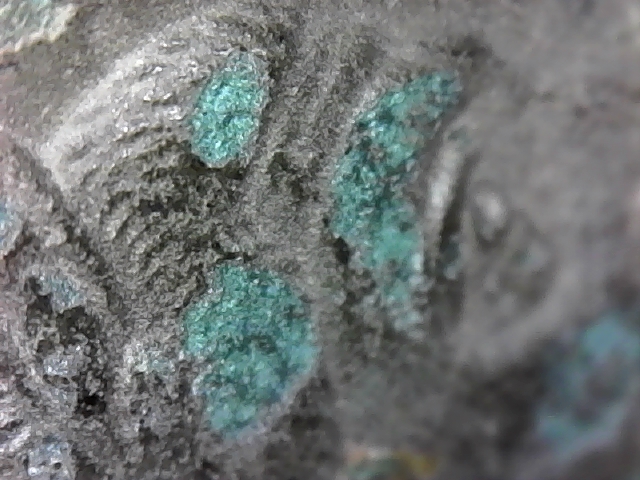
Yes, this is a case of bronze disease. The first thing is to isolate your coin from others...
For more information see
Http://www.classicalcoins.com/bronze_disease.html
|
|
Rest in Peace
10197 Posts |
Good advice, do it! You can't fully stop the progression, but can retard it some to keep from getting wors and affecting other copper elemental coins.
|
|
Rest in Peace
United States
17900 Posts |
Treat it like a contagious patient.
|
|
Valued Member
 United States
319 Posts |
Thank you all for the helpful (yet distressing) responses. I have quarantined the coin for now, until steps can be taken to safely stabilize it. Fortunately, my coins have been stored in separate compartments in a reasonably dry space. As always...great advice from great people!
|
|
Moderator
 United States
23731 Posts |
Bronze disease is not easy to treat but once you learn some of the methods you can get good results. The disease is caused when moisture gets into the coin, first you have to remove the moisture. A method that I have used for years and works very well is to place the coin in a 250 degree oven for about 20 minutes. Remove the coin an quickly place it on a very flat surface cover it with a jar so that a vacuum is formed the coin not be exposed to the air will not draw in any moisture as the coin cools. Once completely cooled remove whatever DB is present try not to touch the coin with your fingers so moisture from you fingers doesn't reenter the coin. Wear rubber gloves. Once the coin is cleaned cover it with REN wax. This is a very simple method that doesn't require and chemicals.
|
|
Pillar of the Community
United States
636 Posts |
Here's what I usually do in a case like this. The green "bronze disease" can often be removed by soaking for a week or two in a solution of sodium sesquicarbonate. To make this solution you can dissolve 10.6 grams sodium carbonate (washing soda) and 8.4 g sodium bicarbonate (baking soda) in 100 mL distilled water.
I have had good success with several Byzantine and other coins with this method. In my experience it doesn't remove the patina, but if the coin surface is corroded below the blue/green encrustation it will of course reveal the corroded area.
After this treatment it is probably advisable to soak in distilled water for a few hours to remove any residue of sodium sesquicarbonate, dry the coin thoroughly, then if desired coat with Ren wax.
Edited by Seeker55
06/17/2018 9:02 pm
|
|
Pillar of the Community
United States
1122 Posts |
|
|
Valued Member
United States
319 Posts |
Thank you all for the great advice regarding my effected coin. I am in the process of taking the recommended steps to halt the effect of the "disease". I must report, however, that I have discovered the corrosion is far worse than was visible is the pictures. After the low-level baking out of the moisture, the surface began flaking and collapsing at the edges of most of the greening. Revealing the true extent of the damage. I will take further steps to stabilize this precious piece of history, and create a separate post of my results. Again...thank you all!
|
|
Pillar of the Community
United States
7067 Posts |
Quote:
the surface began flaking and collapsing at the edges of most of the greening. Too bad. The BD had eaten below the surface, leaving a skin of metal above in those areas. Best wishes on salvaging what you can. |
| |
Replies: 9 / Views: 1,610 |
|









 Posted 06/17/2018 6:18 pm





