| Author |
 Replies: 14 / Views: 2,013 Replies: 14 / Views: 2,013 |
|
|
New Member
United States
5 Posts |
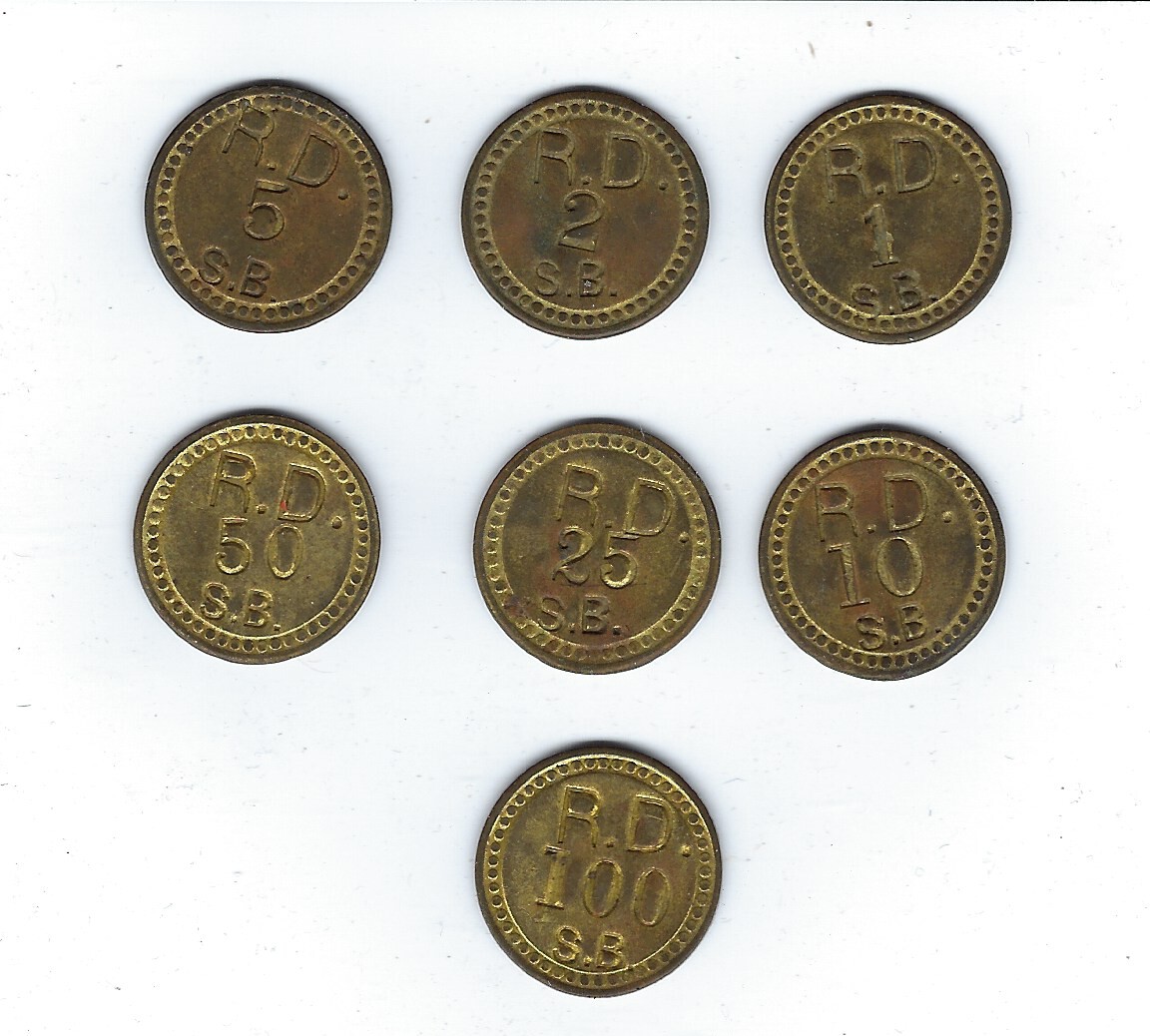 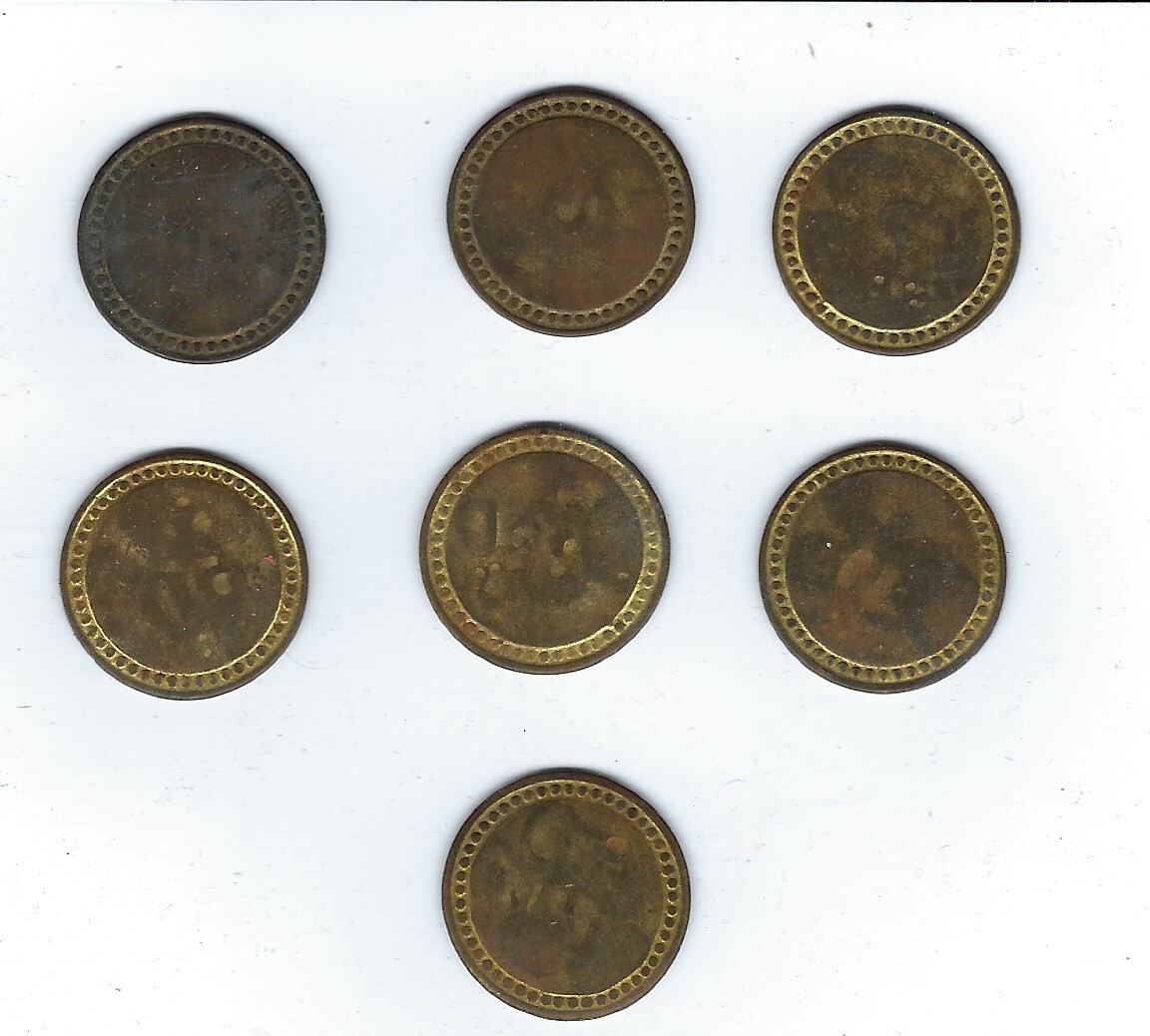 they are 21mm This set of tokens came from my mother in law, who was from Ontario Canada. They are from early twentieth century. I am not sure if R.D. stood for rural delivery or possibly this was a store script. I collect Miami Florida tokens. Edited by paa-miami
06/28/2018 7:45 pm
|
|
|
|
Bedrock of the Community
United States
10284 Posts |
 to CCF It appears you probably have a set, which would be probably very difficult to assemble no matter what they are. I will look into this. |
|
New Member
 United States
5 Posts |
Thank you...I can use your help....
|
|
Bedrock of the Community
United States
10284 Posts |
I looked and looked and can't find a thing on them. Sorry, sometimes this happens with obscure tokens but maybe we will find out eventually. Stick around and share your Miami Florida tokens in the meantime.
|
|
Moderator
 United States
198174 Posts |
to the Community! |
|
Pillar of the Community
United States
4409 Posts |
These would be considered mavericks since there is little information to help nail down an issuer, location or much else.
These could be a sample set that a scrip manufacturing company to show would show to an interested merchant or maybe even the finished product used by the merchant. No way to really know.
-MV
|
|
New Member
United States
5 Posts |
Thank you for the information...I showed a sample set but I have about 40 of them. Most are low denominations with only one 50 and one 100. Which would lead me to believe they might have been in circulation. But as you say these Mavericks could had a very small circulation...or possibly currency in a game?
|
|
Bedrock of the Community
Canada
24885 Posts |
To the Forum. |
|
Rest in Peace
10197 Posts |
Reminds me of Picker's tokens...bushels of some produce as fruits or weight of fish perhaps? Even wheat bales. Just a thought, but no idea where to look for those.
|
|
Bedrock of the Community
United States
10284 Posts |
Quote:
Thank you for the information...I showed a sample set but I have about 40 of them. Most are low denominations with only one 50 and one 100. One thing for sure, don't lose the 50 and 100! |
|
Valued Member
United States
333 Posts |
I have a few of similar design, where they apparently took blanks and then stamped initials and a number on one side, and the stamps end up showing on the other side. They're probably trade tokens -- and good luck trying to figure out where they came from. I checked the token catalog just in case, not surprisingly nothing came up. Any chance you can ask your mother in law for more information on how she got them? Update: they're probably canning tokens. Here are a few of similar design on ebay at the moment: https://www.ebay.com/itm/312170833842https://www.ebay.com/itm/381509152451https://www.ebay.com/itm/352308677727Edited by nautilator
06/30/2018 12:58 pm
|
|
Rest in Peace
United States
233 Posts |
|
|
New Member
United States
5 Posts |
It certainly looks like they are canning, piecemeal or pickers tokens. Thank you all for the information. My mother in law has passed but her younger sister is still alive in the same area of rural Canada. My next step is to contact her with the information I have learned. I will keep you informed if I learn anything.
|
|
Pillar of the Community
 United States
6514 Posts |
I had wondered what canning tokens were for a while. Also referred to as piecework tokens. Here is an excerpt I copy and pasted from another forum that explains them well:
"And regarding whether these are considered "merchant tokens", the answer is a qualified yes. Canning tokens are part of a sub-group often called piecework tokens. Rather than being a "good-for" type token that was used in place of money at a certain denomination, piecework tokens were used where money would be inconvenient. In the case of canning tokens, one scenario would be where the produce had to be peeled or cored before canning. A worker would get a crate of the produce, do the handwork to peel/core it, then turn a crate over to the next step in the canning process. The worker would receive a token at the time they finished the crate (or other unit). At the end of the day, the worker's accumulation of tokens would be exchanged at the paymaster for whatever the going rate for peeling was. That way, if they processed apples during one run and rutabagas during the next run, the same tokens could be used and the pay rate would vary."
Clever and practical.
|
|
New Member
United States
5 Posts |
Thank you for that update...
|
| |
Replies: 14 / Views: 2,013 |
|




 Posted 06/28/2018 10:17 pm





