








 Posted 07/14/2018 3:52 pm


In the US these are known as Conder tokens, after one of the earliest people to catalogue them. Here in the UK they have various names, including Commercial Tokens and Tradesmen's tokens.
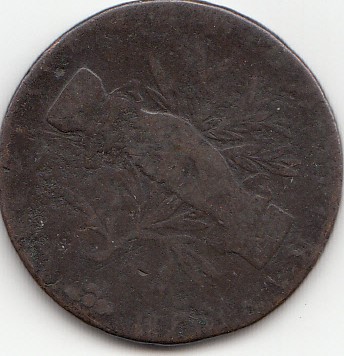
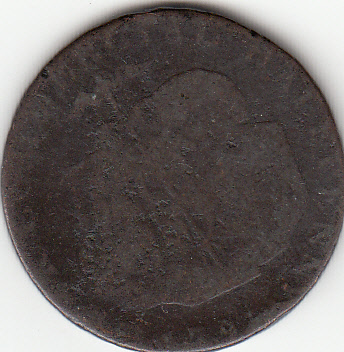
This one is DH11 ( Dalton and Hamer ) minted in 1793 for the town of Leek, Staffordshire England.
Top picture - two clasped hands with frilled cuffs, over an olive bough. Text around the design is ARTE FAVENTE NIL DESPERANDUM.
Bottom picture - a packing case with a bale of cloth (silk?) lying across it and with a caduceus resting across it. The top of the caduceus is the bird "perching" at the top which can be seen in your picture. Text around the design is LEEK COMMERCIAL HALFPENNY 1793.
Note that the caduceus was not a medical badge at that time. It was about Mercury the messenger. I believe it only came to have a medical meaning in 1902 when the medical branch of the US Army mistook it for the staff of asclepius ( only has one snake ) and adopted it as their badge.
Edge inscription should be "PAYABLE AT LEEK. STAFFORDSHIRE + +".
About 5000 halfpenny tokens were struck per hundredweight ( cwt ). There were 20cwt in a ton, with 1cwt = 112lb. This works out at 10.1g approx per halfpenny token. It varied slightly, so the weight of yours is about right.
Diesinker was Wyon, manufacturer Kempson, with 3 tons struck in total. ( Mintages were given by weight ). This gives an estimated mintage of 300,000 .
The tradesman issuing the token is not confirmed 100% but my source says it was likely to be Ford&Phillips, a large company dealing in the silk trade and a major employer in the town of Leek at that time.
This one is DH11 ( Dalton and Hamer ) minted in 1793 for the town of Leek, Staffordshire England.
Top picture - two clasped hands with frilled cuffs, over an olive bough. Text around the design is ARTE FAVENTE NIL DESPERANDUM.
Bottom picture - a packing case with a bale of cloth (silk?) lying across it and with a caduceus resting across it. The top of the caduceus is the bird "perching" at the top which can be seen in your picture. Text around the design is LEEK COMMERCIAL HALFPENNY 1793.
Note that the caduceus was not a medical badge at that time. It was about Mercury the messenger. I believe it only came to have a medical meaning in 1902 when the medical branch of the US Army mistook it for the staff of asclepius ( only has one snake ) and adopted it as their badge.
Edge inscription should be "PAYABLE AT LEEK. STAFFORDSHIRE + +".
About 5000 halfpenny tokens were struck per hundredweight ( cwt ). There were 20cwt in a ton, with 1cwt = 112lb. This works out at 10.1g approx per halfpenny token. It varied slightly, so the weight of yours is about right.
Diesinker was Wyon, manufacturer Kempson, with 3 tons struck in total. ( Mintages were given by weight ). This gives an estimated mintage of 300,000 .
The tradesman issuing the token is not confirmed 100% but my source says it was likely to be Ford&Phillips, a large company dealing in the silk trade and a major employer in the town of Leek at that time.
Edited by Anaximander
07/14/2018 5:49 pm
07/14/2018 5:49 pm


