| Author |
 Replies: 16 / Views: 3,506 Replies: 16 / Views: 3,506 |
|
Pillar of the Community
United States
2403 Posts |
Accidentally put this is the wrong forum. Deleted the other post and made a new one here so the mods didn't have to move it. Anyways I got this today and was wondering what it would grade. 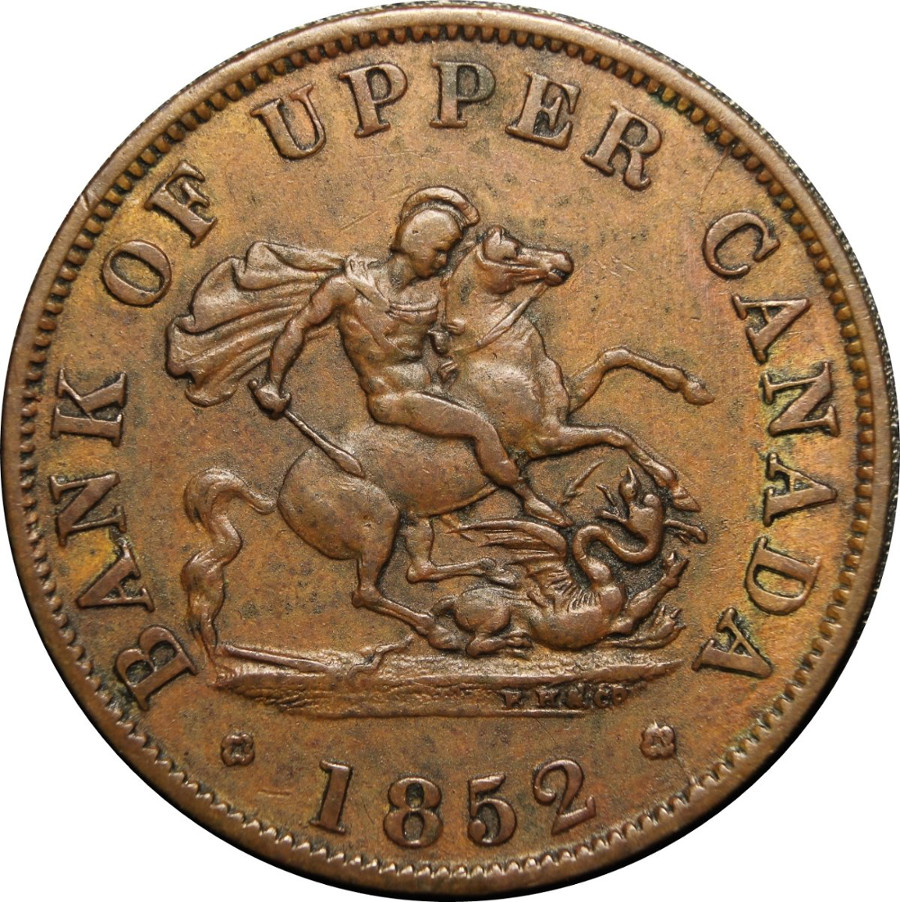 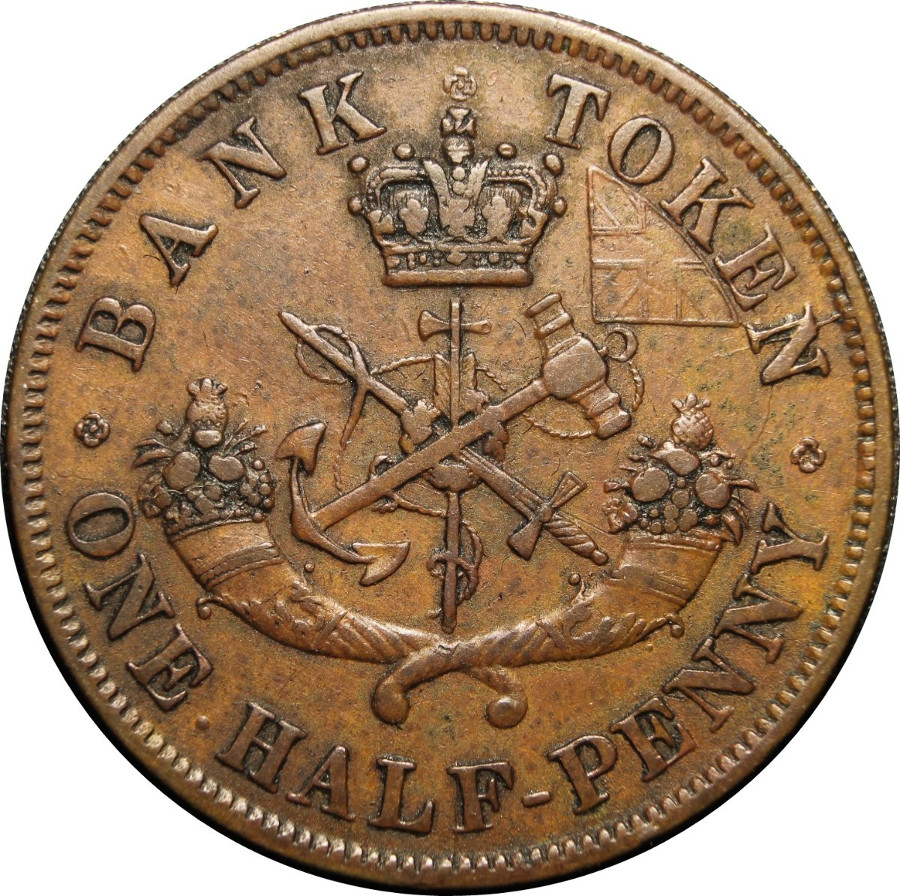 It is my first Dragon Slayer coin of any kind. I am hoping to put together a complete set of these in this condition or better. So what do you think it would grade? Thanks...Mont. |
|
|
|
Pillar of the Community
Canada
9801 Posts |
It does have some wear so AU58
|
|
Pillar of the Community
 Canada
9903 Posts |
EF40
Just barely
"Dipping" is not considered cleaning...
-from PCGS website
|
|
Pillar of the Community
 United States
2403 Posts |
Thank you both! I paid $15 and was hoping it would make at least EF.  |
|
Pillar of the Community
Canada
5646 Posts |
Just from the crown and the effigy (helmet, horse tail and dragon), I'd say VF+ tops.
|
|
Pillar of the Community
United States
2403 Posts |
Thanks again all. Three replies and 3 different opinions on grade. Well that didn't quite work the way I hoped.  |
|
Pillar of the Community
Canada
2786 Posts |
30+ yes, 40 maybe, AU not a chance. This series was extremely well made and does not grade the same as decimals, or even other colonials. Mint state examples appear almost proof like. See below (1854) MS65 Once you really dig in you'll see just how fine of detail these have, and how much is missing from yours (hence the 30/35 grade) Yours shows some honest wear, as do most of this series as coinage in Canada was in extremely short supply. 1850s were the lowest mintage, and saw the most travel, and so can be challenging to find in mint state (by challenging I mean expensive in comparison). 1852s and 54s had double the mintage and yours is typical of average condition. $15 might have been a tad high, but the difference between $10 and $15 is negligible. 1857s had the same mintage as the 52/54s but saw limited circulation as decimals were released a year later. Mint state examples are easily found and affordable. 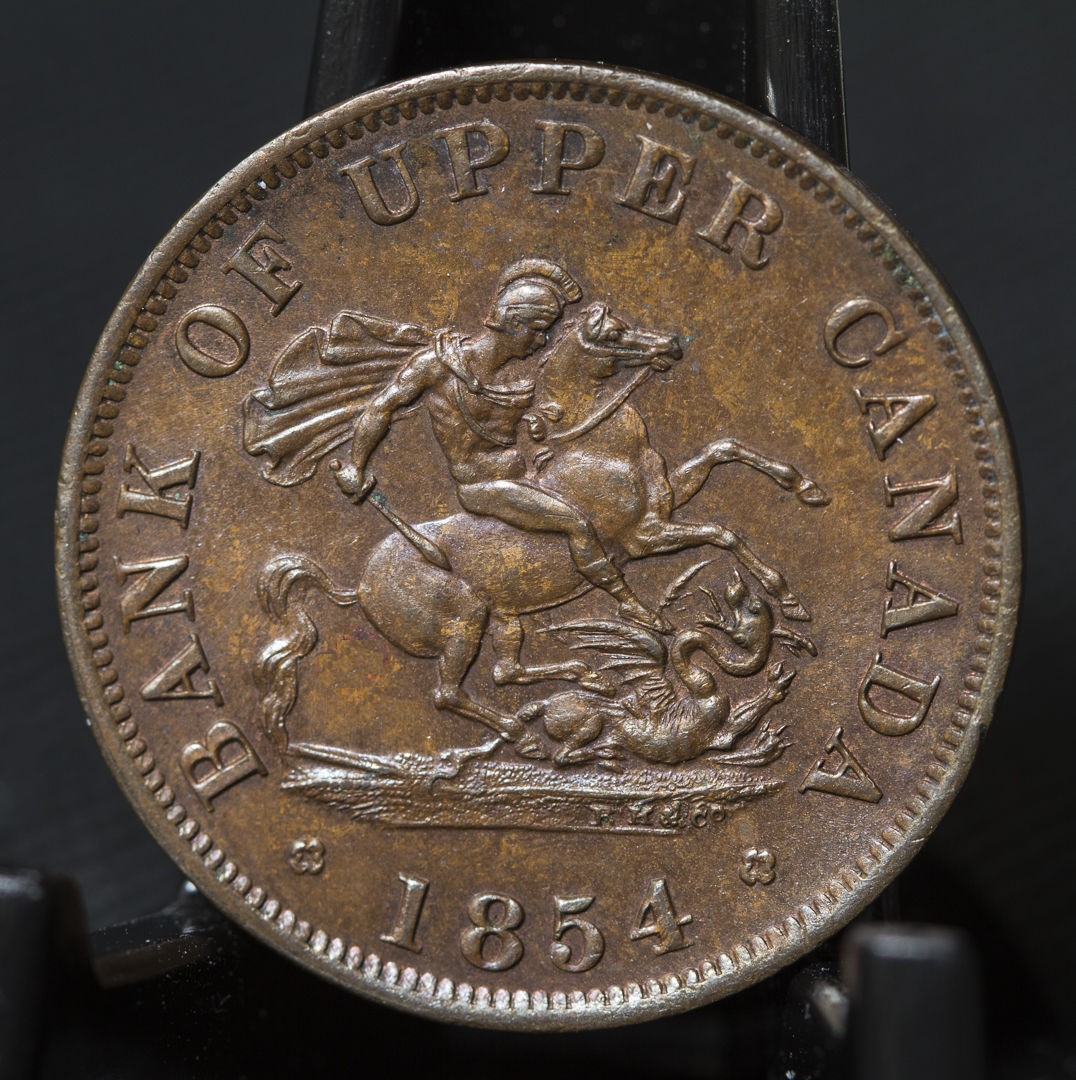 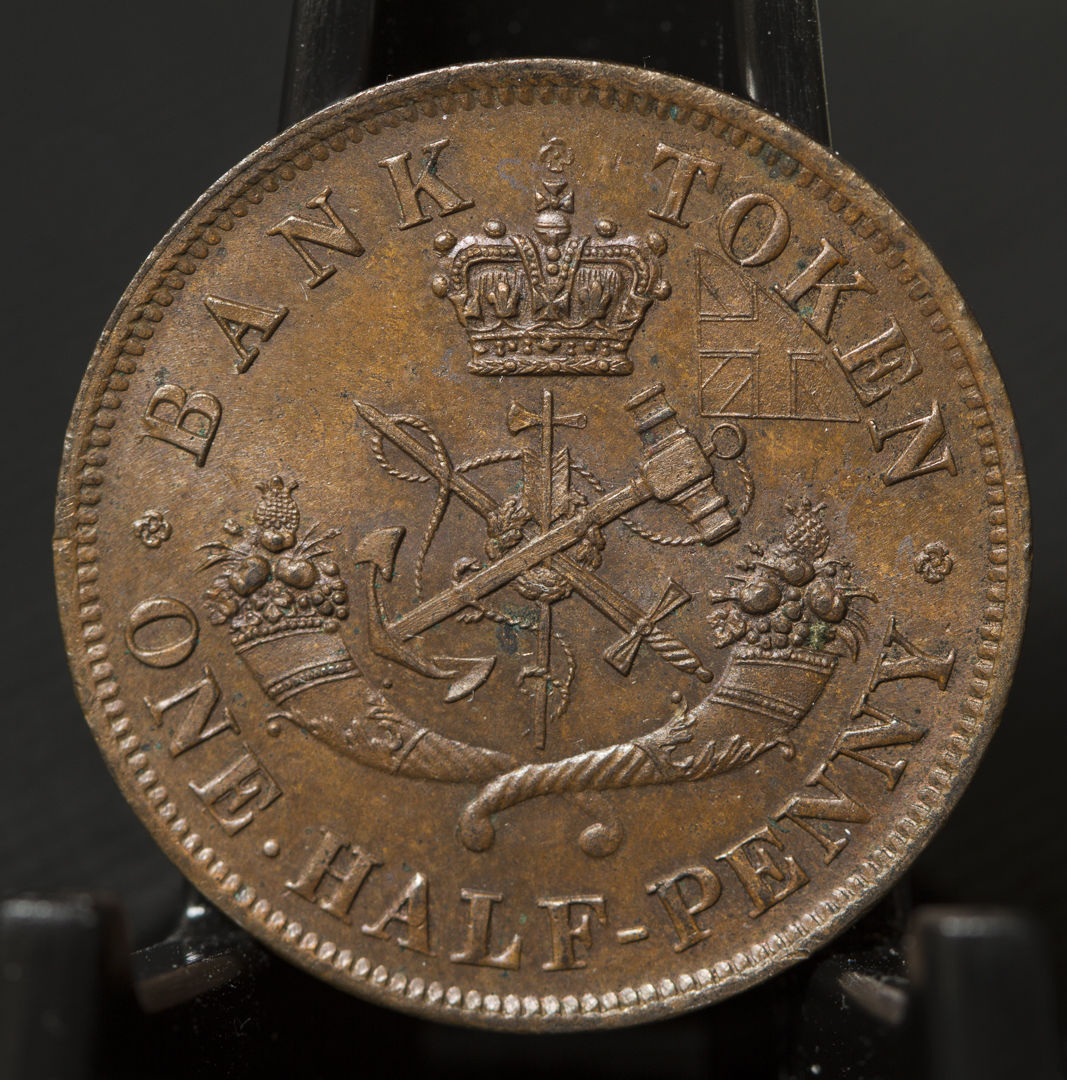 Edited by Wade
08/08/2018 6:49 pm
|
|
Bedrock of the Community
United States
94367 Posts |
I'd lean toward VF-30 or 35. Very attractive, but the wear is evident.
|
|
Valued Member
Canada
291 Posts |
I see why some are saying VF+, but I'd say EF given the remaining detail with the sword. Or at the very least, it's similar to overs I've seen sold as EF,
|
|
Valued Member
Canada
222 Posts |
Between VF-25 or VF-30. Courteau #078 / Rarity 3:Obverse: The figure «2» points to the left of a tooth around border. The man's left foot is fully struck. Generally with die crack through right rosette. In some cases two additional die cracks occur: One through left rosette and a curved one through letter « Canada». Reverse: The Union Jack outline below letters is heavy, only the upper part of St-Andrews cross frame shows below letter «tok En». With several die cracks, especially through letter «hal F» and through letter «toke N». In some cases only the former shows. ---------------- Here is a description of the grade VF-20/VF-25 for Half Penny and One Penny of this series. Sorry it's only available in French for the moment, since my book is still being written. Moreover, this description is not definitive. 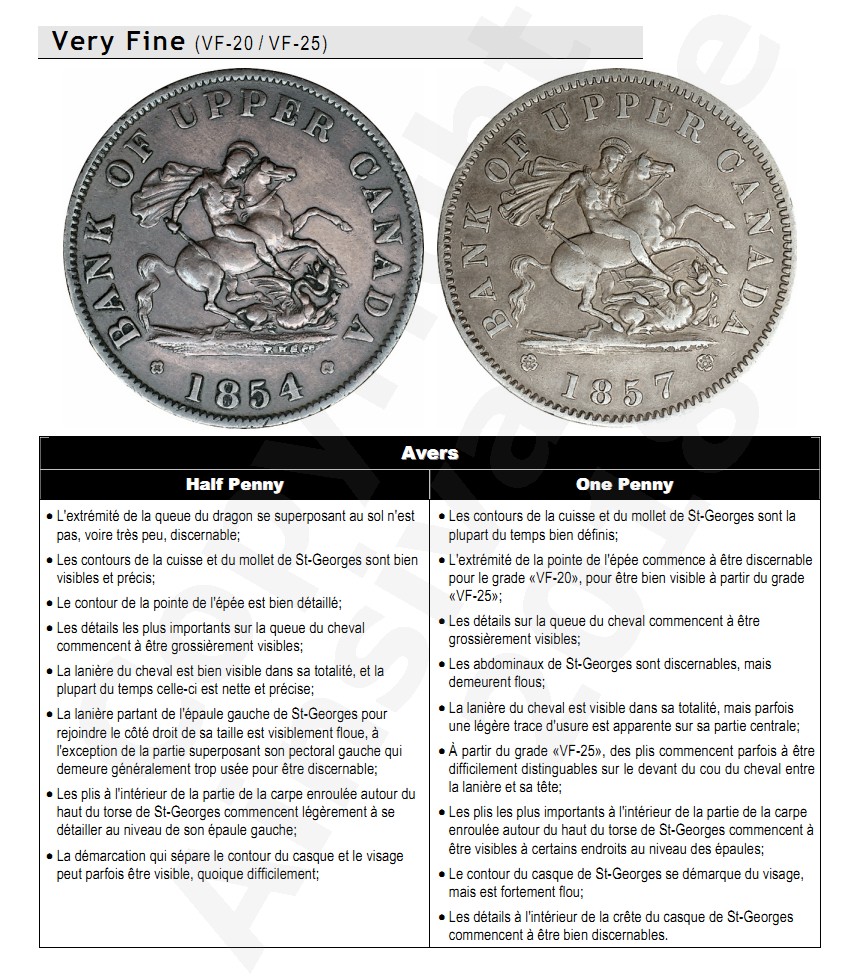 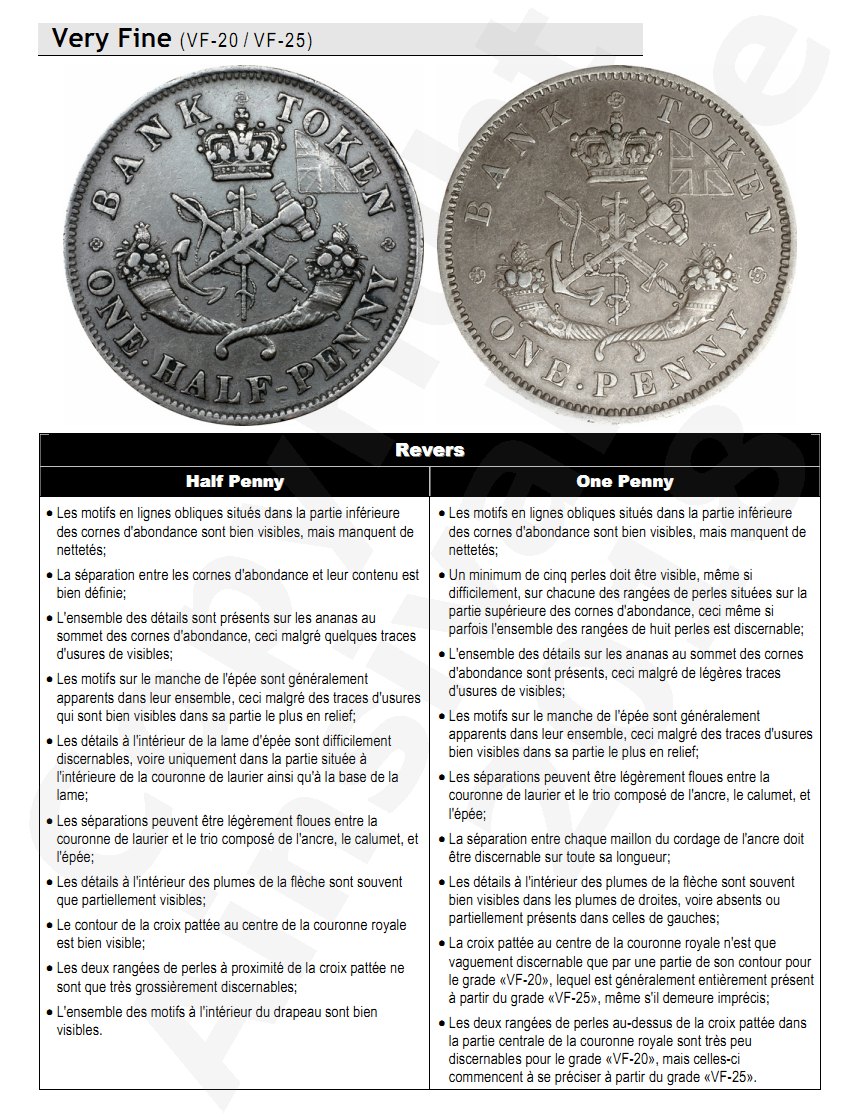 I'm sorry if my English isn't perfect... I'm learning a little more every day.
Edited by ainsivalavie
08/27/2018 5:32 pm
|
|
Bedrock of the Community
United States
94367 Posts |
I'll stick with VF-35 tops. A beautiful example for sure!
|
|
Pillar of the Community
Canada
2786 Posts |
AINS,
while I agree the first coin shown is close to VF20 (personally I would give it a 15), the second example is well beyond the specified VF25.
I would have no problem tagging this a 40+, and on a good day low AU.
|
|
Valued Member
Canada
222 Posts |
@Wade:Just a small precision, the gradation of 1/2 Penny and 1 Penny differs on several elements, this even if the design is similar. Example with the obverse of grade VG-8 for the 2 denominations, half penny to the left, and one penny to the right (Look for example the thigh of St. George): 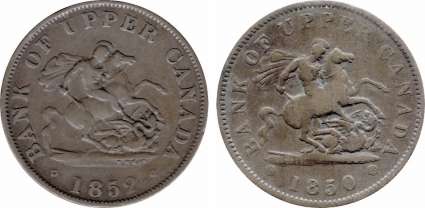 Note: Sorry for the low resolution Since 2011, I started writing a chapter on the gradation of this series for one of my future books, and to date, although incomplete, I must exceed 60 pages of content.
At the same time, concerning your comment of «08/08/2018 - 6:47 pm», unless I misunderstood your comment, here are the real mintage for each denomination and year of issue: -1/2 Penny 1850: 1 500 000
-1/2 Penny 1852: 1 500 000
-1/2 Penny 1854: 1 500 000
-1/2 Penny 1857: 3 000 000
-Total: 7.5 million of Half Penny
-1 Penny 1850: 750 000
-1 Penny 1852: 750 000
-1 Penny 1854: 750 000
-1 Penny 1857: 1 500 000
-Total: 3.75 million of One PennyNote: About 1/4 of the 1857 issue was never issued because of the introduction of the decimal system in 1858.
I'm sorry if my English isn't perfect... I'm learning a little more every day.
Edited by ainsivalavie
08/28/2018 01:23 am
|
|
Pillar of the Community
United States
2403 Posts |
Quote:
Courteau #078 / Rarity 3:
Obverse: The figure «2» points to the left of a tooth around border. The man's left foot is fully struck. Generally with die crack through right rosette. In some cases two additional die cracks occur: One through left rosette and a curved one through letter «Canada».
Reverse: The Union Jack outline below letters is heavy, only the upper part of St-Andrews cross frame shows below letter «tokEn». With several die cracks, especially through letter «halF» and through letter «tokeN». In some cases only the former shows.  To the CCF! Wow! Thanks for the info. Can you explain the rarity number? I have seen this often on other coins and never knew what it meant. How does this scale work? The higher the number the rarer, or is it the lower the number? Quote:
A beautiful example for sure! Thank you. I agree. I have asked for the obverse to be my new avatar but haven't gotten a response yet. Edited by MontCollector
08/28/2018 01:18 am
|
|
Valued Member
Canada
222 Posts |
Quote:
MontCollector
Can you explain the rarity number? I have seen this often on other coins and never knew what it meant. How does this scale work? The higher the number the rarer, or is it the lower the number? The varieties rated R.1 or R.2 are relatively common, while those rated R.7 or R.8 are very rare, and R.9 or R.10 of the utmost rarity. I'm sorry if my English isn't perfect... I'm learning a little more every day.
Edited by ainsivalavie
08/28/2018 01:18 am
|
|
Pillar of the Community
United States
2403 Posts |
Quote:
The varieties rated R.1 or R.2 are relatively common, while those rated R.7 or R.8 are very rare, and R.9 or R.10 of the utmost rarity. Got it. A scale of 1-10 with 10 being the rarest. That's exactly what I wanted to know. Thanks  |
| |
Replies: 16 / Views: 3,506 |






 Posted 08/07/2018 10:24 am





