| Author |
 Replies: 9 / Views: 1,642 Replies: 9 / Views: 1,642 |
|
|
Valued Member
United States
138 Posts |
I came across this beautiful Byzantine coin recently and knew I had to pick this up. The transition of style between the Late Roman and that of the Byzantine one is is clearly evident in this type, especially on the obverse. However, the bronze disease is doing a lot of damage to this otherwise exceptionally sharp coin. Any recommendations on how to treat this? I can tell that the BD is the fluorescent green type on the obverse but what about the top part of the reverse? Is that BD? It has a dark green coloring to it.. I tried a few ancient coins 5 years ago but I realize that it was a hit and miss experience...I'm too worried to repeat the same mistakes so any advice would be highly appreciated! 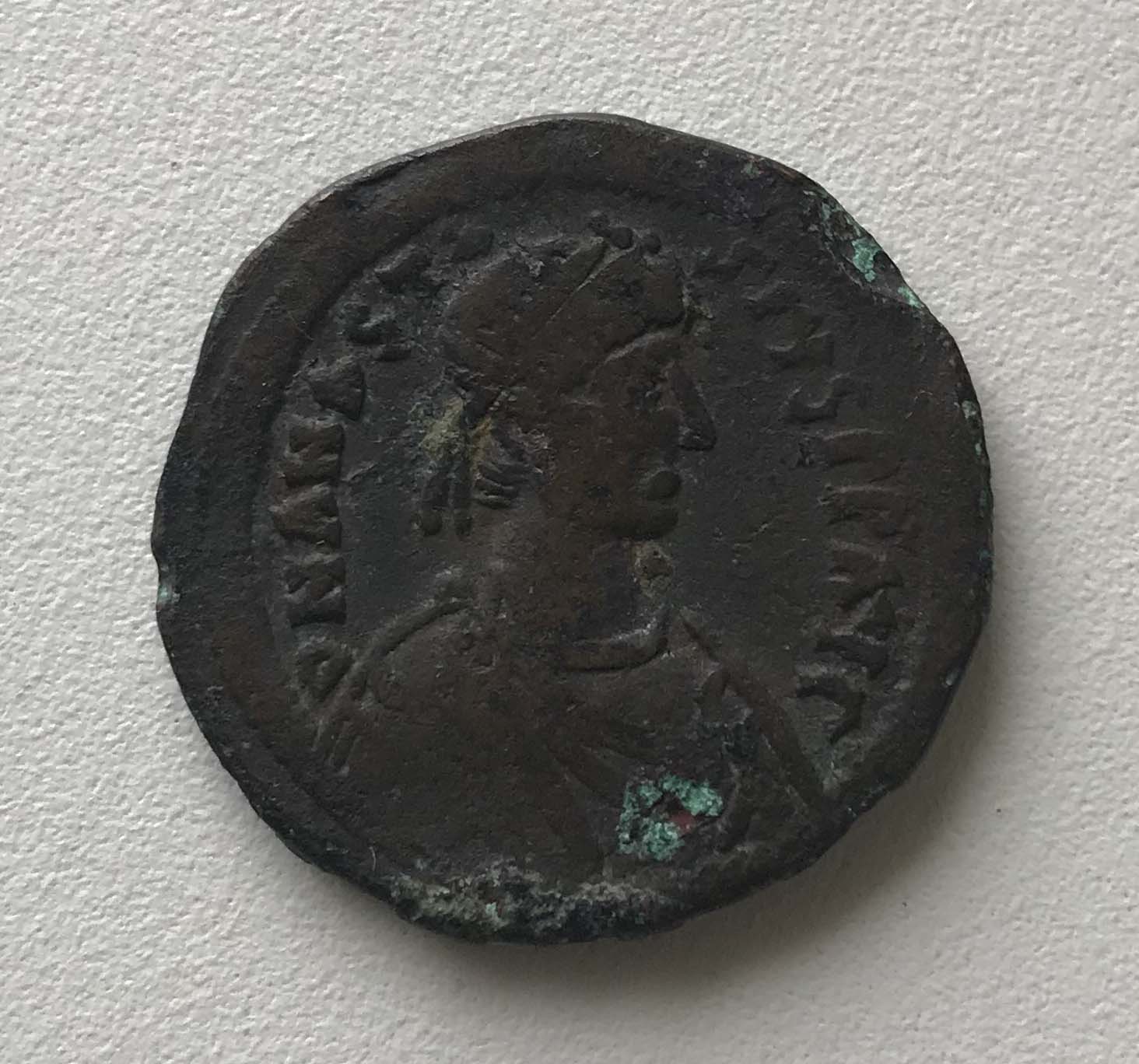 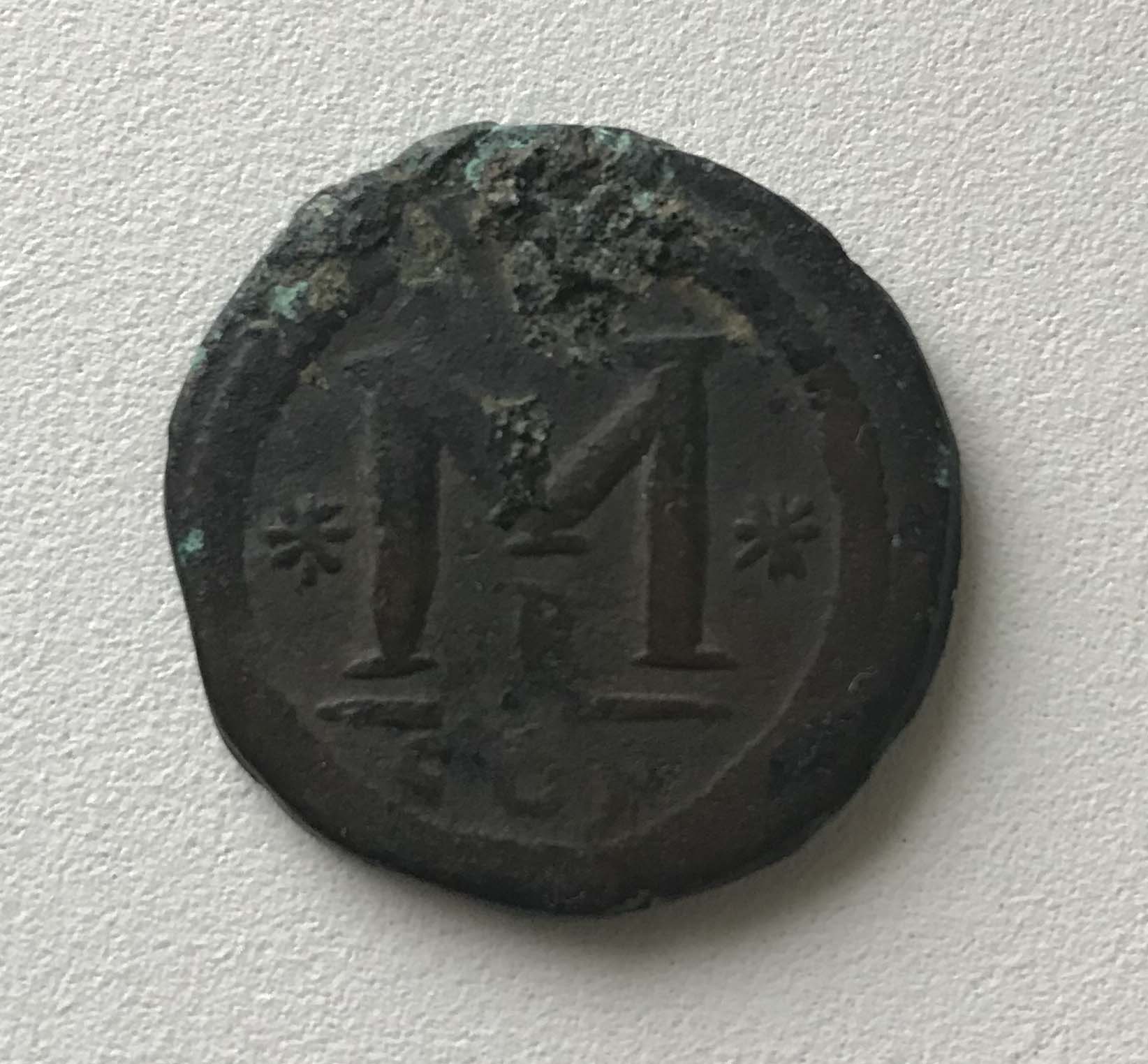 |
|
|
|
Pillar of the Community
United States
7067 Posts |
Make sure to keep this coin away from other AE's in your collection. Bruce Nesset's contribution to the many online suggestions for treatment seems to be commonly cited. It appears at both of the following sites: http://kevinscoins.ancients.info/BD...Disease.htmlhttp://www.forumancientcoins.com/nu...ze%20DiseaseAs I understand it a treated coin, even if looking good and made entirely free of green, needs to be checked regularly since BD is sometimes known to recur again down the line. Best wishes in the conservation effort. |
|
Valued Member
 United States
138 Posts |
Thank you very much for your response, Bob.
I'll give it a try and report back.
|
|
Moderator
 United States
23731 Posts |
Hope your able to stop the spread, it's a nice coin.
|
|
Moderator
United States
34561 Posts |
Quote:
I'll give it a try and report back. Ok great! I'm looking forward to seeing the "after" pics. "If you climb a good tree, you get a push."
-----Ghanaian proverb
"The danger we all now face is distinguishing between what is authentic and what is performed."
-----King Adz
|
|
Pillar of the Community
United States
3495 Posts |
I would diagnose this as stage 1 BD
The prognosis should be excellent as long as the treatment is thorough
You will get a few small poc marks but nothing to detract too much from an impressive looking coin
I would have grabbed it at the right price
|
|
Valued Member
United States
138 Posts |
Thanks for all of your responses!
Just a quick question, is the part I highlighted in red also BD? Wouldn't to damage it if it isn't!
As for the price, FVRIVS. I paid a total of 50 dollars for this along with the Vespasian Sestertius (I have a feeling you may be right on it being a forgery) I posted earlier and the Philip and Tyche antioch coin as we well.
Edited by PhoenicianX
08/26/2018 7:05 pm
|
|
Pillar of the Community
United States
7067 Posts |
Quote:
is the part I highlighted in red also BD? I see no part highlighted in red. In any event, if you are referring to the upper part of the reverse, which you mentioned in your initial post: Although it's hard to tell from the photo if it's corrosion (below the surface plane) or if it is built up in relief, I assume it's built up. If so it's an accretion, probably metallic, and possibly a result of "migration of molecules" (Wayne Sayles' term) that sometimes results from coins being buried for long periods alongside one another (electrolysis). That area is subject to BD, as is the whole coin. The entire coin should be treated. |
|
Valued Member
United States
138 Posts |
Apologies, Bob. Here is the picture. 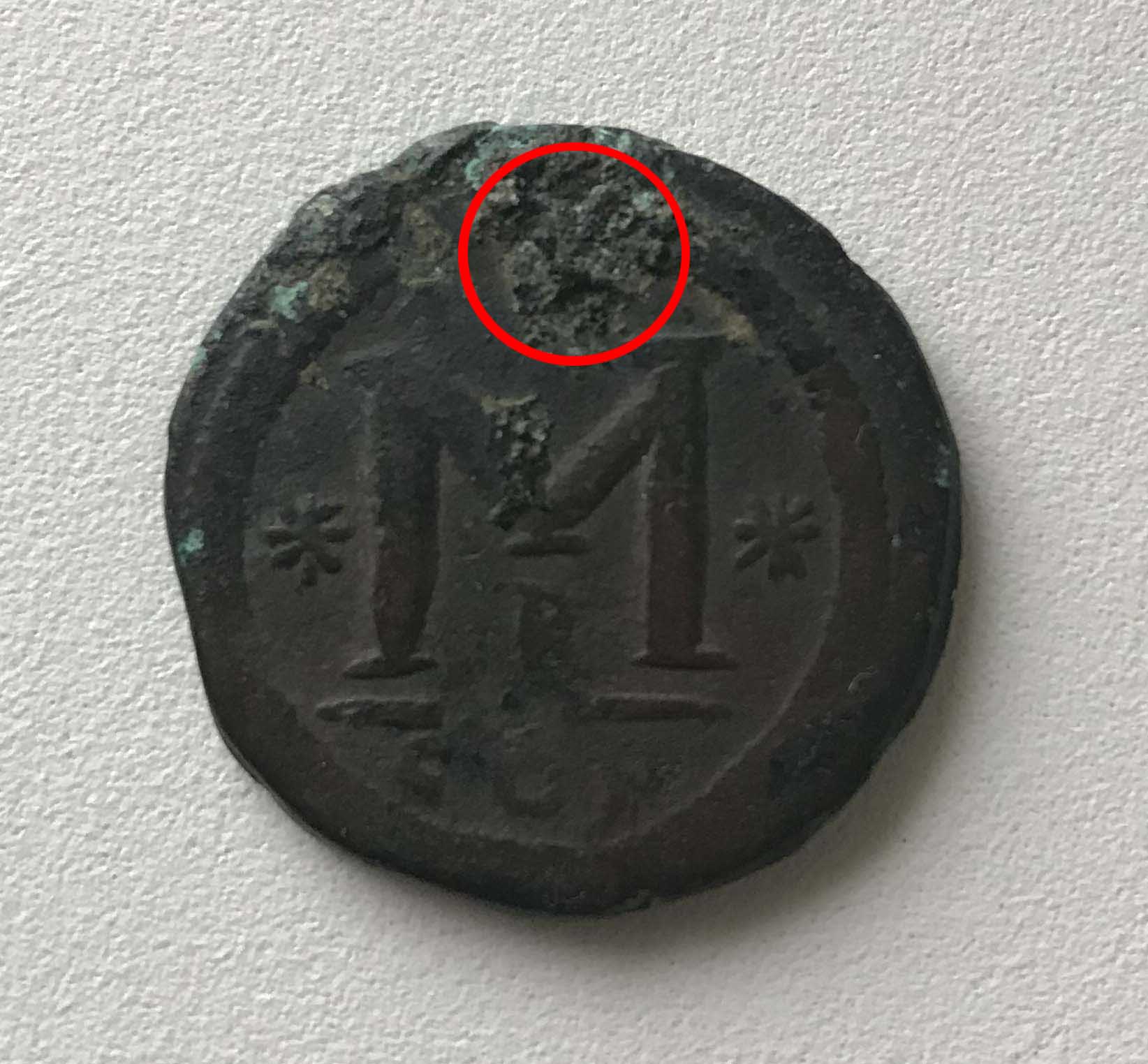 |
|
Pillar of the Community
United States
3495 Posts |
I have a Caracalla sestertius which had some (small) very hard red brown accretions in several spots
I actually thought they added character to the piece despite the presence of some green
Once I saw the green increase in size I threw all considerations aside
My brother treated it for me and he is very secretive about his remedies
Suffice to say that the stage 1 cancer was halted and while there was some loss of patination the coin is still a beauty albeit with a few minor 'poc' marks in the surfaces where the cancer was removed.
|
| |
Replies: 9 / Views: 1,642 |
|







 Posted 08/26/2018 10:11 am





