| Author |
 Replies: 8 / Views: 1,213 Replies: 8 / Views: 1,213 |
|
|
Rest in Peace
10197 Posts |
*** Edited by Staff to Add Year / Mintmark / Denomination to Title. Titles are Important! ***What is this thing? I've had it hanging around in my wazzit box forever. I first thought Greaser many moons ago, then heard about Die alignment strikes, but with this reverse, and the lines on it that don't look Johnny applied, but does look like a wire brush or even a file may have attacked a die. I am really stumped. Any guesses? 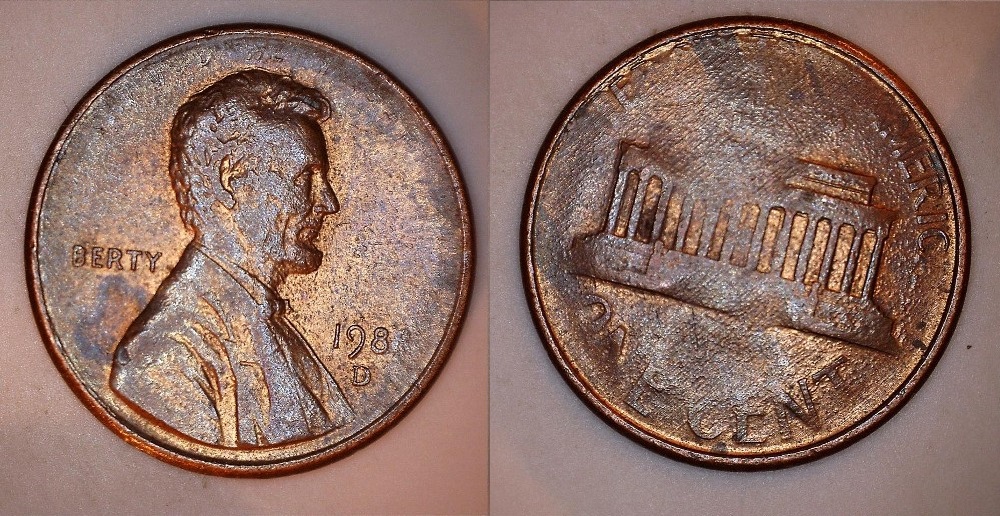 Edited by Crazyb0
08/30/2018 12:22 pm
|
|
|
|
Moderator
 United States
56855 Posts |
The rims look too full to be a die alignment strike to me. My guess is Greaser. John1  |
|
Pillar of the Community
United States
2257 Posts |
|
|
Moderator
United States
56855 Posts |
Crazyb0, Did you mean to say die alignment strike or die pressure strike? And that leads me to a question I was wondering about for awhile. How does the mint deal with pressure strike adjustments? Does the press just start out making the proper strike pressure from coin 1 or does it ramp up and ramp down the pressure. If it ramps,what happens with the low pressure struck coins? John1 |
|
Bedrock of the Community
United States
78150 Posts |
|
|
Rest in Peace
 10197 Posts |
Quote:
How does the mint deal with pressure strike adjustments? Does the press just start out making the proper strike pressure from coin 1 or does it ramp up and ramp down the pressure. If it ramps,what happens with the low pressure struck coins? John1, good question. I did mean "Die Alignment", not pressure. It was a term I came across while researching for my instruction pamphlets. It appeared from reading (also from limited machining experience w/ hydraulic presses) that there is a process of aligning new dies placed in the mechanisms. Pressure is surely one step needed, as is proper alignment of the die key-ways, and angle of face upon strike(level). Think of it like a lamp globe in a fixture or better yet a Christmas tree in a stand. The three-prong screws determine the upright tree. Same with dies. If screws are loose, or too much on a side, angle are screwy. A "tilted die" causes pressure problems. Now, the coin posted weighs between 2.4 and 2.5grs, my cheepo scale fluctuates this way when coin is above 2.45g, meaning coin is well within normal weight. My question is, "What is the definitive difference or definition of a 'die alignment strike'? "...when (and if...) compared to a grease-filled strike thru? Coop or Mike Diamond... HELP! |
|
Bedrock of the Community
United States
78150 Posts |
It's time to get that coin in a 2x2 soon.
Errers and Varietys.
|
|
Rest in Peace
10197 Posts |
David, the ones I actually save as examples get put in my vinyl page album of errors, as is this one. The others, a lot of what I post either are given away, or tossed back into the pond for a "lucky CRHer" LOL!
|
|
Bedrock of the Community
United States
62064 Posts |
I'm leaning towards a lot of grease on the die. Like it was moved around on the die filling the deeper parts. But note the tops of the letters on UNITED STATES. Mostly blocked out except next to the rim area. So I thinking the die was filled in with grease, rather than a thinned planchet error.
|
| |
Replies: 8 / Views: 1,213 |
|







 Posted 08/30/2018 06:46 am





