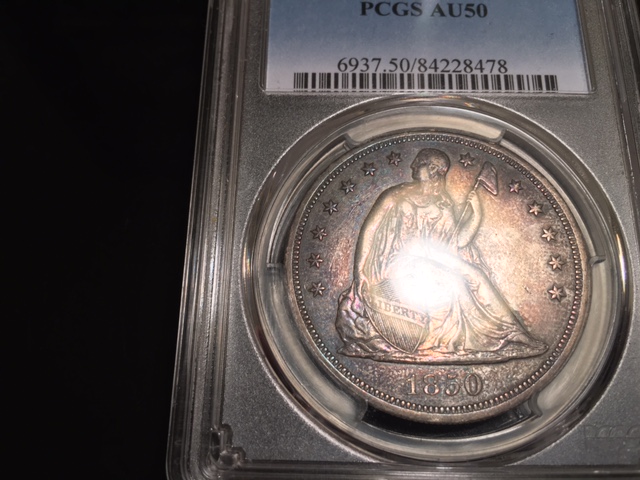
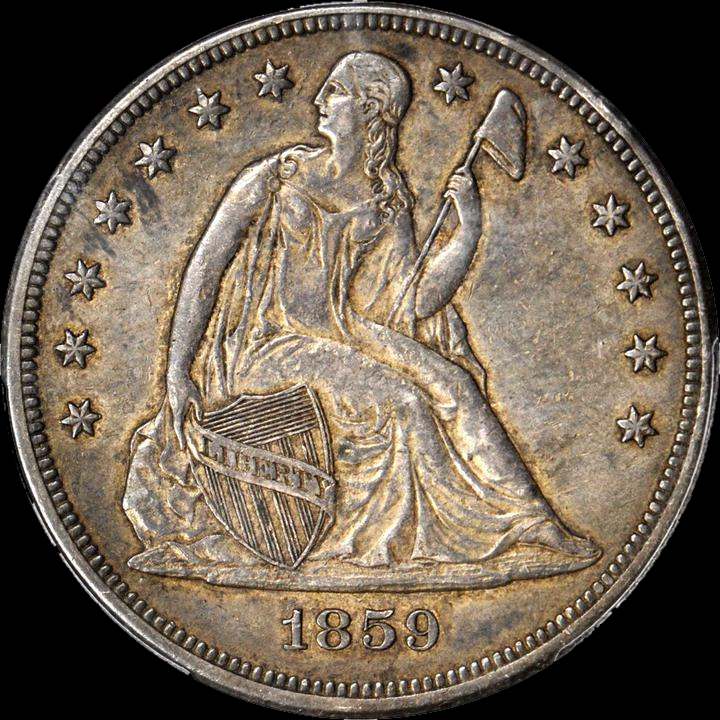
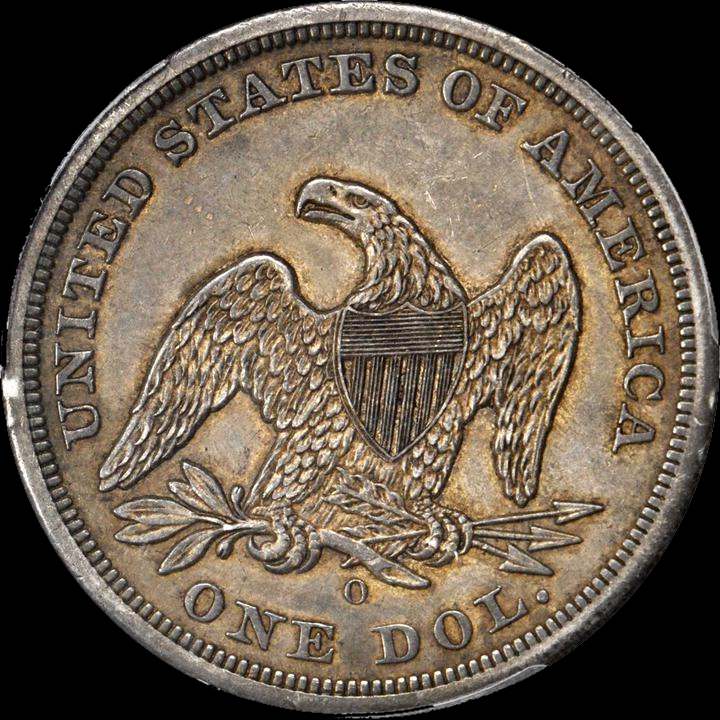
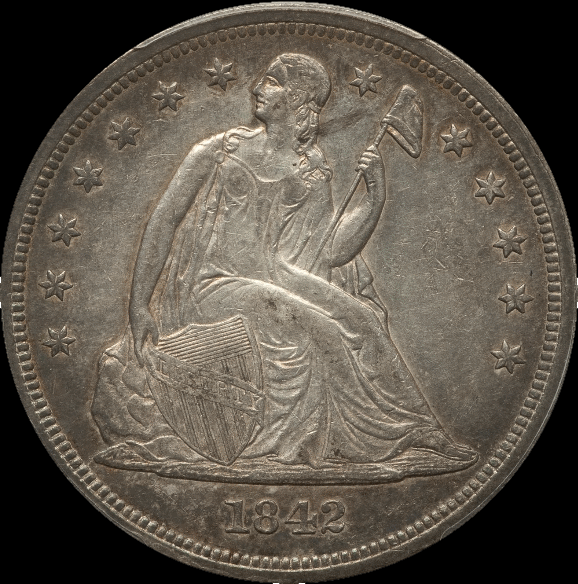
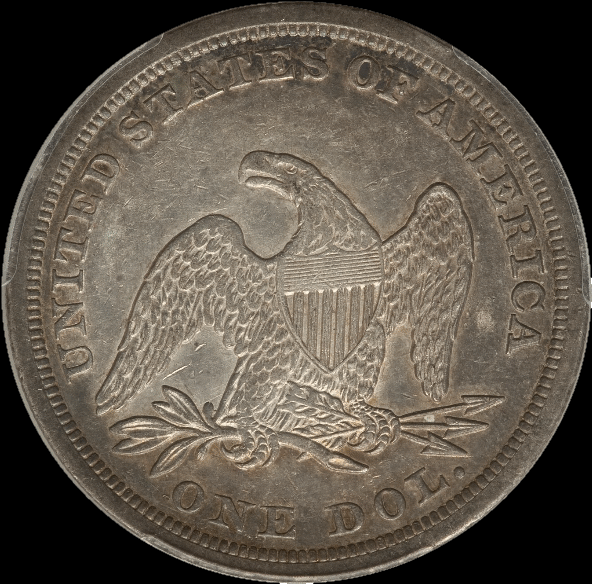
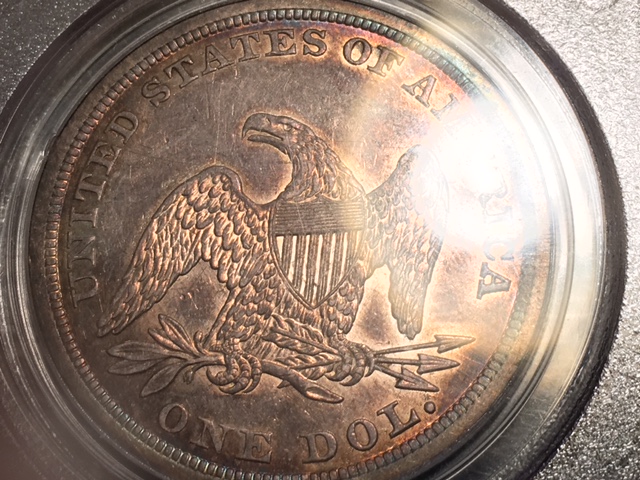
I have been buying only TPG coins as a way of avoiding overgraded and cleaned coins. I was looking at an ebay listing for a PCGS straight graded AU55 1872 Liberty Seated silver dollar that I liked a lot from the photographs. The seller's description stated that the coin was "improperly cleaned in a PCGS AU55 holder." If the seller had not pointed out that the coin was cleaned, I would have relied on the no details grade and perhaps never have realized I had a cleaned coin. How can a buyer know that a TPG straight graded coin is cleaned, but "commercially acceptable " when it has a no details grade? What does "commercially acceptable" mean? How is it defined? Does whether a coin is commercially acceptable vary widely from grader to grader? I always thought that the benefit of buying slabbed and graded coins was a protection against cleaned coins, but apparently that is not necessarily the case. I have read that many if not most 19th Century coins have been cleaned sometime in their history. With TPG no details grading and an apparently undefined commercially acceptable threshold what's a collector to do to avoid buying junk?
Do you have pictures or a link? Some straight graded coins of that era appear to possibly have old cleanings due to the way they have toned. And that is the way I see sellers describe a coin, whether slabbed or raw, to bring a buyers attention to it.
MANY (Most?) coins from the 1800's were cleaned. The TPG's will not label them DETAILS if the cleaning: -- is very old -- not harsh, and -- the coin has nicely retoned.
As you noted that means "commercially acceptable". The definition of "commercially acceptable" is a subjective judgement as is much of coin grading. Maybe somewhere on each TPG's website the term is defined or at least addressed.
Looking at the listing machine20 linked, if that was a Morgan dollar, would it be market acceptable? No.
But since Seated dollars are so rare to find in a completely un-cleaned state, most TPGs give them 'market acceptable' grades, meaning they will straight grade a coin with an old cleaning that has toned over or is not a harsh cleaning. This is extremely common - in fact, most SLDs in TPG holders, many with CAC stickers, have had an old cleaning and toned over.
To answer your question about how to tell if the coin is cleaned: Buy the coin, not the holder. Let's take the coin in the ebay listing as an example. I see the color of the coin is characteristic of an overdipped coin. Also, note the lack of original mint luster on the coin. This was most likely caused by the coin being dipped in a cleaning solution, and being left in the solution for too long/dried improperly after taking the coin out of the liquid.
This is why I think that every coin collector should at least try learn the basics of how to grade independently. A lot of people are under the impression that if you buy a straight graded coin by a TPG that your getting an uncleaned coin, but this is simply not the case.
When it comes to selling, it usually doesn't prove too bad as the amount of people at auctions etc who will just look at the grade and pay the price without even looking at the coin is quite lofty. But when it comes to building your own collection, that's when it starts to potentially have problems.
For example, a lot of U.S. sets I have considered putting together, I have shelved until I start attending more coin shops and shows, because I just don't feel comfortable buying sight unseen with the amount of 19th century details coins in straight graded holders because the issues are considered "market acceptable".
(I do want to specify that old light cleanings are not what I am talking about, I mean the coins that have clearly been abrasively, harshly cleaned but still somehow manage to straight grade.)
Machine20 and Silverdollar2017: you have found the coin I have been looking at. SilverDollar2017: I see and understand your observations. I will study and save the cleaned coin link.I understand, and have tried to practice the buy the coin not the holder philosophy, but I am limited by my own lack of skill. I just don't have the eye or the experience to be able to look at a picture of a coin and be able to tell from its color that it has been dipped, over dipped, or improperly dipped and dried as you have described. I had thought I could rely on the TPG to protect me from buying cleaned coins, but when most of the coins available seem to have been cleaned as you observe, I guess that puts me in the position of having to judge for myself. I do find it difficult to judge luster on a gray toned coin I cannot rotate it my hand to see if it "cart wheels." I do have an 1837 ms63cac graded Half Dime and an 1837 ms63 graded dime. Both are gray toned, but both have cart wheel luster when rotated, particularly on the reverses. Looking at either straight on with out rotating them, the obverses especially seem to be short on luster. I guess my bottom line question is whether I can rely on the TPG's determination of market acceptability in issuing a straight grade to protect me from buying a coin that is not resellable. The only two readily available with motto SLDs are dated 1871 and 1872. I have looked at several pictures of on line coins for sale of these dates, and I have found most of those I have seen to be unattractive. This one seems better struck than most, especially on the reverse. If you would be willing to share your opinion, would you take a pass on this coin and continue to look for a better example, or is this straight graded AU55 about as good as I am likely to find? Thanks to both of you for taking the time to educate me.
To find an original skin SLD with motto and eye appeal is very very difficult. When you do find one, you will pay a premium. The typical SLD with a straight grade is resealable, but you may take a hit if the coin has obviously been cleaned that is sitting in a straight grade holder.
Quote: The only two readily available with motto SLDs are dated 1871 and 1872. I have looked at several pictures of on line coins for sale of these dates, and I have found most of those I have seen to be unattractive. This one seems better struck than most, especially on the reverse. If you would be willing to share your opinion, would you take a pass on this coin and continue to look for a better example, or is this straight graded AU55 about as good as I am likely to find?
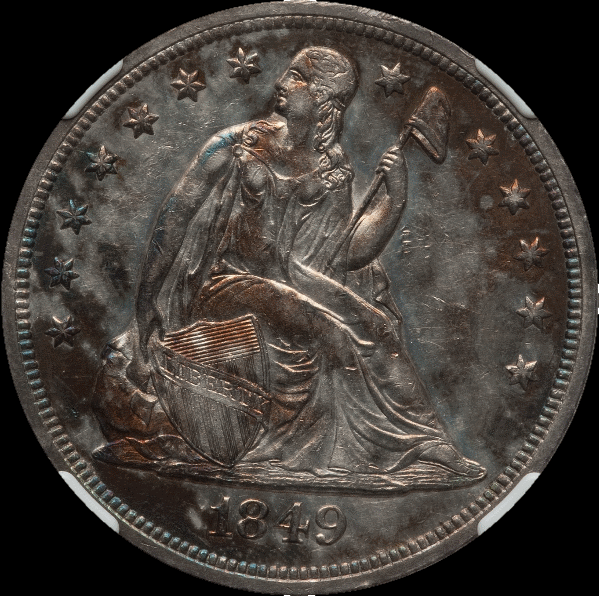
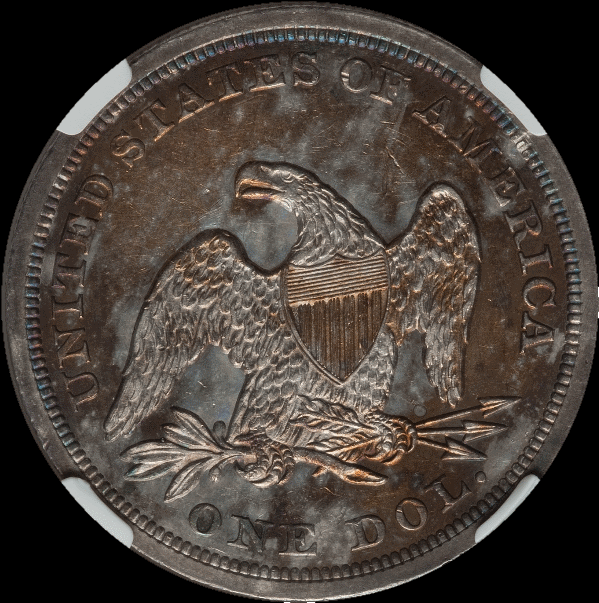
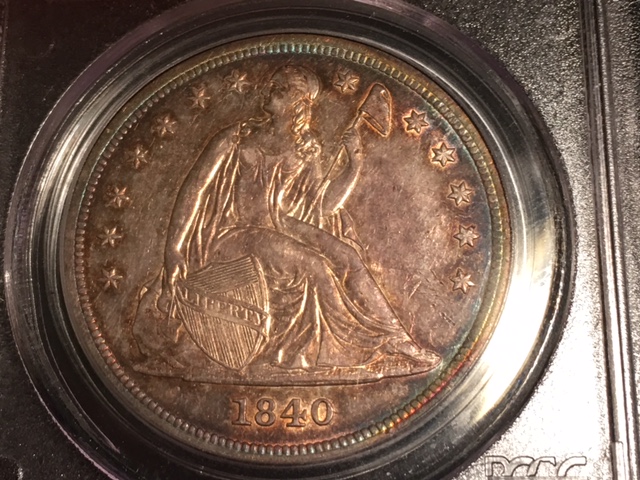
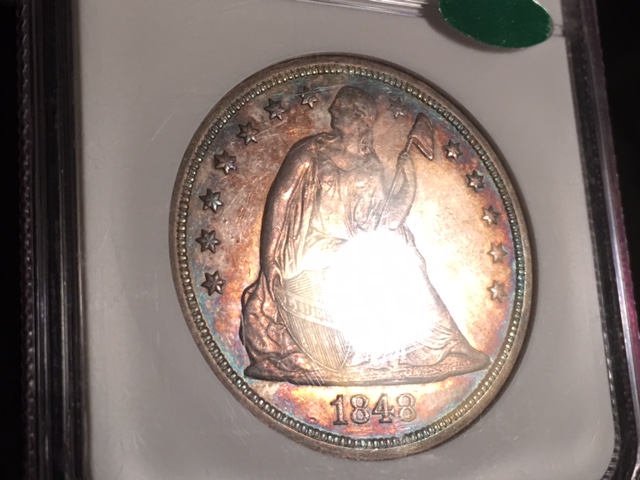
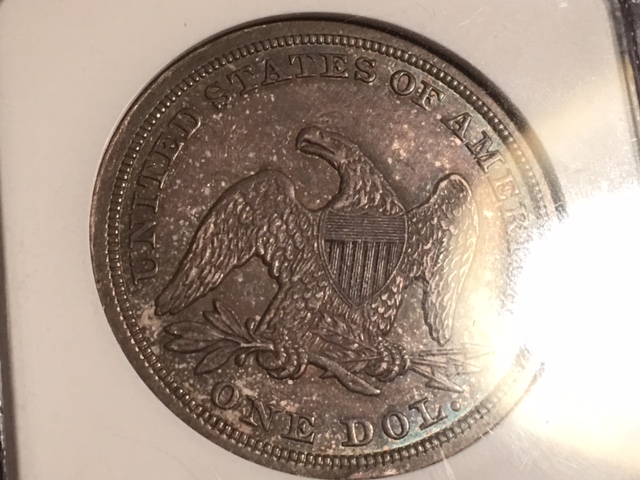
The key word you used is readily available sld's. To find choice sld's requires extreme patience and restraint. Far too many new collectors want what they want right now. That doesn't work with this series. I've been trying to complete an original date set for the last 2 years and have made good progress. Here are some choice original examples from my collection to wet your appetite.
Quote: SilverDollar2017: I see and understand your observations. I will study and save the cleaned coin link.I understand, and have tried to practice the buy the coin not the holder philosophy, but I am limited by my own lack of skill. I just don't have the eye or the experience to be able to look at a picture of a coin and be able to tell from its color that it has been dipped, over dipped, or improperly dipped and dried as you have described.
Yep. It takes time to learn how to spot cleaned coins. Observing examples of cleaned and uncleaned coins (both in online images and in person) is a great way to start. Personally, I'd recommend you go to a coin show and get a feel for what cleaned/original coins look like. Also, a coin show is great for someone new to collecting to go to - there's a wide selection and sometimes great deals. (although be careful of deals that are too good to be true - it could be that something's not right with the coin)
Quote: Also, a coin show is great for someone new to collecting to go to - there's a wide selection and sometimes great deals. (although be careful of deals that are too good to be true - it could be that something's not right with the coin)
I gotta disagree here. Local coin shows are where the shadiest stuff I've ever seen happen happens. It's one thing if a US dealer sells a great deal for world coins, but aside from that it's the last place I would tell a new person to go
Alright baseball, I've had enough of your taunts you big bully!
Just kidding!
The 49 is graded au-55 by NGC. It's one of those coins that you either love or hate. It's in a stack of coins I plan to send to CAC.
Will it bean? Flip a coin. It's extremely unique in appearance and looks beautiful inhand. I would argue that it's irreplaceable. I know I will never find another one like it.
Quote: How can a buyer know that a TPG straight graded coin is cleaned, but "commercially acceptable " when it has a no details grade?
By learning to grade for yourself. Sorry sounds harsh but it is the truth.
Quote: What does "commercially acceptable" mean?
It means that in the graders opinion it is a scare enough coin that if the grade is lowered a little the market will buy it as a straight grade at that level.
Quote: I always thought that the benefit of buying slabbed and graded coins was a protection against cleaned coins, but apparently that is not necessarily the case.
Correct, that is what the TPG's told us when they began, but they started fudging on that a long time ago. First with just the very early coins but now it is occurring on much later coins.
Quote: With TPG no details grading and an apparently undefined commercially acceptable threshold what's a collector to do to avoid buying junk?
See the first answer. But contrary to your statement I don't think all problem coins are "junk". There is a lot of that "junk" that many collectors would love to have.
All TPG graders word them as "improperly cleaned" or such. Yet if they clean them it's considered conserved, which NGC does. Either way, the older the coin the more likely at some point it has been cleaned since TGP is relatively new. What I do not understand is PCGS and their plus grading. It either is one grade or it is not. So in a nut shell, TGP's are only good for guaranteeing authenticity.
ANA member - PAN Member - BCCS Member There are no problems only solutions - the late, great John Lennon
Quote: All TPG graders word them as "improperly cleaned" or such.
Not sure I understand this completely. Coins can often be market acceptable and have fabulous eye appeal - just a barely visible old cleaning that has toned over excellently. In the case of SLDs, that's not going to give it a details grade at a TPG.
Quote: Yet if they clean them it's considered conserved, which NGC does.
I'm not going to argue about conservation....many people have strong opinions one way or the other.
Quote: So in a nut shell, TGP's are only good for guaranteeing authenticity.
They're good for more than guaranteeing authenticity, for sure.
Disclaimer: While a tremendous amount of effort goes into ensuring the accuracy of the information contained in this site, Coin Community assumes no liability for errors. Copyright 2005 - 2026 Coin Community Family- all rights reserved worldwide. Use of any images or content on this website without prior written permission of Coin Community or the original lender is strictly prohibited. Contact Us | Advertise Here | Privacy Policy / Terms of Use








 Posted 10/05/2018 09:01 am


 .
.