Not as complicated as that...
1. a normally struck 25c struck coin sticks to the reverse (hammer) die
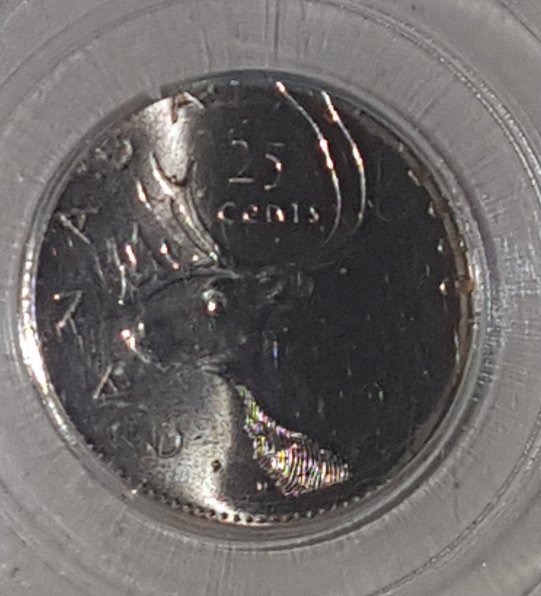
2. that die cap then strikes another 25c planchet, creating a mirror brockage... this might have happened a couple of times, enlarging the design on the cap
3. then the die cap is dislodged, but not the recently struck 25c mirror brockage (which might have stuck to the anvil die as a cap).
(Somewhere between steps 1 and 3 the collar die disengages - unless you can see reeding on your coin somewhere)
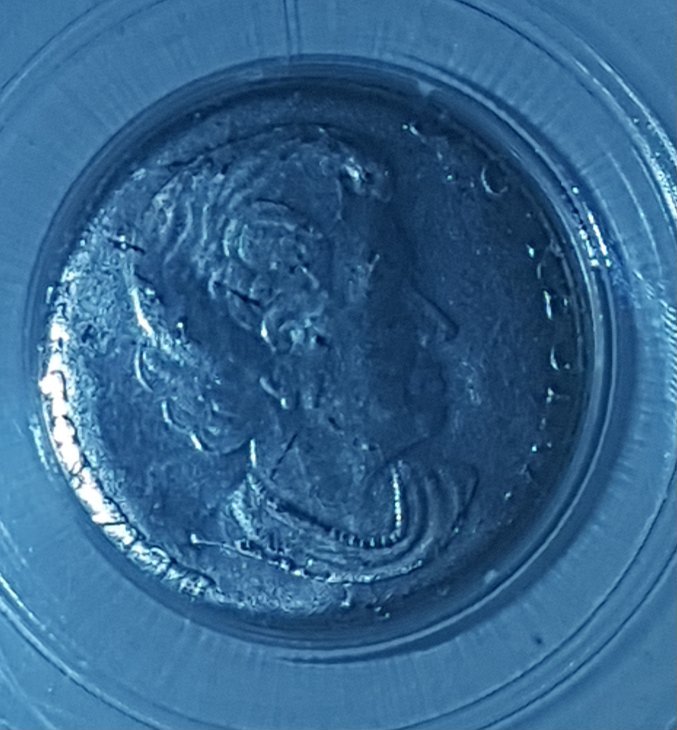
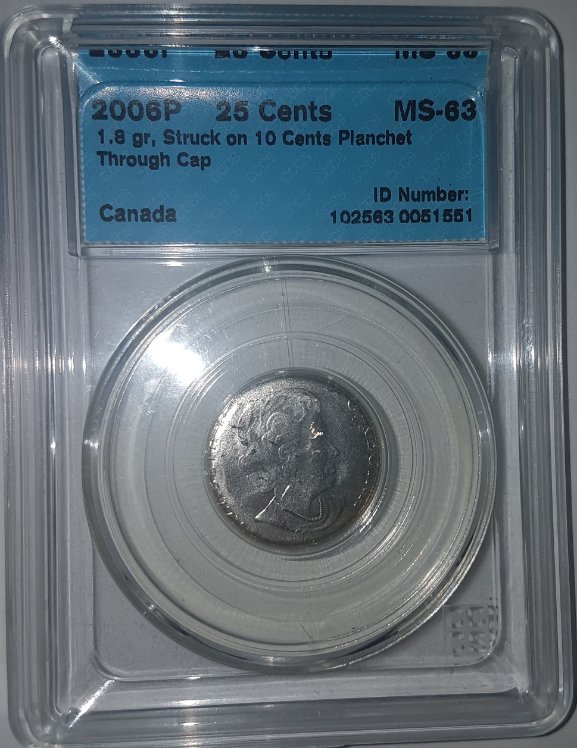
4. Then, your 10c planchet is fed into the press, landing on top of the 25c mirror brockage and is struck directly by the hammer die and sandwiched over the mirror brockage design
Net result is your counterbrockage... which are unusual and scarce, but definitely even more scarce on a wrong planchet strike...
Finally - there is the possibility that someone did this intentionally, by placing the 10c coin over a mirror brockage... but there is no way to prove that one means or the other... (generally, however, 2006P off metal errors are very rare)
"Discovery follows discovery, each both raising and answering questions, each ending a long search, and each providing the new instruments for a new search." -- J. Robert OppenheimerContent of this post is licensed under a Creative Commons Attribution-NonCommercial 3.0 Unported License. See:
http://creativecommons.org/licenses...0/deed.en_USMy
eBay store











 .
.


 Posted 10/23/2018 8:57 pm


