If anyone may recall, I'm a newbie who (about a week ago) got pretty frustrated trying to understand how to identify a double die when you see it. I had submitted photos of a Shenandoah quarter that I thought showed clear doubling but was told it was only deteriorating die doubling. When the other telltale sloppy signs of a
DDD was pointed out to me, I was fine with accepting that (and I've come across some other
DDD's since then and knew immediately that's what they were). But what continued to irk me was how some photos of actual DD's didn't look the slightest bit doubled to me--no hint of extra lines on any sides of letters/numbers shown! Explanations of these didn't help either. Reading that they had "little to no spread, but added thickness" seemed like b.s. --to me they looked just as narrow as normal ones.
--You see what I did there? I was taking 'thickness' to mean 'WIDTH.' And I bet I'm not the only one to have that misunderstanding at first. After all, spread CAN add the appearance of overall width, but that's totally separate from thickness. Thickness is DEPTH, PROTRUSION, 3D-NESS, STICK-OUTEDNESS.
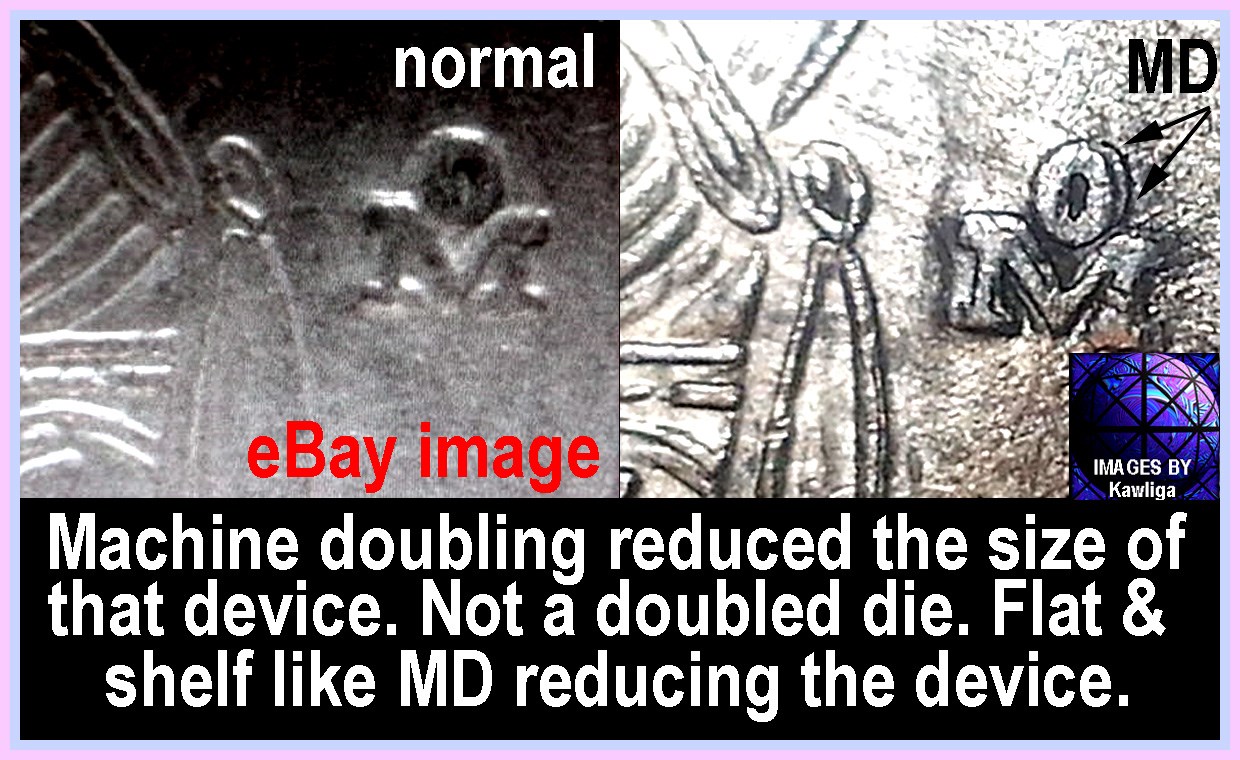
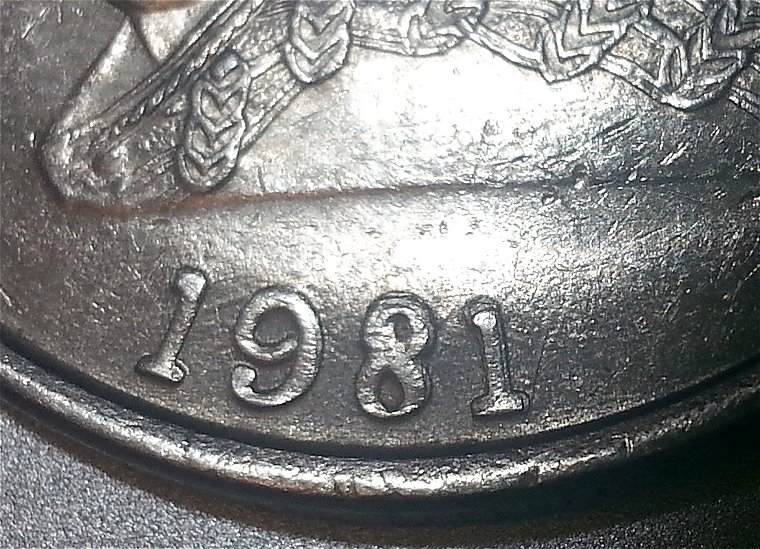
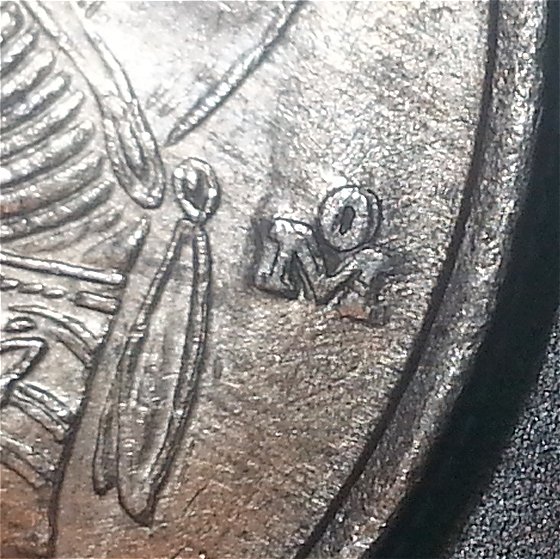
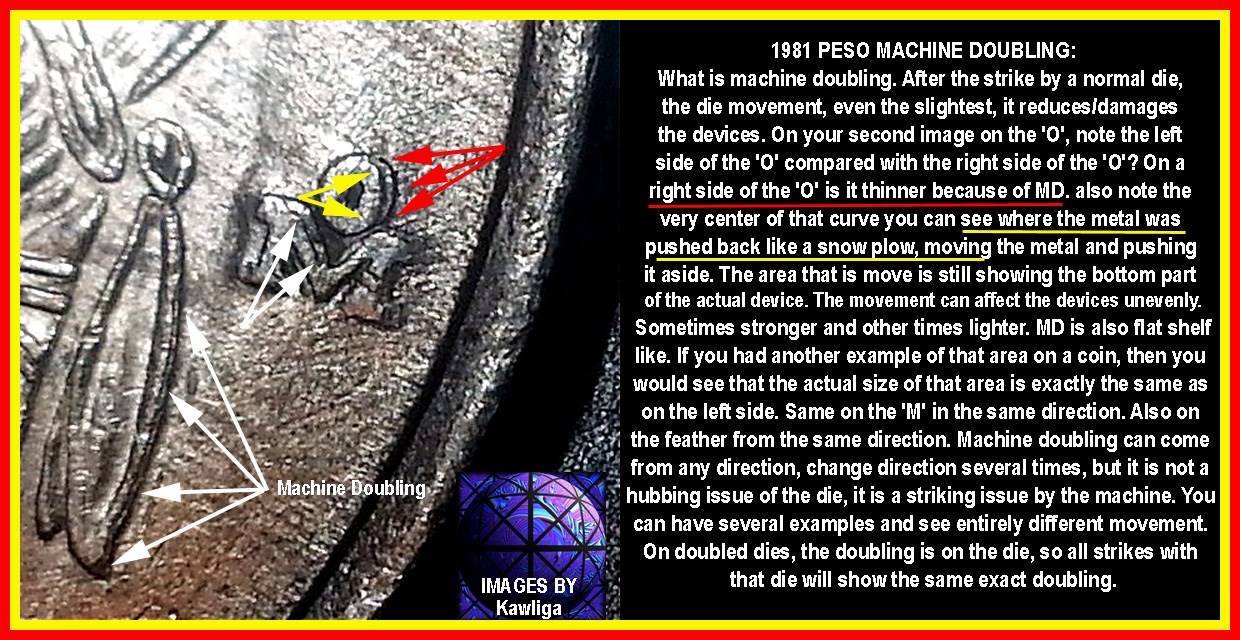
How did I finally have the epiphany? Well I got so sick of looking at Abe and George, I bought 3 pounds of bulk foreign coins from my local shop, just to enjoy looking at Elizabeth and other Georges (and fish, horses, pigs, pagodas, etc.) for a while. At one point yesterday I was studying a 1981 Mexican Peso, trying to figure out which variety I had, and I was having some trouble focusing on the date with my magnifier. I thought, 'Well, I don't know if that's an open or closed 8, but these numbers sure do stick out far.' And then I saw the lines on the edges. And THEN I saw the mint mark, and it was like BAM! OHMYGODOHMYGODOHMYGOD! So that's when I realized, doubling is literally STACKING. Even if it doesn't show lines (spread), it can still be doubled, just stacked with perfect alignment. By the way, I also discovered Variety Vista, so now I can see exactly where to look for doubling on my
US coins (now I have to reexamine all the ones I already looked at).
So for any other newbie troubled by doubling identification, or for anyone trying to explain it to them, two very important things:
1. Thickness isn't width; it's how far from the field something stands out.
2. You can't really see thickness in photos, because duh, they're 2D!!











 Posted 10/27/2018 4:06 pm