| Author |
 Replies: 15 / Views: 1,336 Replies: 15 / Views: 1,336 |
|
|
Pillar of the Community
 United States
906 Posts |
I decided to look through some culls and see if I could identify them. I found this coin interesting, and had trouble figuring out what was going on. I thought others might as well. Guess if you care to. I only included pictures of the reverse, because that is the interesting part. 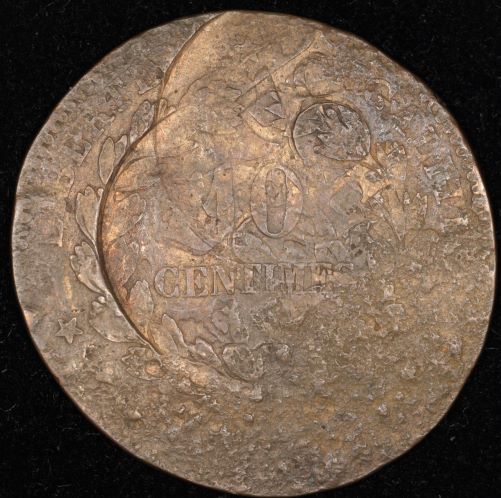 Rotated for a better view of the impression. 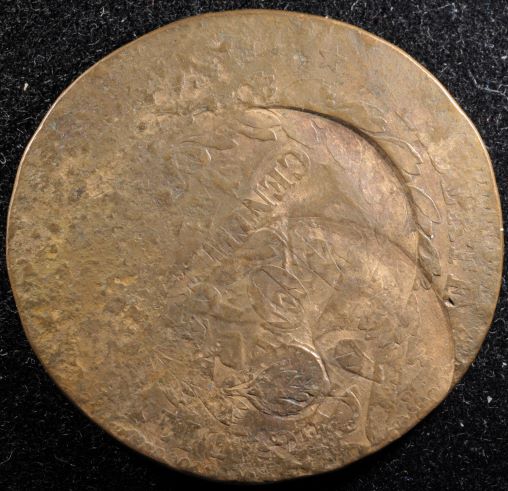 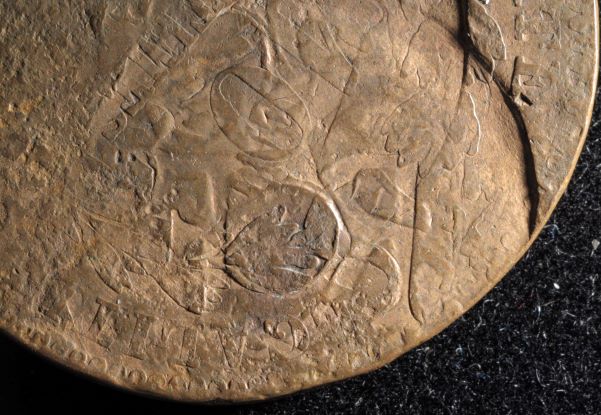 Edited by Jadey
12/20/2018 8:46 pm
|
|
|
|
Bedrock of the Community
United States
94367 Posts |
I've got an opinion, but I'd like to see an obverse pic as well.  Edited by Coinfrog
12/20/2018 8:53 pm
|
|
Moderator
 United States
34561 Posts |
Quote:
Guess if you care to Well, I'm always willing to guess: this looks like a double vise job but with steel washers rather than other coins. I don't see any transfer of design, only flattening of the peripheral details from the impression. "If you climb a good tree, you get a push."
-----Ghanaian proverb
"The danger we all now face is distinguishing between what is authentic and what is performed."
-----King Adz
|
|
Pillar of the Community
 United States
906 Posts |
OK Kermit, if you insist ... 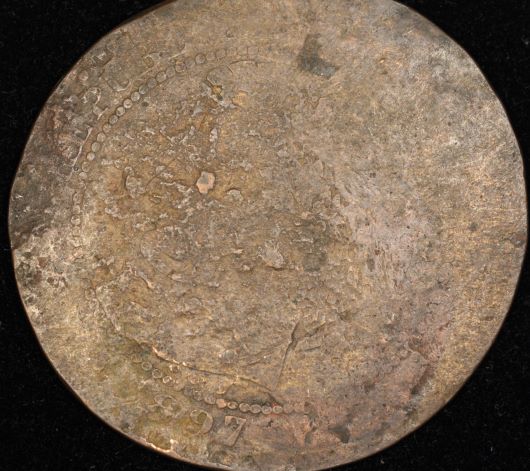 ... there's one in every crowd.  |
|
Pillar of the Community
United States
906 Posts |
Quote:
Well, I'm always willing to guess: this looks like a double vise job but with steel washers rather than other coins. I don't see any transfer of design, only flattening of the peripheral details from the impression. Spence, I'm shocked. Think mirror image. |
|
Pillar of the Community
United States
8946 Posts |
|
|
Pillar of the Community
United States
4424 Posts |
Looks like a 1910s-1940s Lindauer-designed french coin hammered onto an 1897 10 Centimes. Similar to a vise job.
|
|
Pillar of the Community
5464 Posts |
Not just any hammer, a french hammer. 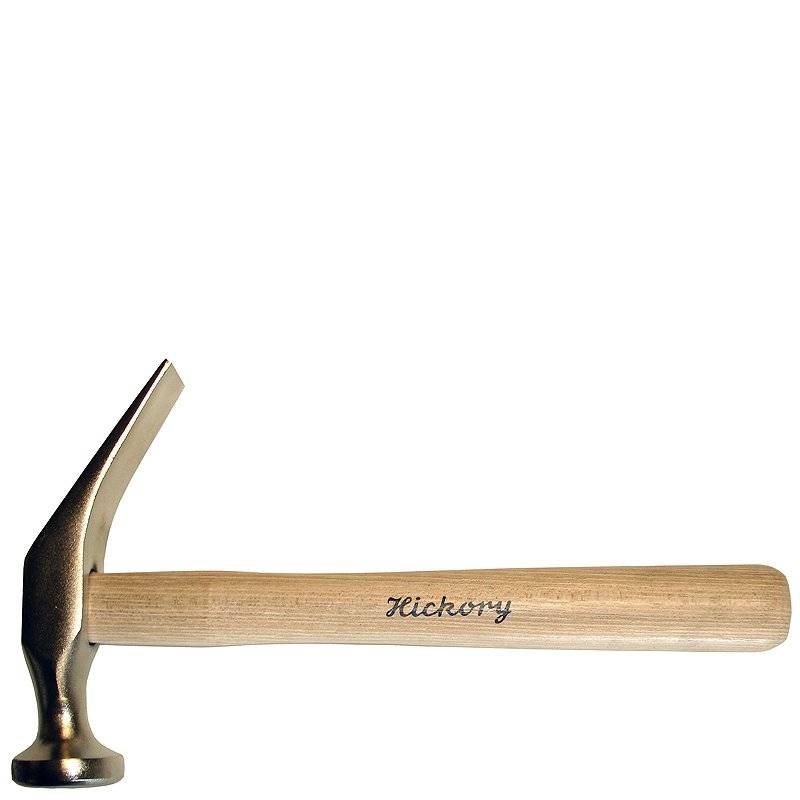 |
|
Bedrock of the Community
United Kingdom
18862 Posts |
 A double vise job with a holed cupro-nickel 10 centimes squeezed against the coin! |
|
Moderator
Australia
17005 Posts |
The majority of these old "vise job" coins actually have a "natural" explanation: somebody used the coin (or a small stack of coins" to level off a piece of furniture, such as a cupboard or lounge chair. Same "squeezing" effect, just over a prolonged period rather than "all at once" like in a vice or with a hammer.
Don't say "infinitely" when you mean "very"; otherwise, you'll have no word left when you want to talk about something really infinite. - C. S. Lewis
|
|
Pillar of the Community
United States
906 Posts |
I've never heard of a vise job before, so I thought it was pretty interesting. Apparently its not uncommmon. Thanks for the responses.
|
|
Pillar of the Community
United Kingdom
709 Posts |
I have a couple of vise jobs which have an interesting characteristic. If you view the coin edge on with the overprinted part to the bottom, there is an approximately 15 degree bend in the coin level with the innermost part of the overprint. No doubt this is from how it was clamped. Can anyone say if this is a general characteristic of such fake error coins?
|
|
Moderator
United States
34561 Posts |
@Anaximander, that is an interesting question, but probably one better discussed on its own thread. I think that I understand what you are saying, but would like a pic to confirm.
"If you climb a good tree, you get a push."
-----Ghanaian proverb
"The danger we all now face is distinguishing between what is authentic and what is performed."
-----King Adz
|
|
Bedrock of the Community
United States
37163 Posts |
I like Sap's answer. The obverse looks porous like it sat on a concrete floor to level the object whether furniture or machining equipment in a shop.
|
|
Bedrock of the Community
United States
94367 Posts |
That is an interesting explanation.
|
|
Pillar of the Community
Australia
1333 Posts |
technically not a fake coin, just that its trying to fake a double strike with PMD. |
| |
Replies: 15 / Views: 1,336 |
|










 Posted 12/20/2018 9:08 pm


