









 Posted 01/08/2019 12:34 am


jskirwin: I would normally think 'casting bubbles', but in this case, I think you are on the right track.
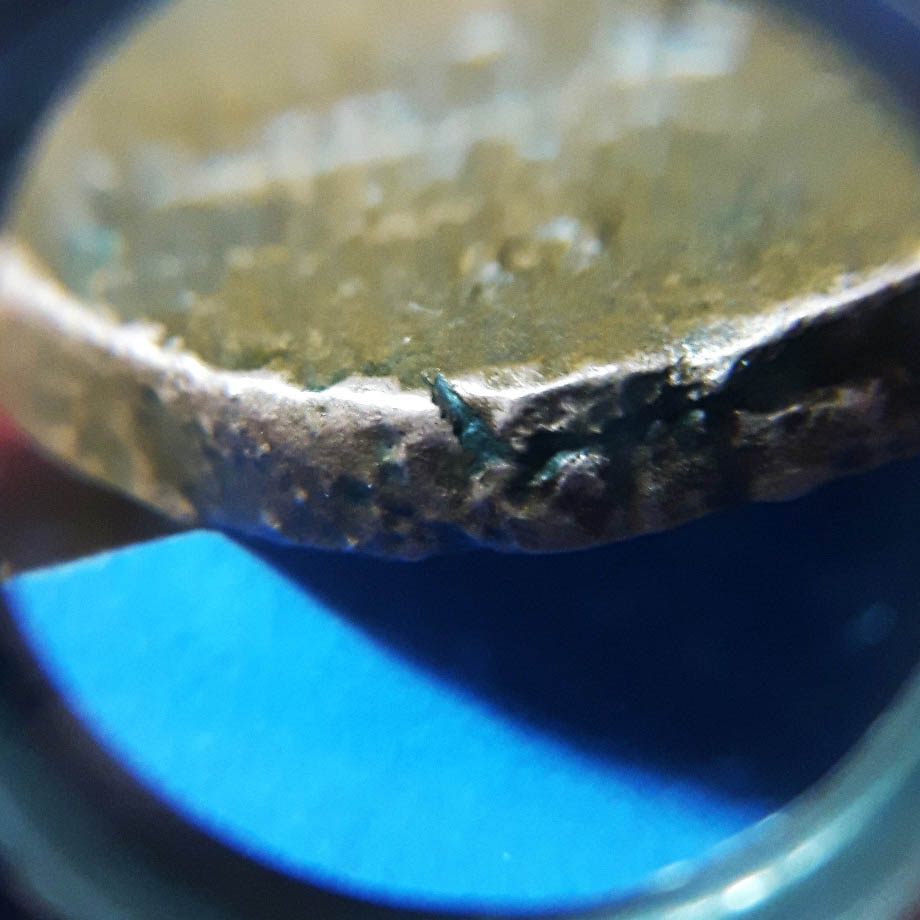
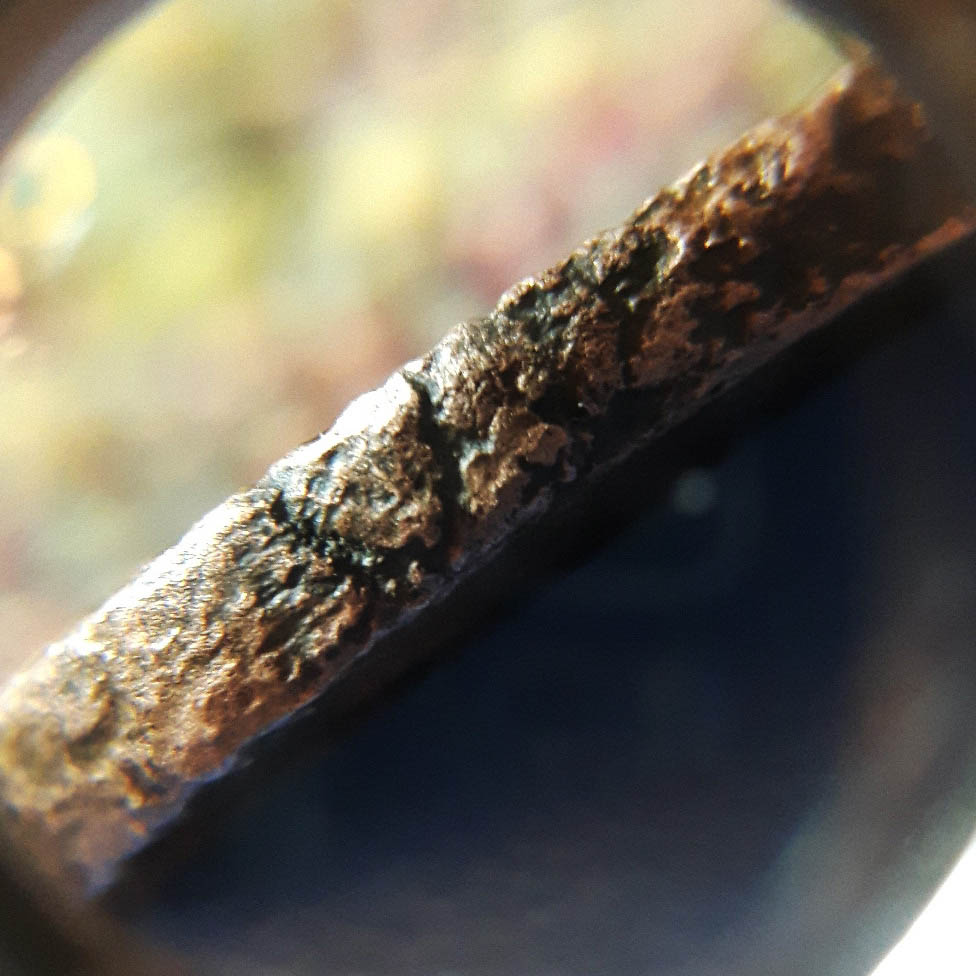
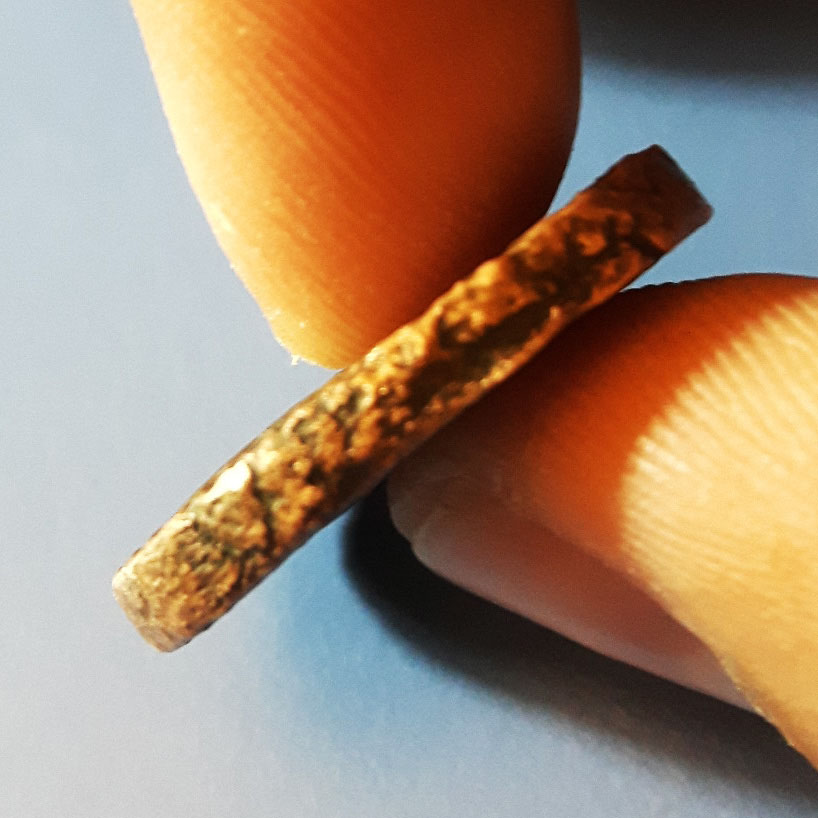
The reason for my support has to do with looking at the edge pictures. Orichalcum (alloy of zinc and copper - a Roman coin alloy of brass), has a paste range for the alloy. The paste range for any alloy is in between the melting points of the lowest and highest melting points of the metals which make up the alloy.
Melting point of zinc 420 deg.C, melting point of copper 1083 deg.C, giving a temperature paste range of 663 Celcius degrees, that is quite a large temperature paste range. If zinc was say, 15% of the alloy, the metal paste would be fairly stiff, but good for relieving die stress.
This produces the cheesy sort of texture of the alloy as seen in the edge pictures. Ancient coin flans were often heated to soften the alloy, so as to extend die life. Dies were hand cut and were expensive to produce.
The edge split has sharp edges which is the result of tensile metal distress, such as what is found on the head of a well used cold chisel.
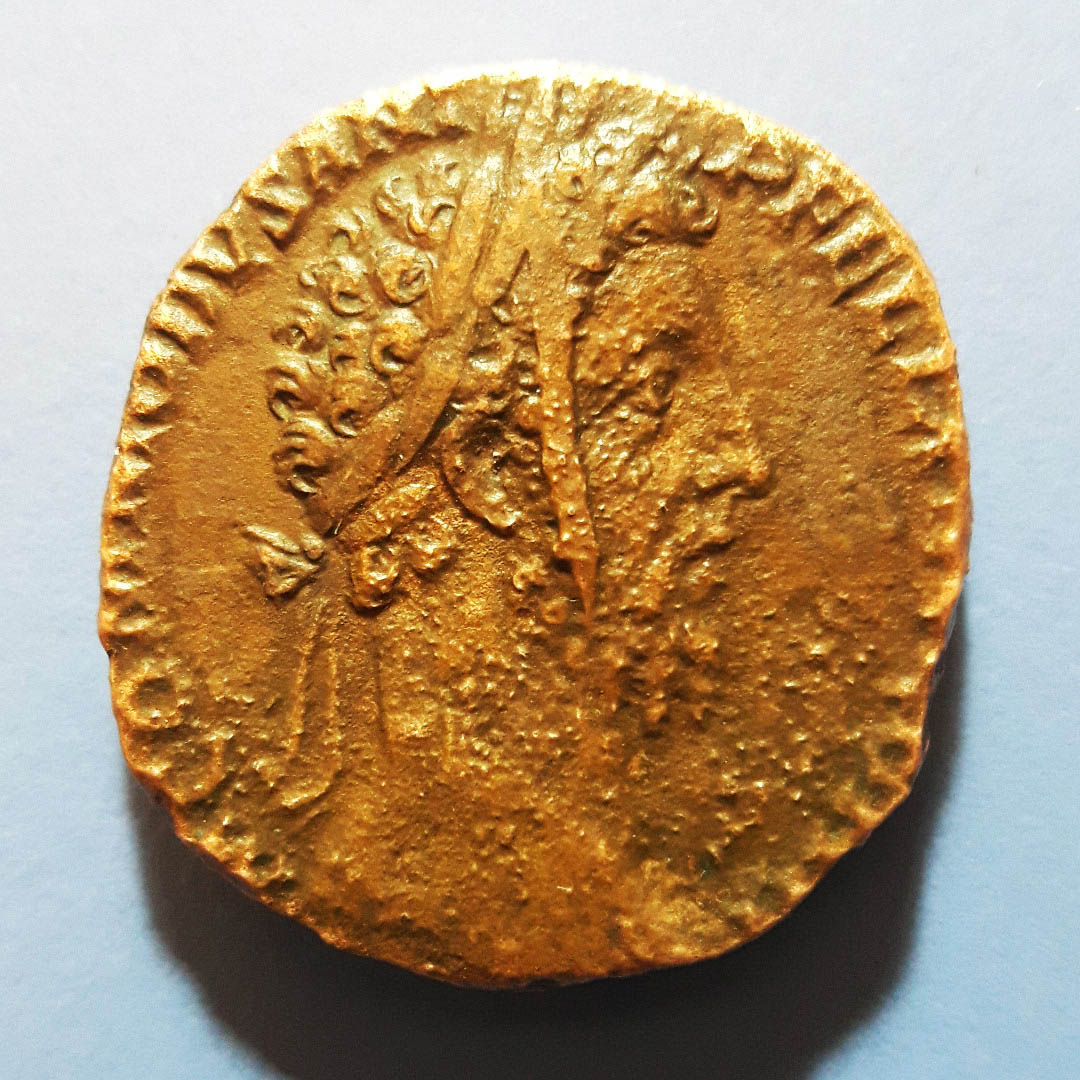
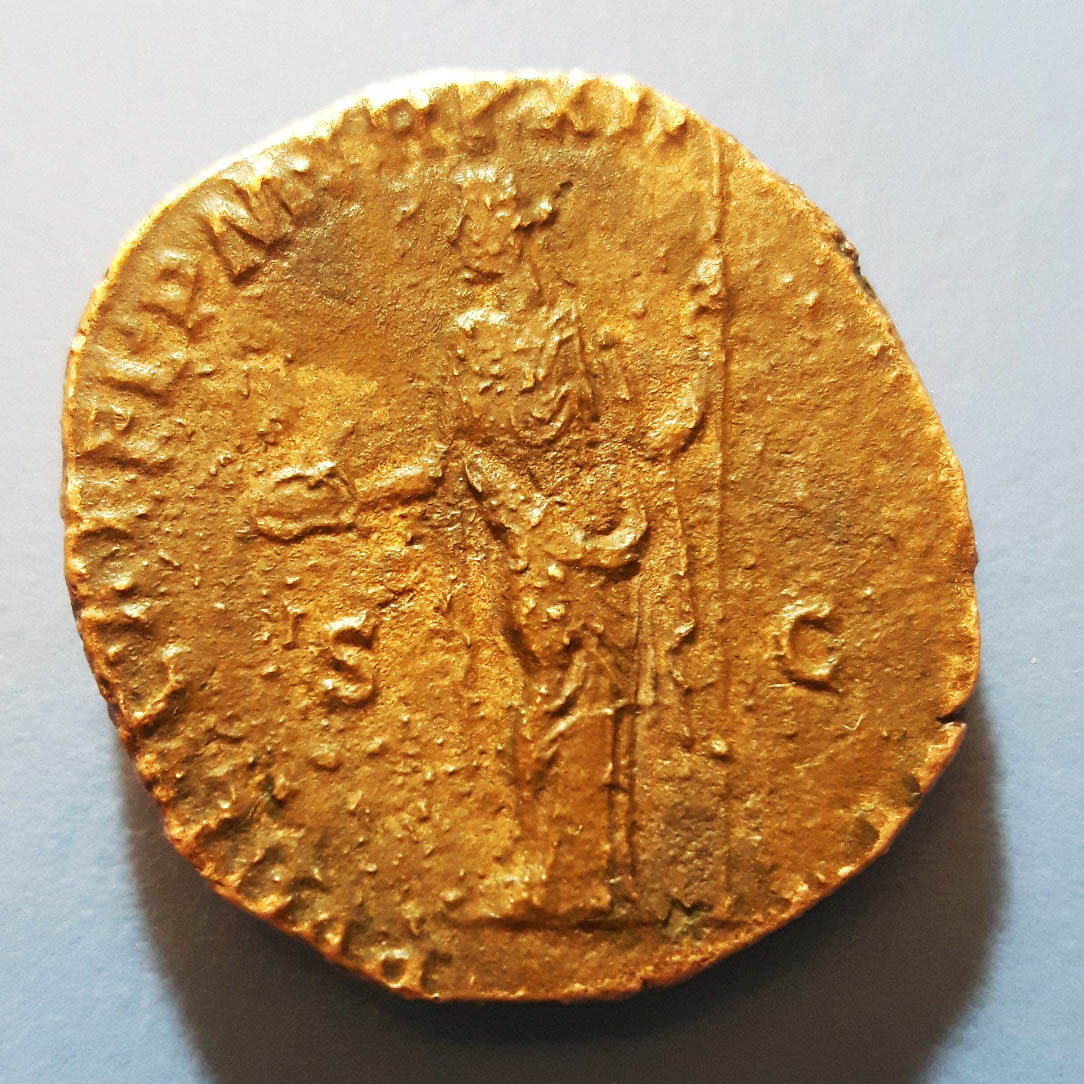
The sharpness of the hair detail and nose line still suggest to me that this coin was struck, not cast.
Therefore, the textured surface in places has to be the result of corrosion, not casting.
The reason for my support has to do with looking at the edge pictures. Orichalcum (alloy of zinc and copper - a Roman coin alloy of brass), has a paste range for the alloy. The paste range for any alloy is in between the melting points of the lowest and highest melting points of the metals which make up the alloy.
Melting point of zinc 420 deg.C, melting point of copper 1083 deg.C, giving a temperature paste range of 663 Celcius degrees, that is quite a large temperature paste range. If zinc was say, 15% of the alloy, the metal paste would be fairly stiff, but good for relieving die stress.
This produces the cheesy sort of texture of the alloy as seen in the edge pictures. Ancient coin flans were often heated to soften the alloy, so as to extend die life. Dies were hand cut and were expensive to produce.
The edge split has sharp edges which is the result of tensile metal distress, such as what is found on the head of a well used cold chisel.
The sharpness of the hair detail and nose line still suggest to me that this coin was struck, not cast.
Therefore, the textured surface in places has to be the result of corrosion, not casting.
Edited by sel_69l
01/08/2019 06:54 am
01/08/2019 06:54 am


