| Author |
 Replies: 10 / Views: 1,762 Replies: 10 / Views: 1,762 |
|
|
Bedrock of the Community
United States
36940 Posts |
Can those of you who specialize in this series tell if this coin looks genuine or has some red flags. Sellers photos so not sure of weight. 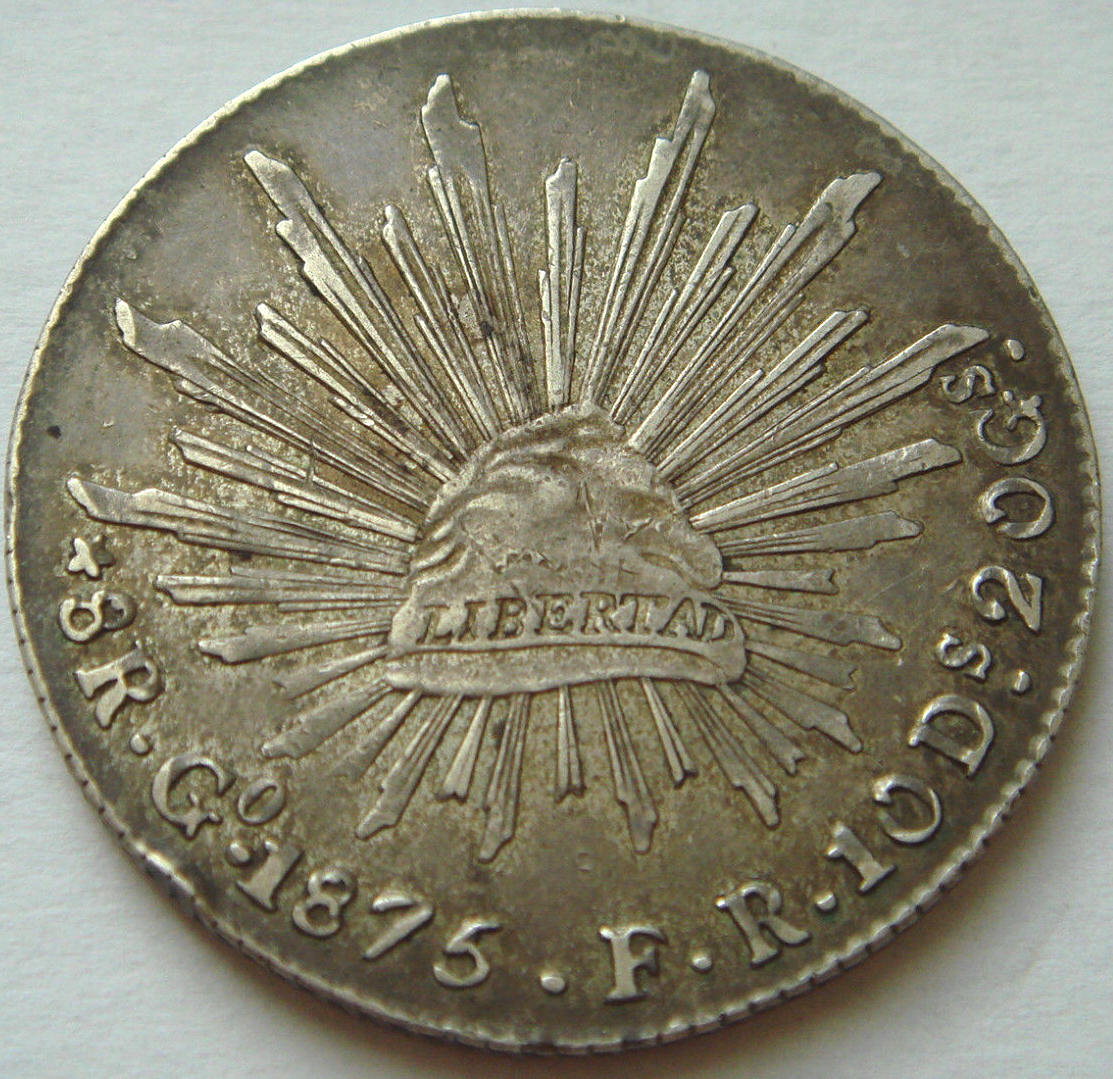 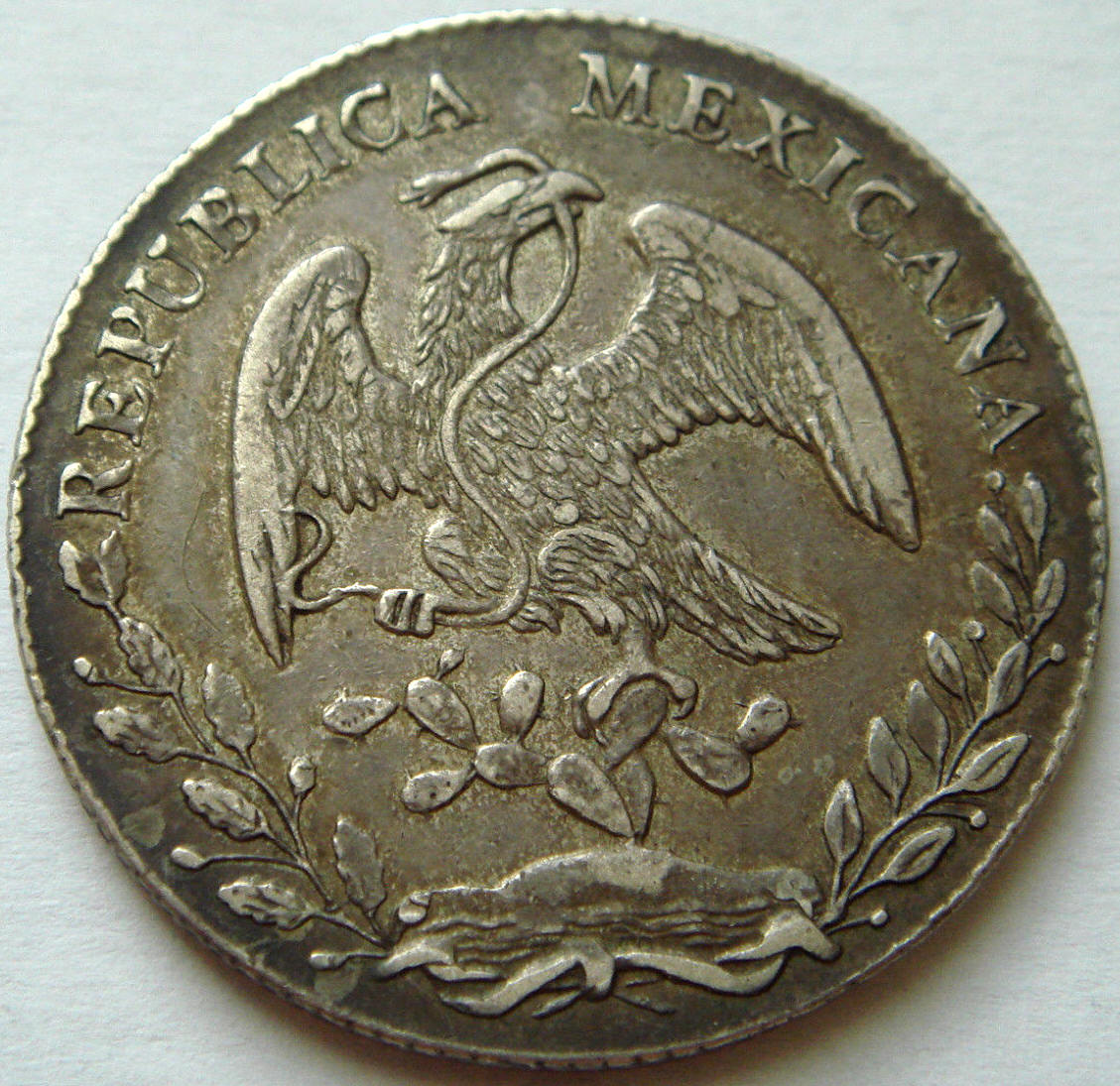 Edited by IndianGoldEagle
01/13/2019 12:33 pm
|
|
|
|
Pillar of the Community
United States
5362 Posts |
IndianGoldEagle The coin is genuine. Based on the size range I have observed on this series of Guanajuato 8 Reales the dot is about mid-sized (average). There is even a dot in a circle variety that I really like. It is foolish looking.
To me the presence of the dot indicates a less than proficient die sinker. Centering "dots", perimeter "tic marks" and full or partially inscribed arcs are used by all engravers for the control of the design on the die. A good engraver sets these marks shallowly so that no trace of these helping hints remains after die finishing.
|
|
Bedrock of the Community
 United States
36940 Posts |
Thanks swamperbob, good to know. I have been holding off on buying one of these due the the counterfeit problem now.
I sold World Coins mail order for over 36 years stopping in 2001. In the 70's 80's and 90's I bought so many of these and never worried about their authenticity. They were $10-20 coins at that time so never gave it a thought. If it rang like a silver coin I didn't worry about it.
How times have changed.
|
|
Pillar of the Community
United States
5362 Posts |
IndianGoldEagle The coin you selected an 1875 Guanajuato 8 Reales is what is referred to as a Second Republic issue. These are far easier to authenticate than are the earlier First Republic types. That is because in the second Republic these were Trade dollars used outside of Mexico almost exclusively and therefore the Government of Mexico attempted die standardization. In addition by the 1870's new die making and coining techniques were in place that allowed increased standardization. If you have a question about a Cap and Ray 8 Reales just post a picture. I am rather adept at this variety since it is by far my favorite series of all time - in particular those of the First Republic.
Edited by swamperbob
01/13/2019 8:32 pm
|
|
Pillar of the Community
 United States
8044 Posts |
|
|
Pillar of the Community
United States
5362 Posts |
tdziemia In 1875 at Guanajuato, my research indicates they were definitely using hubs in some form. The 1875 output was massive. The centering dots were however not a hub feature and varied. The Government of Mexico had taken over the mint in 1874 from long time operator's Manning and Marshall that historically had used their own die shop. I do not believe that in 1875 any dies were made at the Mexico City die shop or anyplace elsewhere because it was early in the tenure of Francisca Temple de Ajura as mint operator at Mexico City who eventually made all branch mint dies. The reason for my belief is primarily because these Go dies have those crazy centering dots. That use of centering dots is definitely a hold over from the Manning and Marshall culture (see issues of 1873 Go issues which normally have centering dots).
So in my opinion, the centering dot was in all likelihood used in the hubbing process that prevailed in the die shop which was a hold over into at least 1875. A few years later the dots are gone.
Hubbed dies all match their hubs. The only issue left is whether or not the hubs were 100% complete.
When I compared the two coins (the worn 1875 and the MS example you supplied) I believe I see a subtile difference in the spacial relationship of the dentils to the details which would indicate a different working die (at least for the reverse which I checked first. When I looked at the cap die I noticed a more distinct difference. It looks to me like the font used for the assayer statement is different - note specifically the 10 Ds. Check the height and size of the 1 and the D in particular. Then look at the spacing of the digits in the date. The 5 at the end of the date is spaced slightly wider on one coin versus the other. The last digit of the date is often omitted on working hubs (and on master hubs of course) so that difference is often the only clue visible for two working dies created from the same (nearly complete) hub.
Dies and how they were made must be completely understood to explain differences on hubbed coins in particular.
I have also found that year to year progress or retreat in die making methods needs to be done and understood as well. I always try to remember to look for changes introduced when new lease operators are put in place at branch mints.
Edited by swamperbob
01/13/2019 10:03 pm
|
|
Pillar of the Community
United States
8044 Posts |
I should know better ... I am now seeing some differences in the base of the E in REPUBLICA (more curved in the MS example)
Thanks for taking the time to explain. Certainly the whole discussion took my attention away from my normal areas of interest. Always a good thing!
|
|
Bedrock of the Community
United States
36940 Posts |
This is great info, thanks guys. It seems the edges of the wings on both coins come weakly struck. That makes it tougher to grade these coins, especially for those of us not familiar with the strikes on these coins.
|
|
Pillar of the Community
United States
5362 Posts |
IndianGoldEagle You touch on a very critical subject with this comment; Quote:
That makes it tougher to grade these coins, especially for those of us not familiar with the strikes on these coins. I would say that "normal" grading used for US coins in particular the Sheldon scale is in appropriate for some of the Cap and Ray coins. You are entirely corrcet that without a clear understanding of how these coins were struck - getting a correct grade is much more difficult than modern coins. The scale is actually best used and applicable to fully struck coins. The 8Rs struck in the first Republic are rarely fully struck up. So do the TPGs in fact understand this point? If they do it is not apparent from the way they grade. The completeness of the strike is critical in proper grading of 8Rs. I at one time owned a graded MS coin from Zacatecas dated in the early 1830's that had at best a 2/3rd to 3/4th full strike. If there was wear on the unstruck surfaces it would have graded about VF. I took a look at Heritage Auction Archives and found a pair of 1832 Zs OM 8Rs both graded AU 58 by the same TPG. Here they are: 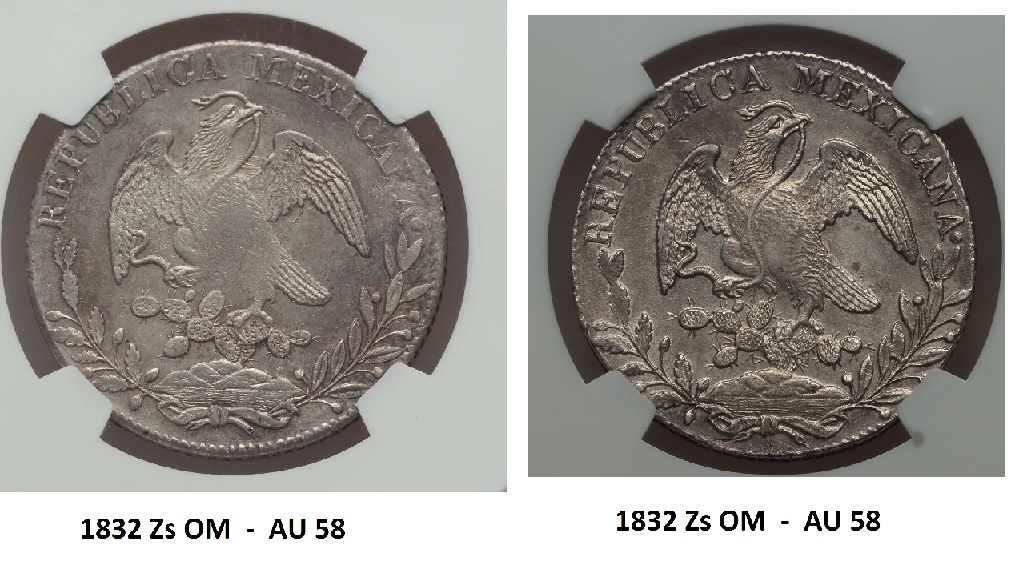
|
|
Pillar of the Community
Belgium
1185 Posts |
Quote:I took a look at Heritage Auction Archives and found a pair of 1832 Zs OM 8Rs both graded AU 58 by the same TPG. unless the Cap side would display opposite differences in quality, the same grade for this pair makes one wonder about objectivity and reproducibility |
|
Pillar of the Community
United States
5362 Posts |
The other side of both coins match the sides shown.
I know that you should "buy the coin and not the slab" but I have to ask what good is the slab in this case?
I have never supported encapsulation of older 8Rs and I believe the majority of serious collectors of this variety feel the same way. I think it is time to change the way we look at encapsulation of older World coins.
The seller's paid the same amount for both coins to be authenticated and graded. We have already demonstrated that the "authentication" part is not the best when it comes to this series. If the grading part is this bad - what is the fee for?
|
| |
Replies: 10 / Views: 1,762 |
|










 Posted 01/13/2019 1:46 pm


