| Author |
 Replies: 12 / Views: 3,460 Replies: 12 / Views: 3,460 |
|
|
New Member
United States
33 Posts |
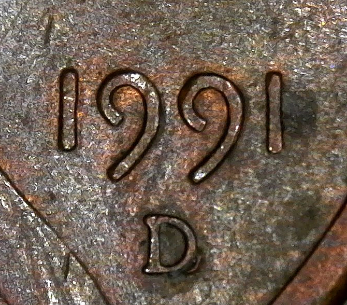 Hey Guys, I found this 1991 D while hunting. Is this a RPM, if not what is it?
|
|
|
|
Moderator
 United States
56855 Posts |
Remember,no more RPM's after 1989 right? Your coin has zinc rot. John1  |
|
Pillar of the Community
 United States
6514 Posts |
Thanks John1. I didn't know the exact year. So 1989 is the last year that they exist?
Check out my counterstamped Lincoln Cent collection: http://goccf.com/t/303507 |
|
Moderator
United States
56855 Posts |
Yes,starting in 1990 the MM is added to the master dies. John1 |
|
Bedrock of the Community
United States
62064 Posts |
After 1990, if the mint mark is doubled it would be a DDO. But on your coin it is a split plating issue. Not a variety, but a normal coin that was altered when the plating was split, allow zinc rot to set in. Be there are a few doubled dies that include the mint mark: 1995-D Cent: _AAA.jpg) _AAB.jpg) 1990-S Quarter:  2017-P Cent: 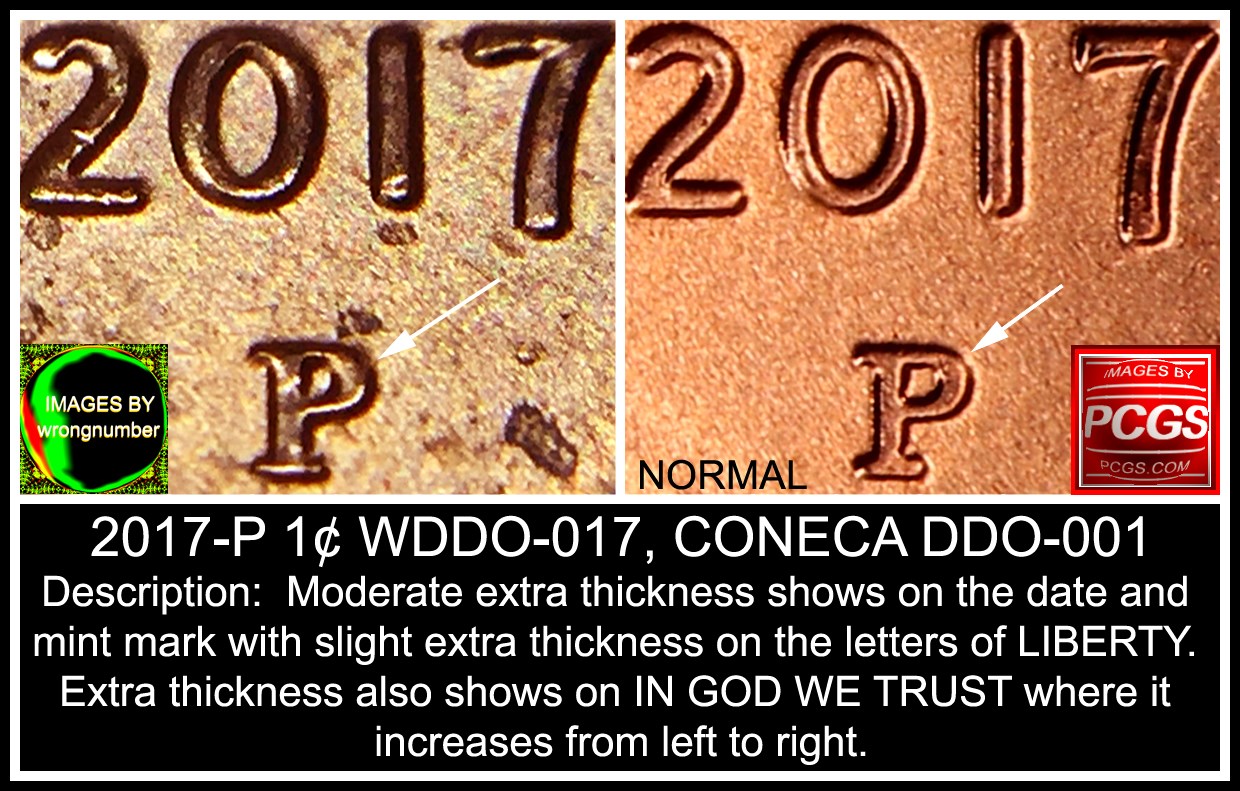 |
|
Pillar of the Community
United States
7592 Posts |
 coop, Nice illustration as always |
|
Pillar of the Community
United States
2775 Posts |
More "mint mark" food for thought. I've read multiple articles on the subject suggesting mint marks included on master dies began in the mid 1980's for proofs and commemoratives. They also suggest this procedure was adopted for the circulating coinage in stages past 1989. Wexler's Coin and Die Varieties http://doubleddie.com/58243.htmlQuote:
The RPM and OMM varieties are two die variety types that the Mint has successfully eliminated from modern day coinage. The first changes to the procedure of applying the mint marks to coinage came in the mid-1980s when the mint mark started to appear to the original model design for commemorative coins and regular proof coins. In 1990 and 1991 the Mint began applying the mint mark for circulating coins to the master die. After 1994 the mint mark was applied directly to the original model for all U.S. coins thus ending the RPM and OMM era. A Look at Mintmarks: Part One | NGC https://www.NGCcoin.com/news/article/682/A Look at Mintmarks: Part Two | NGC https://www.NGCcoin.com/news/article/678/Quote:
The rapid failure of new 'S' puncheons introduced in 1979 and again in 1981 evidently convinced the Mint's engravers that another method of marking the dies was needed. Beginning with the proof coinage of 1985, mintmarks were applied to the master die for each year, rather to the numerous working dies. This procedure was adopted for the circulating coinage in stages. Nickels through halves featured master die mintmarks beginning in 1990, and the cents fell into line the following year. Of course, this means that there are now separate master dies for each mint, whereas previously just a single master die existed for each date and denomination. While collectors will still seek to own examples of each mint's production, they must live with the knowledge that every coin made since 1991 will have the same style of mintmark in the exact same location. Mint Marks | U.S. Mint https://www.usmint.gov/learn/collec...s/mint-marksThanks, Doug. Edited by Halo1st
01/25/2019 11:23 pm
|
|
Pillar of the Community
United States
7592 Posts |
Appreciate the information Doug, very useful.
|
|
Moderator
United States
56855 Posts |
So.a 1990-D cent can have a RPM? John1 |
|
Pillar of the Community
United States
2775 Posts |
Quote:
So.a 1990-D cent can have a RPM?  Depends on who we ask. Wexler's and NGC articles paint a similar timeline. The US Mint's article doesn't include a detailed timeline of the change over. Additional research may reveal more. I think of all three sites typically to be reliable resources. Thanks, Doug. Adding: Error-Ref reference tells us 1989 is the cut off year. I see no mention of a step by step transitional timeline. I typically think it to be a reliable resource as well. PART II. Die Varieties: Repunched Mintmark (RPM) http://www.error-ref.com/?s=master+die+mint+markQuote:
The era of RPMs ceased in 1989 when the U. S. Mint began placing the mint mark on the master die instead of punching the mintmark into the working die. Edited by Halo1st
01/26/2019 11:21 am
|
|
Bedrock of the Community
United States
62064 Posts |
So there are no more RPMs after 1989. But if the mint marks are doubled, they are then called a doubled die as the mint mark is part of the design. Al after 1990 all the mint marks are all in the same location because they are part of the design. Thus if the mint marks are doubled, they are doubled dies. The dates on Cents would also be doubled as in the example I posted on the 2017-P DDO and the 1995-D above.Edited by coop
01/26/2019 11:27 am
|
|
Pillar of the Community
United States
2775 Posts |
Quote:
So there are no more RPMs after 1989. Timelines seem to differ between resources. Some suggest the transition began earlier and surpasses 1989. My question is was the mint mark still hand punched into the "Master Dies"? If so a RPM could still be possible at that time. Case in point on coop's image of the 1990s 25¢ above. The mint marks locations seem to differ slightly between the two dies. Bare in mind the one on the right is a doubled die from a working die. A reminder from coop's image library that shows it better than I can explain it. 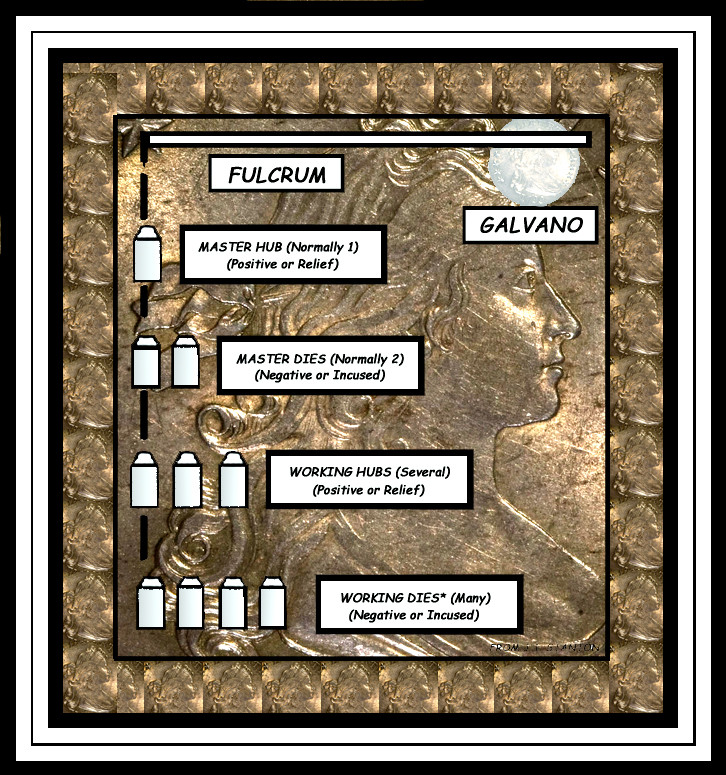 The way I read the references of the mint mark transition at this time, regardless if the procedure was adopted for the proof and circulating coinage in stages, which began in the mid 1980's or an all out change over in 1989, they all suggest it stated at the Master Die(s) level, not the top design level nor the Master Hub(s) level. Thanks, Doug. Edited by Halo1st
01/26/2019 1:11 pm
|
|
Bedrock of the Community
United States
62064 Posts |
I think the problem there were experiencing on the punching them by hand was that the die was all finished and hardened. So when they would punch the mint mark in, they would slow get distorted because of the hardening of the dies. So by adding it to the master die, they would get a lot more mileage out of the punches that way. On the master dies they would have to create three of them. One for each mint. So they could created there own working hub and Working dies each year.
|
| |
Replies: 12 / Views: 3,460 |
|







 Posted 01/25/2019 12:07 pm





